
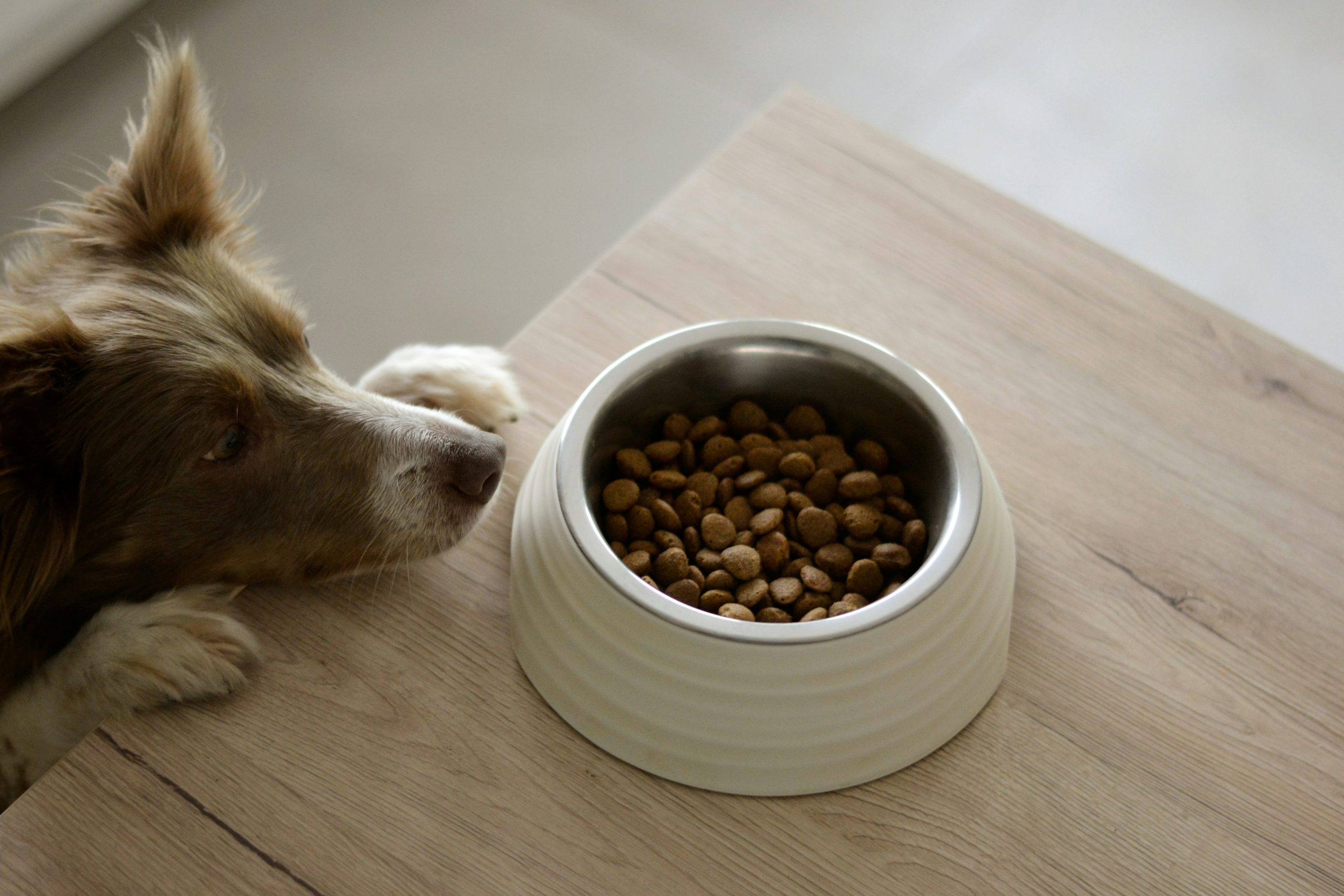
Two dogs can eat from identical bowls and still need different food. The question is not simply whether a puppy eats more than an adult. It is whether the diet is formulated for growth, whether the portion matches that dog’s changing body, and whether anyone is quietly adding extras between meals.
A puppy that is growing steadily needs a complete diet appropriate for growth. An adult generally needs a diet appropriate for maintenance, with portions adjusted to body condition, activity and health. Those labels matter more than a generic “puppy versus adult” calorie chart. If you have a large-breed puppy, the choice deserves particular care because growth rate and mineral balance affect developing bones and joints.
Start with the label, then look at the dog
Read the nutritional adequacy statement on the package. It should say which life stage the food is formulated to support. For a large-breed puppy, check that the growth claim includes dogs expected to be large as adults; ask your veterinarian if the wording is unclear. A bag marketed as “natural” or “premium” does not answer this question. Nor does the assumption that all puppy foods contain the same amounts of protein, fat or calcium.
The feeding chart gives an initial portion, not a fixed target for every dog. Record the amount offered, include treats and chews, and track weight as your puppy grows. At checkups, ask the veterinary team to show you a body condition score and how to feel for ribs beneath a light covering of fat. Review breed, size, food, amount and body condition throughout a dog’s life. A sudden change in appetite, vomiting, diarrhoea or poor growth is a reason to call the clinic rather than simply changing the portion.
Meal frequency should fit the puppy in front of you
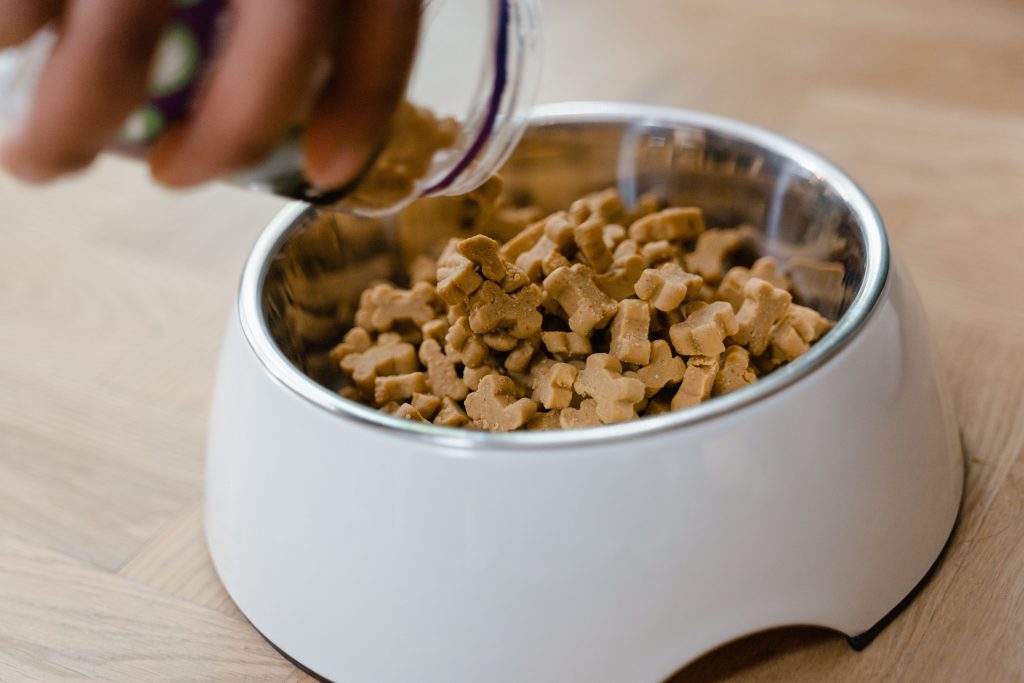
Young puppies often do better with smaller, more frequent meals because they cannot comfortably eat a full day’s ration at once. As they mature, many can move toward two meals a day. There is no safe universal birthday for that change: age, size, health and the amount eaten at each meal all matter. Very small puppies and those with a medical condition may need a different schedule. Keep fresh water available and ask your veterinarian for a feeding plan if a puppy repeatedly misses meals.
Measured meals make it easier to see a change in appetite. If a puppy shares a home with an adult dog, feed them in separate spaces and pick up bowls afterward. Otherwise, the adult may eat calorie-dense growth food while the puppy eats too little. The same practical setup also helps when one dog is on a prescription diet.
When is it time for adult food?
Size and maturity are better guides than one date printed on a calendar. Small dogs generally finish growing sooner than large or giant breeds, which may continue growing well into their second year. This range is why a single switch date does not fit every breed. Ask at a routine puppy visit when your dog’s expected adult size, growth curve and body condition suggest a change. The decision may differ for a dog that has been neutered, is gaining excess weight, or has a medical condition.
When a change is appropriate, mix the new food into the old over several days and watch stools and appetite. Go more slowly, or call your veterinarian, if digestive upset appears. Measure the new food according to its own calorie content; the same-sized scoop of two products need not provide the same energy. A gradual transition is about tolerance, while the total daily amount is about the individual dog’s needs.
Adult feeding is a maintenance task, not a fixed cup count
For an adult dog, review weight and body condition periodically instead of leaving the puppy portion unchanged. Activity, age, neuter status and illness can alter energy needs. Many adults do well with two measured meals, but the exact schedule should work for the dog and household. Count training rewards and table food as part of the day’s intake. If a dog starts leaving meals, do not assume it is merely “picky”; DailyTrail’s guide to a dog refusing regular meals explains what to check before changing the bowl.
There are exceptions to simple life-stage rules. Pregnancy, nursing, illness and weight loss can change nutritional needs; the right diet in those situations belongs in a veterinary plan. Conversely, routinely feeding a healthy adult puppy food just because another dog in the home needs it can make portion control harder. Separate bowls are easier than guessing who ate which food.
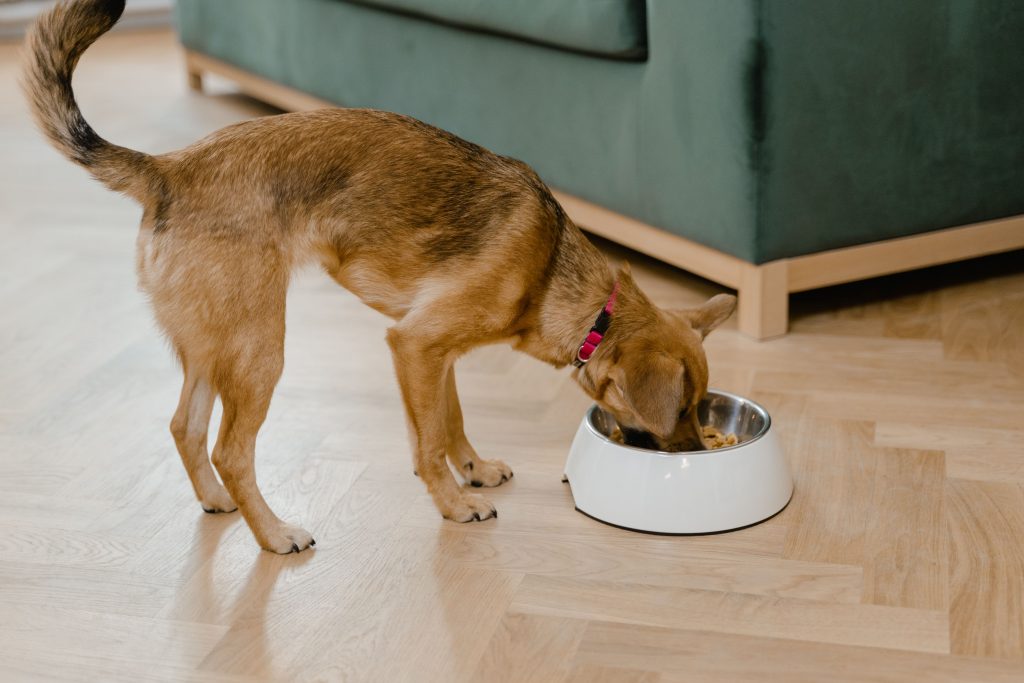
If you are unsure whether the current food still fits your dog, take the package label, portion amount and a short record of treats to the next veterinary visit. That gives the team something specific to assess alongside weight and body condition.
Sources used for this guide
- AAHA: Nutritional Assessment Across Canine Life Stages
- VCA Animal Hospitals: How Much Food Should I Feed My Puppy?
Editorial note: The photographs on this page illustrate feeding setups; they are not presented as the author’s own dogs. This article provides general feeding information and does not replace advice from a veterinarian familiar with your dog.
[…] the whole dog: energy, stool, vomiting, mouth comfort, weight and any new medication. Our guide to feeding puppies and adult dogs explains why portions and meal patterns need to change with growth and life […]