
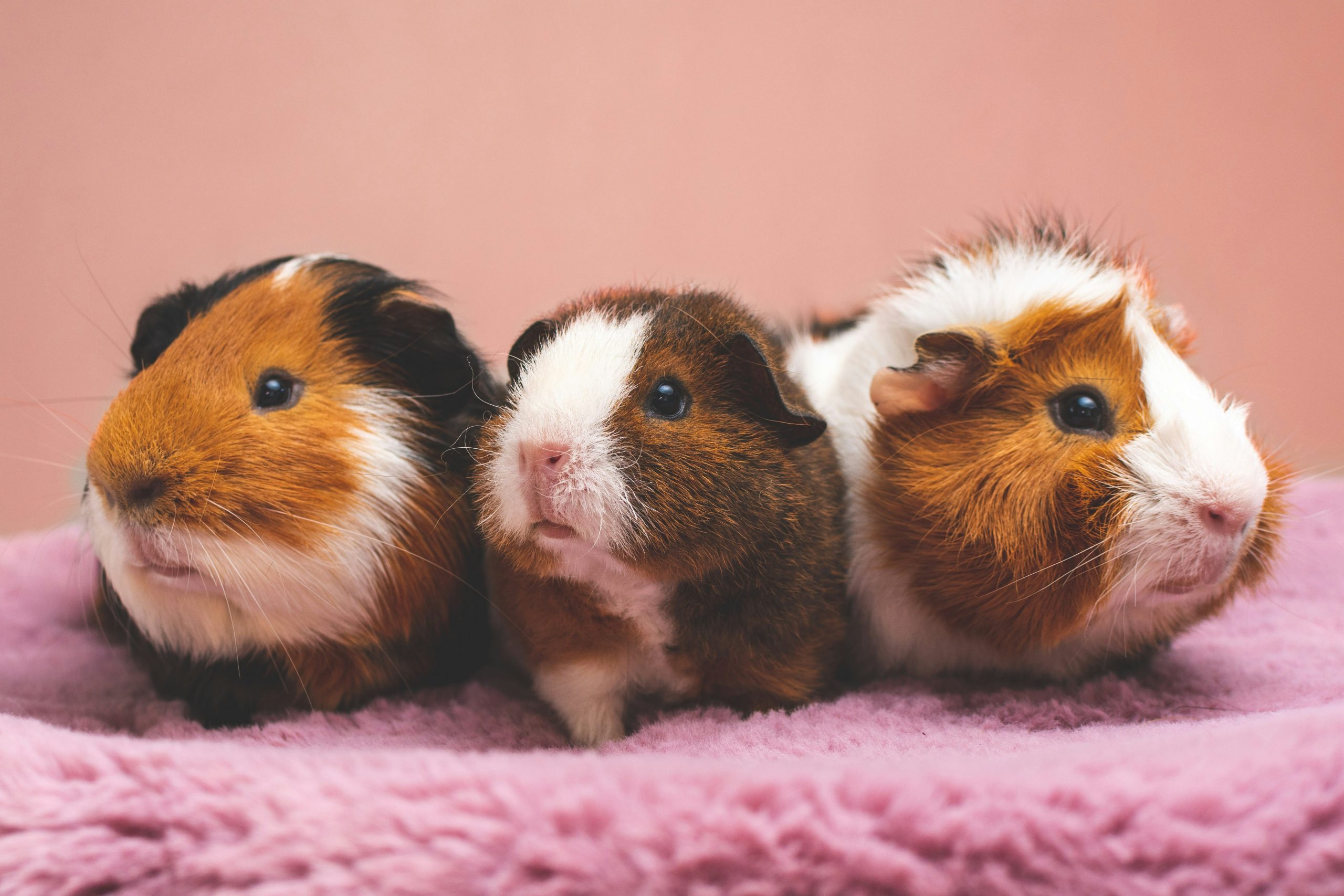
First time I brought a guinea pig home, I thought — bigger hamster, bigger cage, same deal, right?
First week in, I realized how wrong I was. The thing would shiver in my hands, squeak like a tiny alarm clock every time I opened the fridge, and eat hay non-stop. Eat, poop, eat, poop.
Okay, fine — they are pretty cute. But way more work than a hamster.
Here is what I learned after making all the usual beginner mistakes. Hope it saves you some of the hassle I went through.
Guinea Pigs Are Social Animals
I need to say this straight up: guinea pigs should not live alone.
In the wild, they live in groups. A single guinea pig gets lonely, anxious, and depressed. Some countries actually have laws against keeping just one — not because the government has nothing better to do, but because it is genuinely not fair to the animal.
Get at least two. Same-sex pairs work best (males together or females together). Two males raised together usually get along. Two females almost always do.
One pig means it is staring at you all day, expecting you to be its entire social life. And you cannot be there 24/7.
The Cage — Bigger, Then Bigger Again
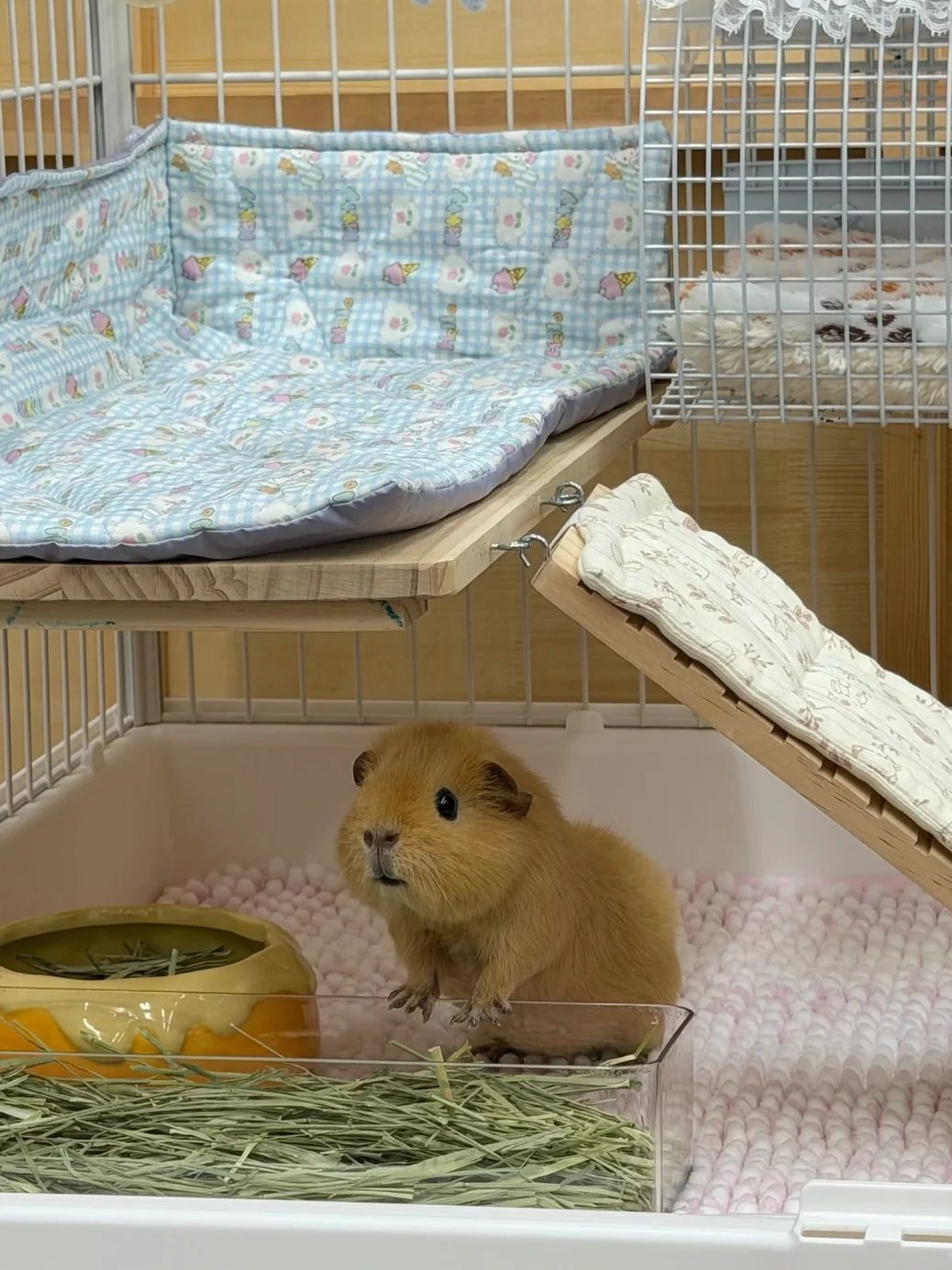
Guinea pigs do not climb, but they run a lot. The floor space they need is bigger than you think.
Minimum for two pigs: 7.5 square feet — roughly 30 inches by 36 inches. And that is the minimum. Go bigger if you can. 10 square feet or more is way better.
The floor must be solid. Wire-bottom cages mess up their feet. You can use C&C cages, large plastic storage bins, or commercial cages — just make sure the bottom is flat and solid.
Where to put it: Inside your home, away from direct sunlight, away from AC vents and heaters. They are sensitive to temperature — ideal range is 65°F to 75°F. Anything over 80°F and they start overheating.
Bedding — Go Deep, Change Often
Guinea pigs produce a lot of waste. Thin bedding means constant cleaning — your choice.
Bedding depth: at least 2 to 3 inches. That is the starting point, not the recommendation.
Good bedding options:
- Paper-based bedding — absorbs well, dust-free
- Aspen shavings — also fine, make sure they are kiln-dried
Stay away from:
- Pine and cedar shavings — the oils mess with their lungs
- Corn cob bedding — grows mold easily, and they might eat it
- Scented bedding — too strong for their sensitive noses
Change the bedding completely once a week. But do a “spot clean” daily — scoop out wet spots and piles of poop. The more consistent you are, the less the cage smells and the healthier their feet stay.
Timothy Hay — Not a Side Dish, the Main Course
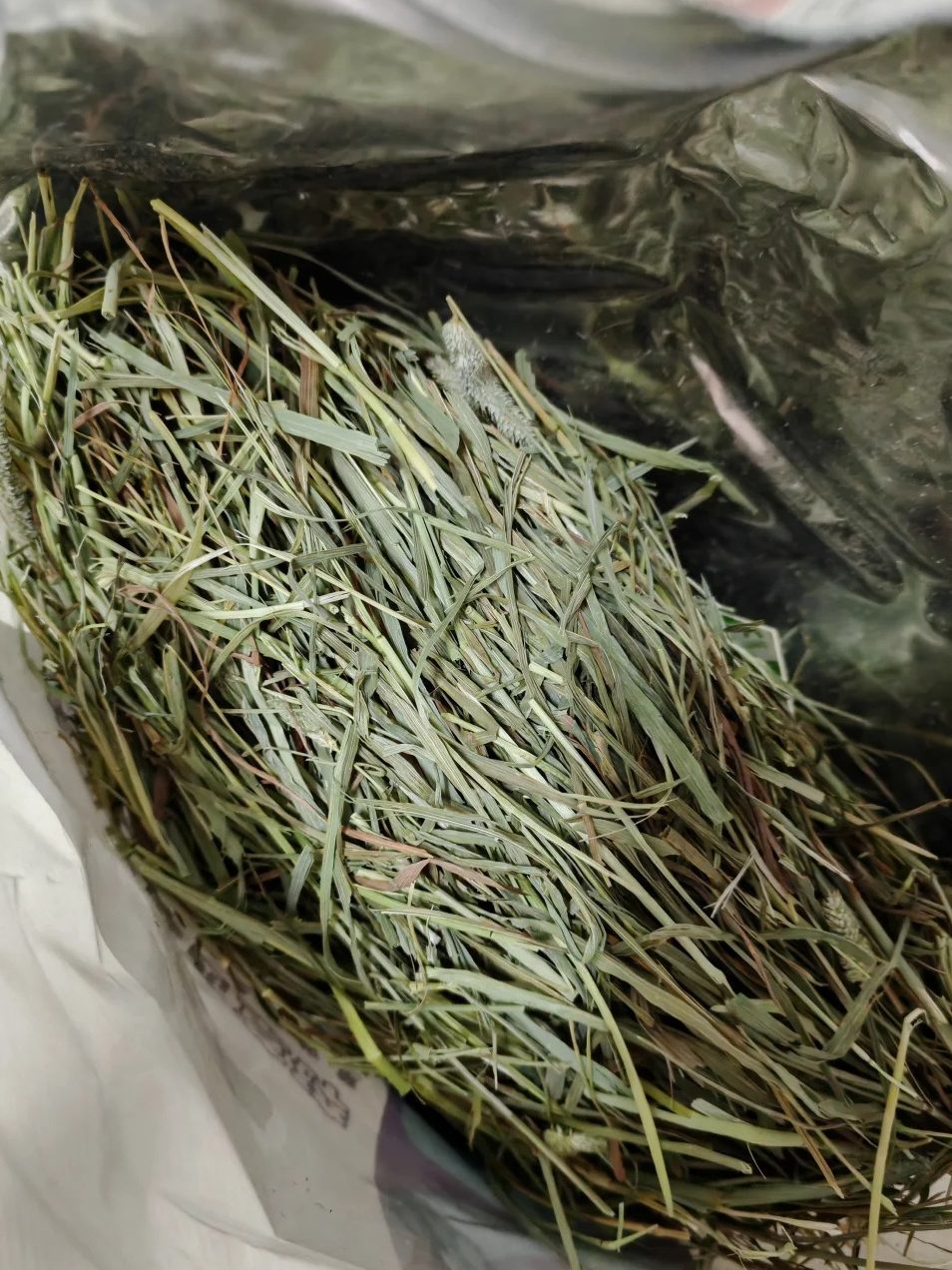
Just like rabbits, guinea pigs need unlimited Timothy hay.
Why? Their digestive system needs the fiber to keep moving. And their teeth never stop growing — they grind them down by chewing hay.
Check the hay rack every day. If it is empty, refill it. Never let it run out.
Adult guinea pigs do not need alfalfa hay (unless they are pregnant or nursing) — too much calcium and protein. Timothy hay, orchard grass, or oat hay are the right choices.
Vitamin C — They Cannot Make It Themselves
This is one of the biggest differences between guinea pigs and most other pets. They cannot produce their own vitamin C.
Without enough C, they get scurvy — swollen joints, pain when walking, loose teeth, no appetite. It is a real condition in guinea pigs.
How to give it:
- Offer fresh veggies high in vitamin C every day — bell peppers (red and green), kale, broccoli, parsley
- Use stabilized vitamin C tablets made for guinea pigs — follow the dosage on the package
- Do not rely on water drops — vitamin C breaks down fast in water, and if the water tastes weird, the pig might drink less
About one cup of fresh veggies per pig per day, rotated for variety.
Pellets — A Little Goes a Long Way
Pellets are a supplement, not the main food. Hay is still number one.
About 1/8 cup of pellets per pig per day. That is enough.
Choose Timothy-based pellets — not alfalfa-based, unless your pig is a baby, pregnant, or nursing. Plain pellets without seeds, dried fruit, or colored bits are the best choice.
Water — Change It Daily
Same as always — water bottle or bowl, cleaned and refilled every day.
Water bottle nozzles need regular scrubbing — gunk builds up fast inside the metal tube. If you use a bowl, pick a heavy ceramic one that will not tip over.
Floor Time — They Need to Run
Guinea pigs need out-of-cage time every day. At least 1 to 2 hours of supervised roaming in a safe area.
How to set it up:
- Use a playpen, or block off a safe room (cover wires, close doors)
- Put down a blanket or mat
- Add tunnels, cardboard boxes, and hideouts — they love to explore
They will run around and jump straight up — that is called “popcorning.” It is exactly what it sounds like, and it means they are happy.
Handling and Bonding
Guinea pigs do not leap onto your hand like a dog. But with regular handling, they learn to trust you.
How to pick them up: one hand under the chest and front legs, the other hand supporting the back end. Never let their back legs dangle.
During handling:
- Talk softly and calmly
- If they shake or try to squirm — put them back
- Offer a veggie treat after every handling session — build the association that you are good news
For the first few days, just sit near the cage and offer food through the bars. Let them learn you are the one with the good stuff, not the one who grabs them.
Daily Health Checks
Guinea pigs hide illness well. Daily observation is your main tool.
Check every day:
- Eating and drinking normally?
- Poop looking normal — dry, oval, even-sized?
- Eyes clear and bright?
- Coat smooth, no bald patches or crust?
- Active and alert — not hiding in a corner?
Call a vet if:
- Not eating for 6 to 8 hours
- Poop gets smaller, fewer, or changes shape
- Trouble breathing or wheezing
- Eye discharge, redness, or cloudiness
- Head tilt or wobbling when walking
- Sudden weight loss
Vet: find one that treats guinea pigs. Many cat-and-dog vets do not know much about them, and medication doses are different.
Final Thoughts
Guinea pigs are not a shortcut pet. Big cage. Unlimited hay. Daily veggies. A friend to live with. Regular cleaning.
But if you get those basics right, you get a pig (or two) that squeaks when you open the door, popcorn when they hear the treat bag, and sometimes falls asleep on your lap.
Do it right, and they will be with you for five to seven years. That is a good stretch. Worth the effort.