
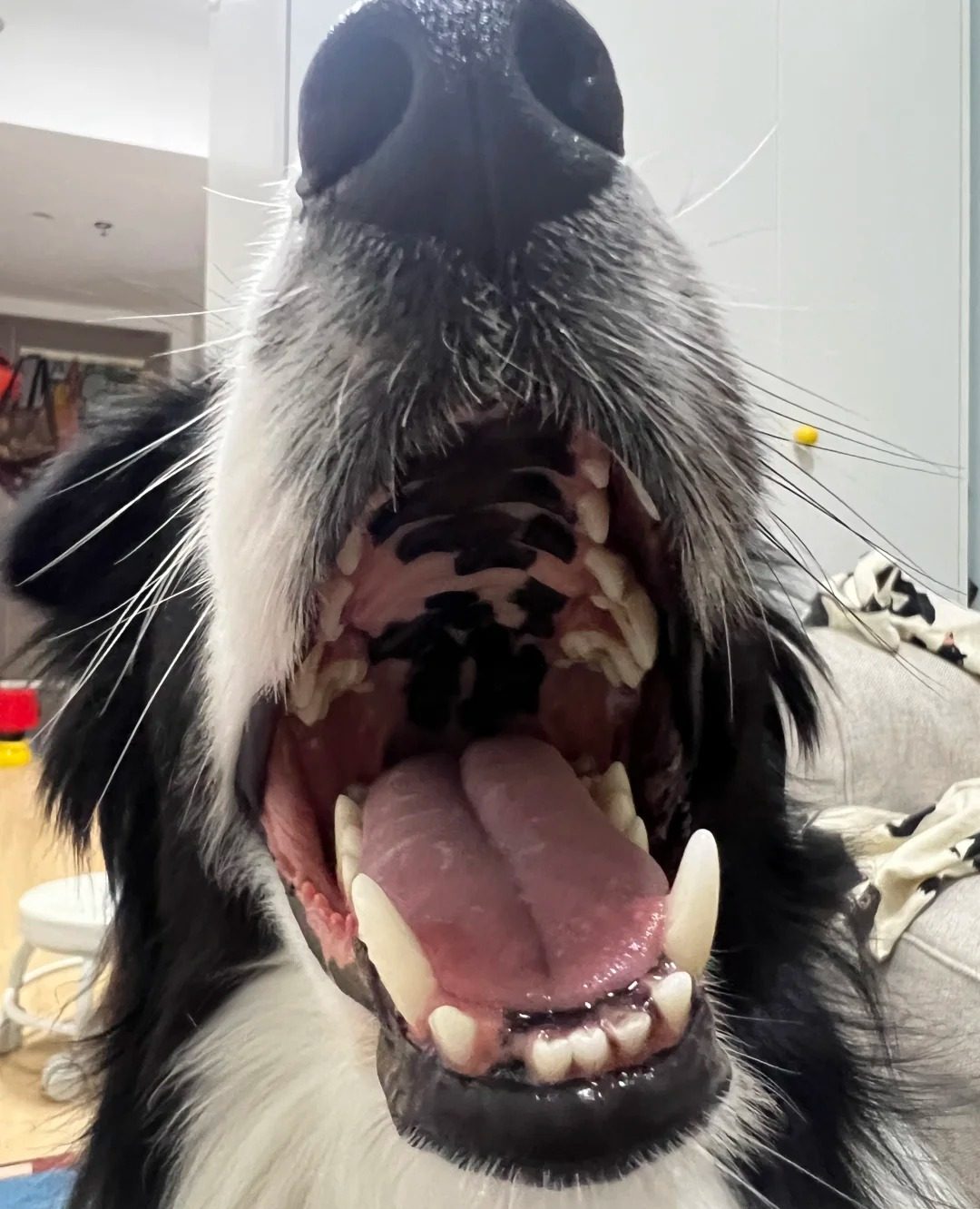
You know how bad dog breath can get?
I had a dog whose breath could hit you from across the room. Not that “oh, he just ate kibble” kind of smell. More like “did this dog eat something dead” territory.
I thought that was normal. Dogs have stinky mouths, right?
Then the vet took one look and said something I still remember: “That smell is bacteria breaking down tartar and rotting food. His gums are already starting to recede.”
He was seven that year. The vet said if we did not intervene, he would lose at least three teeth before he turned ten.
That was when I learned — dental care for dogs is not cosmetic. It is baseline health. And it has nothing to do with how expensive your dog food is.
Your Dog’s Teeth Need Brushing Too
Here is the thing most people miss. Your dog’s teeth and your teeth work the same way. After eating, food particles mix with bacteria and form plaque. If you do not remove it, that plaque hardens into tartar within 24 to 48 hours. Once that happens, you cannot brush it off — you need professional veterinary tools to remove it.
Tartar buildup leads to gingivitis. Gingivitis leads to periodontal disease. Periodontal disease leads to loose teeth and tooth loss. And the whole chain does not stop at the mouth. Bacteria from the gums enter the bloodstream, affecting the heart, kidneys, and liver over time.
The numbers from veterinary dentistry are clear: over 80 percent of dogs over the age of three have some form of periodontal disease. Not might have. Have.
Let me put it plainly. If you do not want your dog losing teeth by age ten, you need to start brushing while they are still young.
How to Brush Your Dog’s Teeth — Tools and Method
Tools you need:
- A soft-bristled toothbrush made for dogs — not a human toothbrush
- Toothpaste made for dogs — human toothpaste contains fluoride and xylitol, both toxic to dogs
- A finger brush works fine when you are just starting out
Method:
- Day one — let your dog lick the toothpaste off the brush. Make it a positive experience.
- Day two — use the finger brush or toothbrush to gently touch the outer surface of the teeth and lips. Just touching, no brushing.
- Day three — start brushing a few teeth on the outer surface. Small circular motions. Keep it brief.
- Over the next few weeks, gradually increase the area until you are covering all outer surfaces.
Focus on the outer side of the teeth — the side facing the cheek. The inner side and the tongue side usually get cleaned pretty well by the dog’s own tongue. Hold the brush at a 45-degree angle to the gum line and use gentle circular motions.
A few seconds per tooth is enough. Total time — about two minutes. If your dog fights you, brushing whatever you can reach is still better than not brushing at all.
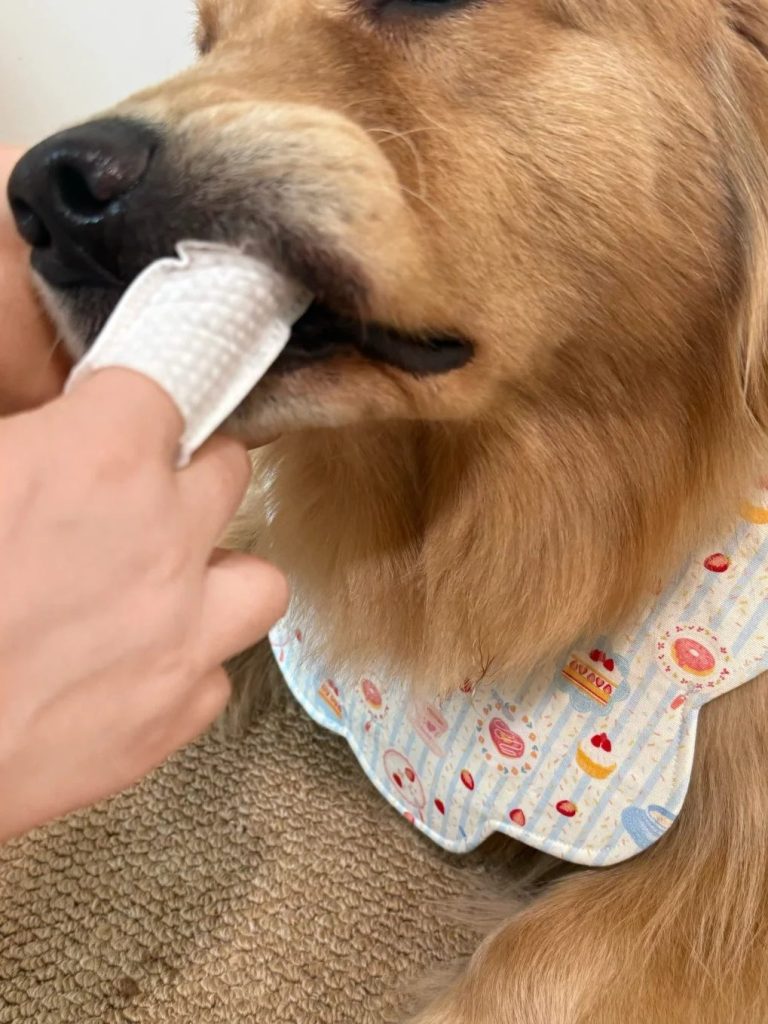
Frequency — Between Ideal and Reality
The ideal is once a day. That frequency interrupts the plaque formation cycle and keeps it from mineralizing into tartar.
Here is the honest truth — I do not hit daily brushing myself. But I make sure I get at least three times a week. Every three days beats once a week. Once a week beats never. It is a “more is better” situation, but a little is still better than nothing.
If you are just starting, do not go for daily right away. The dog is not used to it. You will lose patience. Start with two to three times a week, then build up as the dog gets comfortable.
Other Tools That Help — But Do Not Replace Brushing
Brushing is the gold standard. But it is not the only tool.
Dental chews: Products your dog gnaws on that physically scrape plaque off the teeth. Look for ones with the Veterinary Oral Health Council (VOHC) seal. That seal means the product has actual science backing its claims. No seal? It is probably just a treat.
Water additives: Liquids you add to drinking water that reduce oral bacteria. They are helpers, not replacements. Good for extra protection, but do not rely on them alone.
Dental toys: Certain rubber toys with raised nubs that scrape the tooth surface when chewed. Limited effect, but better than nothing.
A Mistake I Made
One year, I bought a spray that claimed to remove tartar. Just spray once a day, done. I thought — this is way easier than brushing. Took that shortcut for about three months. At the next checkup, my vet pointed at the back molars: “This tartar is now hardened to the point where it needs a professional cleaning under anesthesia.”
That procedure costs a few hundred dollars at minimum.
What I learned: no liquid dissolves hardened tartar. You can only remove it mechanically — brushing, chewing, scraping. Sprays and rinses reduce bacteria and slow down new buildup, but they do not remove what is already there.
So now I brush, plus chews, plus water additives. But brushing does the heavy lifting.
Professional Cleaning — It Is Not a Bad Thing
If your vet recommends a professional dental cleaning under anesthesia — do not be scared.
It is not over-treatment. Once tartar hardens to a certain point, home tools cannot remove it. The vet uses an ultrasonic scaler to break it off, then polishes the teeth to smooth the surface and slow future buildup.
Yes, this requires anesthesia. And yes, anesthesia carries risks. But modern veterinary protocols are much safer than they were ten years ago. You can ask for pre-anesthetic blood work to assess risk.
What is the cost of not doing it? Periodontal disease advances. Gums recede. Teeth loosen and fall out. Bacteria enter the bloodstream and affect organs. That cost is much higher than the cleaning.
Daily Observation — More Often Than the Vet
You see your dog’s mouth every day. Use that time.
Lift the lip and look at the gums: Healthy gums are light pink. Deep red means gingivitis. Pale or white gums could mean anemia or circulation issues.
Smell the breath: Light food smell is normal. Strong, rotting smell is bacteria byproducts — meaning tartar is well established.
Look at the teeth: Any yellow or brown buildup at the gum line? That is tartar. More buildup means more trouble.
Watch how your dog eats: Are they suddenly chewing only on one side? Dropping food from their mouth? Those can be signs of dental pain.
Final Thoughts
Your dog’s oral health is one of those things where if you do not act today, you will pay ten times more in three years.
Two minutes of brushing daily costs nothing compared to a few hundred dollars for a cleaning. It costs even less compared to treating heart or kidney issues caused by chronic oral bacteria.
Do not wait until the breath stinks and teeth start falling out. Start now. Whatever age your dog is, starting today is better than never starting.
Pick up the brush. Do one tooth today. Do two tomorrow. Stick with it, and your dog will keep their teeth into old age. That is what they actually need — not the extra treat, but the teeth to eat it with.