
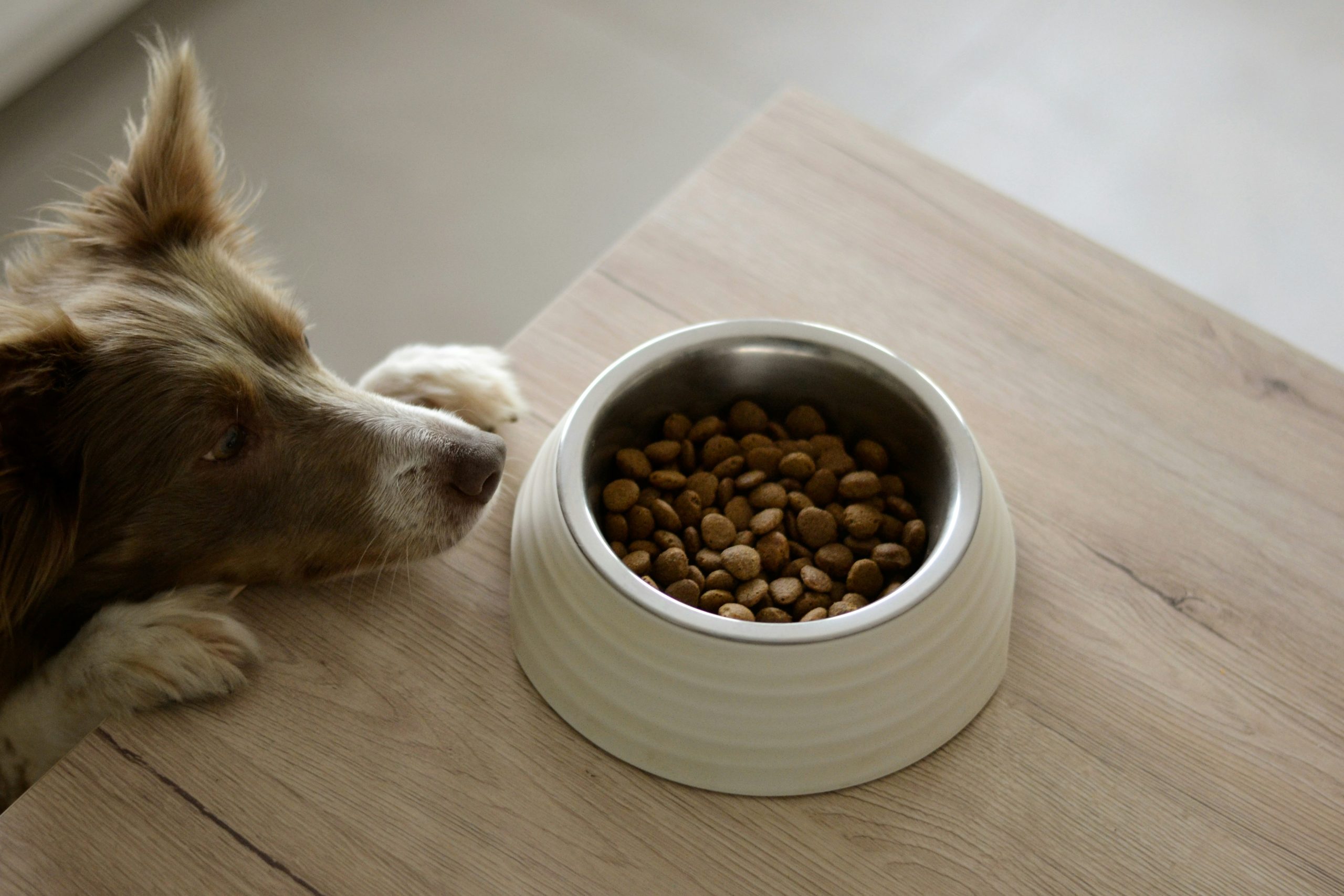
Feeding a puppy and feeding an adult dog are two fundamentally different tasks. The kibble might look the same, the bowl might be the same, but the nutritional requirements — calories, protein, calcium, fat — change dramatically as a dog grows. Get this wrong, and you are not just wasting money. You are potentially affecting bone development.
Until my dog turned one and I was still feeding him puppy food. He ate it fine, but he was visibly getting rounder. At the checkup, the vet asked: “You do know when to switch, right?”
Honestly, I had a rough idea. I just kept putting it off. Then I actually looked into it and realized — the nutritional gap between puppies and adult dogs is a lot bigger than I thought.
A Puppy Is Not a Small Adult Dog
That is the most important thing I learned.
Puppies grow fast. Their nutritional needs are way higher than adult dogs’. Puppy food has more protein, more fat, more calcium and phosphorus — all to support bone, muscle, and brain development. Small breed dogs mature faster, usually around 7 to 8 months. Large breed dogs take longer — sometimes up to 2 years.
My dog was a medium breed. The vet said he should switch around one year old. I waited two extra months, and he got noticeably rounder.
How often to feed puppies:
Puppies have small stomachs and fast digestion. They need small meals more often. Most puppies do best with 3 to 4 meals a day, gradually spacing them out. By 4 to 5 months, you can drop to 2 meals a day.
If you have a large breed puppy, hold off longer on switching. Large breeds might stay on puppy food until 15 to 18 months, and giant breeds sometimes until 24 months.
When to Switch to Adult Food
Here is the practical rule: look at the dog’s size, not the age chart.
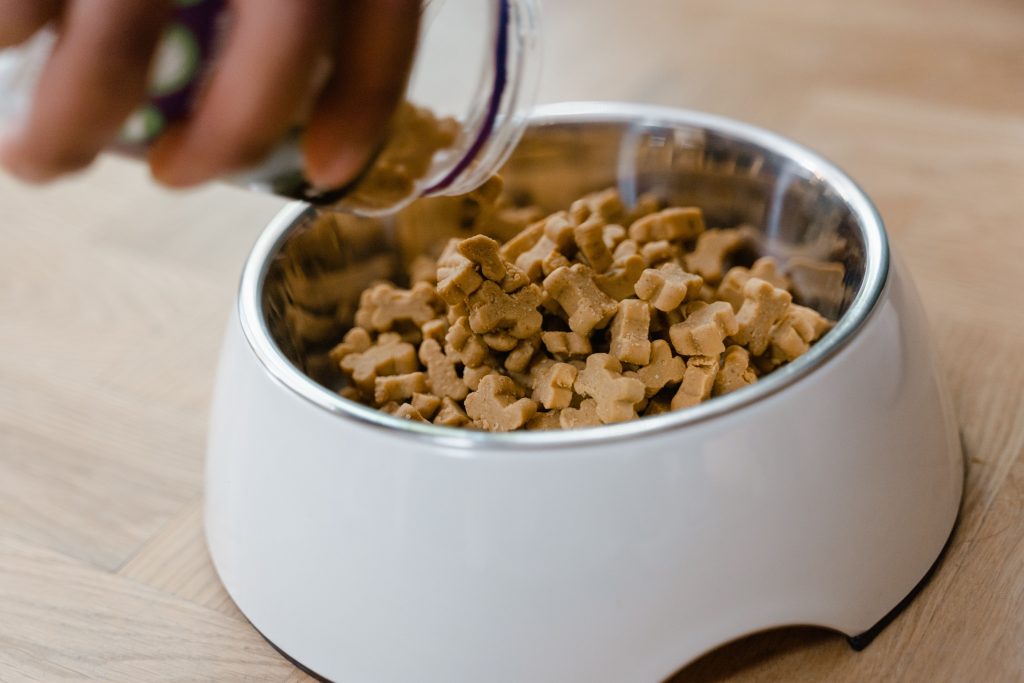
For small breed dogs — adult weight around 10 pounds or so — you can switch at 8 to 10 months. Medium breeds, roughly 11 to 25 kilograms, switch around 12 months. Large and giant breeds need more time — 15 months for large breeds, 18 to 24 months for giant breeds.
Vets usually recommend starting the transition when your puppy reaches 80 to 90 percent of their expected adult weight. Take at least 7 to 10 days to transition gradually. Sudden changes upset their stomach.
Adult Dog Feeding — From “Growing” to “Maintaining”
For adult dogs, the goal shifts from “supporting growth” to “maintaining health.” Adult food has fewer calories, less fat, and slightly less protein than puppy food. That fits their slower metabolism and lower activity levels.
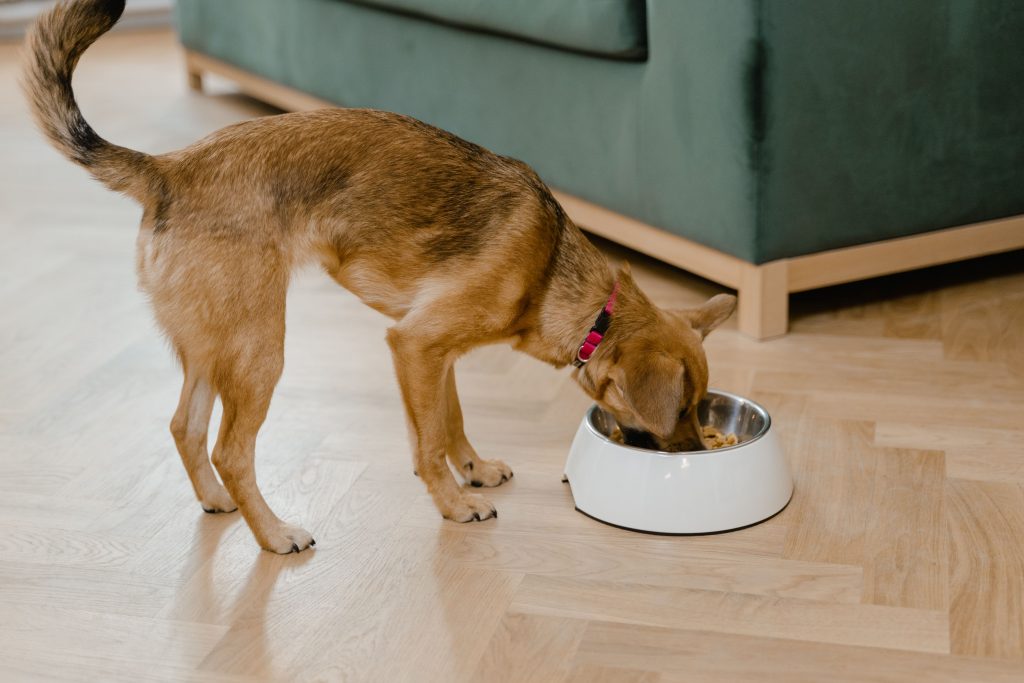
Adult feeding frequency: Most adult dogs do fine with two meals a day. Keep them at the same times. This helps prevent picky eating and keeps weight in check.
How much to give: I learned to go by body condition, not just measuring cups. You should be able to feel their ribs without seeing them stick out. Looking from above, you should see a clear waistline. Vets call it body condition scoring — much more reliable than the number on the scale.
A Common Mistake — Adults Eating Puppy Food
In multi-dog households — including mine, once — people sometimes just feed everyone the same puppy food to save trouble. Puppy food for all.
But long term, adult dogs on puppy food can gain weight and get imbalanced nutrition. The calcium-phosphorus ratio and calorie density are higher than what an adult dog needs. If you reduce the portion to control calories, they might not get enough of certain nutrients.
The only exception is for pregnant or nursing mothers, or adult dogs that are severely underweight. In those cases, vets might recommend temporarily switching to puppy food. Otherwise, keep them separate.
Final Thoughts
The difference between puppy and adult feeding comes down to one thing: puppies build their bodies. Adults keep them running.
Puppies need high energy, rich nutrition, and more meals — they are building bone and muscle. Adults need controlled calories, balanced nutrition, and steady meals twice a day — they are maintaining a stable adult frame.
Switch too early or too late, and the dog pays the price. Let their body size guide the timing. If you are not sure when to switch, ask your vet at the next checkup. It takes three seconds and saves a lot of guessing later.