
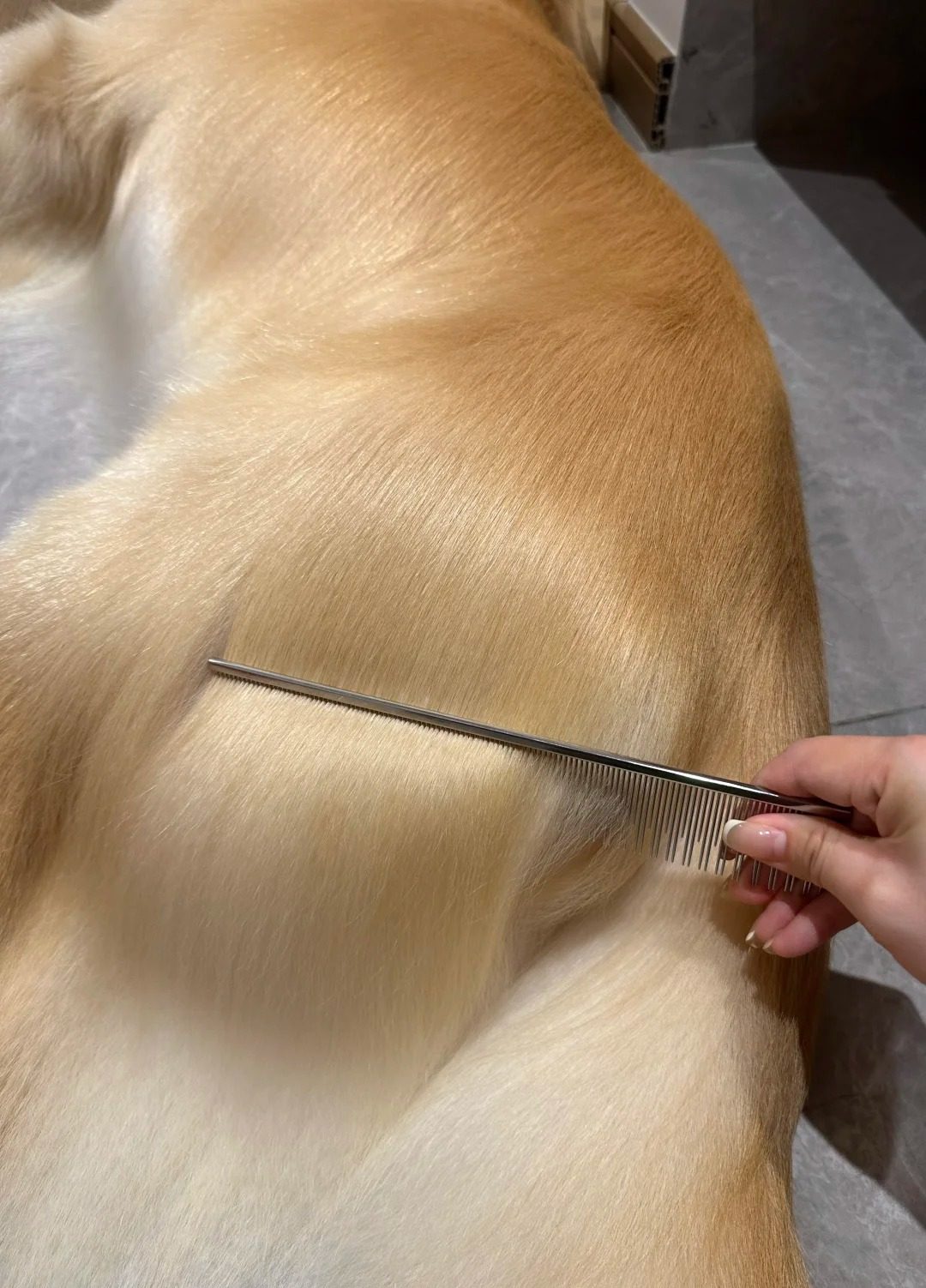
A brush full of hair can look alarming, but the amount in the brush is only one clue. I start by looking at the pattern: Is the coat still even? Is the skin calm? Is the dog scratching or licking more than usual? That short check is more useful than trying to judge shedding by the size of the fur pile.
Normal coat renewal varies with coat type, season, indoor heating, age and the individual dog. The goal of home care is therefore not to stop every loose hair. It is to remove loose coat comfortably, keep the skin visible, and notice changes that grooming cannot solve.
First decide whether this is shedding or hair loss
When I check a shedding dog, I part the coat in several places under good light: behind the ears, along the shoulders, over the back, at the base of the tail and on the belly. Loose hair with an otherwise even coat and comfortable skin can fit ordinary shedding. A bare or thinning patch is different, especially when the dog keeps returning to it.
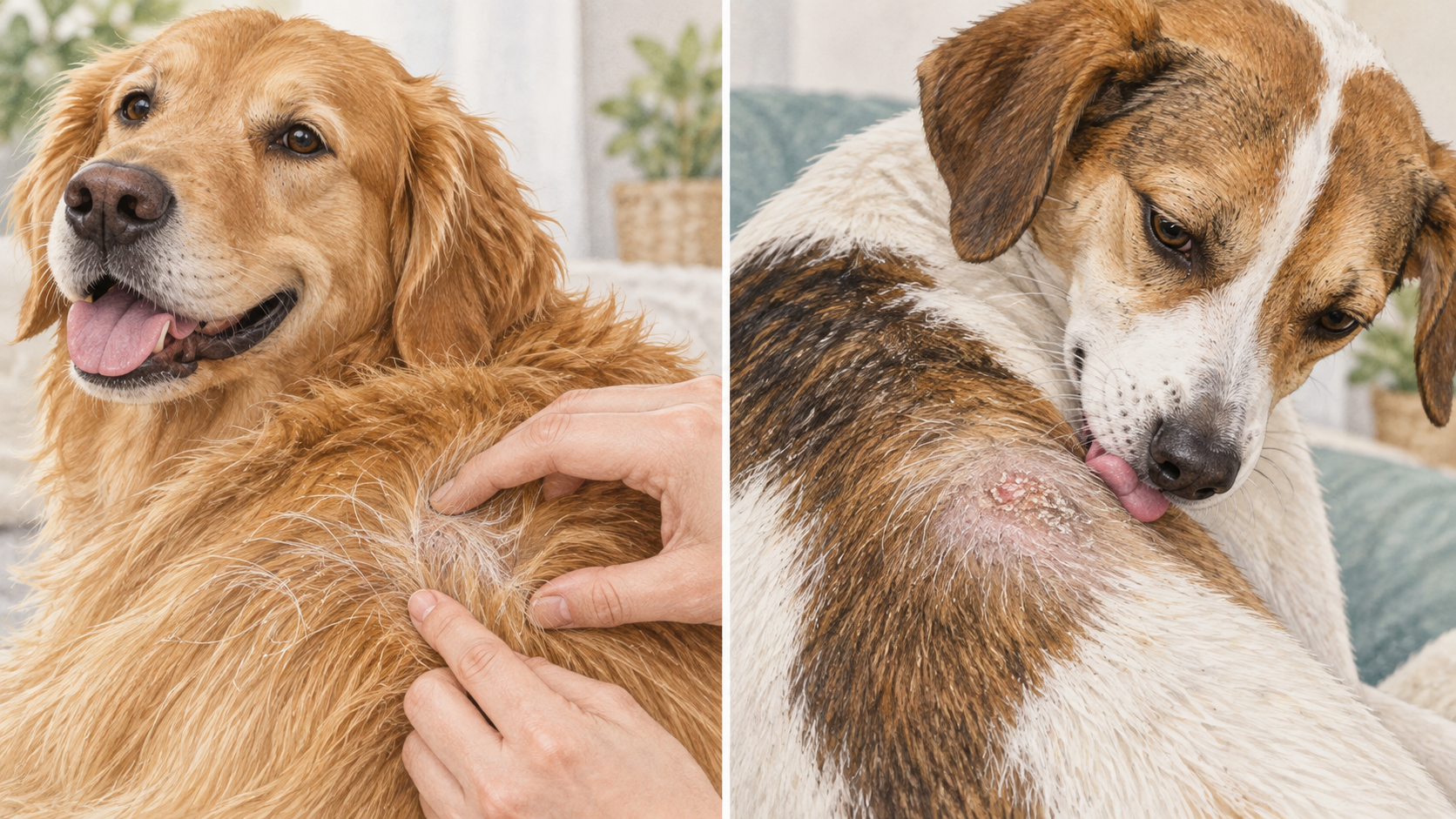
Arrange a veterinary examination when you find bald patches, persistent itching or licking, redness, crusts, scaling, odor, discharge, pain, or a sudden change from the dog’s usual coat. Changes in thirst, appetite, weight or energy make that call more important. Parasites, infection, allergy, hormonal disease, nutrition problems and self-trauma can all cause hair loss, and they cannot be separated reliably by appearance alone.
A phone photo taken in the same light every few days can show whether a patch is spreading. Note when the change began and any recent food, medication, parasite-control or household-product changes. Our five-minute home health check for dogs gives a broader head-to-tail observation routine that can help organize those notes before an appointment.
Choose the tool by the coat in front of you
I do not set one brushing timetable for every dog. I choose a tool, make a few gentle passes, and check what happens. A rubber curry or grooming mitt often collects loose hair from a short, smooth coat. A slicker brush can separate longer coat, followed by a metal comb to find small tangles. Some dense double coats benefit from a carefully used undercoat rake. Curly, corded and hand-stripped coats need different handling, so a breed-experienced groomer is the safer guide when the coat type is unfamiliar.
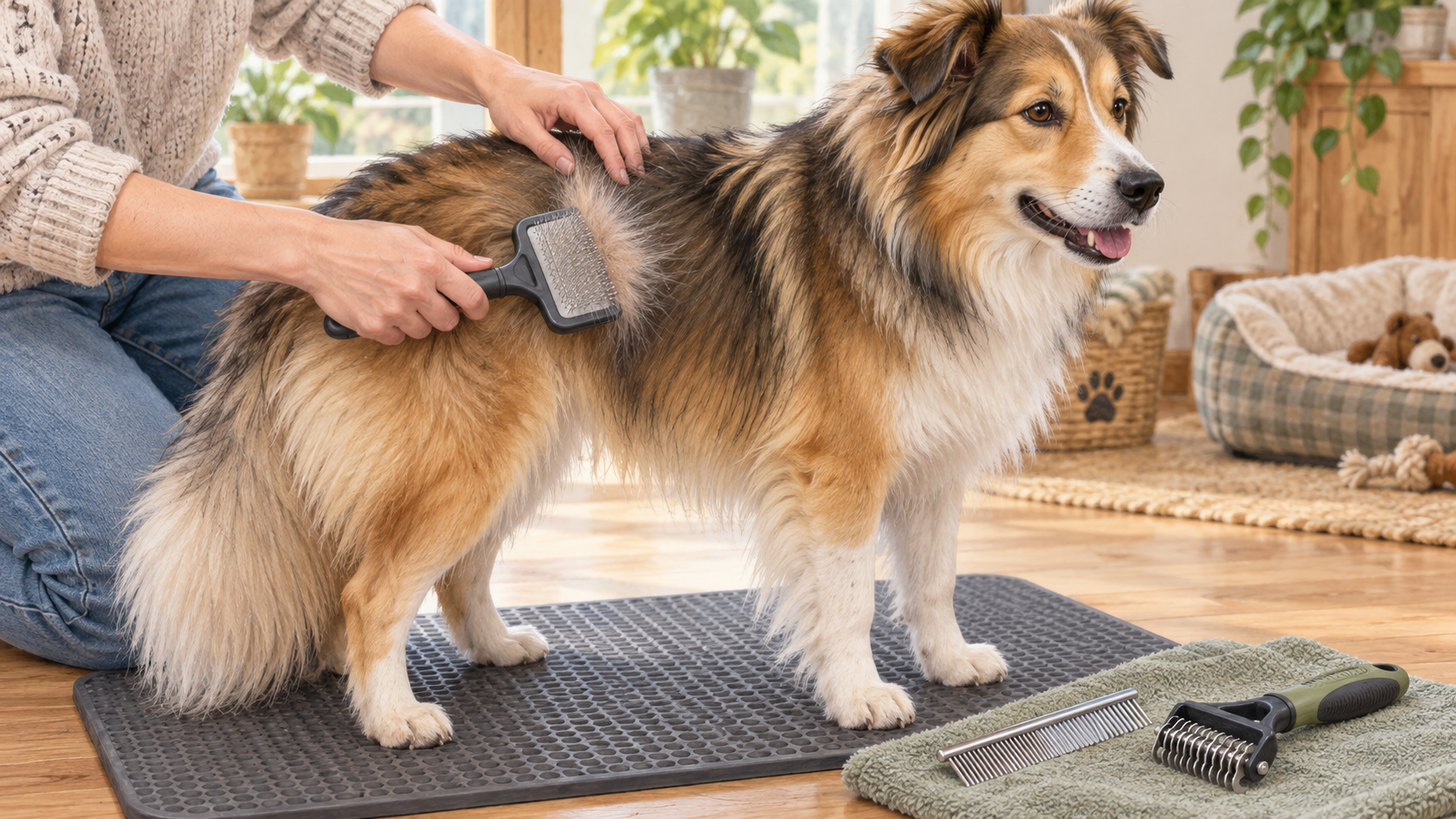
Work in small sections instead of dragging a tool repeatedly across the back. Start where the dog accepts touch, brush in the direction of growth, and pause to look at the skin. If the brush catches, hold the hair near the skin so the pull is not transferred to the dog. Stop if the skin becomes pink, the dog flinches, turns away or tries to escape. More pressure does not make grooming more effective.
The coat tells you when to repeat the session. Brush often enough that the comb can move through without snagging and each session stays short. During a seasonal coat change that may mean more frequent sessions; at other times it may mean much less. A tightly matted coat, mats close to the skin or a dog that cannot tolerate handling belongs with a professional groomer or veterinary team. Do not slide scissors beneath a mat because folded skin is easy to cut.
Use bathing to support the coat, not as a fixed schedule
Before a routine bath, remove loose hair and work out easy tangles while the coat is dry. Use a shampoo made for dogs, protect the eyes and ears, rinse until the water runs clear, and dry the coat thoroughly. Product left against the skin can cause irritation, while damp dense undercoat can hide tangles and skin changes.
How often to bathe depends on the dog’s coat, activity and health. A dog that has rolled in dirt needs a different plan from a clean indoor dog. A dog with skin disease may need a prescribed shampoo and a schedule set by the veterinarian; substituting ordinary shampoo or bathing more often on your own can interfere with treatment. Persistent odor soon after bathing is also a reason to look for a medical cause rather than add another bath.
Treat food and supplements as health decisions
For routine feeding, I look for a complete and balanced food appropriate for the dog’s life stage and keep track of how the dog maintains weight, stool quality, skin and coat on it. The first five ingredients do not provide a reliable score for diet quality, and the presence of grain does not by itself explain shedding. A sudden food change can also create digestive trouble without addressing the real cause of hair loss.
Omega-3 products are sometimes used as part of veterinary care for skin conditions, but the product, dose and reason matter. Supplements add calories, can cause adverse effects or interact with treatment, and labels are not a substitute for a veterinarian’s recommendation. Bring the exact product or a photo of its label to the appointment before adding it.
Make the routine measurable
A simple record prevents vague impressions from turning into guesswork. Once or twice a week, note:
- whether loose hair is general or concentrated in one area;
- any scratching, licking, rubbing or change in sleep;
- redness, flakes, bumps, crusts, odor or tenderness;
- the brush used and whether it snagged;
- recent baths, products, food, medication and parasite control.
For the house, washable throws and a vacuum suited to the flooring usually do more than chasing every floating hair. Clean vacuum filters as the manufacturer directs and groom in an easy-to-clean area. These steps manage the hair that has already shed; they do not treat skin disease or guarantee relief from human allergies.
If the skin remains comfortable and the coat stays even, adjust the grooming routine by what you observe. If the pattern changes or the dog is uncomfortable, stop trying new brushes, shampoos and foods one after another. A clear record and an examination will be more useful than another home remedy.
Sources used for this guide
- Merck Veterinary Manual: Hair Loss (Alopecia) in Dogs
- Merck Veterinary Manual: Routine Health Care of Dogs
- VCA Animal Hospitals: Grooming and Coat Care for Your Dog
- AAHA: 2021 Nutrition and Weight Management Guidelines
Editorial note: The illustrations on this page were generated for DailyTrail to show the observation and grooming methods described. They are not photographs of the author’s animals. This article provides general care information and does not replace advice from a veterinarian familiar with your dog.