
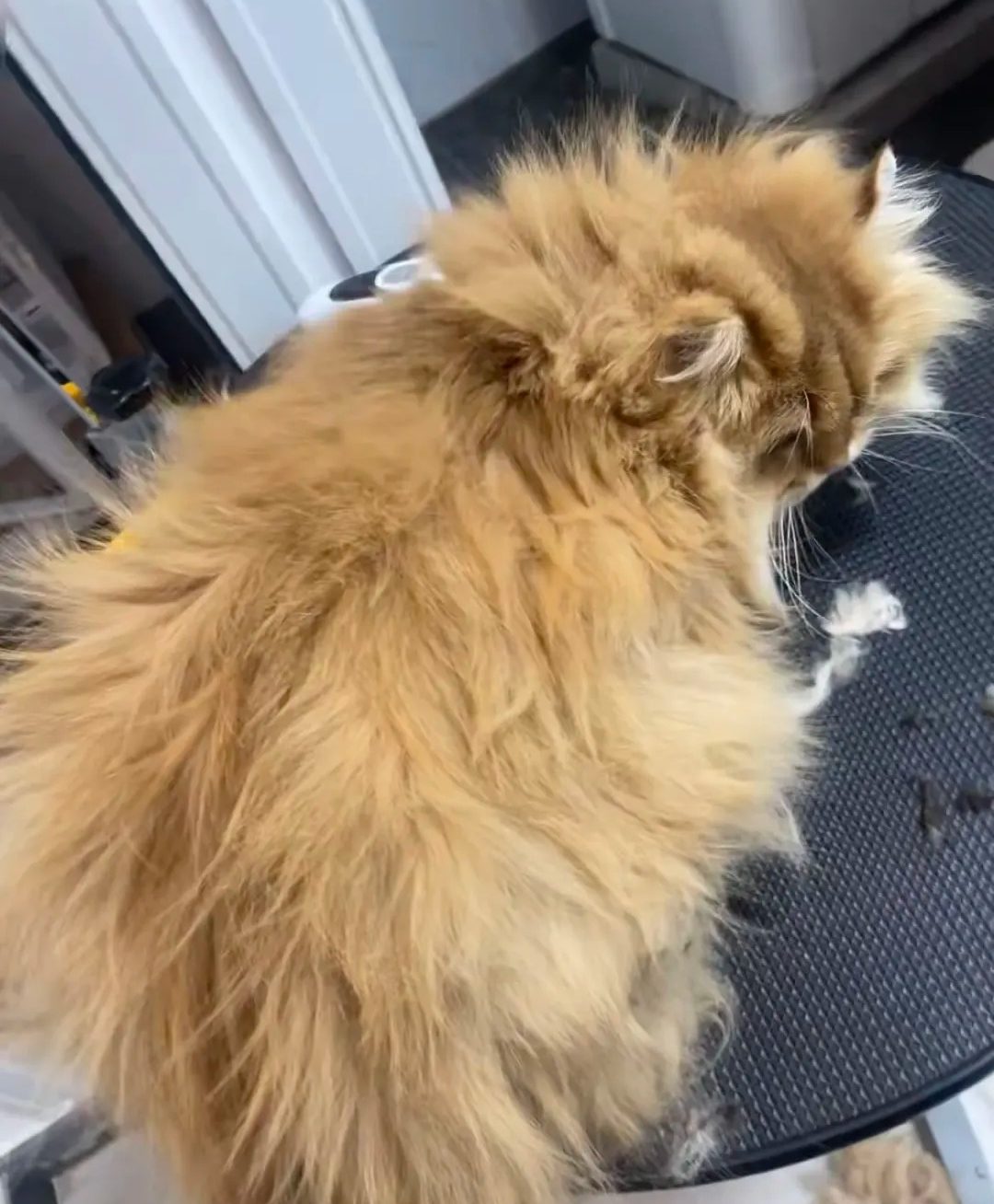
Dandruff describes what is visible on a cat’s coat; it does not identify the cause. A few white flakes can accompany ordinary skin turnover, reduced grooming, parasites, infection, allergy, or another health problem. Before reaching for shampoo, oil, or a supplement, look for the details that separate these possibilities: where the flakes appear, whether the cat is itchy, what the skin looks and smells like, and what changed before the problem began.
Look at the skin, not only the flakes
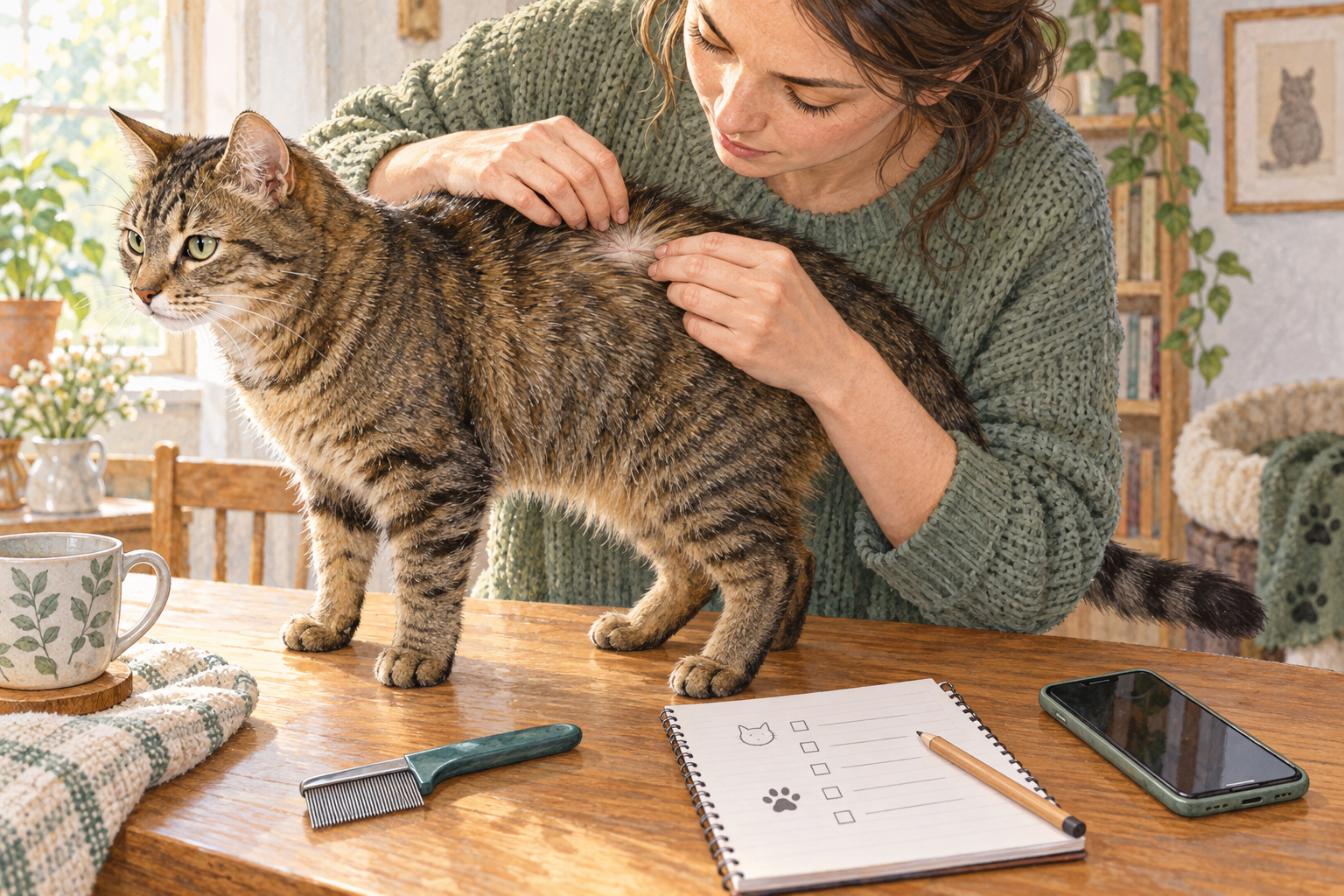
Choose a well-lit room and part the coat behind the ears, along the back, at the tail base, under the front legs and across the belly. Note loose white scale, greasy debris, redness, small crusts, broken hairs, thinning patches or sores. Watch what the cat does between checks. Scratching, chewing and repeated licking show that the skin is uncomfortable even if the cat stays quiet during the examination. If repeated licking has become the main problem, this guide to cat over-grooming explains how to record the pattern and distinguish discomfort from a learned routine.
Take clear photographs once or twice a week from the same distance. Write down when the problem started, any new food or litter, grooming products, parasite prevention and medications. Note whether another pet or person in the home has developed an itchy or circular skin lesion. These details help a veterinarian separate parasites, infection, allergy, self-trauma and less common medical causes.
Dandruff and itching are signs, not a diagnosis
A few flakes with no redness or itching may reflect normal skin turnover or a coat the cat is no longer grooming well. Older cats, overweight cats and cats with painful joints may struggle to reach the lower back. Persistent scaling still deserves attention because reduced grooming can be a clue to pain or illness.
When itching is present, veterinarians commonly consider fleas and other parasites, fungal or bacterial infection, and allergies. Location alone cannot prove the cause. Tail-base debris may raise suspicion for fleas, but cats often groom away the insects. Round hair loss can occur with ringworm, yet ringworm does not always form a neat ring and can spread to people and other animals. A food allergy cannot be diagnosed from a short ingredient swap or an online blood test; a controlled diet trial should be planned with a veterinarian.
What you can do safely while arranging care
Keep the cat on a complete and balanced diet and make fresh water easy to reach. Do not add fish oil, vitamin E or another supplement simply because the coat looks dull. Dose, product quality and the rest of the diet matter, and supplements can cause adverse effects or interfere with treatment. Ask the veterinarian whether a supplement is appropriate for this cat.
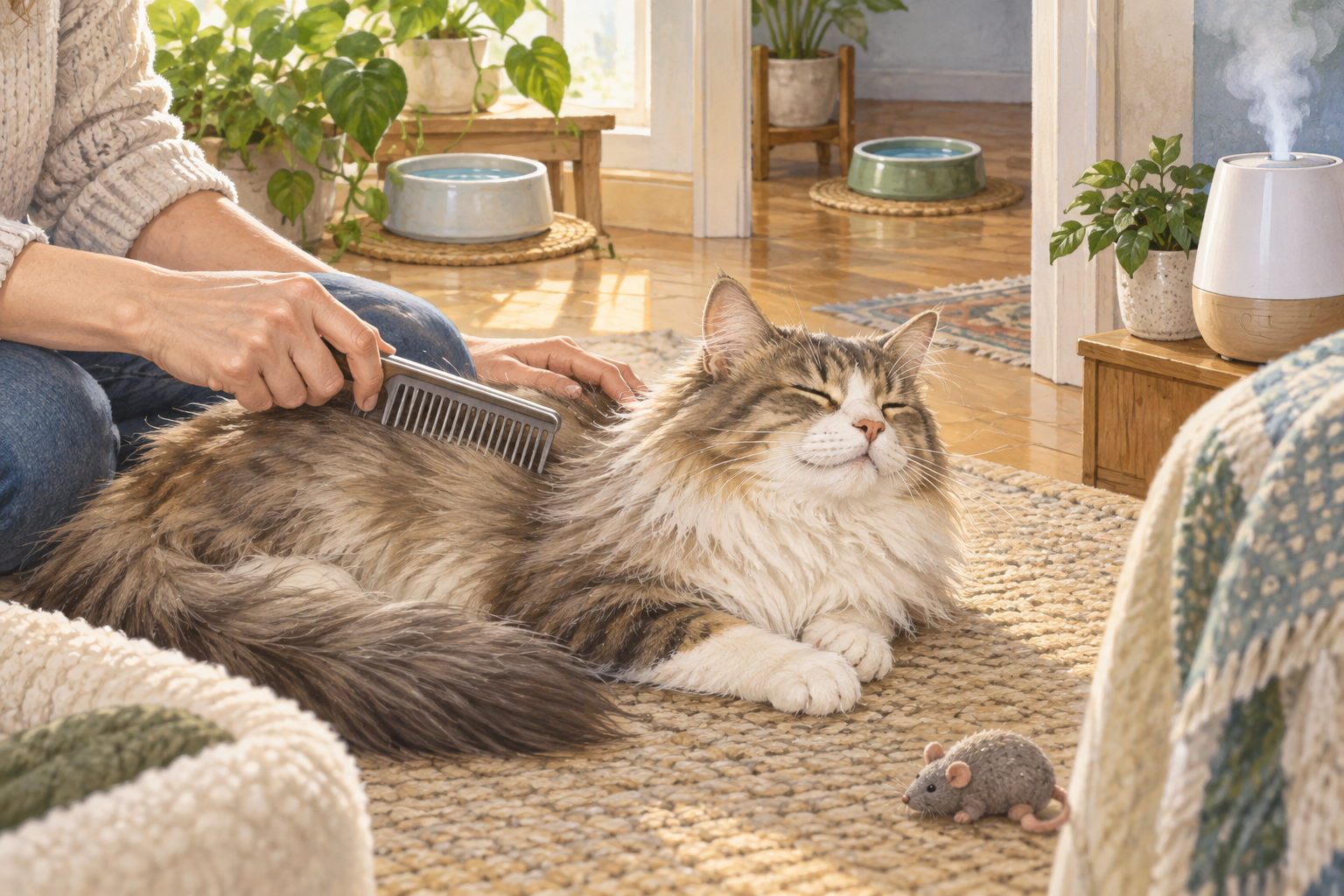
Gentle brushing can remove loose hair and help you see the skin. Long-haired cats benefit from a regular routine that finds tangles early; the steps are covered in this weekly brushing guide for long-haired cats. Use a tool that moves through the coat without scraping, stop at resistance, and do not pull at mats close to the skin. Clippers and scissors can injure a moving cat; tight or extensive mats are safer for a veterinary or experienced grooming professional to handle.
Most cats do not need a bath for dandruff. If you are unsure whether washing is necessary, this guide explains when a cat actually needs a bath and when spot cleaning or brushing is the better choice. If washing is medically indicated, use only the product and frequency recommended for cats. Human shampoo, essential oils and dog flea products are poor experiments. Some dog parasite products contain permethrin, which can cause serious poisoning in cats. Never apply a medication or moisturizer to skin the cat can lick unless a veterinarian has approved it.
Humidity and housekeeping can support comfort
Heated or air-conditioned rooms can feel dry. If indoor air is very dry, a clean humidifier may improve comfort, but it is supportive care rather than a treatment for parasites, infection or allergy. Follow its cleaning instructions and place it where the cat cannot tip it, touch hot parts or chew the cord. Vacuum resting areas and wash bedding regularly, especially when flea control is part of the veterinary plan.
Do not start flea treatment by choosing a product at random. The correct product depends on species, age, weight and health. Treating only one animal may also fail when several pets share the home. A veterinarian can recommend a cat-safe product and explain whether the environment and other pets need treatment.
When to book an examination
Arrange a veterinary visit when scaling persists, spreads or returns, or when the cat scratches, over-grooms or develops hair loss. Seek earlier care for red or painful skin, open sores, discharge, odor, swelling, thick crusts, marked lethargy, poor appetite or a rapid change. Contact the clinic promptly if a person or another animal develops suspicious skin lesions, because some fungal infections are contagious.
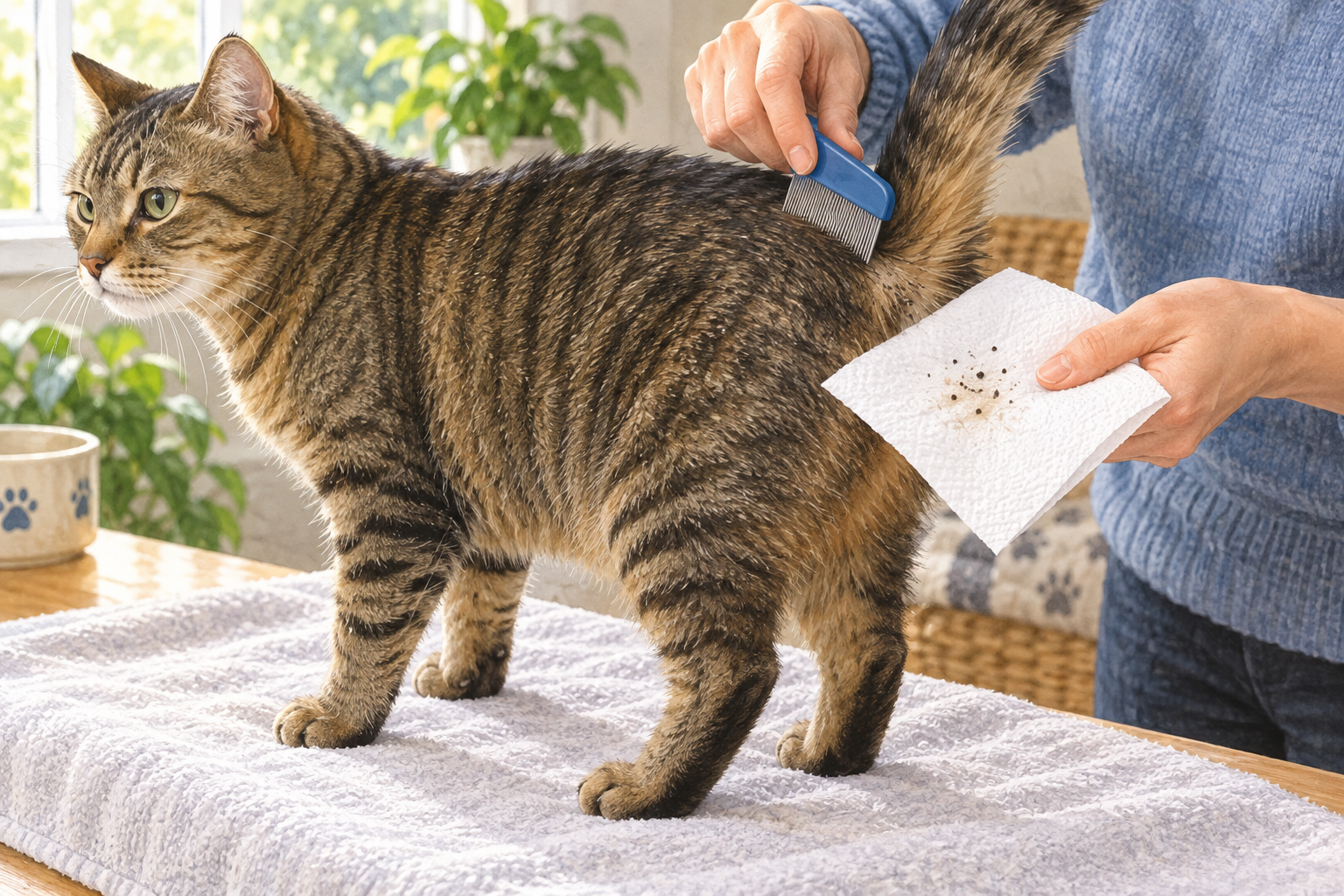
At the visit, the veterinarian may use a flea comb, skin scraping, cytology or fungal testing. These tests answer questions that appearance alone cannot. Bring photographs, product names and a timeline. If treatment is prescribed, record whether the itch, lesions and coat improve; that response can be part of the diagnostic process.
Sources
Merck Veterinary Manual: Itching in Cats; Merck Veterinary Manual: Fleas of Cats; Merck Veterinary Manual: Ringworm in Cats; Cornell University College of Veterinary Medicine: Pet Allergies.
Editorial note: The illustrations on this page were generated for DailyTrail to show the observation and care setups described. They are not photographs of the author’s animals. This article provides general care information and does not replace advice from a veterinarian familiar with your cat.
[…] coat or bald spots. If flakes or itching are part of the change, the observations in this guide to cat dandruff and itchy skin can help you prepare for a veterinary […]