
When I review a hamster setup, I look for evidence of choice rather than a cage full of objects. Can the hamster run without curving its back, disappear into a burrow, carry food to a quiet chamber, and retreat when it has had enough? Those options matter because exercise is only one part of activity. Digging, foraging, nesting and exploring allow a hamster to use its body without being forced into constant motion.
Start by watching the wheel, not measuring it alone
A wheel should stand upright, turn smoothly and have a continuous running surface. Wire, mesh and widely spaced rungs can trap small feet or legs. Merck Veterinary Manual also advises choosing a wheel large enough for the hamster to enter, leave and move freely.
Published size guides are useful starting points: Blue Cross lists about 27–32 cm for Syrian hamsters and species-specific ranges of roughly 20–27 cm for dwarf and Chinese hamsters. The final check happens while the animal runs. I look from the side for a level, comfortably extended back and a natural head position. If the back stays curved upward, the head is lifted to fit, or the hamster repeatedly slips, the wheel is not a good match even if its label claims otherwise.
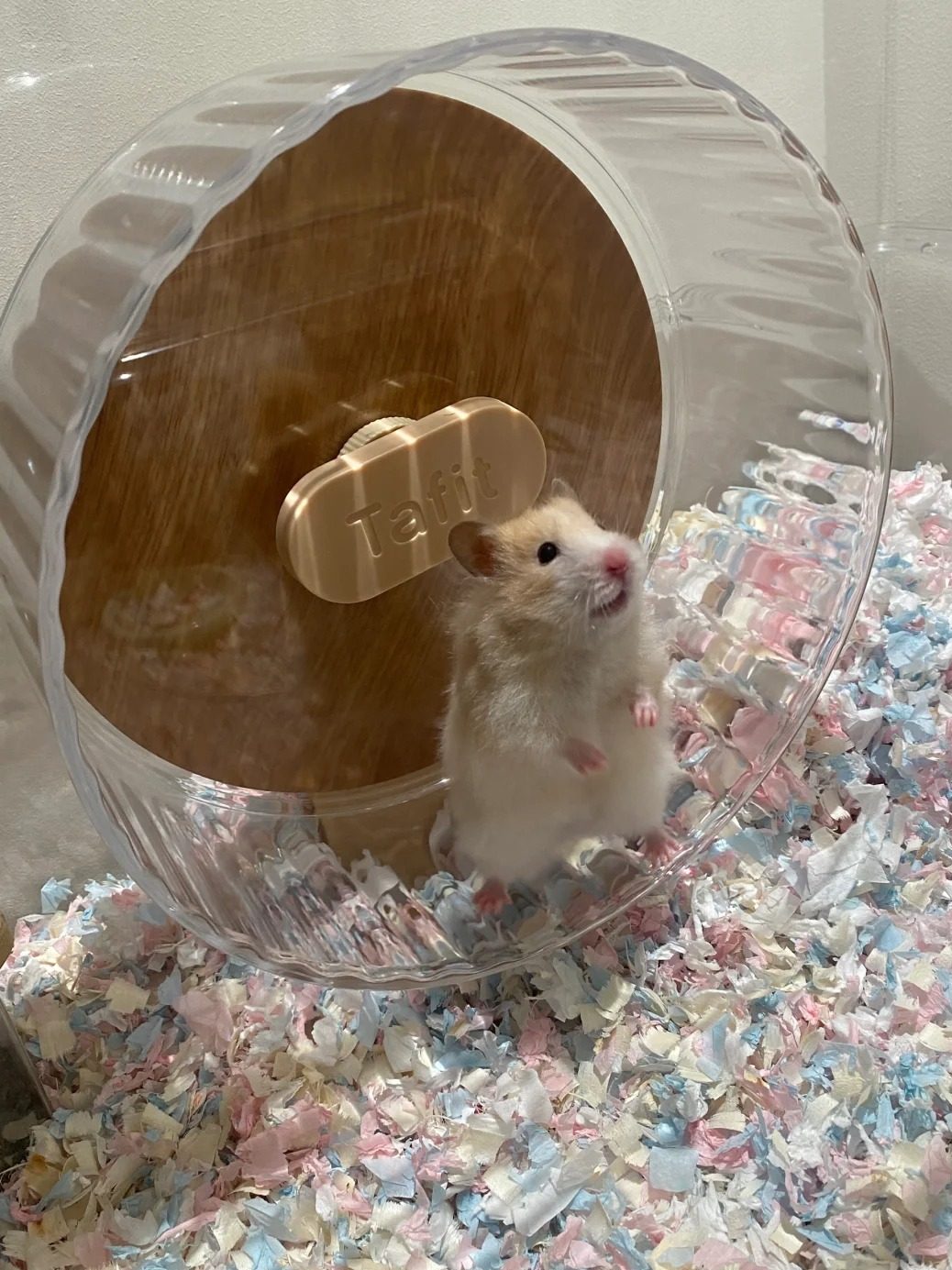
Noise is mainly a household issue, but wobbling is a safety issue. Check the stand or attachment regularly and remove a damaged wheel. Sore feet, limping, swelling or reluctance to bear weight calls for removal of the suspected hazard and prompt veterinary advice.
Build activity into the enclosure
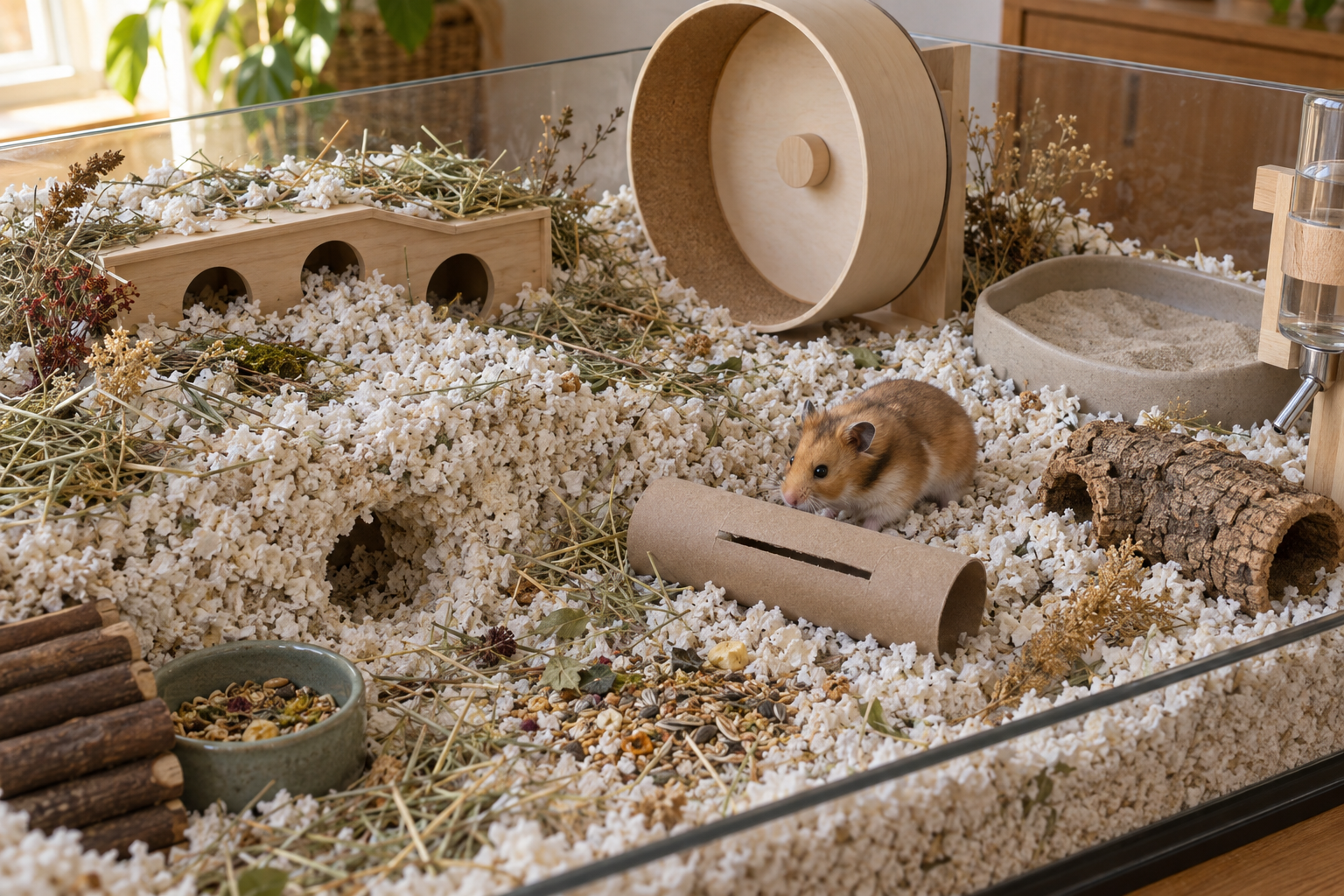
A wheel cannot replace a usable enclosure. Hamsters naturally dig and create chambers, so provide a deep area of dust-extracted bedding that can hold a tunnel. Paper bedding, wood-pulp bedding and hemp are among the options described by Blue Cross. Avoid fluffy nesting wool and other fibrous material that can wind around a limb or cause problems if swallowed.
I arrange the enclosure around routes rather than height. A buried multi-chamber hide, a wide cork tunnel, a sand bath, low cover and an open path to water create several places to investigate without requiring risky climbing. Any tunnel must be wide enough for the hamster to turn or pass through with full cheek pouches. Heavy objects need stable support so a burrow cannot collapse beneath them.
Turn part of the daily ration into a search
Scatter feeding lets the hamster use smell, movement and digging to find food. I start with a small portion of the normal dry ration scattered on the surface, then hide a few pieces just under clean bedding once the hamster is finding them easily. Food used for enrichment still counts toward the daily amount; adding treats on top of the normal ration can quietly increase calories.
Plain cardboard boxes and tubes can become hides, tunnels or simple foraging puzzles. Cut a lengthwise slit in a narrow cardboard tube so it can open if the hamster becomes wedged. Remove items that are wet, heavily soiled, coated, taped or breaking into sharp pieces. Change one or two items at a time while leaving the nest and familiar scent areas as undisturbed as hygiene allows.
Offer a playpen only when the hamster is awake
A secure playpen can provide extra exploration, but it is optional. I would begin with a small area containing a hide, familiar bedding, water and low tunnels. Place it away from stairs, cables, gaps, houseplants and other pets. Stay beside the pen throughout the session.
Let the hamster enter from a familiar carrier or container instead of chasing or waking it. There is no universal number of minutes that every hamster must spend outside. Returning repeatedly to the transport container, frantic wall climbing, freezing, repeated escape attempts or refusing familiar food can mean the session is too exposed or stressful. End it calmly and adjust the setup next time.
Do not use an exercise ball
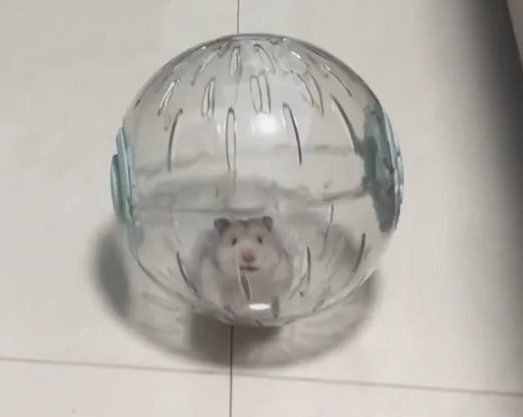
Transparent exercise balls are widely sold, but both RSPCA and Blue Cross advise against them. Inside a ball, a hamster cannot choose a hiding place or reach water, and the shell limits how it investigates with its whiskers, smell and touch. Ventilation holes can catch feet, while collisions and uncontrolled rolling add injury and stress risks. Supervision does not solve those design problems; a secure playpen gives the animal more control.
Respect the hamster’s active period
Hamsters are usually most active from evening through the night, though individuals do not follow an identical clock. Keep daylight and household lighting reasonably predictable and avoid waking a sleeping hamster for handling or cleaning. Schedule interaction after it emerges on its own.
I check activity by looking at several nights rather than one quiet evening. A moved food scatter, disturbed sand, new burrow opening or changed nesting material can show that the hamster was busy while the household slept. A sudden, sustained reduction in wheel use or exploration matters more when it comes with poor appetite, weight change, hunched posture, breathing difficulty, diarrhea, discharge, limping or an untidy coat. Those signs need veterinary assessment rather than another toy.
Review the setup as the hamster changes
Young, older, injured and recovering hamsters may use the same enclosure differently. Check whether the wheel still turns easily, routes remain open and water can be reached without climbing. Lower obstacles and simplify routes if balance or strength declines, but preserve hiding, burrowing and foraging choices wherever possible.
Bar chewing and repetitive pacing can be signs that the environment is not meeting the hamster’s needs, but they are not a diagnosis of boredom. Review space, bedding depth, cover, disturbance, wheel fit and opportunities to forage. If the behavior begins suddenly, causes injury or continues after the environment is improved, discuss it with a veterinarian familiar with small mammals.
Sources
Merck Veterinary Manual: Providing a Home for a Hamster; Blue Cross: Hamster Care; RSPCA: Understanding Hamster Behaviour; PDSA: Hamsters as Pets.
Editorial note: The enclosure illustration on this page was generated for DailyTrail to show the setup described. The wheel and exercise-ball images are reference photographs; the ball is shown as an example of a product welfare organisations advise against. The images do not document animals treated by the author. This article provides general husbandry information and does not replace advice from a veterinarian familiar with hamsters.