
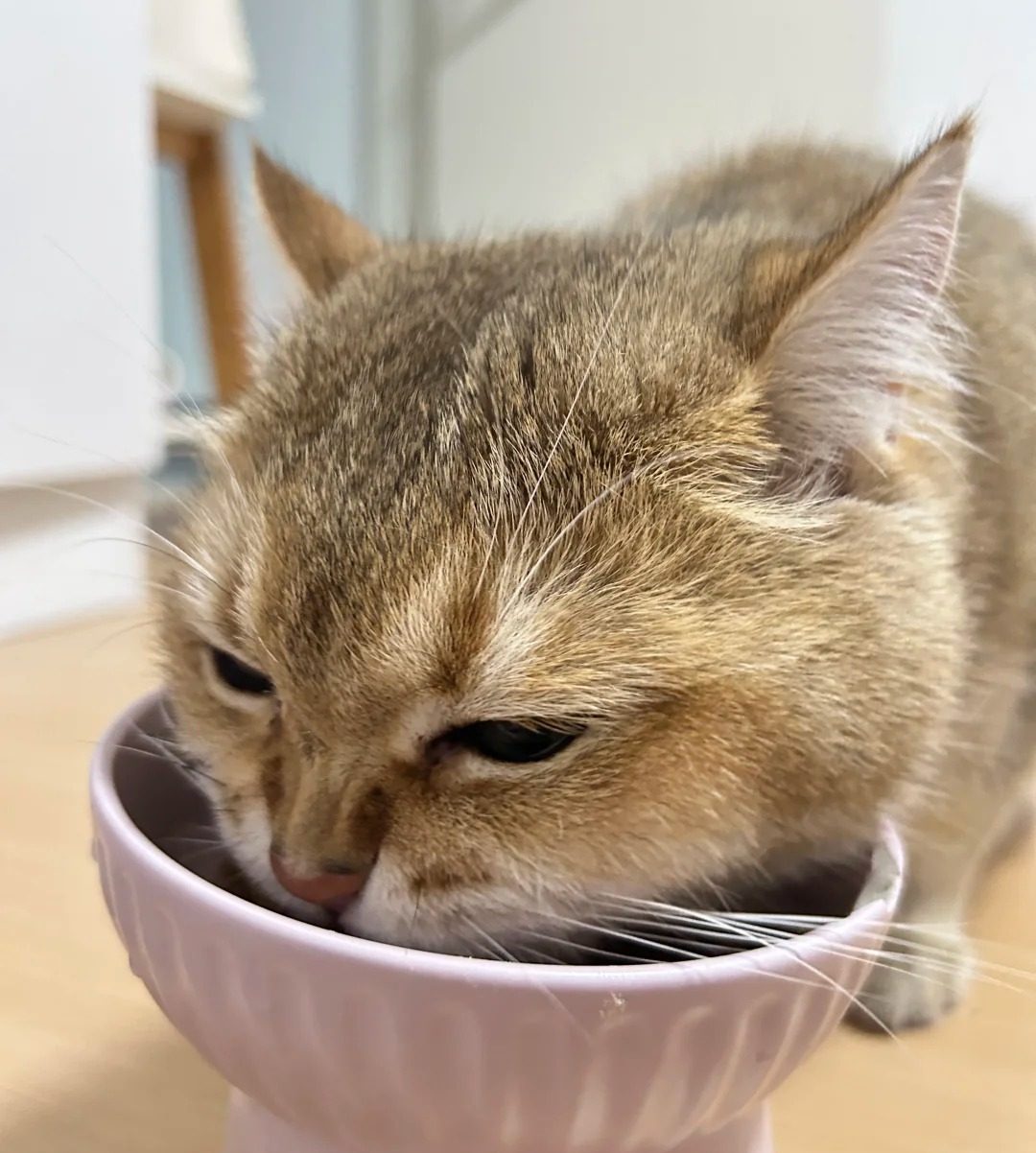
Before changing a cat’s food, turn the package over. The useful information is usually on the back: whether the food is complete and balanced for the cat’s life stage, how many calories it contains, and how much is actually being served. Claims such as “grain-free,” “high-protein,” or “natural” may sound decisive, but they cannot tell you whether the diet suits this cat or whether the portion is appropriate. This guide works through the checks that make that decision more concrete.
Start with the food’s purpose, not its front label
Cats need nutrients supplied in appropriate amounts, including taurine, which is why a bowl of plain meat or dog food is not a substitute for a balanced cat diet. In the United States, look for a nutritional adequacy statement saying the food is complete and balanced for the relevant life stage. A kitten, a healthy adult and a pregnant or nursing cat do not all have the same needs. Products labeled for intermittent or supplemental feeding are not meant to be the main meal. In other countries, look for the equivalent complete-food statement.
I would not reject a food because fewer than three of its first five ingredients are named meats, nor assume “grain-free” means better nutrition. Ingredient order reflects weight before processing; it does not tell you whether the finished food supplies the right nutrients. The WSAVA questions for pet-food makers put more weight on formulation expertise, quality control and nutritional adequacy than on marketing language. If a cat has kidney disease, diabetes, a food allergy or another diagnosis, the veterinarian’s diet plan takes priority over a general shopping rule.
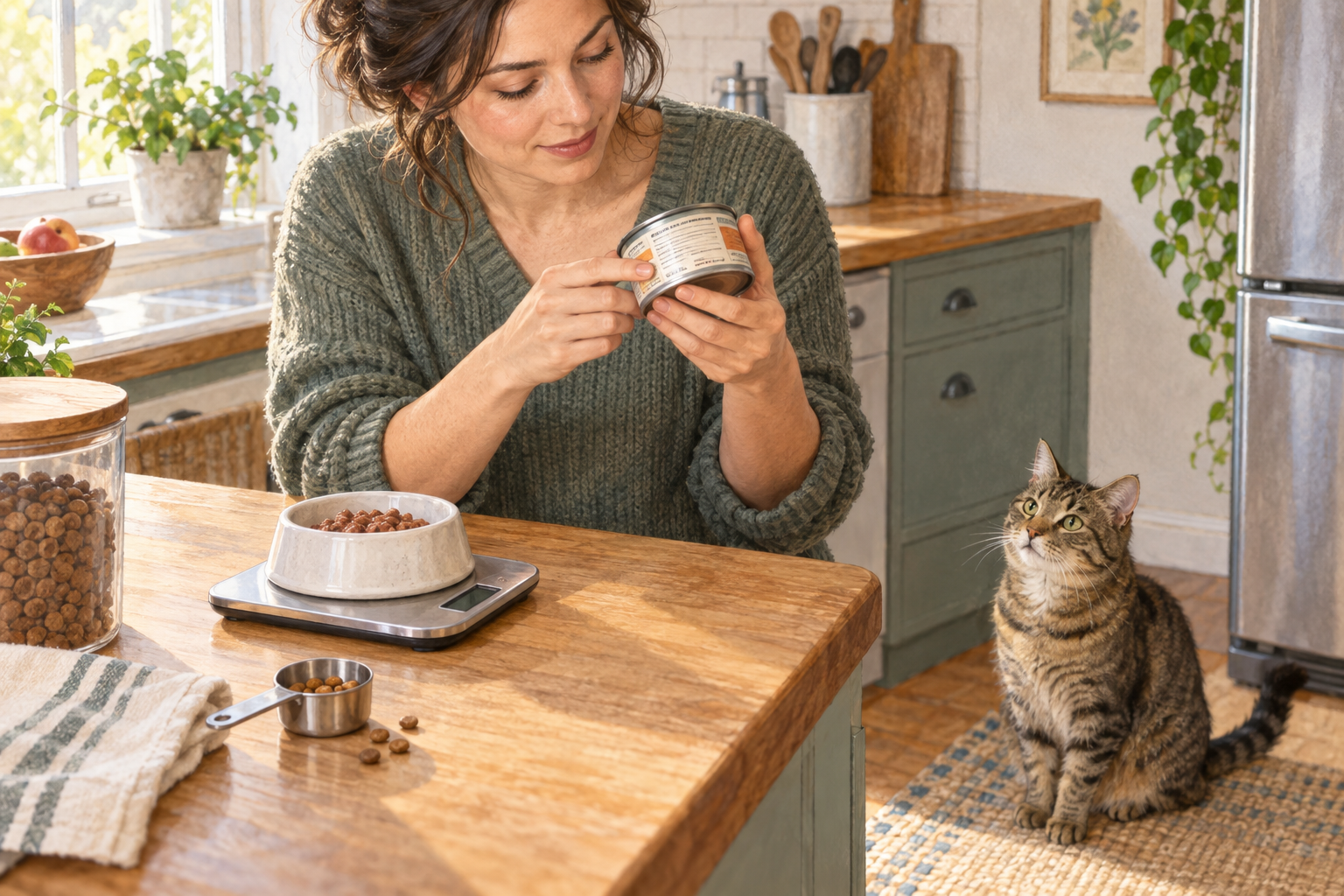
Measure a starting portion, then watch the cat
The feeding guide on a bag or can is a starting estimate, not a prescription. Check calories per can, pouch or measured cup, and include treats in the day’s total. If food is left out all day, it is still possible to measure the daily allowance, but an always-refilled bowl makes intake hard to see. Some cats self-regulate; others overeat. Scheduled meals or a measured daily allotment can make the pattern clearer.
Once a week, weigh the cat under similar conditions and look at body condition: can you feel the ribs under a light covering, and is there a waist when viewed from above? A long-haired cat may need a hands-on check because fur hides the outline. A veterinarian can help set a target for an underweight or overweight cat and adjust calories safely. Do not impose a sudden, aggressive diet on a cat. If the cat is losing weight despite a normal appetite, or gaining weight despite measured meals, book an exam rather than simply changing brands.
Wet food, dry food and water
Wet food contributes water to the diet; dry food is more calorie-dense by volume and usually more convenient to store and portion. Neither format alone proves that a cat is well or poorly hydrated. Cornell’s feline health guidance notes that cats eating wet food may drink less from a bowl because they obtain more water from food. Choose a complete diet the cat will eat, provide fresh water in accessible places, and consider wet food or adding water when the veterinarian recommends more fluid intake. A fountain is an option if the cat likes it, provided it is cleaned as its maker directs.
Watch for changes in drinking and urination instead of assuming a dry-food diet will inevitably cause kidney disease. Drinking much more than usual, straining to urinate, or making repeated trips to the litter box deserves veterinary attention. A cat that cannot pass urine needs emergency care.
Treats and a food change
Treats can be useful for play or handling, but they should stay a small part of daily calories; WSAVA recommends keeping them below about 10%. Count squeeze treats, table scraps and food used for medication too. A cat on a prescription diet may need a different treat plan. A tiny portion of its regular food can sometimes do the same job.
If you need to change foods, offer the new one gradually over several days, adjusting the pace to the cat’s appetite and stool rather than following a rigid seven-day chart. Keep track of how much is actually eaten. If vomiting, diarrhea or refusal of food appears, pause and ask the veterinarian what to do. Do not keep trying to “wait out” a cat that will not eat: Cornell warns that lack of appetite can become serious within about 24 hours, especially for an overweight cat. A medical diet change should follow the treating veterinarian’s instructions.
A practical check at the next meal
Read the nutritional adequacy statement and calories on the food you already use. Measure one normal serving, note any extras, and check the cat’s weight and body condition over time. Those observations are more useful to take to a veterinary visit than a rule about a single ingredient or a fixed protein percentage. For a kitten, senior cat or cat with a health condition, ask for an individual feeding plan.
Sources
WSAVA: Selecting a Pet Food; Cornell Feline Health Center: Feeding Your Cat; Cornell: Hydration; Merck Veterinary Manual: Proper Nutrition for Cats; Cornell: Anorexia.
Editorial note: The illustration on this page was generated for DailyTrail to show the setup described. It is not a photograph of the author’s cat. This article provides general feeding information and does not replace advice from a veterinarian familiar with your cat.