
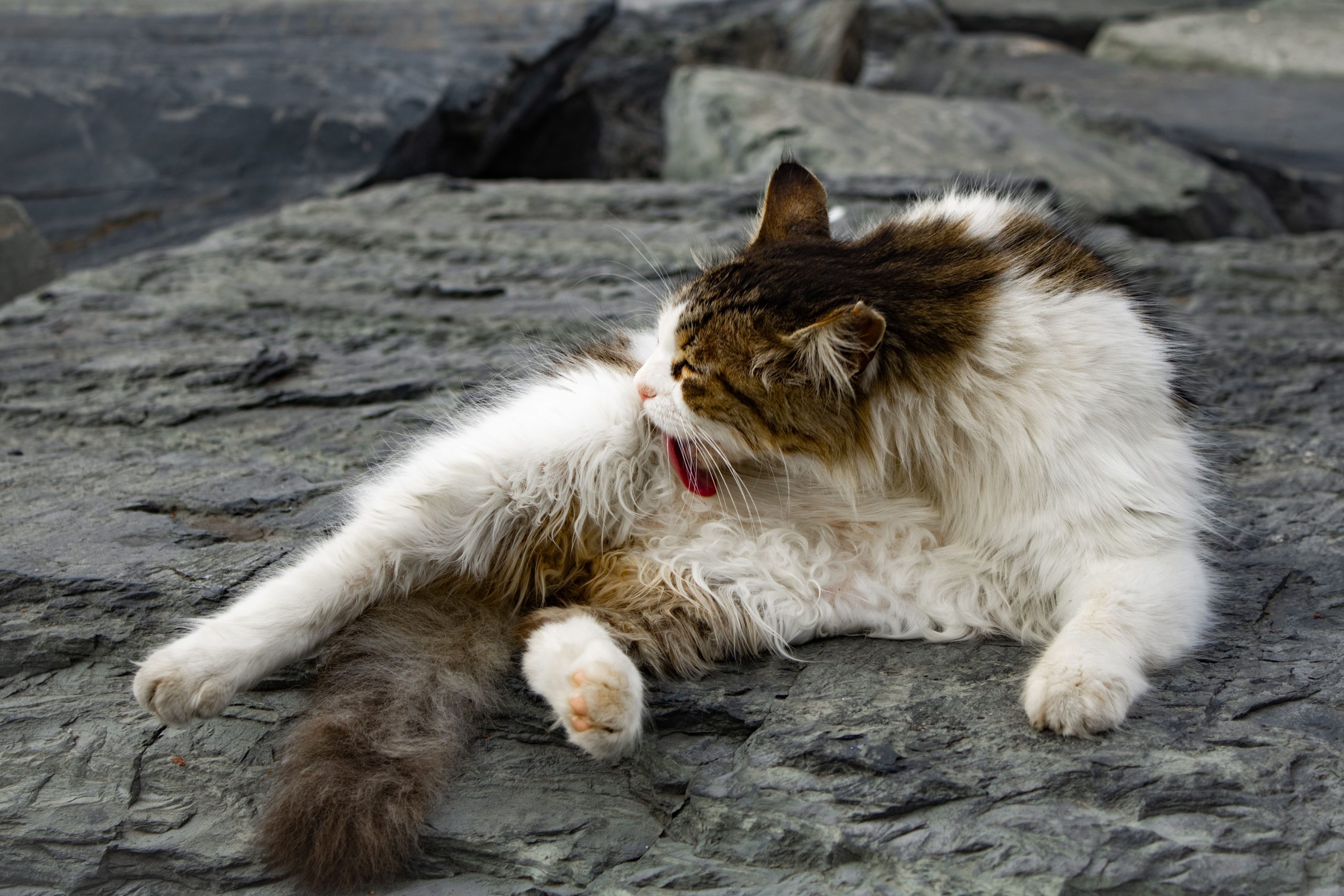
Repeated licking that leaves broken hair, bald patches or sore skin is a sign to investigate, not a habit to suppress. Cats normally spend a large part of the day grooming, so the useful question is whether the coat and skin have changed. I would document the pattern first, then arrange a veterinary examination before assuming anxiety is the cause.
Record what is changing
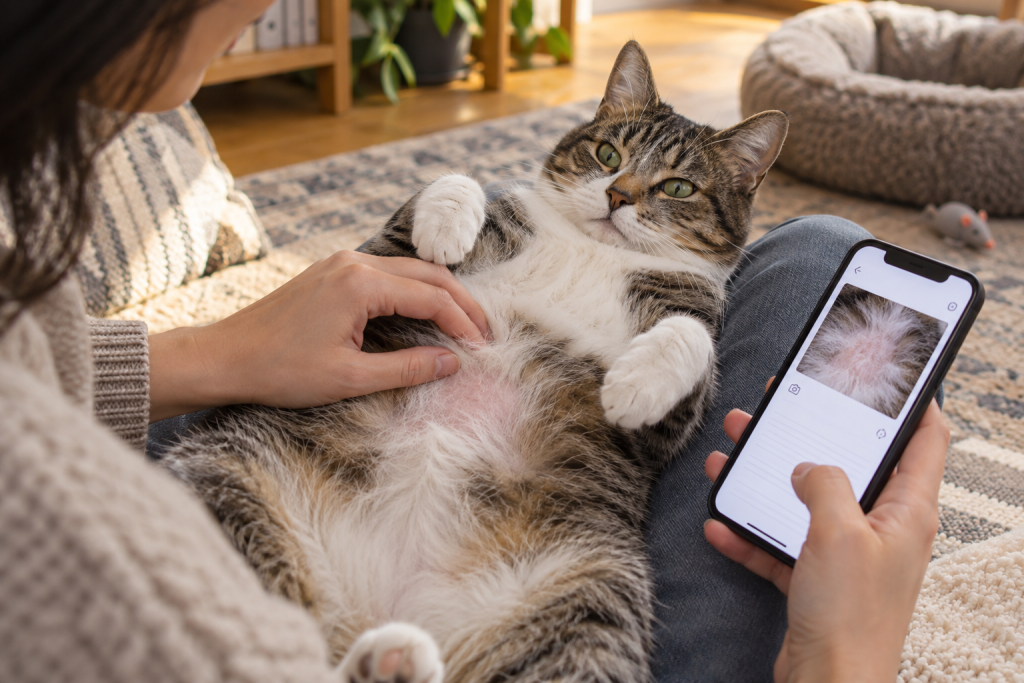
Part the coat in good light and photograph the same area every few days. Note the location, whether hairs look snapped or absent, and whether the skin is red, scaly, moist, crusted or wounded. Also record scratching, head shaking, vomiting, appetite, thirst, litter-box changes and any reaction when the area is touched. A short video of the licking can help the veterinarian see behavior that may not happen in the clinic.
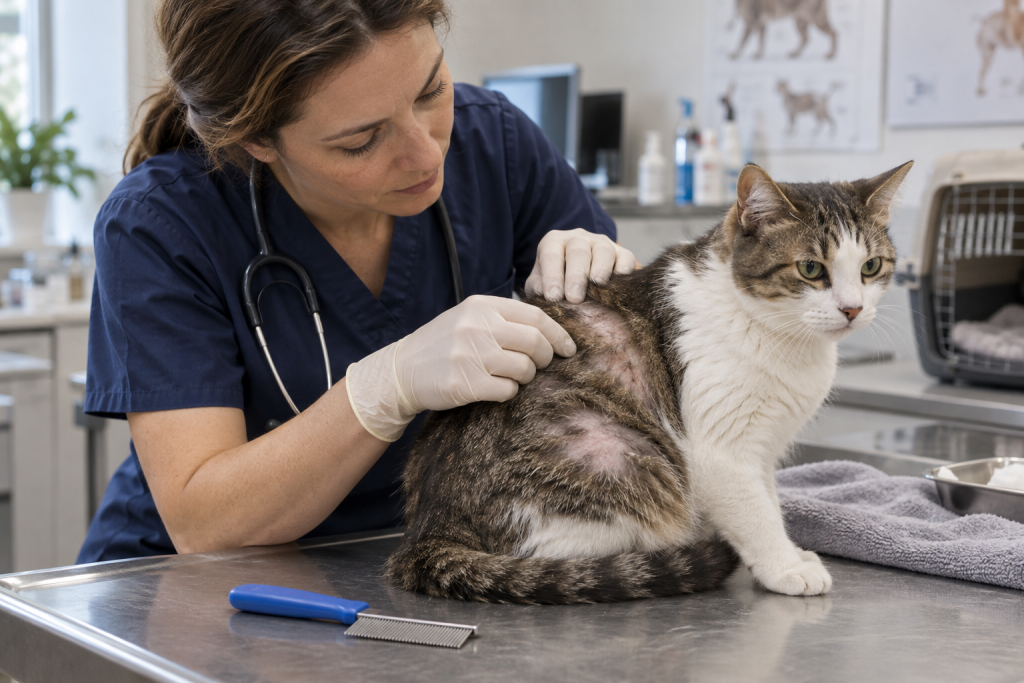
Seek prompt veterinary care for open or bleeding skin, swelling, discharge, a bad smell, marked pain, rapid spread, reduced eating or drinking, lethargy, trouble urinating, or repeated vomiting. Do not apply human creams, essential oils or leftover medication; licking can turn a topical product into an oral exposure.
Medical causes come before a stress diagnosis
Itching from fleas, mites, allergy or infection can produce intense grooming. Live fleas may be hard to find because cats remove them, and a flea-allergic cat can react strongly to a single bite. Pain can also focus licking over one body region. The VCA overview of feline over-grooming lists skin disease, pain and anxiety as important possibilities.
A veterinarian may examine the coat and skin, look for parasites, test for fungal or bacterial disease, review parasite prevention and consider pain or internal illness. Diet trials and allergy investigations need veterinary direction; randomly changing foods can confuse the history and may create an incomplete diet.
Look at stress after physical causes are addressed
Cornell’s article Cats That Lick Too Much explains that stress-related over-grooming is considered after medical problems have been ruled out. A move, construction, visitors, a new animal or conflict between household cats may matter, but the timing should be documented rather than guessed.
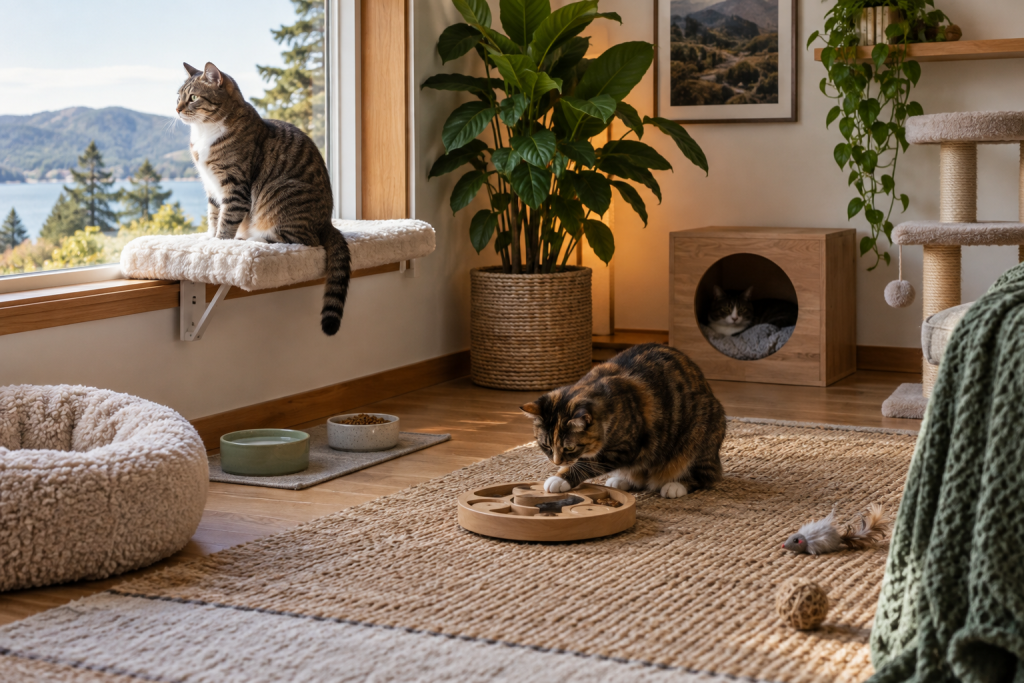
Map each cat’s access to food, water, litter trays, resting places, hiding spaces and high perches. Resources placed together can still be guarded by another cat. Spread them across quiet locations with more than one route in and out. Add predictable play and feeding times, introduce changes gradually and provide a retreat where the cat is not followed by children or other animals.
Avoid turning licking into a confrontation
Do not clap, spray water, shout or repeatedly grab the cat. Those responses can add arousal and do not treat itch or pain. If the veterinarian has addressed medical causes and approves redirection, calmly offer a familiar toy or food puzzle before the usual high-risk period. Clothing or a collar should be used only with veterinary guidance because it can rub the skin, trap moisture or create more distress.
Review the photo log with the veterinarian at the agreed interval. Hair regrowth is slow, so progress is better judged by less licking, healing skin and no expansion of the patch. Worsening lesions or new symptoms require an earlier recheck. Medication for itch, pain or anxiety must be prescribed for the individual cat and used alongside treatment of the underlying cause.
Sources used for this guide
- Cornell Feline Health Center: Cats That Lick Too Much
- VCA Animal Hospitals: Over-Grooming in Cats
- VCA Animal Hospitals: Flea Allergy Dermatitis in Cats
Editorial note: The illustrations on this page were generated for DailyTrail to show the observation, examination and home setups described. They are not photographs of the author’s cat. This article provides general information and does not replace veterinary diagnosis or treatment.
[…] stays quiet during the examination. If repeated licking has become the main problem, this guide to cat over-grooming explains how to record the pattern and distinguish discomfort from a learned […]