
Long-haired cats can look tidy on the surface while loose undercoat is beginning to knot close to the skin. That is why I treat brushing as a short coat check, not a beauty routine. The goal is to find small tangles while they still separate easily and to notice skin changes before thick fur hides them.
There is no useful one-size-fits-all weekly number. Coat density, shedding, age, weight and the cat’s ability to groom all matter. A Persian with a dense undercoat may need attention every day; another long-haired cat may remain comfortable with several thorough sessions each week. Let the comb and the cat’s coat decide the schedule.
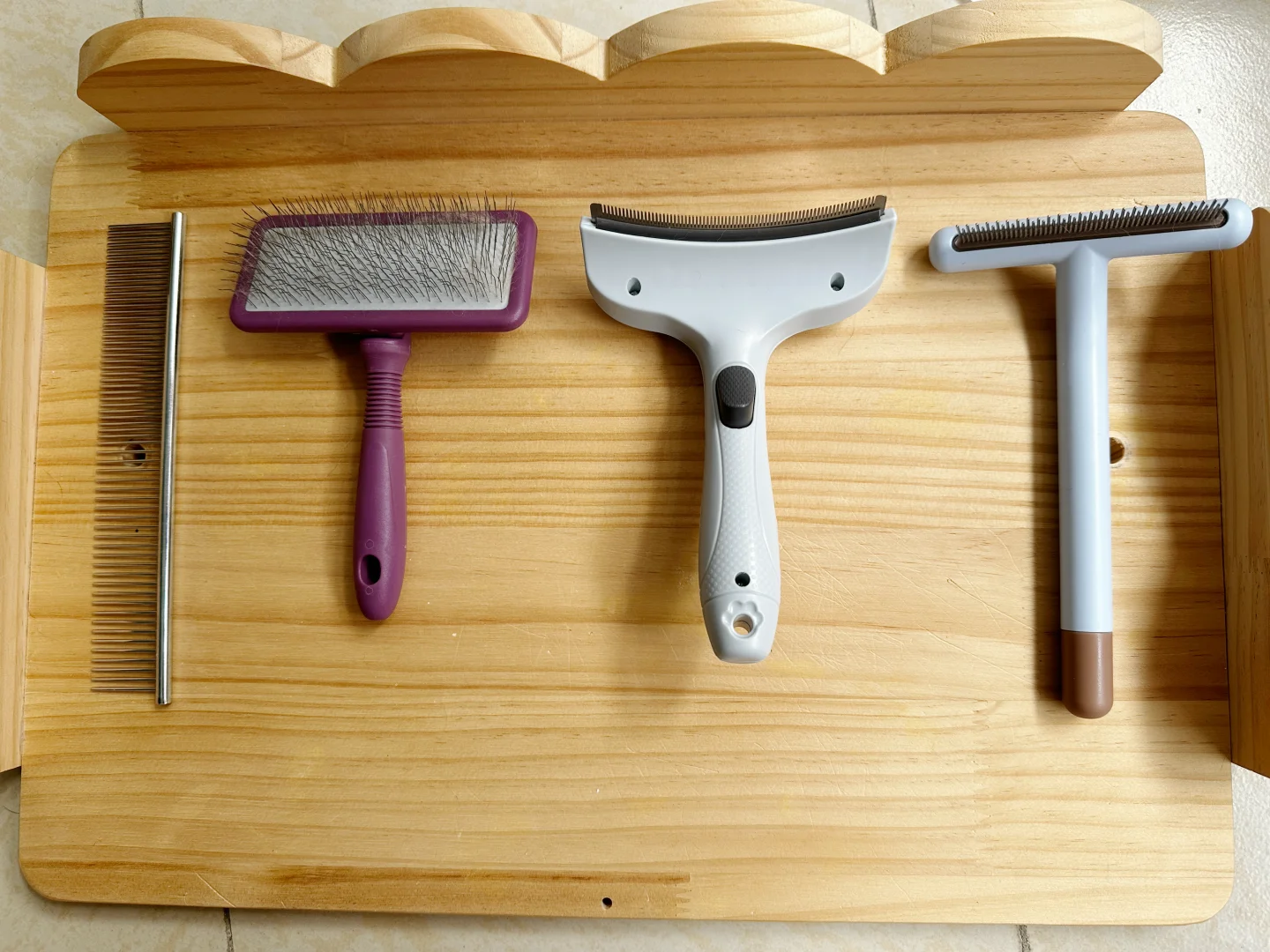
Use the simplest tools that reach the skin safely
For most coats, I would start with a wide-toothed metal comb and keep a softer brush for loose surface hair. A fine comb can help check smaller areas, but owning three tools is not a rule. The useful tool is the one that passes through the coat without scraping skin or pulling hard. Pins should be smooth, with no bent or sharp ends.
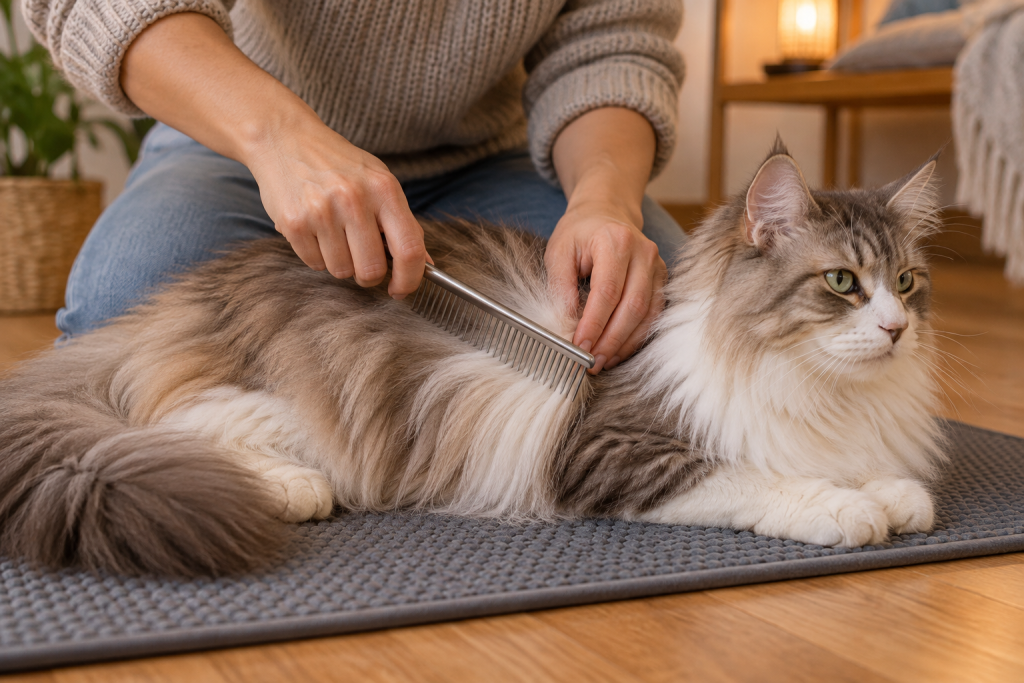
Set the cat on a stable, non-slip surface in a quiet room. Begin where touch is usually accepted, often the shoulders or back. Part a small section, support the hair near the skin with one hand, and comb the ends before moving gradually toward the roots. Short strokes reveal resistance sooner than one long pull. If the comb catches, stop; repeated tugging makes the next session harder.
A ten-minute routine that can be split across the day
I use the same order each time so no area disappears under all that fur. Start along the back and sides, then check the chest and neck. Continue behind each ear, under the collar line, through the armpits, along the belly and inside the hind legs. Finish around the tail base and rear, where moisture or stool can soil the coat.
Those sensitive areas do not need to be completed in one sitting. Two calm three-minute sessions are more useful than holding a struggling cat for fifteen minutes. Watch the tail, ears and skin twitching. A cat that turns repeatedly toward the tool, crouches, swats or tries to leave is asking for a pause. Release the cat before the interaction becomes a fight, then resume later with an easier area and a small reward.
During heavy shedding, run the comb through the coat more often and record where it first begins to catch. Older cats, overweight cats and cats with arthritis or dental pain may groom less effectively. A sudden greasy, clumped or unkempt coat can therefore be health information rather than a grooming failure.
What to do when the comb finds a tangle
A loose tangle that is away from the skin may separate with fingers or the end teeth of a comb. Hold the hair at its base so the skin is not pulled, work from the outer edge and stop if the cat shows pain. Do not wet a mat first; moisture can make tangled hair tighten as it dries.
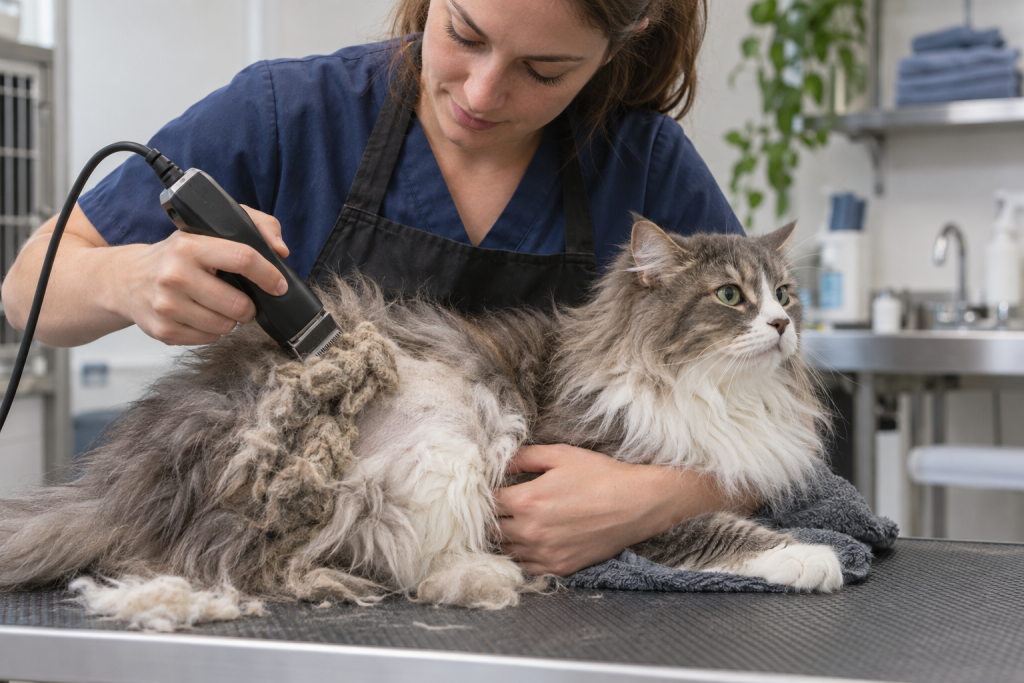
Never slide scissors under a mat. Cat skin is thin, mobile and easily pulled up inside the clump, so it can be cut even when it appears safely out of the way. VCA Animal Hospitals advises using clippers rather than scissors and seeking professional help for severe or extensive matting. Home clippers also become hot and can nick folded skin, so an inexperienced owner should leave close, tight or widespread mats to a veterinarian or experienced cat groomer.
Professional removal is also the safer choice when the cat cannot tolerate handling, the mat restricts movement, the skin looks red or moist, or feces is trapped around the rear. A veterinarian can assess pain, infection and any health problem that contributed to the coat change; sedation may sometimes be the kindest way to remove extensive mats.
Use the coat check to look beyond tangles
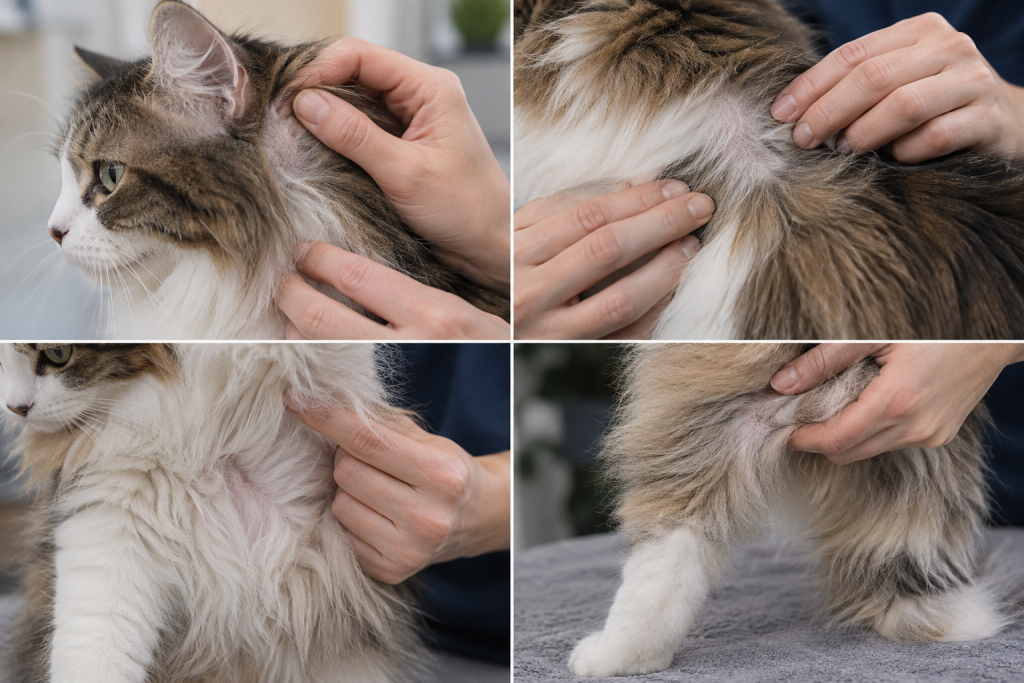
As I part the hair, I look for redness, flakes, scabs, bald patches, fleas or flea dirt, swelling and any spot the cat suddenly protects. The ASPCA’s grooming guidance also recommends examining skin and coat during grooming. Contact a veterinarian when a change persists, spreads, smells unusual or comes with itching, pain, appetite change or reduced activity.
Hairballs are another reason to remove loose coat, but frequent vomiting should not simply be labelled normal. The Cornell Feline Health Center explains that long-haired cats may be at greater risk and recommends regular combing. Repeated unproductive retching, inability to keep food down, lethargy or loss of appetite needs veterinary attention.
A schedule based on what you find
Begin with a brief daily check for one week. If the comb repeatedly catches in the same areas, brush those areas daily. If it passes cleanly and the coat stays free of clumps, longer sessions can be spaced out. Increase frequency during seasonal shedding, after missed sessions or when age and mobility reduce self-grooming. The result to aim for is simple: the comb reaches the skin without force, sensitive areas remain clean, and the cat finishes without fear.
Sources used for this guide
- VCA Animal Hospitals: Grooming and Coat Care for Your Cat
- ASPCA: Cat Grooming Tips
- Cornell Feline Health Center: The Danger of Hairballs
Editorial note: The illustrations on this page were generated for DailyTrail to show the grooming steps described. They are not photographs of the author’s cat. This article provides general care information and does not replace advice from a veterinarian.
[…] cat groomer. For a routine that catches tangles before they become painful mats, see this weekly brushing routine for long-haired cats. If an older cat suddenly stops grooming or repeatedly gets dirty, ask the vet about mobility, […]