
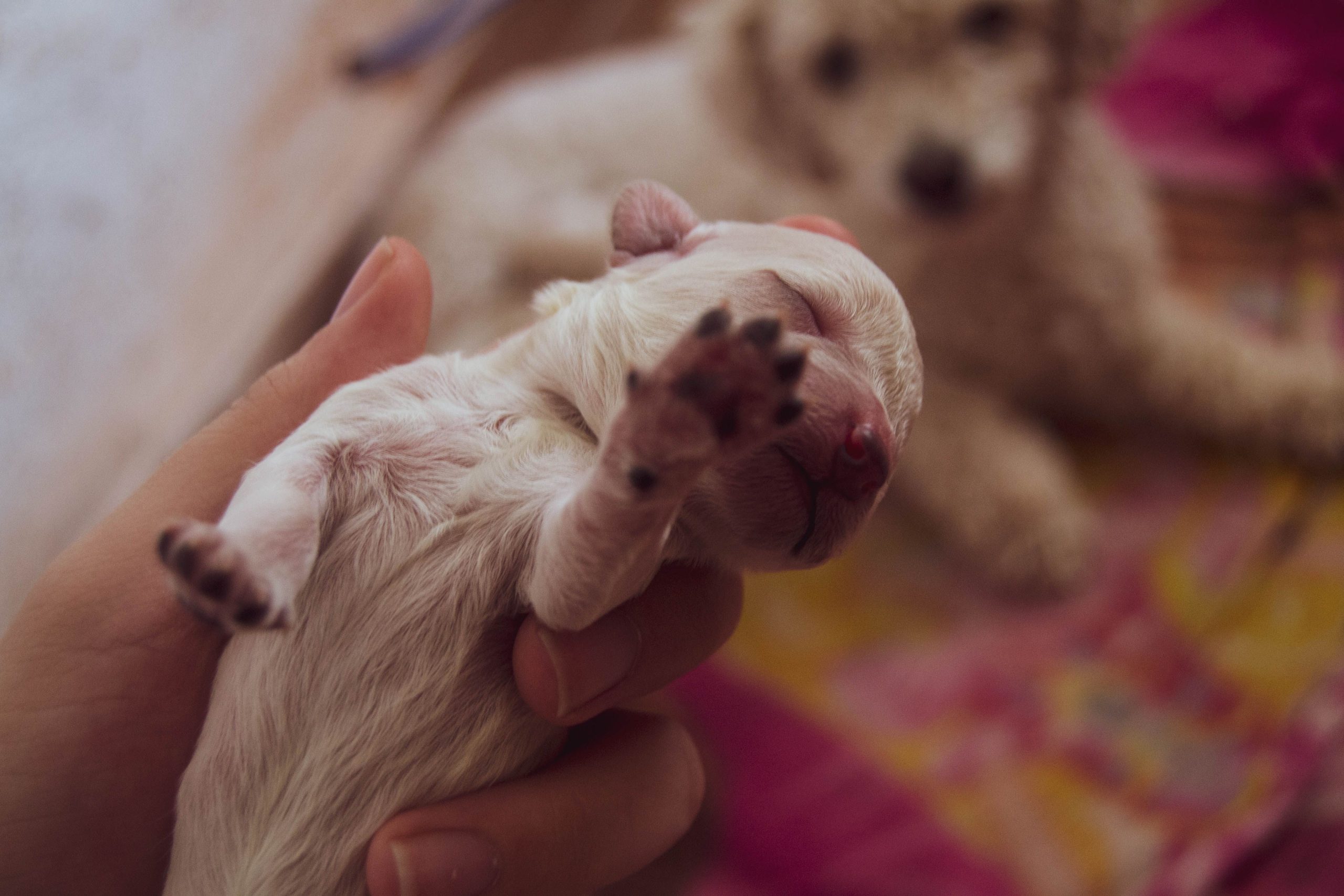
With newborn puppies, I would rather record a small change early than wait for an obvious crisis. A puppy that feels cool, misses a feeding, or stops gaining weight may deteriorate quickly. The daily routine is therefore simple: observe the mother, identify each puppy, record weight, check nursing and warmth, and call the veterinary team when the pattern changes.
Start with the mother and the whole litter
A veterinarian should advise on post-birth care for the mother and puppies, especially after a difficult delivery, Caesarean section, premature birth, stillbirth, or illness. Watch whether the mother settles with the litter, allows nursing, cleans the puppies and has enough milk. Pain, fever, foul-smelling discharge, a hot or painful mammary gland, poor appetite, agitation, or rejection of the litter needs prompt veterinary advice.
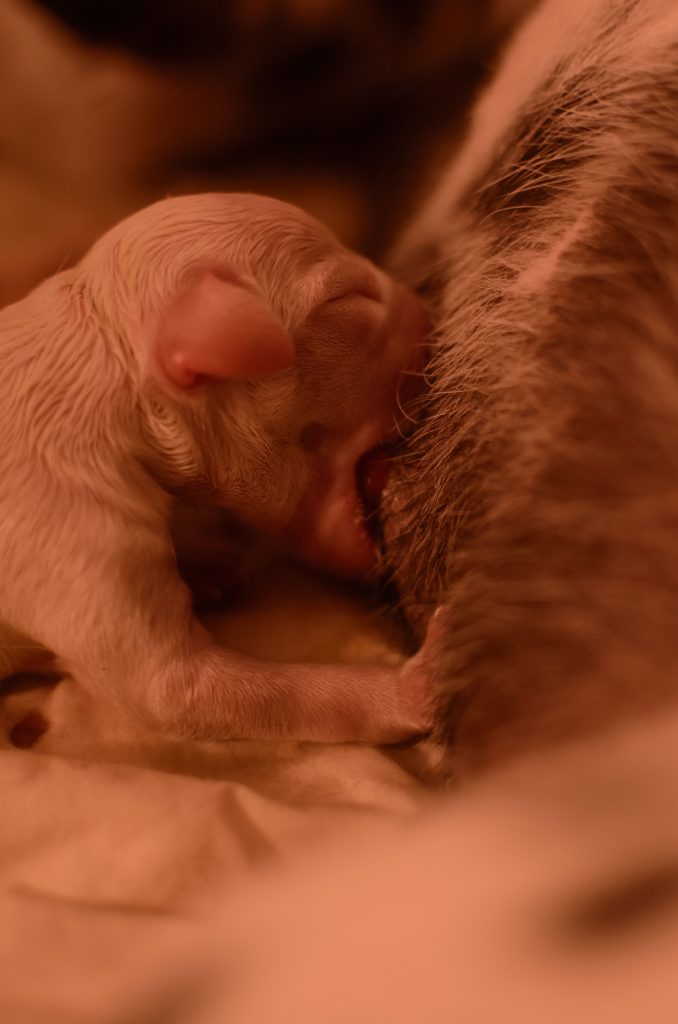
Newborn puppies normally spend most of their time nursing or sleeping quietly. Persistent crying, repeated crawling away from the mother, weakness, or a puppy that is consistently separated from littermates is information to act on. Colostrum—the first milk—provides important immune protection, so tell the veterinarian promptly if a puppy did not nurse during the first day.
Use a written record, not memory
Give each puppy a safe identifier and weigh it on a digital scale at the same time every day. Record the number rather than writing only “gaining.” Merck Veterinary Manual notes that a small temporary loss may occur on the first day, but steady gain should follow; any loss after the first 24 hours or failure to gain deserves immediate attention. Breed and expected adult size affect the actual number, so the trend matters more than comparison with another litter.
Beside the weight, note nursing strength, activity, urine and stool, and any vomiting, diarrhea, coughing, nasal milk, swelling or unusual crying. This short log gives a veterinarian a usable timeline and helps reveal one puppy falling behind while the rest appear well.
Provide warmth without creating a burn risk
Puppies cannot regulate body temperature normally during their first weeks. Warm only part of the whelping area so they and the mother can move away from the heat. Merck lists an environmental range of about 84–89°F (28.9–31.7°C) for week one, about 80°F (26.7°C) for weeks two and three, and 69–75°F (20.6–23.9°C) during week four. These are starting points; litter behavior, room humidity, breed and veterinary advice still matter.
An overhead heat source at a safe distance is generally preferable to direct contact heat. Heating pads can burn puppies that cannot move away, even when covered. Keep bedding dry, flat and non-slip, with no deep folds that can trap a puppy. Place the box in a quiet area without drafts, direct sun or heavy traffic.

When the mother cannot provide enough milk
Contact a veterinarian before starting routine supplementation. A puppy may be failing to nurse because it is chilled, weak, ill, unable to latch, or competing poorly—not simply because the mother lacks milk. Chilled puppies digest poorly and should be warmed gradually before feeding under veterinary direction.
Use a commercial canine milk replacer recommended by the veterinarian and mix it exactly as its label directs. Cow’s milk, goat’s milk and homemade mixtures are not complete long-term substitutes. Calculate the amount from the puppy’s current weight and the particular product instructions; labels may state a total daily amount or an amount per meal, so read that distinction carefully.
For bottle feeding, keep the puppy horizontal on its belly with the head neutral, as it would nurse from the mother. Formula should drip slowly from an inverted nipple rather than stream. Never squeeze milk into the mouth or feed a puppy on its back. Milk at the nose, coughing, labored breathing, or sudden weakness can indicate aspiration and requires urgent veterinary help. Tube feeding should only be done after hands-on training from a veterinarian.
Elimination and hygiene are part of every feed
The mother usually stimulates urination and defecation by licking. Orphaned puppies need gentle stimulation after feeding with a warm, moistened cotton ball or soft cloth around the genital and anal area, generally through the first two to three weeks. Ask the veterinarian to demonstrate if you have not done this before.
Clean bottles and nipples carefully between uses, prepare and refrigerate formula according to the label, and discard milk that has been left out. Replace damp bedding promptly and wash hands before handling the litter. Separate equipment for a sick puppy until the veterinary team advises otherwise.
Begin weaning as a gradual transition
Many puppies begin exploring a shallow dish of softened puppy food at about three to four weeks. Mix a complete food formulated for growth with warm water or milk replacer to make an easy-to-lap gruel. Offer a small amount, supervise, and continue nursing or correctly measured formula while intake from the dish increases. Do not push a puppy’s face into the food.
Reduce the liquid gradually as the puppies eat reliably. The exact pace depends on growth, stool quality, the mother’s condition and veterinary guidance. Human baby food and improvised table food do not provide balanced puppy nutrition. Once puppies begin investigating household food, this guide to safe and harmful human foods for dogs explains why access should be controlled.

Call promptly when the pattern changes
Seek veterinary advice immediately for a puppy that is cold, limp, difficult to wake, unable to latch, losing weight after the first day, failing to gain, crying continuously, breathing abnormally, vomiting, passing watery diarrhea, developing a swollen or painful abdomen, or producing milk from the nose. Also call if several puppies change at once or the mother appears unwell. Do not wait two days to see whether a newborn begins gaining again.
Before calling, have the puppy’s age, current and previous weights, last successful feed, formula name and dilution, urine and stool observations, environmental temperature and the mother’s symptoms ready. Those details help the clinic decide how urgently the litter needs to be seen.
Sources
Merck Veterinary Manual: Management of the Neonate in Dogs and Cats; Merck Veterinary Manual: Environmental Warmth Required for Neonatal Dogs and Cats; VCA Animal Hospitals: Feeding Orphaned Puppies; VCA Animal Hospitals: Caring from Birth to Weaning.
Editorial note: The photographs on this page illustrate newborn puppy care but do not document a litter raised by the author. This article provides general care information and does not replace advice from a veterinarian experienced in canine reproduction and neonatal care.