

A dog has taken food from the counter. The useful first question is not whether that food appears on a “safe” list; it is exactly what the dog ate, including sweeteners, seasonings, bones, packaging and the amount. I would keep this distinction in mind when offering a treat as well. Plain food in a small piece can be different from the same ingredient in a rich prepared dish.
Foods that warrant a prompt call
If your dog eats grapes or raisins, a product containing xylitol, chocolate, onion or garlic, macadamia nuts, alcohol, caffeine, or raw yeast dough, contact a veterinarian or animal poison service promptly. Do not wait for vomiting or other symptoms. The risk depends on the ingredient, amount, body size and other details, and an owner cannot reliably clear an exposure by looking at a dog that still seems normal.
Grapes and raisins can injure kidneys, and the amount that causes harm is unpredictable. Chocolate risk varies with its type and concentration; darker and baking chocolate contain more of the relevant compounds, but that is not permission to ignore milk chocolate. Xylitol, also called birch sugar or wood sugar on some labels, may be in sugar-free gum, candy, baked goods and some nut butters. The FDA warns that it can cause a dangerous fall in blood sugar and sometimes liver injury. Onion, garlic, chives and related ingredients can damage red blood cells, including when cooked or hidden in a sauce.
Raw bread dough can expand and ferment after swallowing. Alcohol and caffeinated drinks are not dog treats. Keep these foods and their packaging out of reach rather than relying on the dog to leave them alone.
Small, plain extras are different from a meal
For a healthy dog whose regular diet is complete and balanced, a few pieces of plain carrot, green bean, apple without its core and seeds, or unseasoned cooked lean meat can be occasional treats. Cut food into pieces appropriate for the dog and supervise chewing. Avoid cooked bones, rich sauces, onion or garlic seasoning, and foods with added sweeteners. A food that is generally suitable may still upset an individual dog or conflict with a prescribed diet.
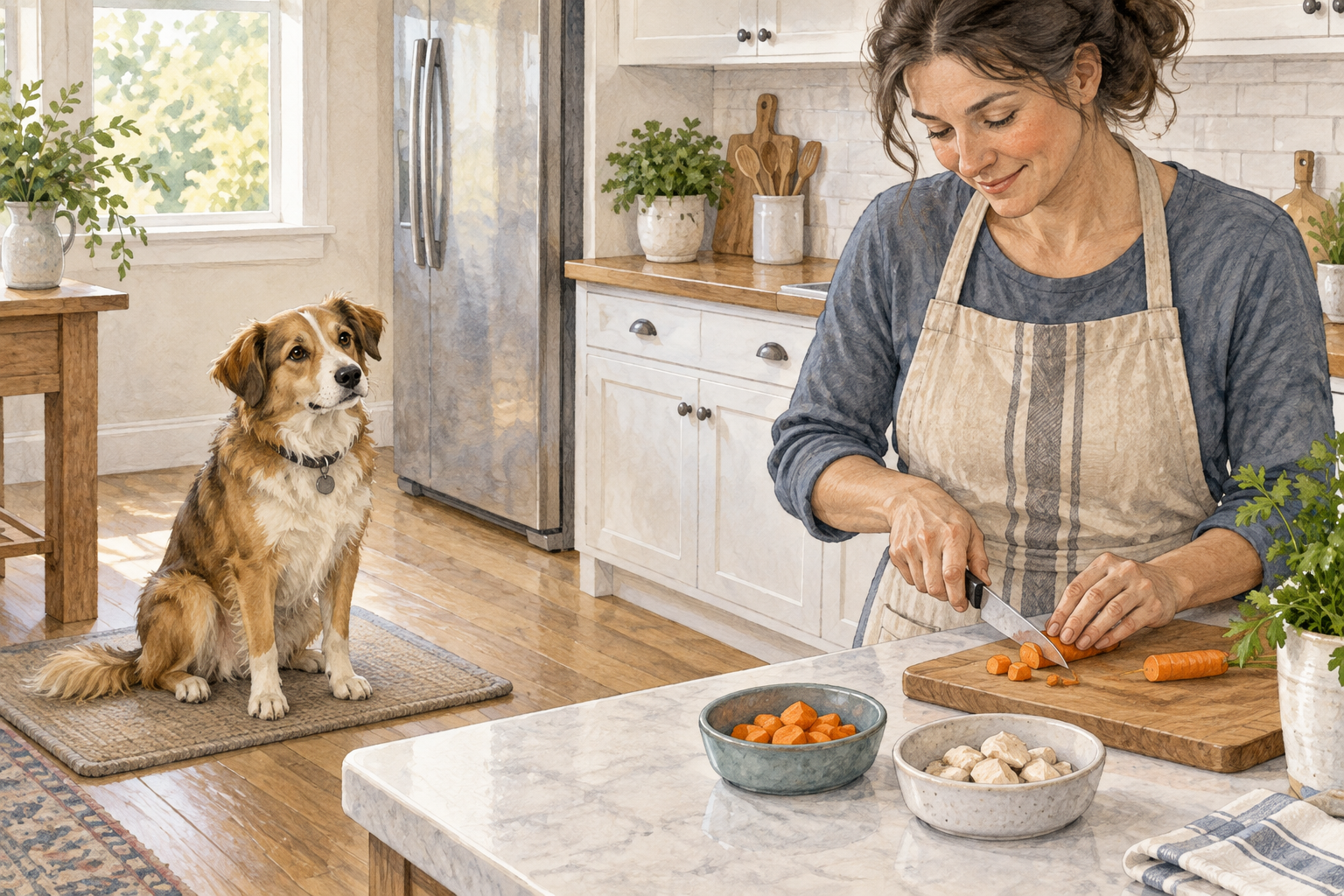
The World Small Animal Veterinary Association advises that treats make up no more than about 10% of a dog’s daily calories. That is an upper limit, not a target to fill. If your dog has pancreatitis, food allergies, kidney disease, a veterinary diet or weight concerns, ask the vet before adding people food. Plain pumpkin is sometimes offered as a snack, but it is not a home treatment that works for every case of diarrhea or constipation.
Some foods need a closer look at the whole item
Peanut butter is only an option after checking every ingredient for xylitol and keeping the portion small; high fat can be a problem for some dogs. Dairy can cause digestive upset. Cooked eggs can be a treat, while raw eggs carry food-safety risks. With avocado, the pit is a choking or obstruction hazard, while the fatty flesh may cause stomach upset; neither belongs on a routine treat menu. That does not make an avocado sandwich, guacamole or its seasonings a sensible treat.
The same distinction applies to leftovers. A plain cooked chicken piece is not equivalent to a chicken wing with bones and onion-heavy sauce. Read the label on packaged food instead of trusting a familiar front-of-pack name.
If your dog has already eaten something questionable
Move the remaining food out of reach. Save the wrapper or photograph the ingredient list, and note the product, estimated amount, time eaten and your dog’s weight. Call your veterinarian, an emergency veterinary clinic or an animal poison service right away if the item may be toxic, if you do not know what was in it, or if the dog is unwell. In the United States, the ASPCA Animal Poison Control Center is available at 888-426-4435; elsewhere, use your local veterinarian or poison service.
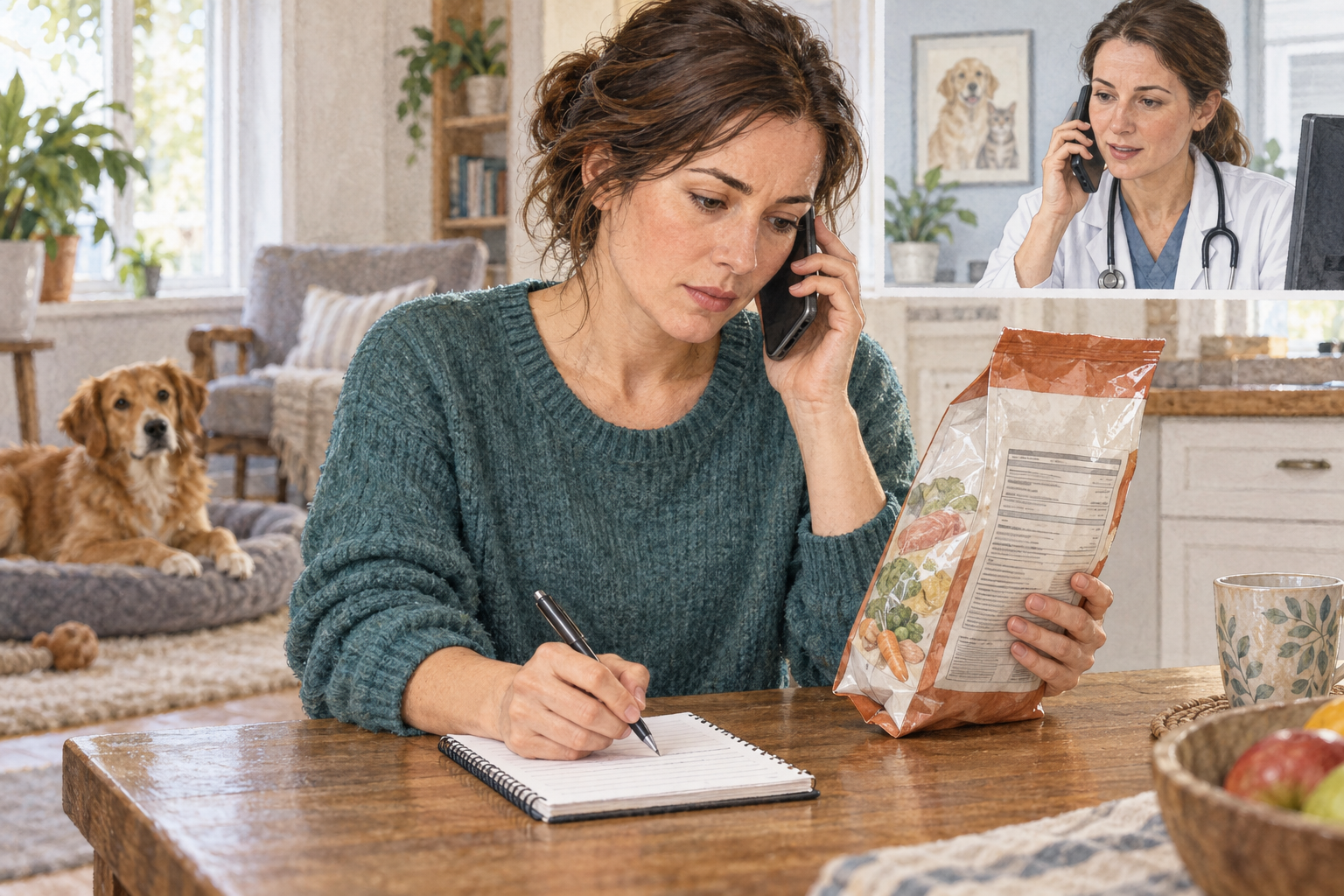
Do not induce vomiting, give human medicines or attempt a home remedy unless a veterinary professional instructs you to do so. Some exposures require action before signs appear, and some dogs need monitoring or treatment even when they initially look well. If the dog is collapsing, seizing, struggling to breathe or repeatedly vomiting, seek emergency veterinary care immediately.
Sources
ASPCA Poison Control: People Foods to Avoid Feeding Your Pets; ASPCA Poison Control: Foods You Can Safely Share; U.S. FDA: Xylitol Is Toxic to Dogs; WSAVA: Feeding Treats to Your Dog; U.S. FDA: Potentially Dangerous Items for Your Pet.
Editorial note: The illustrations on this page were generated for DailyTrail to show the setups described. They are not photographs of the author’s animals. This article provides general care information and does not replace advice from a veterinarian familiar with your dog.
[…] provide balanced puppy nutrition. Once puppies begin investigating household food, this guide to safe and harmful human foods for dogs explains why access should be […]