

On a hot day, I do not decide whether a walk is safe by looking at the temperature alone. I check the humidity, the amount of shade, the surface underfoot, what the dog has been doing, and how that dog normally breathes after light exercise. The change from normal matters. Panting that does not settle after a pause, slowing down, seeking shade, or refusing to continue are reasons to stop before the situation becomes an emergency.
Make the decision before clipping on the leash
Check the hourly forecast rather than the day’s high. Heat can remain in pavement after the air begins to cool, and high humidity makes panting less effective. Choose a shorter shaded route, carry more water than you expect to use, and make sure you can turn back quickly. Early morning is often the easiest window, but local conditions matter more than a fixed hour.
Age, body condition, fitness, coat, health and airway shape all change risk. Flat-faced dogs, puppies, older dogs, overweight dogs and dogs with heart or breathing problems need a more conservative plan. A dog that recently arrived in a warmer climate may also lack acclimatization. Ask your veterinarian for individual limits if exercise already causes noisy breathing or slow recovery.
Pack a collapsible bowl and fresh water. Bring a phone, know where the nearest veterinary clinic is, and avoid routes without shade or an easy exit. Seasonal routines should respond to conditions; the same principle applies when adjusting walks for winter cold.
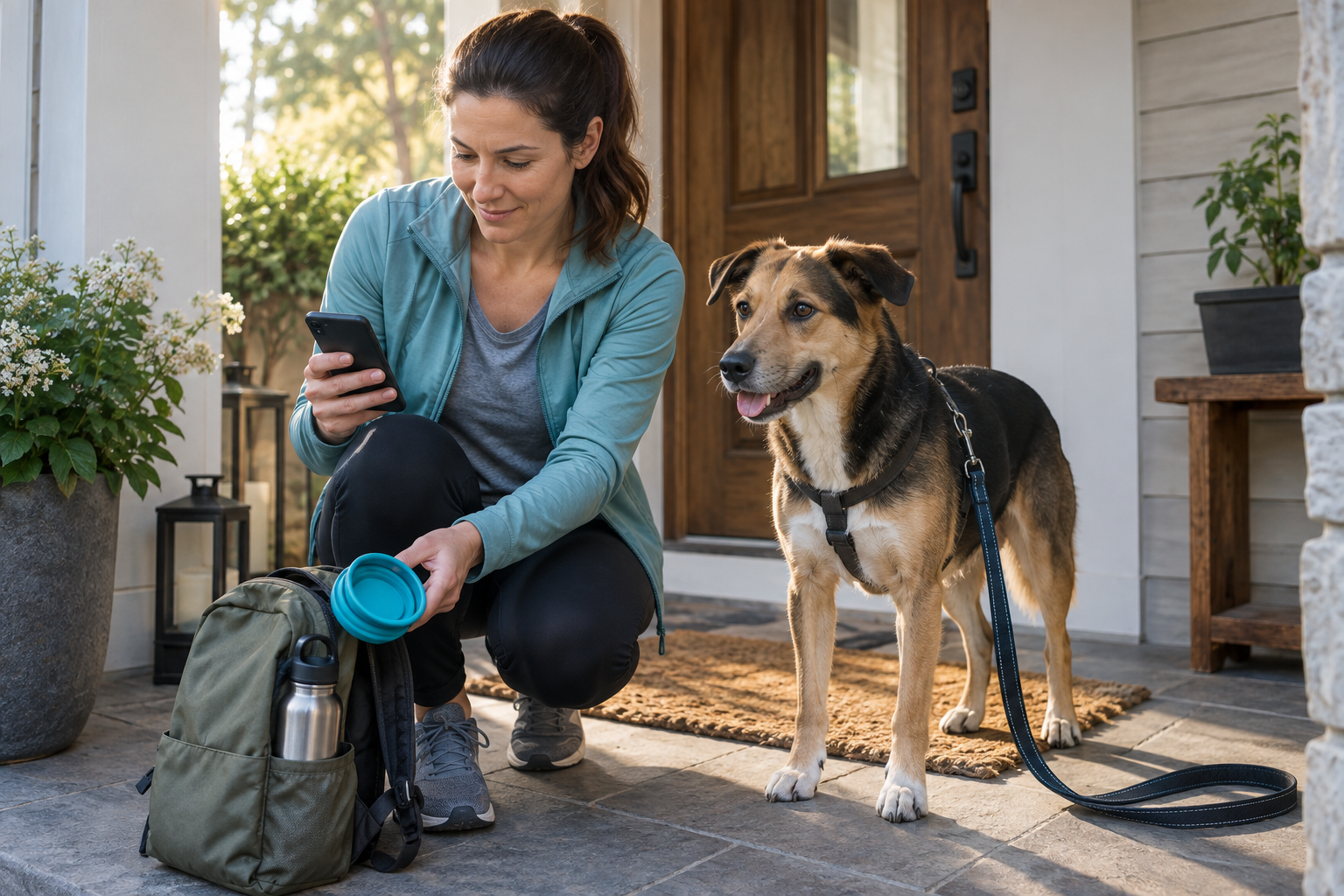
Watch the dog, not a universal temperature cutoff
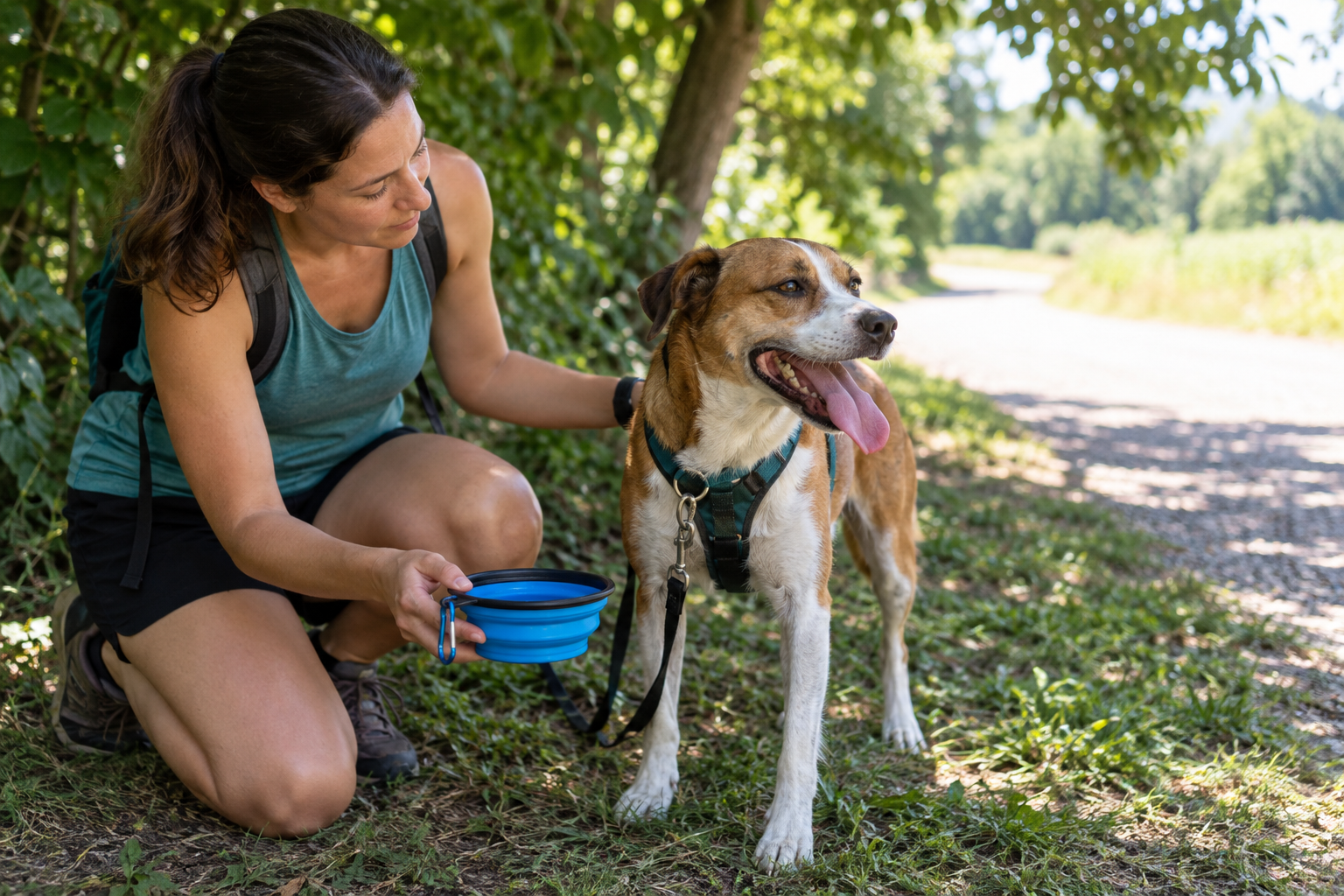
There is no single outdoor temperature that is safe for every dog. Heat produced by running, excitement or pulling can matter as much as the weather. Begin with an easy pace and check breathing, gait and attention during the walk. Take breaks in real shade; a small patch beside sun-heated pavement may offer little relief.
Normal panting after activity should begin to ease with rest. Stop the outing if panting becomes unusually intense or noisy, the tongue seems much wider than usual, the dog repeatedly searches for shade, lags behind, lies down, or becomes less responsive to familiar cues. Move to a cooler place and offer water without forcing the dog to drink. Do not make a reluctant dog finish the route.
Hot surfaces are a separate injury risk. Look for limping, shortened steps, repeated paw lifting or hesitation. Choose grass or shade when possible and inspect the pads after the outing. The routine in this guide to dog paw and nail care shows what to examine. Touching pavement with a hand may alert you that it feels hot, but it does not prove a surface is safe for a dog’s paws.
Cars, yards and indoor rooms can all trap heat
Never leave a dog unattended in a parked vehicle in warm weather. Cracking the windows or parking in shade does not make the car reliably safe, and conditions can change while you are away. If the dog cannot accompany you at the destination, arrange for the dog to stay in a cool place instead.
A yard is only safe when the dog can leave direct sun, reach fresh water and be checked frequently. Dog houses can become hot and poorly ventilated. Indoors, close blinds against direct sun, keep air moving, refill water bowls and give the dog access to a cool floor or air-conditioned room. Cooling mats can help some dogs rest comfortably, but inspect them for leaks and do not use one as a substitute for a safe room temperature.
Recognize when overheating has become an emergency
Heatstroke can progress quickly and damage internal organs even when a dog appears better after cooling. Warning signs include persistent rapid or labored panting, excessive or thick drool, weakness, stumbling, confusion, vomiting, diarrhea, abnormal gum color, collapse or loss of consciousness. Treat these signs as an emergency rather than waiting to see whether rest fixes them.
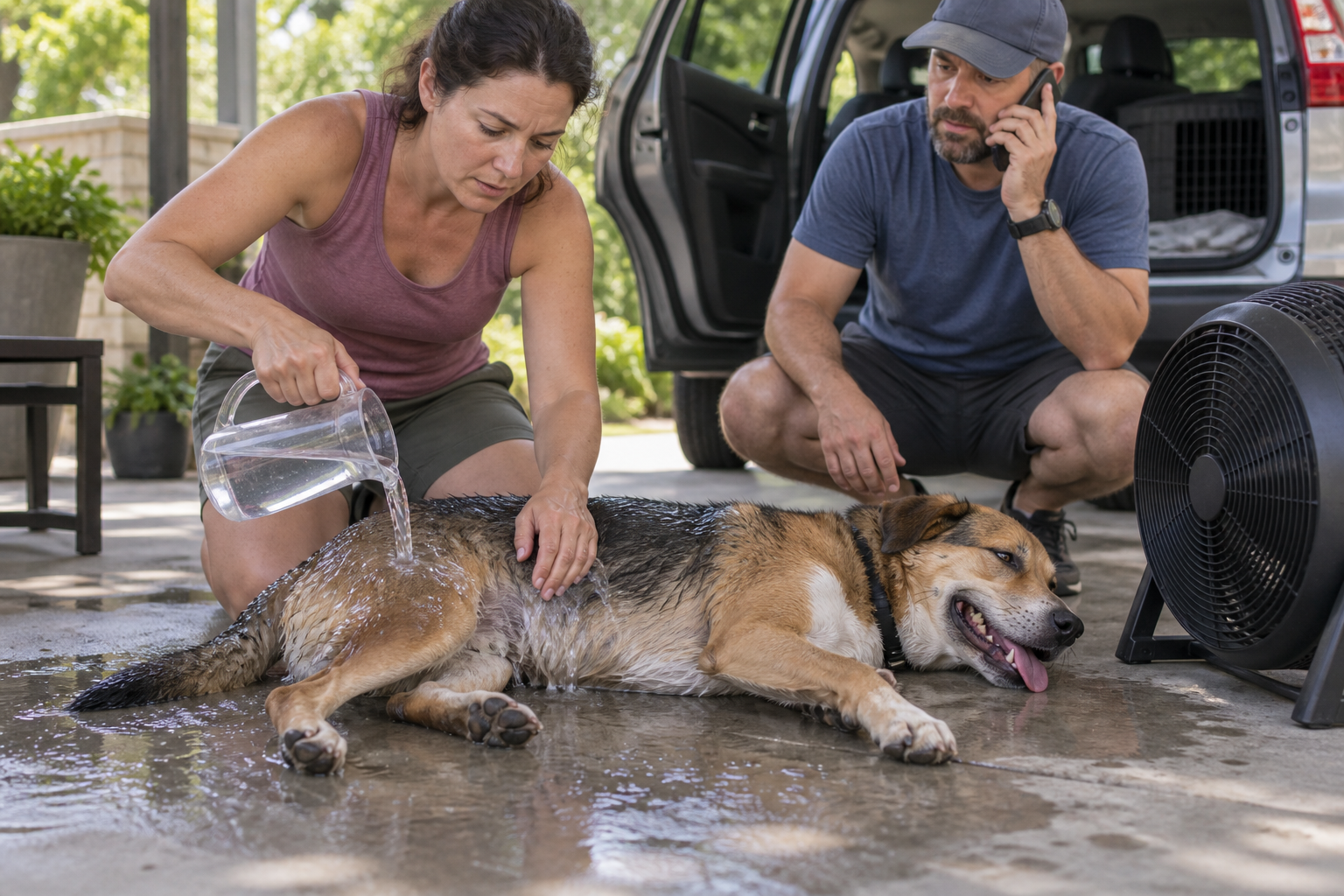
Call the nearest veterinarian or emergency hospital so the team can prepare, but begin cooling immediately. Move the dog out of the heat. Apply or pour water that is cooler than the dog’s body over the neck, torso, abdomen and thighs, and use a fan or vehicle air conditioning to increase airflow across the wet coat. Keep water away from the face of a dog that is unconscious or struggling to breathe.
Do not force water into the mouth. Do not wrap the whole dog in wet towels, because a towel left in place can warm up and reduce evaporation. Avoid alcohol rubs and do not delay veterinary transport while trying to reach a particular temperature at home. Guidance about very cold water differs among reputable organizations and may depend on the dog’s condition and available equipment; follow the emergency clinic’s instructions while you are on the phone.
What to tell the veterinary team
Give the clinic a short timeline: when exercise or heat exposure began, when the breathing changed, whether the dog vomited, collapsed or had diarrhea, and what cooling you started. Mention known heart, airway or seizure conditions and any medication. Transport the dog in a cool, well-ventilated vehicle and continue the cooling method the clinic recommends. A dog that seems to recover still needs veterinary assessment because complications may appear later.
Sources
RSPCA: Heatstroke in Dogs; Merck Veterinary Manual: Protecting Pets During Hot Summer Months; American Veterinary Medical Association: Pet First Aid; VCA Animal Hospitals: Heat Stroke in Dogs.
Editorial note: The illustrations on this page were generated for DailyTrail to show the preparation, early-warning and cooling steps described. They are not photographs of the author’s animals. This article provides general care information and does not replace advice from a veterinarian familiar with your dog.
[…] safe technique. Hot and cold weather also change tolerance; use the precautions in the guides to dog heat safety and winter cold […]
[…] the paws with cool water rather than ice, and contact a veterinarian for significant injury. Our summer heat safety guide for dogs covers the whole walk, including early heat-stress […]