
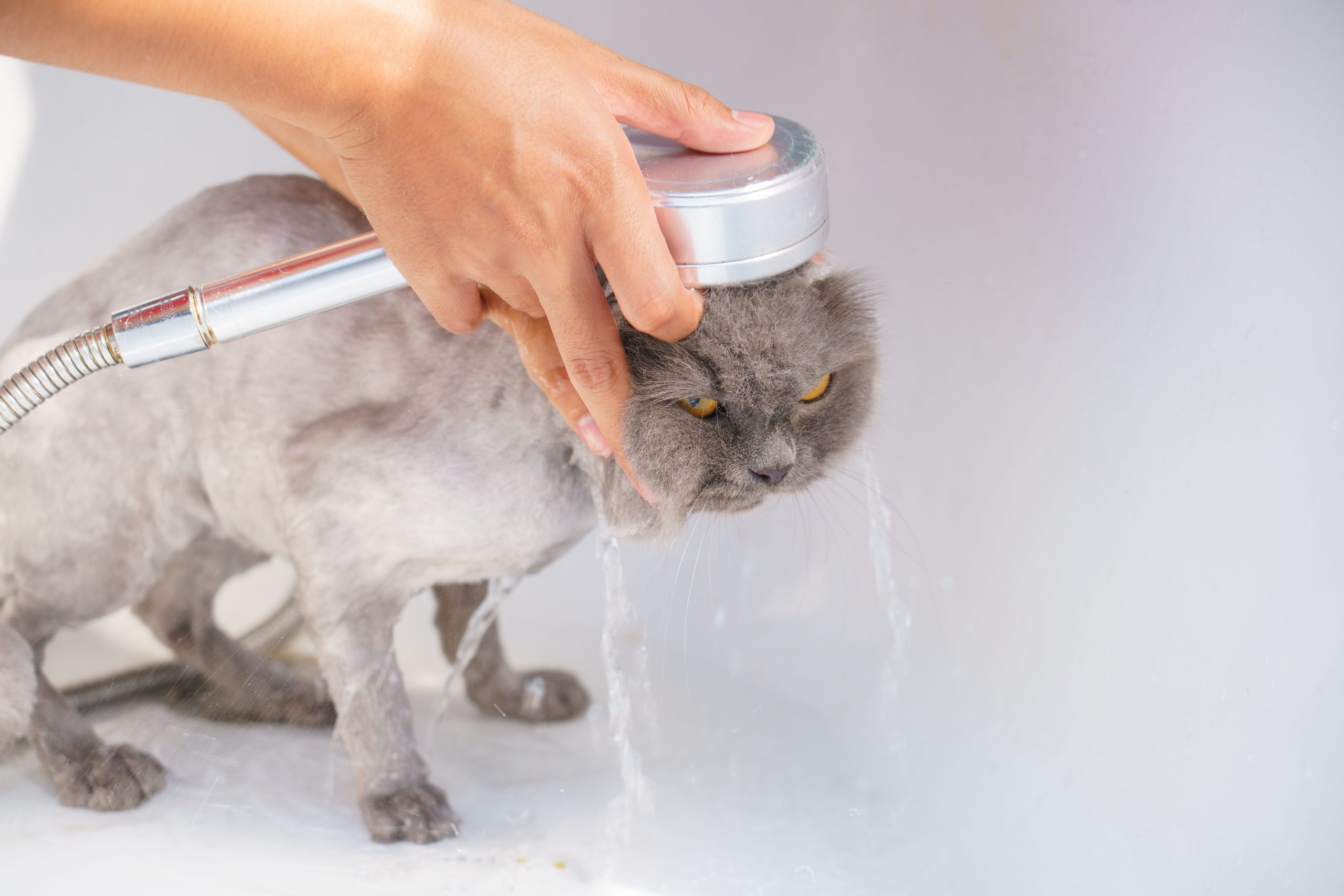
For a healthy cat that keeps its coat clean, there is usually no bath to put on the calendar. I would decide by what is on the fur, whether the cat can groom comfortably, and whether a veterinarian has prescribed skin care. That is more useful than saying every shorthaired cat needs one bath a year or every longhaired cat needs two.
Most dirt calls for a smaller job
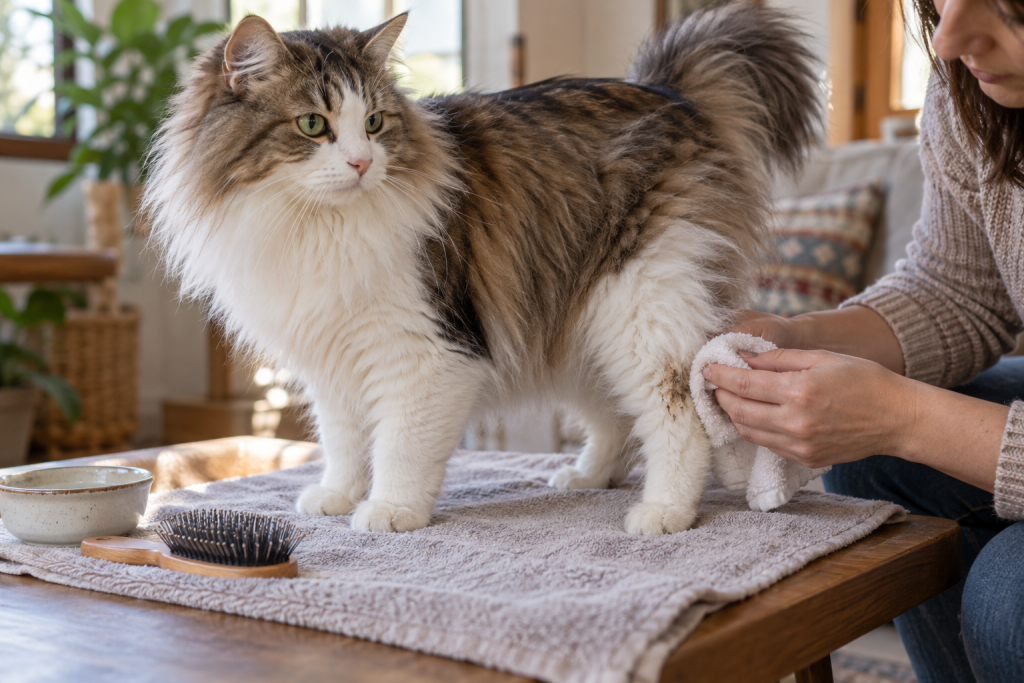
If the coat has a little dust or loose hair, start with brushing. A small patch of ordinary dirt may come off with a soft cloth dampened with warm water. Cats Protection notes that most cats rarely need a bath and that a damp cloth is often enough. Keep the cloth away from the eyes and ears, and let the cat move away if it becomes uneasy.
A soiled patch around a longhaired cat’s rear may need careful local cleaning. If fur is tightly matted, do not pull it, wet it and scrub, or cut close to the skin with scissors. Cats have delicate skin, and painful mats are better assessed by a veterinarian or experienced cat groomer. For a routine that catches tangles before they become painful mats, see this weekly brushing routine for long-haired cats. If an older cat suddenly stops grooming or repeatedly gets dirty, ask the vet about mobility, dental pain or another underlying problem instead of scheduling more baths.
When a bath or veterinary call makes sense
A veterinarian may recommend a medicated bath for a diagnosed skin condition; the product, contact time and frequency depend on the individual cat. Hairless cats may also need a tailored skin-care routine, but a fixed “every two weeks” rule is not appropriate for all of them. Ask your veterinarian what to use and how often.
If the fur has paint, motor oil, cleaning chemicals, a topical product used incorrectly, or another substance the cat might lick, contact a veterinarian or animal poison service promptly. Tell them the product name and where it landed. Do not assume an ordinary shampoo bath is enough, and do not wait for the cat to groom it off. The substance and any skin irritation determine how it should be removed.
For a non-toxic mess that cannot be spot-cleaned, a full bath may be reasonable. If the cat is injured, very ill, panicking, or cannot be handled safely, ask a veterinary team or professional groomer for help. The goal is to solve the actual coat problem without turning it into a struggle.
If you do need to wash the whole cat
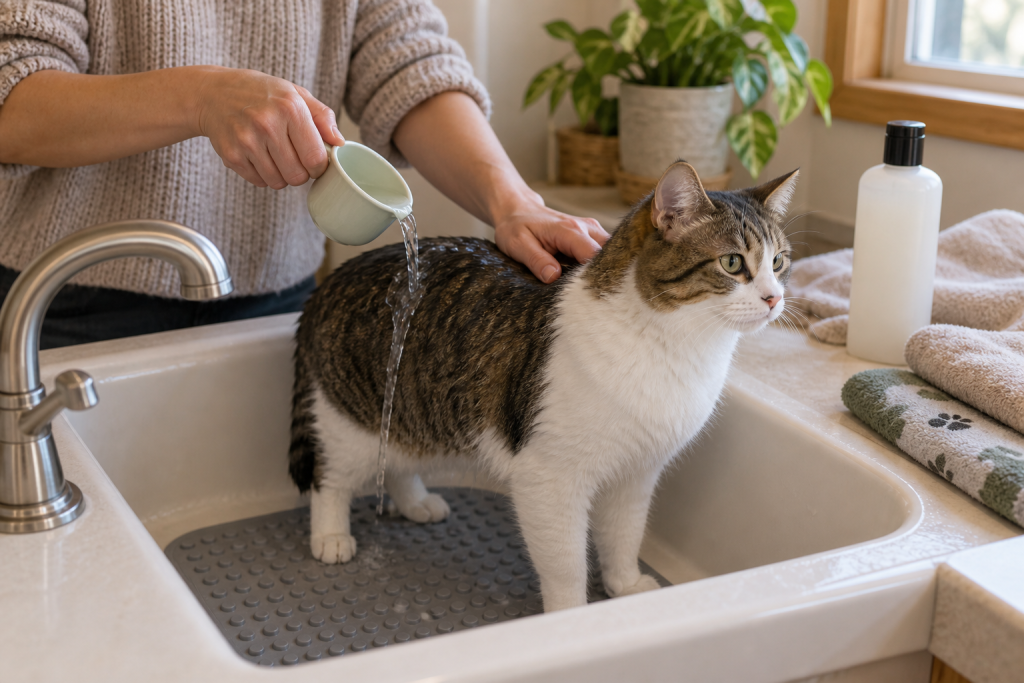
Prepare a comfortably warm room, clean towels, a non-slip surface and lukewarm water before bringing the cat in. Choose water alone when it will remove the mess, or a product made specifically for cats when shampoo is needed. Avoid human shampoo and dog products; some ingredients in dog flea products, including permethrin, are dangerous to cats. Follow a veterinarian’s directions for any medicated shampoo.
Keep the water shallow and give the cat secure footing. Use a cup or gentle flow to wet the body, keeping water and shampoo away from the face, eyes and ears. Work only as much as needed, then rinse thoroughly so residue is not left for the cat to lick. There is no useful universal number of inches of water, spoonfuls of shampoo or minutes of rinsing; the product and cat determine the details.
Lift the cat onto a towel and blot or wrap it gently rather than rubbing hard at tangled fur. Keep the room warm until the coat is dry. A noisy dryer can frighten or overheat a cat; if a thick coat cannot be dried safely at home, ask a groomer or veterinary team how to help. Stop and get help if the cat is struggling hard, breathing abnormally, or you cannot rinse the product fully.
Let the reason set the frequency
For most cats, regular brushing and occasional spot cleaning are the routine; full baths are uncommon. A prescribed medicated bath follows the veterinarian’s schedule, while a one-off spill calls for a one-off response. Repeated greasy fur, odor, dandruff or new grooming difficulty is a reason to look for the cause, not automatically to wash more often.
Sources
Cats Protection: Grooming Your Cat; Cats Protection: Should I bathe my cat?; VCA Animal Hospitals: How to Bathe Cats with Medicated Shampoo; ASPCA: Poisonous Household Products.
Editorial note: The illustrations on this page were generated for DailyTrail to show the setups described. They are not photographs of the author’s animals. This article provides general care information and does not replace advice from a veterinarian familiar with your cat.
[…] Sometimes the decision has already been made: a cat has a non-toxic mess that cannot be removed with a damp cloth, or a veterinarian has prescribed a medicated wash. At that point, the useful question is no longer how often cats should be bathed. It is how to complete this one bath without losing control of the cat, leaving product in the coat, or turning a necessary job into a prolonged struggle. If you are still deciding whether washing is needed, start with this guide to when a cat actually needs a bath. […]