
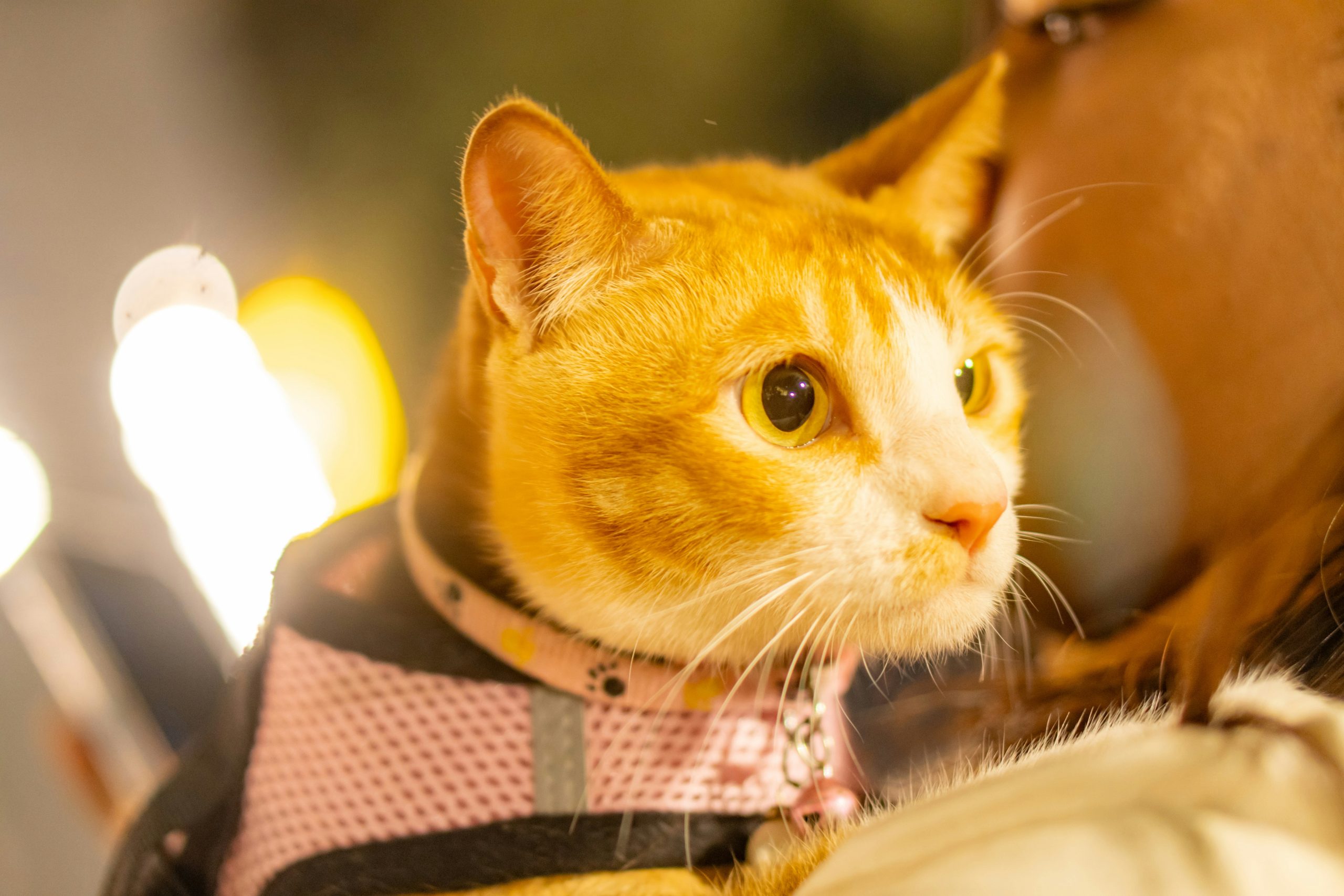
A cat sitting at the door is curious about what is beyond it. That is not, by itself, a request for a walk. I would make the decision by watching how the cat handles a harness indoors and a quiet, familiar outdoor space, not by assuming that every indoor cat needs an adventure. Cats Protection cautions that many cats find a lead and harness stressful.
Decide whether an outing is worth trying
Some cats investigate new objects and recover quickly from mild surprises; others hide, freeze or become distressed when their routine changes. A cat that bolts through an open door may be fleeing or following a smell rather than enjoying controlled outdoor time. There is no need to test a reluctant cat repeatedly. Window perches, indoor play and a secure catio can provide interest without a walk.
Before outdoor access, ask your vet which vaccinations and parasite prevention suit your cat and location. Check that microchip details are current. A cat can back out of a harness or a person can drop a lead, so identification matters even for a short visit to the garden. If your cat has a health condition, is recovering from illness, or is very young, ask your vet when outdoor exposure is appropriate rather than relying on a fixed age rule.
Make the harness ordinary indoors first
Choose a harness made for cats and follow its fitting instructions. It should sit securely without rubbing, restricting movement or allowing the cat to reverse out. Test the fit gently in a closed room. Clip the lead to the harness, never to a collar; pulling on a collar can injure a cat’s neck.
Leave the harness nearby for the cat to investigate. Reward a voluntary sniff or approach with a small treat from its normal food allowance. Later, touch the harness to the cat briefly, then try fastening it for a moment and removing it. Only lengthen sessions while the cat moves normally and remains relaxed. If it freezes, flattens to the floor or tries frantically to escape, take it off and return to an easier step. Do not leave a cat unattended in a harness or attached lead.
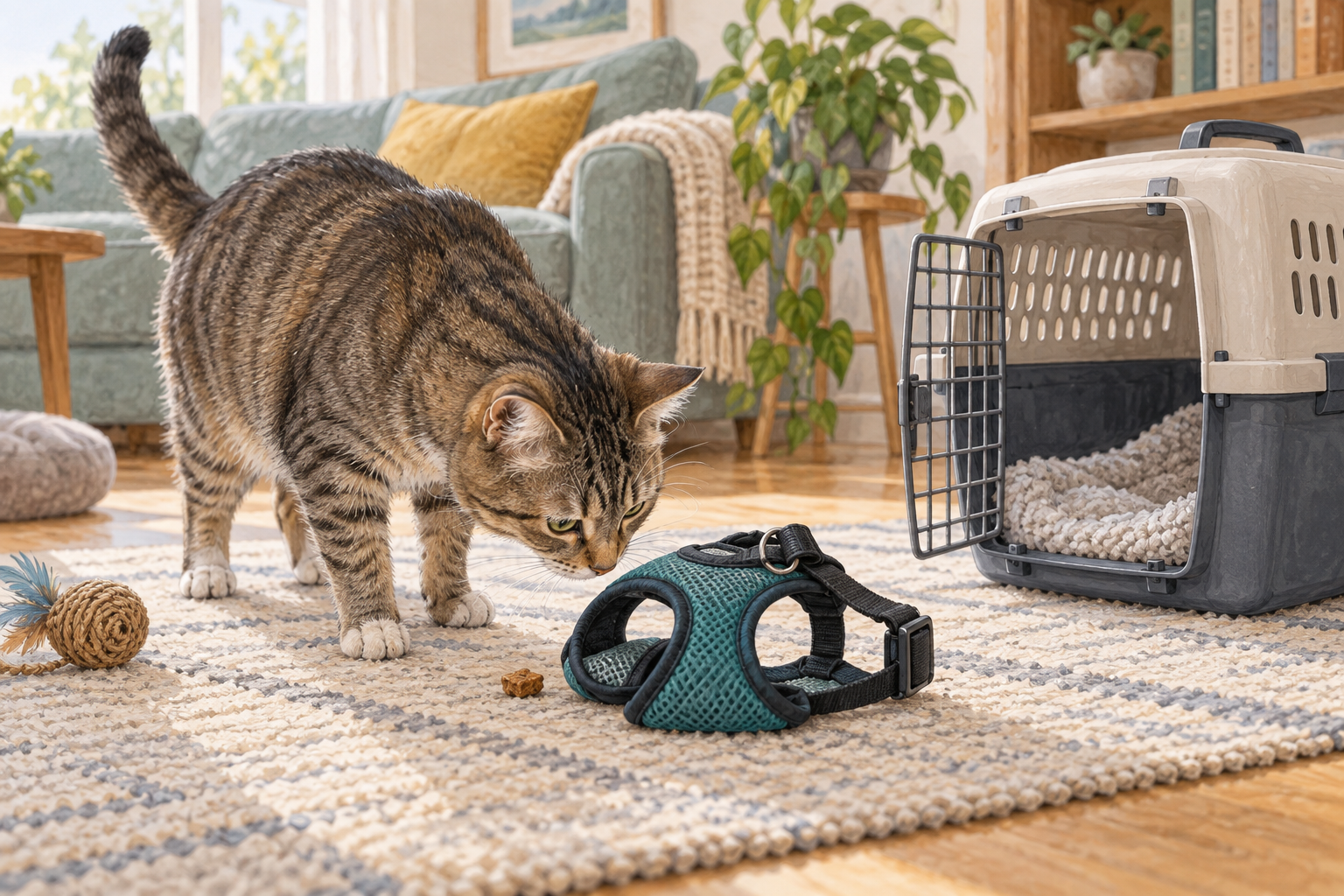
Introduce a sturdy, well-ventilated carrier separately. Leave it open at home with familiar bedding so it can become a predictable place to retreat. Cats Protection advises carrier training in small steps. For transport, choose one large enough for the cat to stand, turn and lie down comfortably, and secure its door before lifting it.
Keep the first outdoor visit close to home
If indoor practice goes well, choose a quiet enclosed garden or similarly sheltered area. Check gates, gaps, traffic access, toxic plants and the chance of dogs approaching. Bring the carrier and keep the lead slack. Avoid carrying the cat into an unfamiliar busy place and setting it down there. Let it look and sniff close to shelter; a first visit can end after a few calm minutes. There is no distance to achieve.
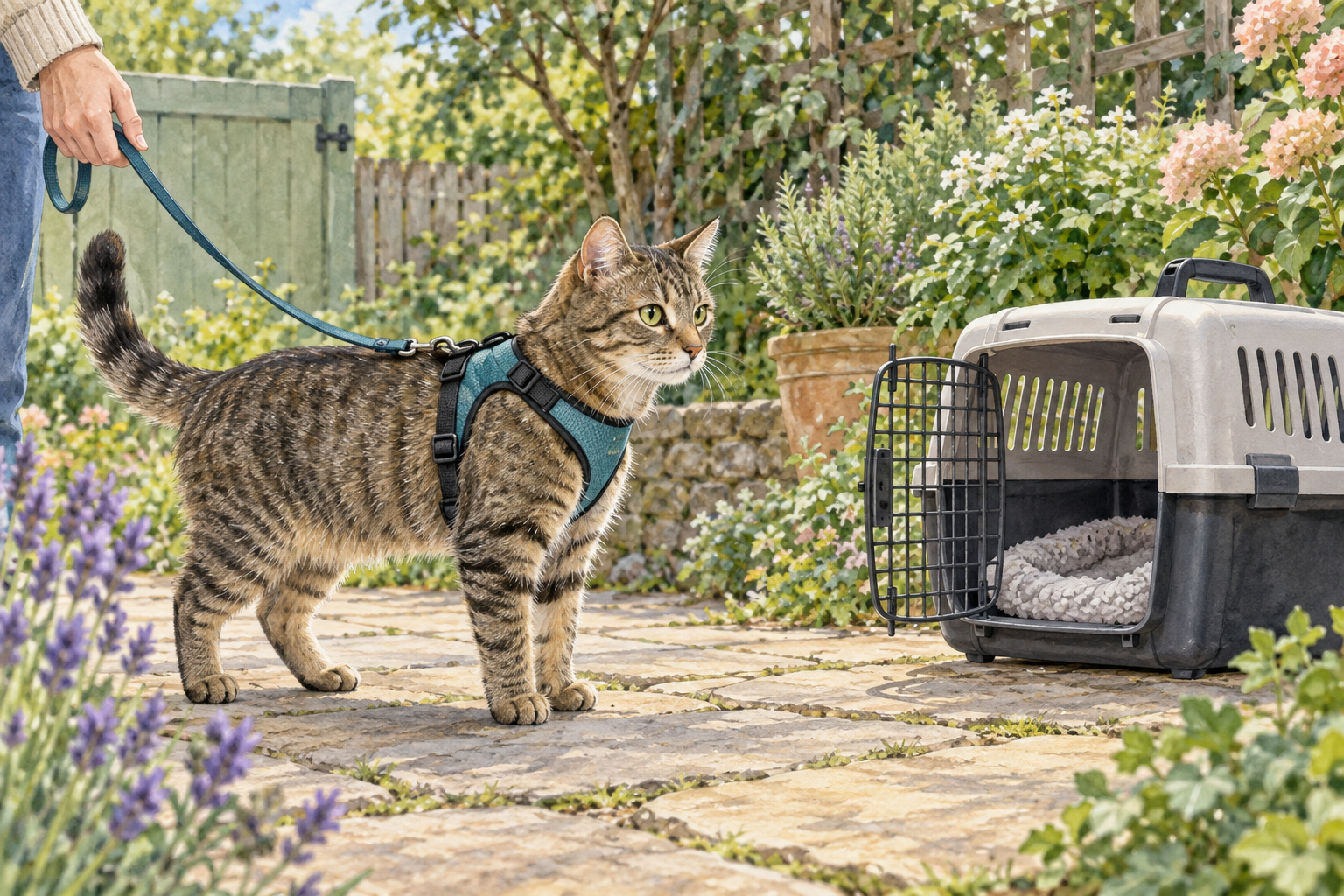
Watch the whole cat rather than one signal. A crouched, motionless posture, pinned ears, tucked or puffed tail, repeated attempts to hide, or frantic pulling are reasons to return indoors. Panting or open-mouth breathing is more concerning: stop the outing, move the cat to a calm place and seek veterinary advice promptly, especially if breathing does not settle. Do not keep the cat outside to “get used to it.”
Prevent an escape before it happens
Hold the lead without wrapping it around your hand, and avoid retractable leads that can let a startled cat reach a hazard before you react. Keep the carrier ready to close if a dog or loud noise appears. If the cat becomes frightened, guide it back to shelter without pulling; if handling is unsafe, do not risk a chase that could make it bolt. Never tie the lead to a fixed object or leave the cat alone outdoors.
Cats Protection does not generally recommend harness walks because restraint and unfamiliar places can be stressful for many cats. That is a useful limit on the idea, not a challenge to train harder. If your cat consistently chooses to stay inside or shows distress after careful indoor practice, stop there and build enrichment at home instead.
Sources
Cats Protection: Keeping Cats Safe Outside; Cats Protection: Should I Walk My Cat on a Harness and Lead?; Cats Protection: Choosing and Using a Cat Carrier.
Editorial note: The illustrations on this page were generated for DailyTrail to show the setups described. They are not photographs of the author’s animals. This article provides general care information and does not replace advice from a veterinarian familiar with your cat.