
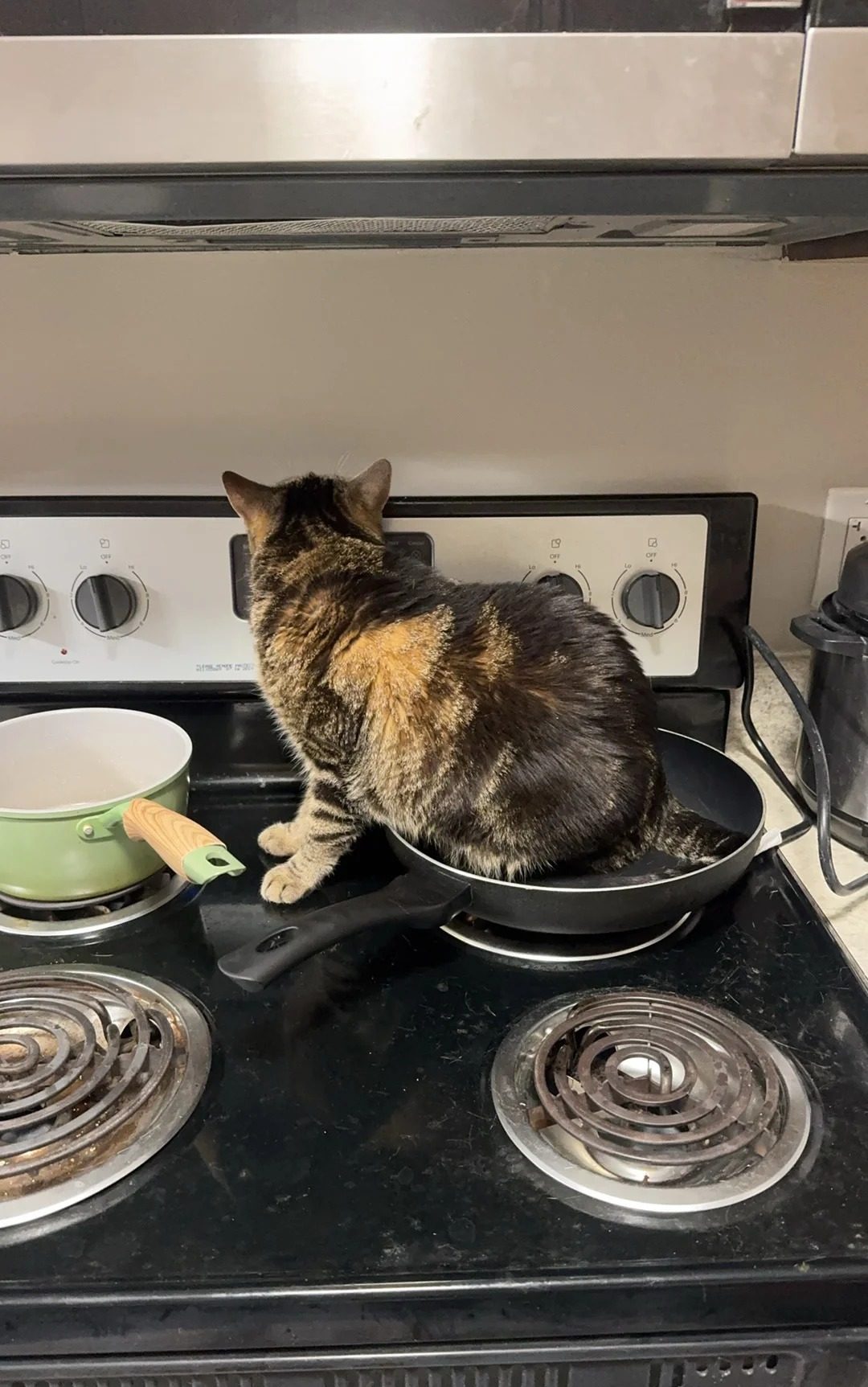
A cat on the kitchen counter is a safety problem when food is being prepared or a burner is hot. It is also a clue: the counter may offer height, a view of the room, or the occasional reward of a dropped morsel. I would change those payoffs first, then teach a place the cat can use while people cook. A cat can learn a different routine, but a perfectly empty counter at every moment is not a realistic promise.
Find the reward before changing the rule
Notice when the jump happens. Does the cat arrive as soon as you open its food tin? Is it watching from the counter while you cook, or investigating food left there afterward? Cats Protection points out that preparing a cat’s food on a worktop can teach the cat to visit that spot. Prepare its meals near its own bowl instead, and put human food away promptly. If the cat also waits beside people for scraps, the counter habit may be part of a broader food-reward routine. This guide to stopping a cat from begging for human food explains how occasional handouts keep that behavior going and how to replace them with a consistent response. Keep counters clear of scraps, plates and tempting packaging.
Deal with immediate hazards before training. Keep the cat out of the kitchen while a burner is on or a hot pan is cooling if you cannot supervise safely. Check that the stovetop is cool before allowing access again. Clean food-preparation surfaces before using them; a training plan is no substitute for kitchen hygiene.
Give the cat a useful place to watch
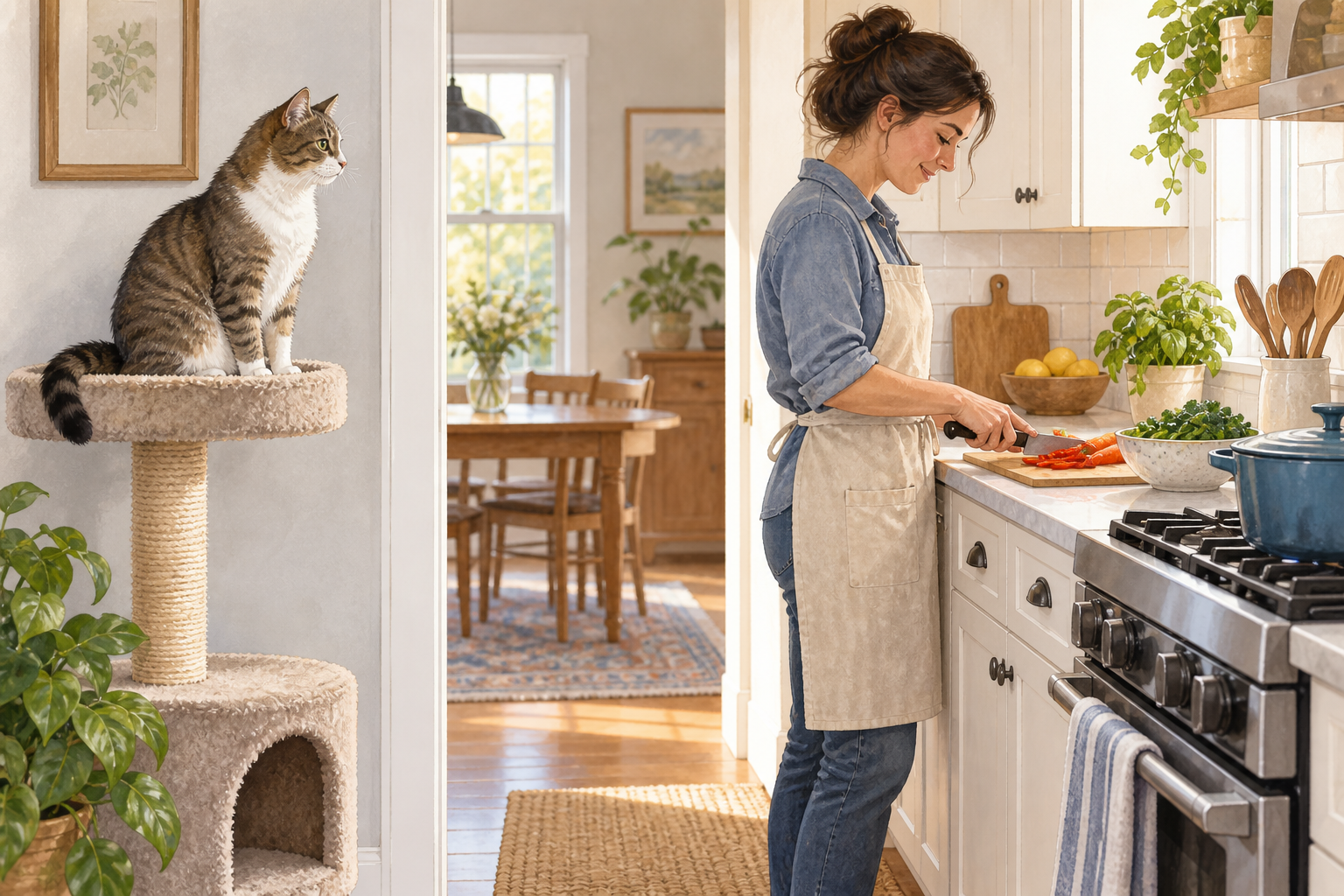
If the cat wants a view, try a stable cat tree or shelf near the kitchen doorway, far enough from the worktop that it cannot be used as a launch point. If the cat is mainly looking for food, a perch alone may not solve it; remove the food reward and make the alternative place rewarding. Some homes need a door or gate during active cooking. That is ordinary management, not a failed training plan.
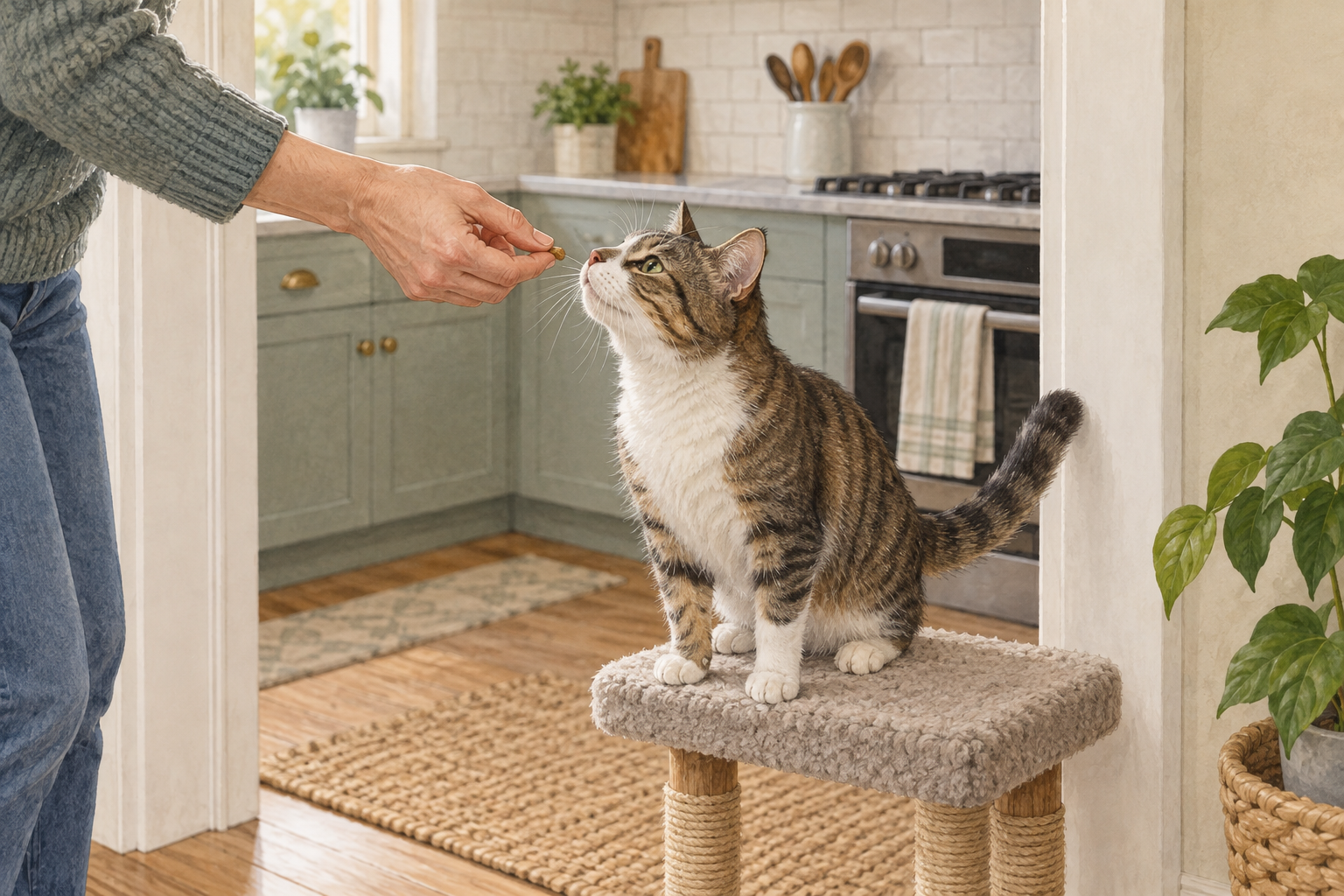
Let the cat discover the perch outside mealtimes. Put a small treat or a favorite toy there, and reward the cat when it steps up. After a few easy successes, use the same cue each time—perhaps a hand gesture toward the perch—and reward the cat there while you do a brief kitchen task. Keep treats small and account for them in its daily food. Cats Protection describes reward-based cat training as marking and rewarding the behavior you want, then building on it gradually.
What to do when you find the cat on the counter
Do not shout, spray water, use an air-blast device or set out a startling surface. Scaring a cat can make it wary of the kitchen or of you without teaching where to go instead. If the stove is safe and the cat is calm, guide it down with a treat or toy directed toward the floor, then reward it for moving to the perch. If there is a hot appliance, prioritize moving the cat out of danger rather than completing a training exercise.
Avoid turning counter-jumping into a reliable way to summon treats. Reward visits to the perch that the cat chooses on its own, not only departures from the counter. Practice when the kitchen is quiet as well as when you are preparing food. Everyone in the household should follow the same plan: no snacks offered from the worktop, and the same safe place encouraged during cooking.
Check the result against real life
Look for a change in when and why the cat jumps, rather than expecting an instant stop. If food is still left out, the counter may remain worth checking. If the cat keeps visiting only when people cook, move the perch so it offers a better view while keeping a safe gap from appliances. A short play session before a predictable busy cooking period may help a cat seeking interaction, but it will not make a hot stovetop safe.
If a cat suddenly starts scavenging intensely, seems unusually hungry, loses weight or changes its drinking habits, speak with a veterinarian. Training should not conceal a possible medical reason for a new appetite or behavior change.
Sources
Cats Protection: Feeding Time and Kitchen Worktops; Cats Protection: Tips for Clicker Training Your Cat; Cats Protection: Consistency and Training.
Editorial note: The illustrations on this page were generated for DailyTrail to show the setups described. They are not photographs of the author’s animals. This article provides general care information and does not replace advice from a veterinarian familiar with your cat.