
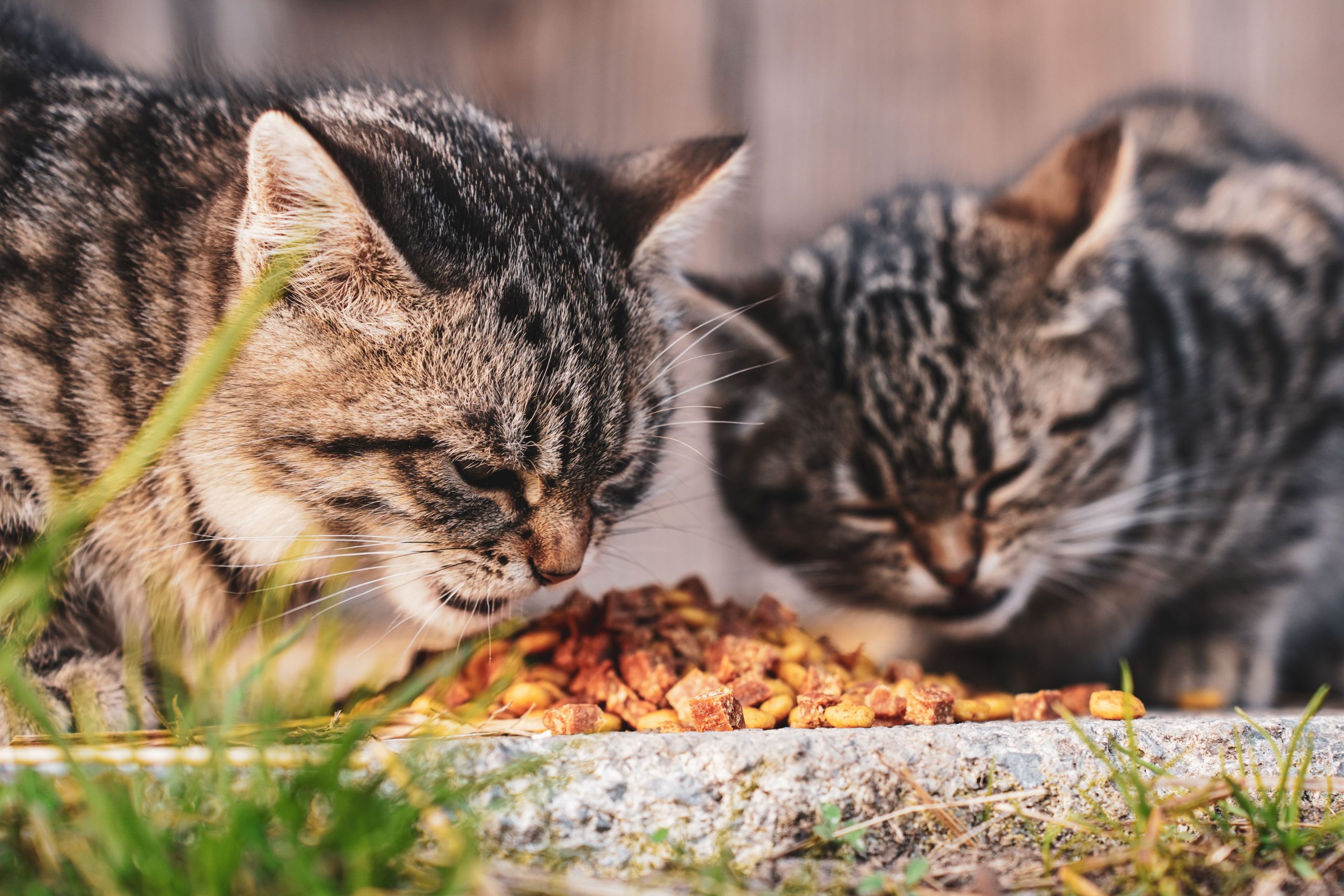
A cat begging beside the dinner table is usually repeating a behavior that has paid off before. Food is one possible reward, but eye contact, conversation and being lifted down can also keep the routine going. I would change the pattern by making human meals predictable and uneventful while teaching the cat a clear alternative place to be.
First, rule out a health or feeding problem. A sudden increase in hunger, weight loss, increased thirst, vomiting or a change in activity deserves veterinary attention. Ask the veterinarian to confirm the cat’s daily calorie target rather than cutting food because the cat appears demanding.
Separate the food budget from the training plan
Measure the entire day’s food before breakfast. Meals, puzzle-feeder portions and training rewards all come from that allowance. This prevents several people from handing out “tiny” extras that quietly become another meal. The ASPCA’s cat nutrition guidance recommends portion-controlled feeding and working with a veterinarian to determine calorie needs.
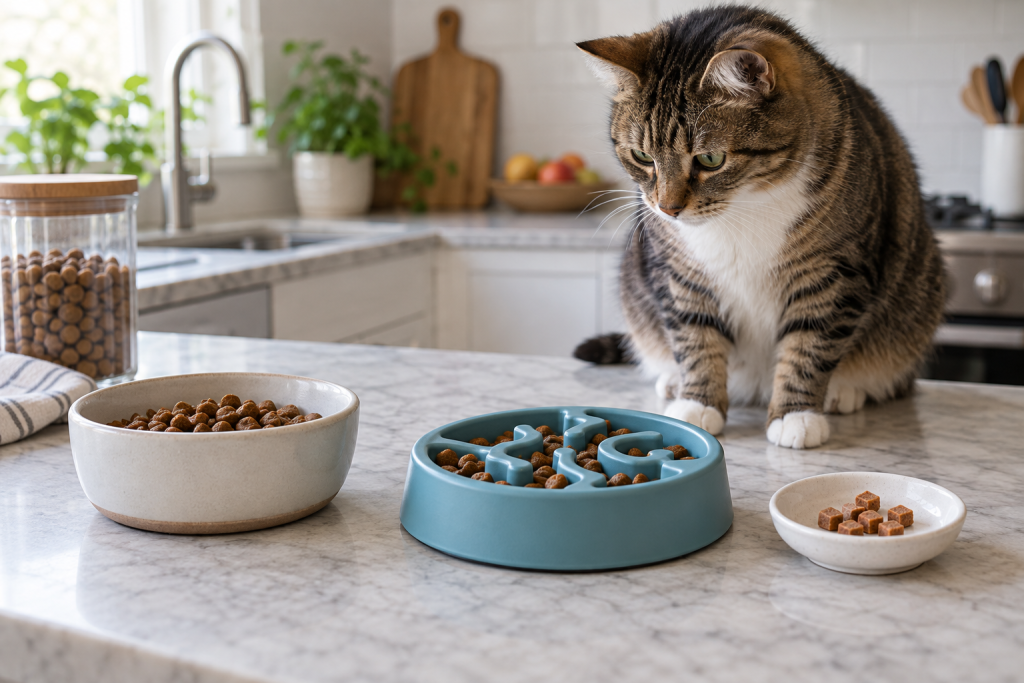
Do not offer food from your plate. Besides reinforcing table-side waiting, human meals may contain unsafe ingredients. Onion, garlic, alcohol, chocolate and raw dough are among the foods covered in the ASPCA list of people foods to avoid. If a cat may have eaten something toxic, note the food and amount and contact a veterinarian or animal poison service promptly.
Teach a place to wait before changing dinner
Choose a mat, bed or perch outside arm’s reach of the table. At a quiet time, reward the cat for stepping onto it. Then reward sitting, and gradually add a few seconds between rewards. Keep sessions short. Once the cat reliably goes there, add a consistent cue such as “mat.” Practice while nobody is eating before expecting the behavior during a distracting meal.
At dinner, place the cat’s reward or puzzle feeder on the station before people sit down. Reward calm staying at first, using part of the measured daily food. Over several meals, increase the interval and reduce how often food appears. A comfortable perch, view from a window or quiet toy can eventually maintain the routine without continuous treats.

Respond consistently when the cat approaches
If the cat leaves the station, quietly guide attention back with the cue or a toy. Avoid shouting, spraying water or pushing. Punishment can add fear without teaching where to go. Do not turn a table visit into a long conversation; even scolding may function as attention.
Expect the behavior to become louder or more persistent briefly when it stops working. This does not mean the plan has failed. Everyone at the table must follow the same rule, because occasional food from one person makes begging worth testing. Clear plates and wipe the table promptly so successful stealing does not provide a surprise reward.

Change the setup when management is needed
Training is harder when food is unattended, children drop scraps or a guest keeps feeding the cat. In those situations, use a comfortable separate room before the meal begins, with water, litter access, a bed and an activity. The room should be routine management, not a punishment delivered after conflict. Let the cat out once food and plates have been cleared.
Puzzle feeders can help by spreading the daily ration across small hunting-like tasks. FelineVMA feeding guidance encourages opportunities for foraging and problem solving. Introduce an easy puzzle first so frustration does not simply send the cat back to the table.
Keep a short record instead of guessing
For seven dinners, record whether the cat approached, jumped up, stayed at the station and received any food or attention from the table. The record often reveals inconsistency faster than memory does. Progress means fewer approaches, a quicker return to the station and calmer body language; it does not require perfect behavior by a fixed two-week deadline.
If begging remains intense despite adequate food and consistent training, or appears with weight or health changes, return to the veterinarian. A behavior professional who uses reward-based methods can help when anxiety, conflict between cats or aggression around food complicates the picture.
Sources used for this guide
Editorial note: The illustrations on this page were generated for DailyTrail to show the training setups described. They are not photographs of the author’s cat. This article provides general behavior and feeding information and does not replace advice from a veterinarian.
[…] while people are eating, the same link between persistence and food may be at work. This guide to stopping a cat from begging for human food explains how to change that reward pattern without replacing table scraps with extra […]
[…] people for scraps, the counter habit may be part of a broader food-reward routine. This guide to stopping a cat from begging for human food explains how occasional handouts keep that behavior going and how to replace them with a consistent […]