
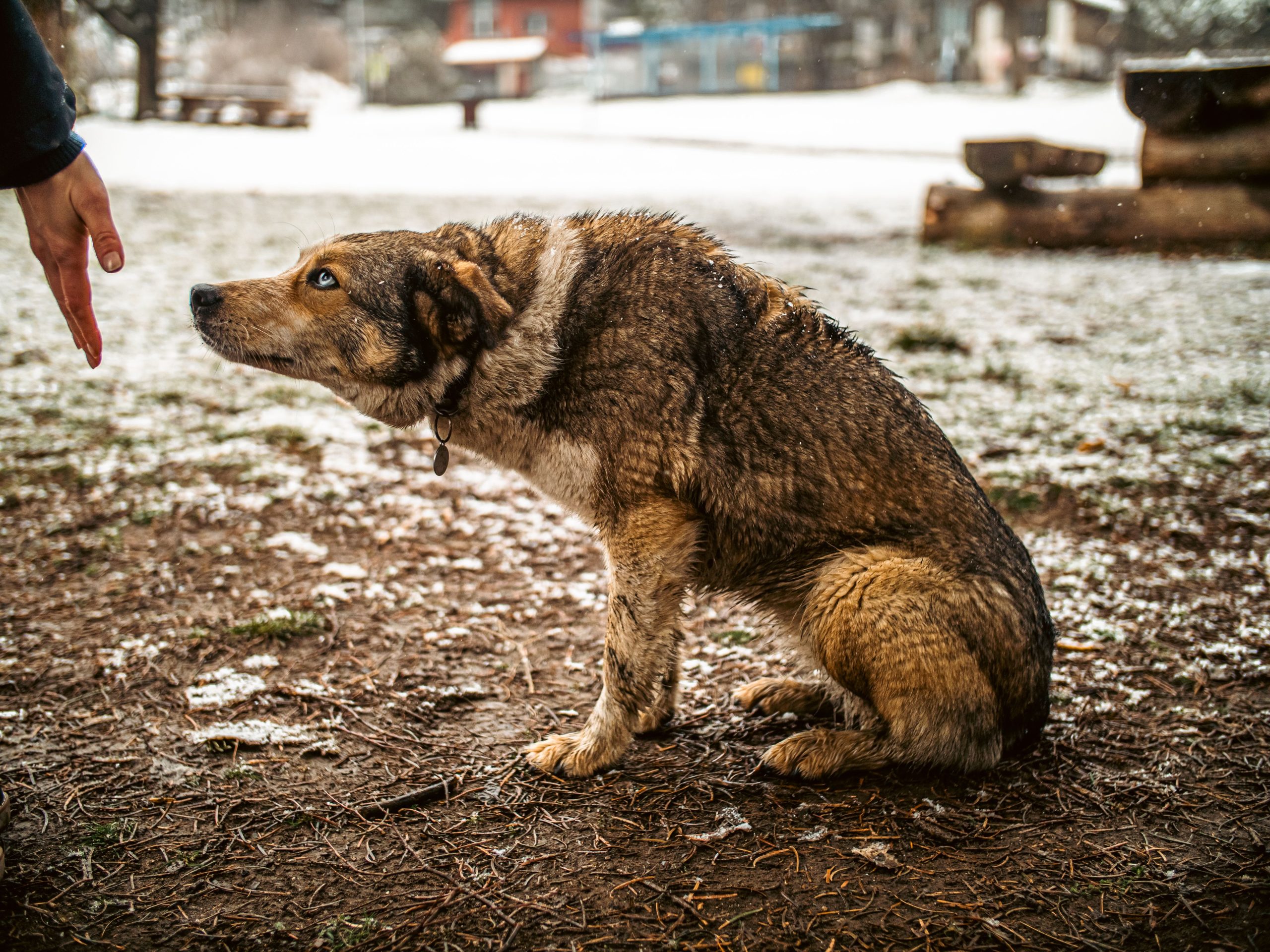
When a dog stops at the end of the leash and watches a stranger approach, I would not start with a command to be brave. I would first make room for the dog to move away. That small decision matters: a frightened dog cannot learn much while it is struggling to cope with the situation in front of it.
Notice what happens before the fear peaks
Watch for a lowered body, tucked tail, ears pinned back, repeated lip licking, yawning, trembling, scanning or attempts to leave. A dog may also bark or lunge to make something move away. None of these signs alone tells you a diagnosis. Note what happened just before the response, how close the trigger was, and how long the dog took to settle afterward. That record is more useful to a veterinarian or behavior professional than calling the dog simply “timid” or “traumatized.”
A sudden change in behavior deserves a veterinary appointment. Pain, illness, sensory changes and other medical problems can alter how safely a dog feels able to respond. If fear is severe, escalating, or includes a bite risk, do not try to work through it alone.
Give the dog a place to recover
Set a bed or open crate in a quiet part of the home, away from foot traffic. Leave water nearby and make sure the dog can come and go. Ask visitors not to approach, stare at or reach into that space. For a dog upset by outside noise, closing curtains or adding gentle background sound may help, but watch its response rather than assuming a particular sound is soothing.

If the dog comes to you for contact, it is fine to offer gentle affection. You do not create fear by calmly comforting a frightened dog. If the dog moves away or stiffens under your hand, give it space. Comfort is useful when the dog seeks it; space is useful when it does not.
Change distance before asking for a different response
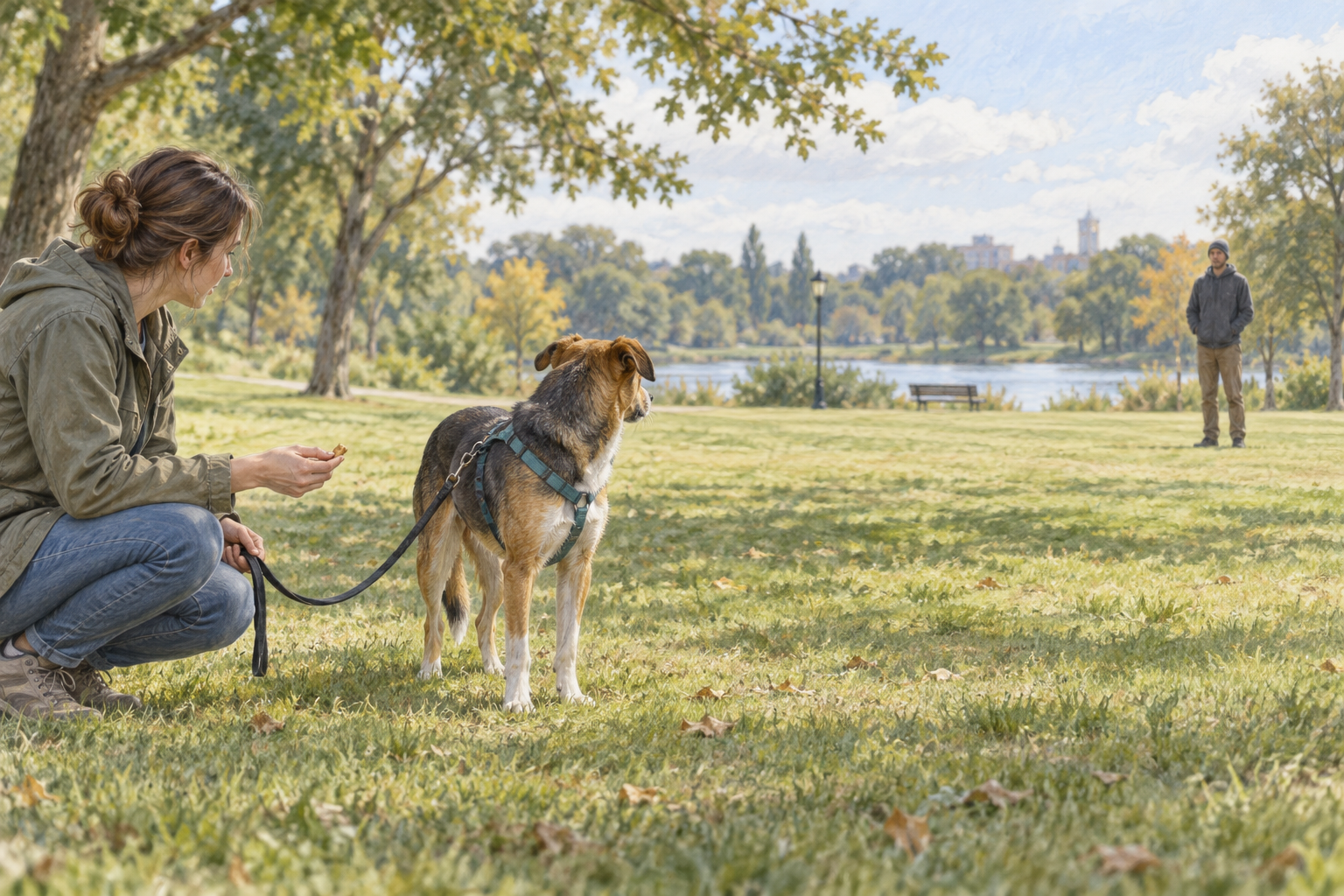
Suppose your dog worries about unfamiliar people. Cross the street or turn down a quieter path before the person is close enough to trigger barking or freezing. At a distance where the dog can notice the person and still eat, offer a small favorite treat. When the person passes, the treats stop. Repeat in manageable situations; do not arrange a greeting as the next step just because one session went well.
If the dog cannot take food, stares hard, pulls away or begins to bark, the exercise has become too difficult. Increase distance and help the dog leave. VCA describes gradual exposure and pairing a mild version of the trigger with something the dog likes; forcing the full-strength fear is not the same process. For thunder or fireworks, the stimulus is harder to control, so a veterinarian can help plan management before the next event.
Make ordinary days easier to predict
Predictability can reduce unnecessary surprises: use familiar walking routes, allow sniffing where it is safe, and let visitors know the dog needs space. A food puzzle or chew may give a dog something pleasant to do at home, but it is not a treatment for severe fear and should not be used to keep a panicking dog in place. There is no need for meals and walks to happen at the exact same minute every day.
Avoid leash corrections, punishment and deliberately flooding the dog with what it fears. The American Veterinary Society of Animal Behavior recommends reward-based methods for behavior change. A qualified professional should be able to explain how they will keep the dog below the point of panic and what you should do if a session goes badly.
When home changes are not enough
Speak with your veterinarian if the dog cannot settle, avoids normal activities, panics during predictable events, or has a history of snapping when cornered. The vet can check for medical contributors and discuss a referral to a veterinary behaviorist or another appropriately qualified, reward-based behavior professional. Medication may be part of a treatment plan for some dogs; it is not a last-resort failure, and the choice and timing belong with a veterinarian. Do not give human anxiety medicine or supplements on your own.
Sources
VCA Animal Hospitals: Fears and Phobias in Dogs — Animals and People; American Veterinary Society of Animal Behavior: Position Statements; VCA Animal Hospitals: Reducing Fear and Stress with Desensitization and Counterconditioning.
Editorial note: The illustrations on this page were generated for DailyTrail to show the setups described. They are not photographs of the author’s animals. This article provides general care information and does not replace advice from a veterinarian familiar with your dog.