
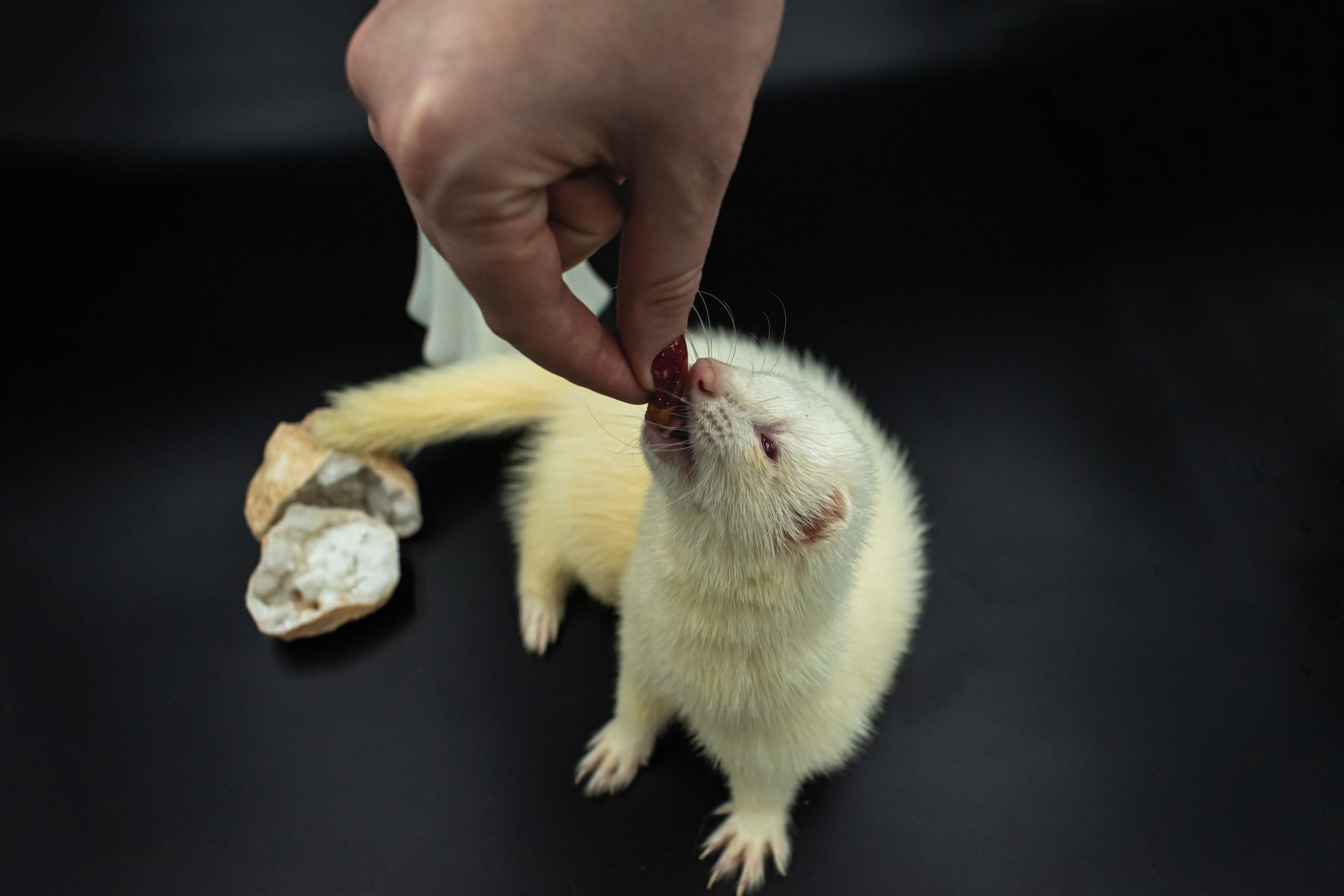
Ferrets are good at making an ordinary day look normal even when something is beginning to change. That is why I would not start a home health check by searching for a disease. I would start with a simpler question: what is different from this ferret’s usual pattern?
A five-minute check cannot diagnose an illness, but it can catch a change early enough to describe it clearly. If a ferret is struggling to breathe, collapses, has a seizure, cannot pass urine or stool, or produces black, tarry stool, skip the checklist and contact an emergency veterinarian.
Begin with a baseline you can actually remember
“Normal for a ferret” is too broad to be useful at home. One animal wakes ready to run; another takes a slow lap around the room before becoming active. Appetite and body weight can also shift with age, season, diet and routine. I find four baseline details worth recording during an ordinary week: activity after waking, usual food intake, normal stool appearance and body weight measured on the same scale at roughly the same time.
You do not need a complicated chart. A dated note such as “active after waking, finished the usual breakfast, two formed brown stools, 980 g” creates a reference point. Later, “sleepy” becomes “remained lying down for ten minutes after the cage opened,” which is far more useful to a veterinarian.

What I would look at in five minutes
Do this while the ferret would normally be awake. Deep sleep and the first groggy seconds after waking can look alarming when they are actually familiar behavior.
First, watch the ferret cross a non-slip floor. I would look for a new wobble, dragging of the hind legs, repeated stumbling, circling or reluctance to move. Do not try to name the cause from the gait. Write down when it began and, if recording does not delay care, take a short video that includes the whole body.

Next, compare food and water with the usual pattern. “Ate less” needs context: was it one meal, or has the change continued all day? Shared bowls can hide which animal is eating. A short period of supervised separate feeding may give a clearer answer without changing the diet.
Then check stool and urination. Note a new change in color, form, frequency or smell. One soft stool in an otherwise bright ferret is different from repeated diarrhea with weakness or poor appetite. Repeated straining, tiny amounts of urine or an inability to urinate is urgent, especially in a male ferret. Black, tarry stool also needs prompt veterinary assessment.
Finally, scan the coat, mouth and room. Look for spreading hair loss, a new lump, swelling, drooling, persistent bad breath or an unusual head position while eating. Then check whether rubber, foam, earplugs, soft plastic or fabric has been damaged. Vomiting, abdominal discomfort, appetite loss or stopping defecation after access to a missing object can indicate an obstruction; do not wait for every symptom to appear.
The point of the record is a timeline, not a diagnosis
I would keep each entry plain: date and time, activity, food, stool and urine, weight if measured, and anything unusual in the room. A useful entry might read: “Tuesday, 8 a.m. — stayed down after waking; ate about half the usual breakfast; fewer stools; urine normal; foam toy found damaged.” That example does not prove what is wrong. It tells the veterinarian when several changes appeared together.
Photographs help when they are comparable. Take hair loss or swelling from the same angle with similar light and include the date. For weight, use the same stable scale and a similar time of day. Seasonal variation can occur, so compare the number with the ferret’s own earlier measurements rather than relying on one generic ideal weight.
The part I would watch most closely is speed of change. Ferrets can deteriorate quickly and may hide discomfort until illness is advanced. A ferret that is becoming less responsive while you observe it needs a call, not a longer set of notes.
When observation should give way to veterinary care
Seek immediate veterinary care for:
- difficulty breathing, collapse, a seizure, inability to stand or severe staggering;
- straining without being able to urinate or defecate;
- black tarry stool, uncontrolled bloody diarrhea or heavy bleeding;
- a suddenly swollen or hard-looking abdomen;
- choking, a serious fall or another obvious injury.
Call a veterinarian promptly for a sudden behavior change, much more sleep than usual, continuing appetite loss, vomiting, repeated diarrhea, unexplained weight change, difficulty eating, expanding hair loss, genital swelling or a new lump. Several mild-looking changes occurring together are also worth reporting.
Before leaving for the clinic, collect the last times eating, drinking, urination and stool appeared normal. Bring recent weight entries, a list of food and medications, relevant photos or video, and any damaged object that may have been chewed. Transport the ferret in a secure carrier; do not delay urgent care to complete the list.
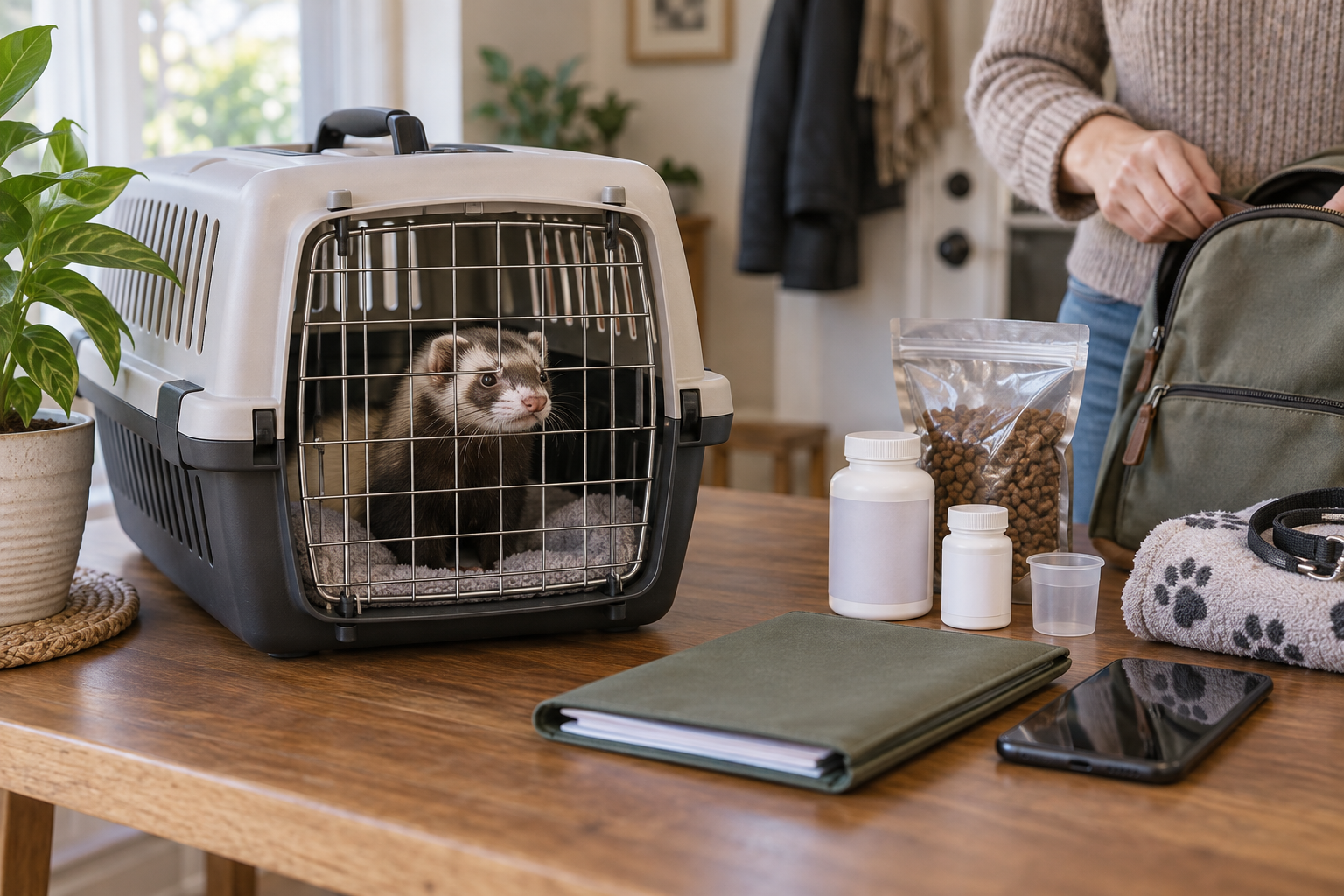
A daily check has a narrow but valuable job: it helps you notice that today is different and gives the veterinarian a clearer starting point. It should never become a reason to watch a worsening ferret for another day.
Sources and further reading
- Merck Veterinary Manual: Emergencies of Ferrets
- Merck Veterinary Manual: Endocrine Disorders of Ferrets
- Merck Veterinary Manual: Special Considerations for Ferrets
- Merck Veterinary Manual: Neoplasia of Ferrets
Editorial note: The illustrations on this page were generated for DailyTrail to show the observations and preparations described. They are not photographs of the author’s animal. This article provides general education and does not replace advice from a veterinarian familiar with ferrets.