
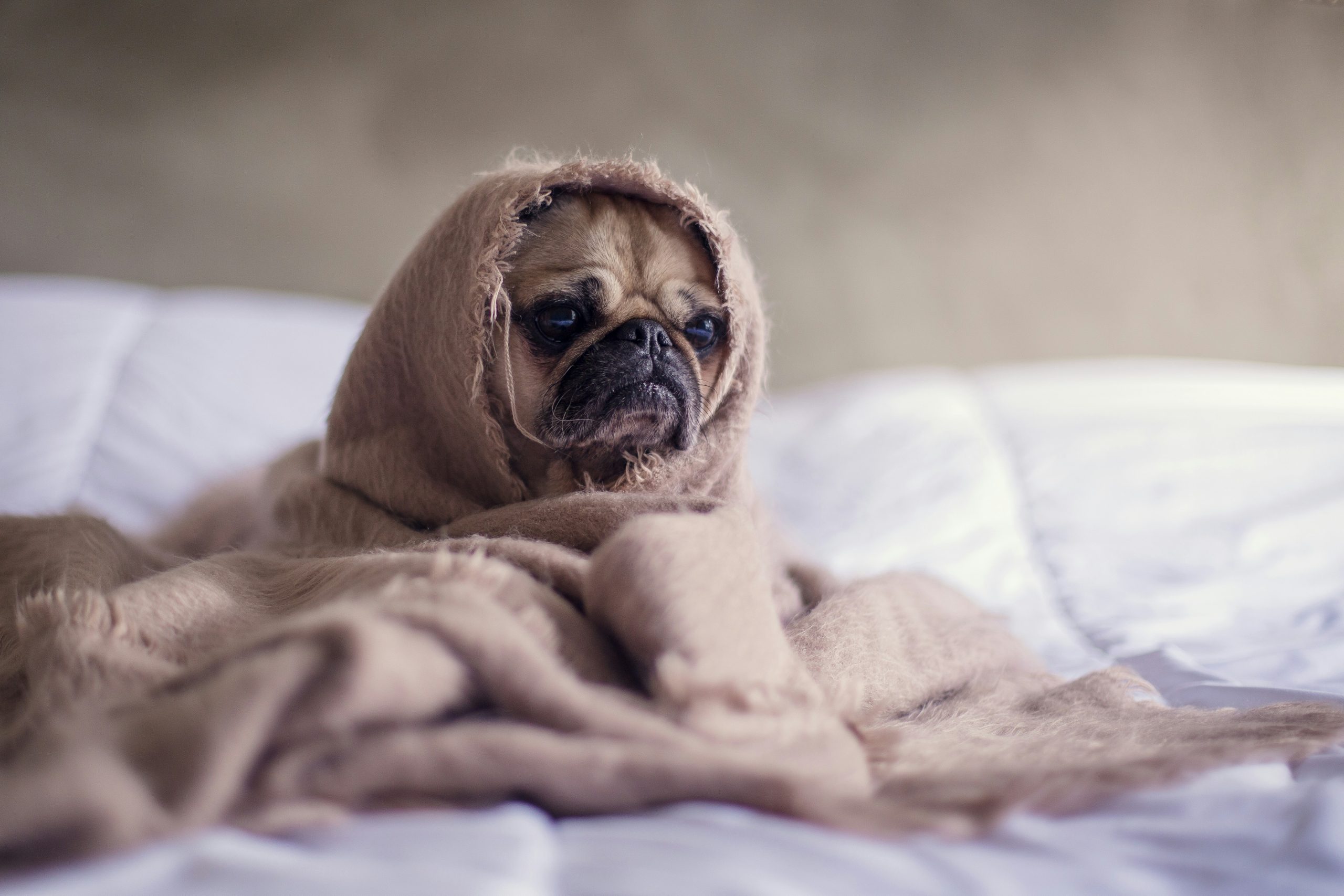
A winter walk can feel routine until a dog starts lifting one paw after another or turns toward home. I would treat that as information, not stubbornness. Cold tolerance varies with coat, size, age, health, wind, wet fur and how long the dog has been outside. There is no single air temperature or walk length that is safe for every dog.
Decide on the outing by the dog and the conditions
Short-coated, small, very young, older, underweight or unwell dogs may have less margin in cold weather. A thick coat can help, but it does not make a dog immune to icy wind, wet fur or prolonged exposure. Check the forecast and the ground before leaving. Freezing rain and slush can be harder on a dog than a brief dry walk at the same temperature.
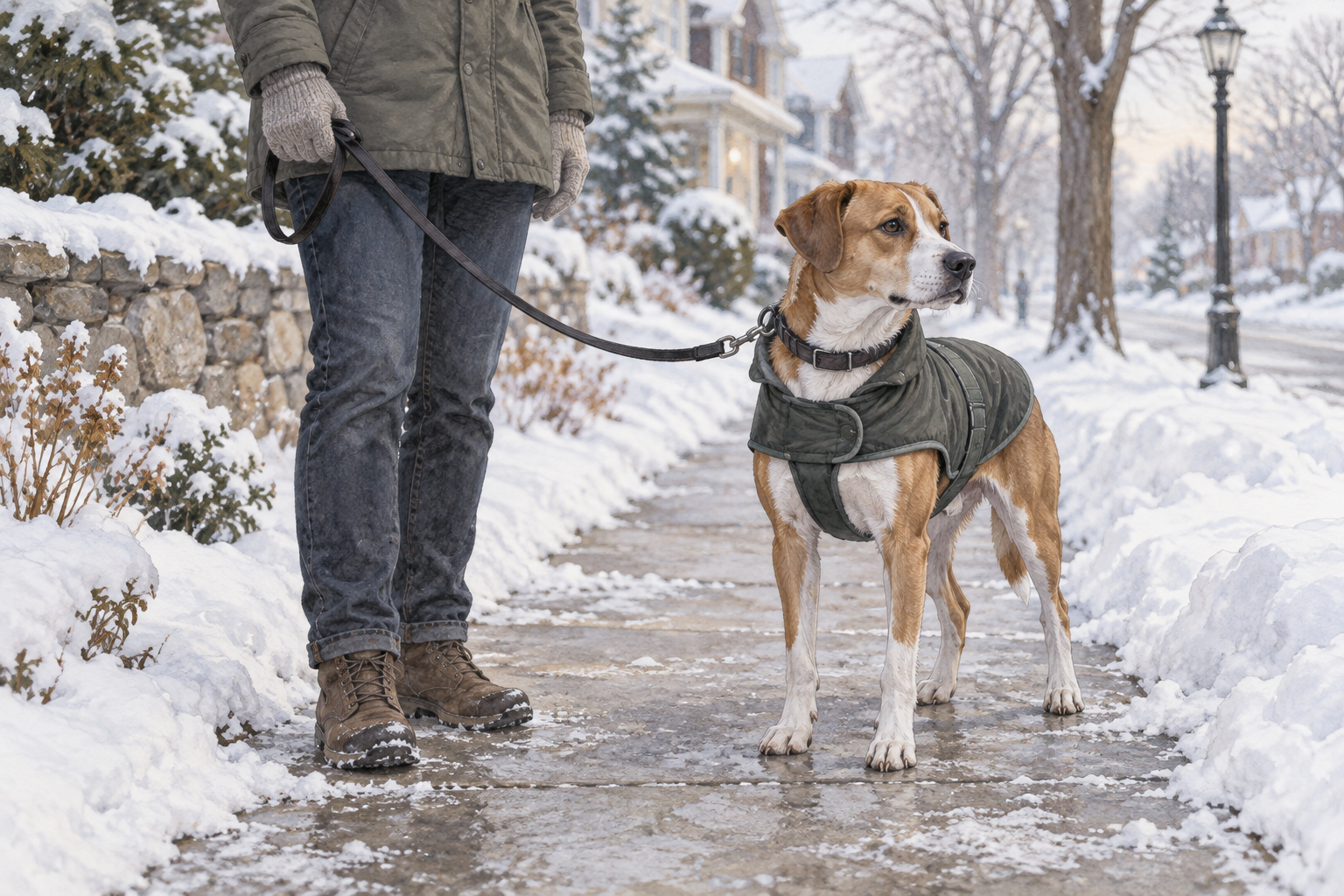
For a dog that gets cold quickly, a well-fitted coat covering the chest and body may help. Make sure it does not restrict movement or rub under the legs, and remove a wet coat when you come inside. Boots may protect paws from ice and de-icing products if the dog accepts them; introduce them indoors in short, pleasant sessions. Neither clothing nor boots make it safe to leave a dog outdoors for a long time.
Have a clear reason to turn back
Watch for shivering, repeated paw lifting, reluctance to continue, slowing, or a dog that seeks shelter. Return inside and dry the coat and paws. If the dog is weak, unusually quiet, confused, stumbling, or continues to shiver after being brought into warmth, contact a veterinarian urgently. Do not assume a dog is fine because it stopped shivering; severe cold injury can reduce normal responses.
If skin on the ears, tail or paws looks unusually pale, grey or blue, feels very cold, or later becomes swollen or painful, seek veterinary care for possible frostbite. Keep the dog dry and warm while arranging help. Do not rub affected tissue or use direct heat such as a heating pad or hot water. A vet can assess injury that is not obvious at first glance.
Check paws when you get home
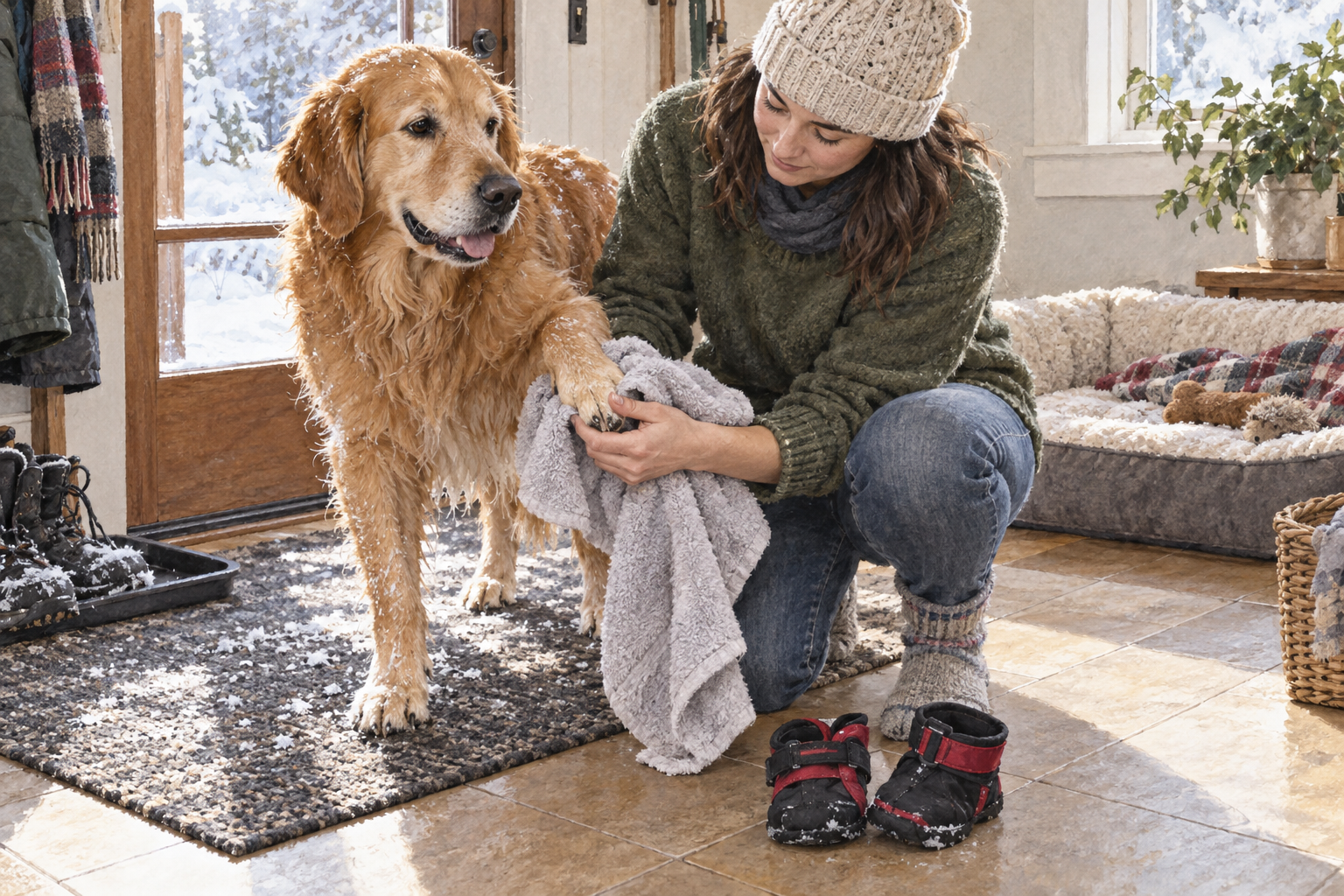
Road salt and ice-melting chemicals can irritate paws and may be swallowed when a dog licks them. After a walk on treated surfaces, wipe or rinse the feet and lower belly as needed, then dry carefully between the toes. Look for lodged ice, redness or cracks. The ASPCA recommends paw protection and cleaning after winter walks; ask your vet which balm or boot style is suitable if irritation keeps returning.
Store ice melt and antifreeze securely, and clean vehicle spills immediately. If you suspect your dog licked antifreeze or another winter chemical, contact a veterinarian or animal poison service at once. Do not wait for symptoms or try to manage a possible poisoning with home remedies.
Give the dog a dry place to recover
At home, provide a dry, draft-free resting place and fresh water. Move bedding away from cold doors and damp floors, but leave the dog room to move away from a heat source. A fixed indoor humidity target or extra food for every dog is not necessary. If the dog is itchy, drinking differently or losing weight, those changes deserve individual advice rather than a blanket winter adjustment.
Do not leave a dog alone in a parked car during cold weather. For walks after dark, use visible or reflective gear and choose footing that both you and the dog can manage. Shorten or skip an outing when wind, ice or the dog’s condition makes it unsafe; indoor games can replace some outdoor exercise until conditions improve.
Sources
ASPCA: Cold Weather Safety Tips; ASPCA: Protect Your Pet’s Paws in Winter; VCA Animal Hospitals: Frostbite in Dogs; American Kennel Club: Does My Dog Need a Winter Coat?.
Editorial note: The illustrations on this page were generated for DailyTrail to show the setups described. They are not photographs of the author’s animals. This article provides general care information and does not replace advice from a veterinarian familiar with your dog.
[…] Pack a collapsible bowl and fresh water. Bring a phone, know where the nearest veterinary clinic is, and avoid routes without shade or an easy exit. Seasonal routines should respond to conditions; the same principle applies when adjusting walks for winter cold. […]