
Bad breath is easy to notice, but it is a poor starting line for dental care. When I review a dog’s home routine, I look for smaller changes first: a new preference for soft food, slower chewing, dropping kibble, rubbing the face, or pulling away when the muzzle is touched. A dog may keep eating despite oral pain, so an empty bowl does not prove that the mouth is comfortable.
Home care has two jobs: reduce new plaque and help you notice changes early. It cannot show what is happening below the gumline, remove firmly attached calculus, or replace a veterinary oral examination.
Begin with a calm mouth check
Choose a quiet moment when the dog is relaxed. With clean hands, lift one side of the lip without forcing the mouth open. Look along the outer surfaces of the teeth and the edge where tooth meets gum. Then check the other side. I note what is normal for that dog rather than judging the mouth from one color rule.
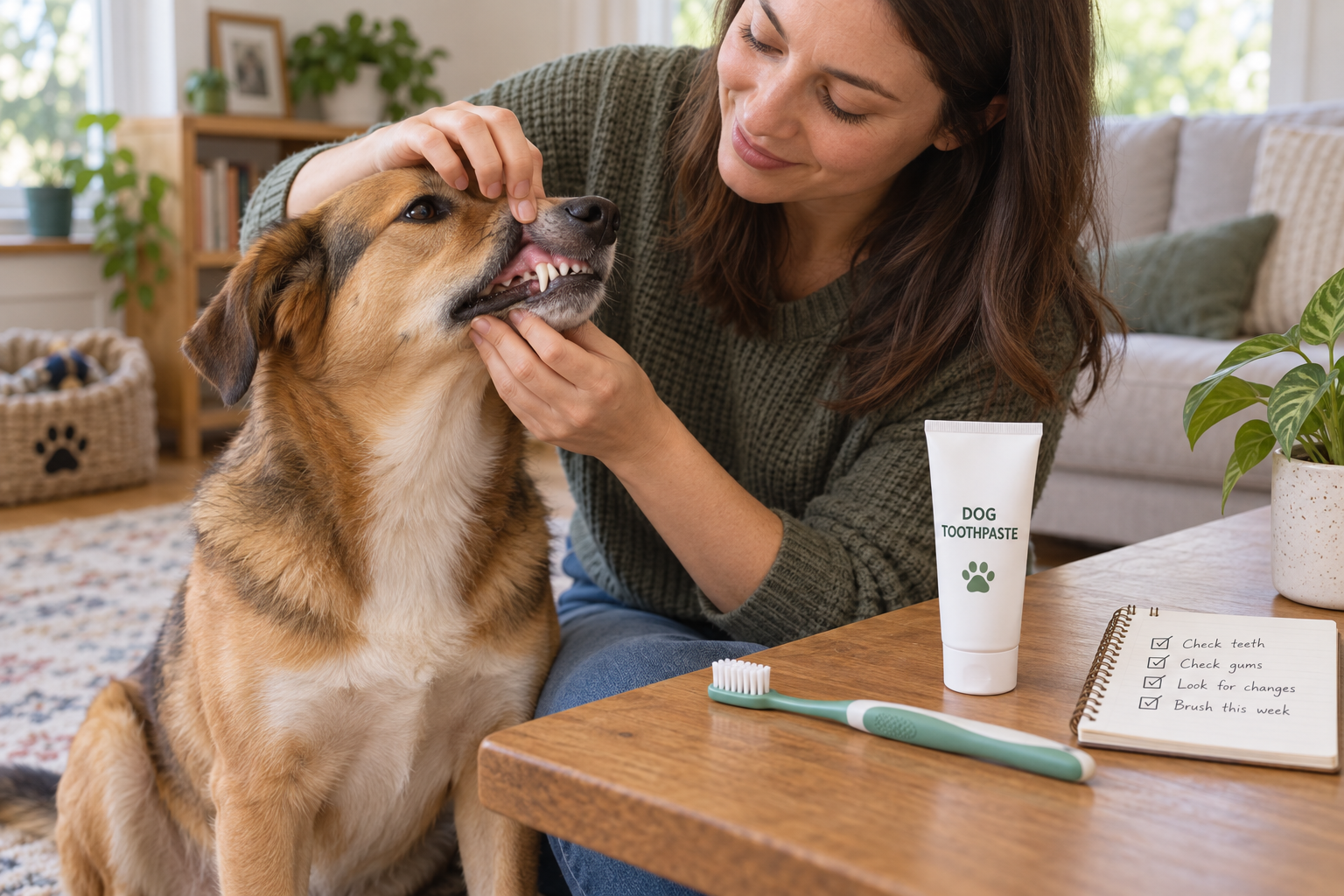
Watch for swelling, bleeding, a broken or loose tooth, a lump, discharge, marked redness, or yellow-brown deposits at the gumline. Compare both sides. Gum pigmentation varies widely between dogs, so “pink equals healthy” is not a reliable test for every animal. A new change, tenderness or asymmetry matters more.
This check fits naturally beside a broader home health check for dogs, but it should remain gentle. Do not pry open a painful mouth or put fingers between the teeth of a frightened dog.
Know when brushing should wait
Do not brush over a visibly painful, bleeding or injured area. Arrange veterinary care if the dog has facial swelling, persistent bleeding, a broken tooth, a loose adult tooth, pus, difficulty eating or opening the mouth, repeated pawing at the face, or sudden strong odor with discomfort. Facial swelling, inability to eat or drink, uncontrolled bleeding, trauma, or breathing difficulty needs prompt assessment.
Visible tartar is another reason to ask the veterinarian what the mouth needs. Brushing helps control soft plaque; it does not safely remove hardened deposits below or above the gumline. Scraping teeth at home can damage enamel or gums and leaves disease below the gumline unassessed.
Choose simple, dog-safe equipment
- A soft pet toothbrush sized for the dog’s mouth, or another tool recommended by the veterinary team.
- Toothpaste made specifically for dogs. Human toothpaste is not designed to be swallowed, and some products may contain xylitol, which is dangerous to dogs.
- A quiet, non-slip place where the dog can step away.
- Small rewards the dog already tolerates, if food rewards suit the dog’s diet.
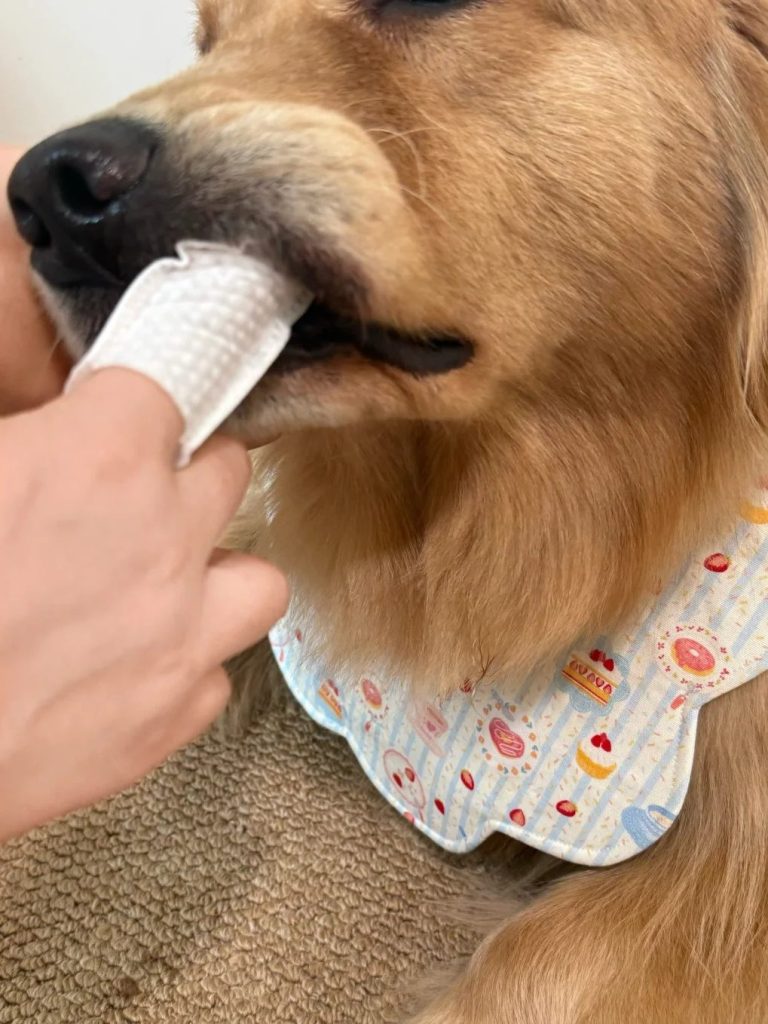
A finger brush is not automatically gentler. It places a finger close to the teeth and may feel bulky in a small or sore mouth. Use it only when the dog is comfortable with it and there is no bite risk.
Teach the handling before brushing the whole mouth
I separate cooperation from cleaning. First, touch the cheek briefly and reward calm behavior. In a later repetition, lift the lip for a moment. Then let the dog investigate the brush and dog toothpaste. Only after those steps are comfortable do I touch one or two outer tooth surfaces.
There is no fixed three-day timetable. One dog may accept a brush quickly; another may need many short sessions. Stop while the dog is still comfortable. Turning the head away, lip licking, freezing, showing the whites of the eyes, growling or trying to leave means the step is too difficult or the mouth may hurt. Do not restrain the dog and continue.
How to brush once the dog is ready
- Place a small amount of dog toothpaste on the brush.
- Lift the lip and angle the bristles toward the gumline without pressing hard.
- Use small, gentle motions over the outer surfaces, concentrating on the back teeth as tolerance allows.
- Keep the first sessions short and end calmly. Add more teeth over time rather than forcing a complete cleaning.
- Rinse or replace the brush according to its instructions and keep each pet’s brush separate.
AAHA describes daily brushing as the best home method for reducing plaque accumulation. That is the target to work toward, but a realistic plan starts with comfortable handling. Ask the veterinarian to demonstrate technique if the dog has a small mouth, crowded teeth, previous dental disease or resistance to facial handling.
Use dental products for the job they actually do
Chews, diets, water additives, wipes and gels vary in evidence and in whether they target plaque, tartar or both. The Veterinary Oral Health Council lists products that have met its standards for a stated claim. The seal does not mean every accepted product is suitable for every dog.
Match a chew to the dog’s size and chewing style, supervise it, and account for calories. Avoid objects hard enough to risk tooth fracture. Dogs with swallowing problems, food allergies, restricted diets or a history of intestinal obstruction need individual advice. A water additive is also a poor choice if it makes the dog drink less.
These products can support a plan; they do not make visible disease disappear. A claim such as “freshens breath” is not the same as evidence for reducing plaque or tartar.
What a professional dental procedure adds
A veterinary dental assessment is more than removing what can be seen on the crown. AAHA notes that important disease may be found only with a detailed examination and dental radiographs. Under general anesthesia, the veterinary team can examine and clean above and below the gumline, protect the airway, take radiographs when indicated, chart disease and treat painful teeth.
Anesthesia has risks, so the veterinarian evaluates the individual dog and explains monitoring and pre-anesthetic testing. An anesthesia-free cosmetic scaling cannot inspect and clean below the gumline in the same way; the AVMA, AAHA and American Veterinary Dental College do not recommend it as a substitute for comprehensive veterinary dentistry.
Keep a useful record between examinations
Once a week, I would record only changes that help a veterinarian: breath compared with the dog’s usual baseline, chewing behavior, appetite, visible deposits, bleeding, swelling and any reluctance to have the face touched. A dated photograph can help track a visible change, provided the dog remains comfortable.
Bring that record to routine examinations and ask how often this particular dog needs a professional oral assessment. Age, breed, tooth alignment, previous disease and home-care tolerance all affect the plan. Even consistent brushing does not rule out problems below the gumline.
Sources used for this guide
- AAHA Dental Care Guidelines for Dogs and Cats
- AAHA: Dental disease signs, professional cleaning, anesthesia and home care
- AVMA: Pet Dental Care
- Veterinary Oral Health Council: Accepted products
Editorial note: The first illustration on this page was generated for DailyTrail to show the home mouth-check setup described; the brushing photograph was already part of the original article. The illustration is not a photograph of the author’s dog. This article provides general oral-care information and does not replace examination or treatment by a veterinarian.