
You put on a black shirt. Step outside. The sunlight hits, and your entire outfit looks like it has been sprinkled with salt — dog hair everywhere.
I know. I live this too.
Over the years, I have owned a few true “walking dandelions.” A Golden Retriever. A German Shepherd. And one Husky that still gives me flashbacks. After a decade of dealing with dog hair, I might know more about managing shedding than I know about training dogs.
What follows comes from trial and error. Lots of error.
First — What Is Normal Shedding?
Dog shedding falls into two categories: normal and abnormal.
Normal shedding is seasonal. Spring and fall coat blows. Old fur falls out, new fur grows in. You cannot stop it. Double-coated breeds — Goldens, Shepherds, Huskies — will shed amounts that genuinely shock first-time owners.
Abnormal shedding is a different story. Bald patches. Red, irritated skin. Constant scratching in one spot. Shedding that never slows down, year-round. That points to skin disease, allergies, parasites, or hormonal issues.
How to tell the difference? Look at the skin underneath. Normal shedding areas have smooth, pink, healthy-looking skin. Abnormal areas show redness, scaling, scabs, or odor. The latter means a vet visit. Do not guess.
Brushing — Tools and Frequency Matter More Than You Think
Most people brush their dogs wrong.
Not just any brush, scraped across the back twice, counts as grooming. You need the right tool, at the right time, doing the right thing.
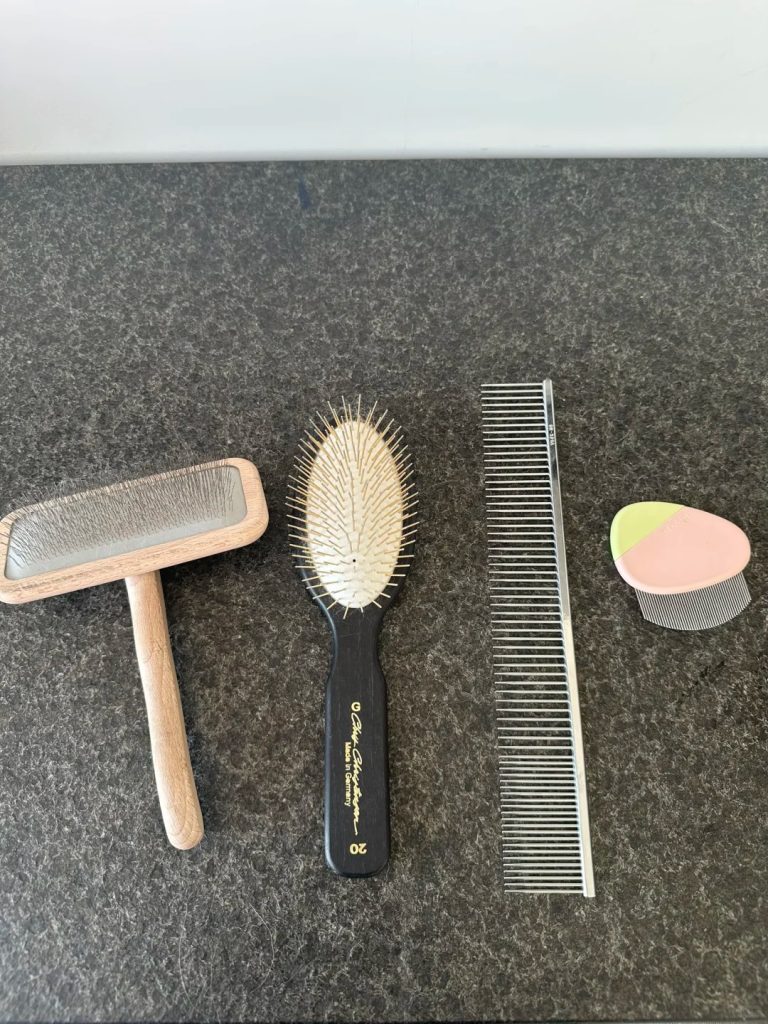
Short-coated dogs (Labradors, French Bulldogs): Use rubber curry combs or silicone grooming mitts. These tools grip the skin surface and pull out dead hair and dander together. Brush 1 to 2 times per week normally — increase to 3 to 4 times during shedding season.
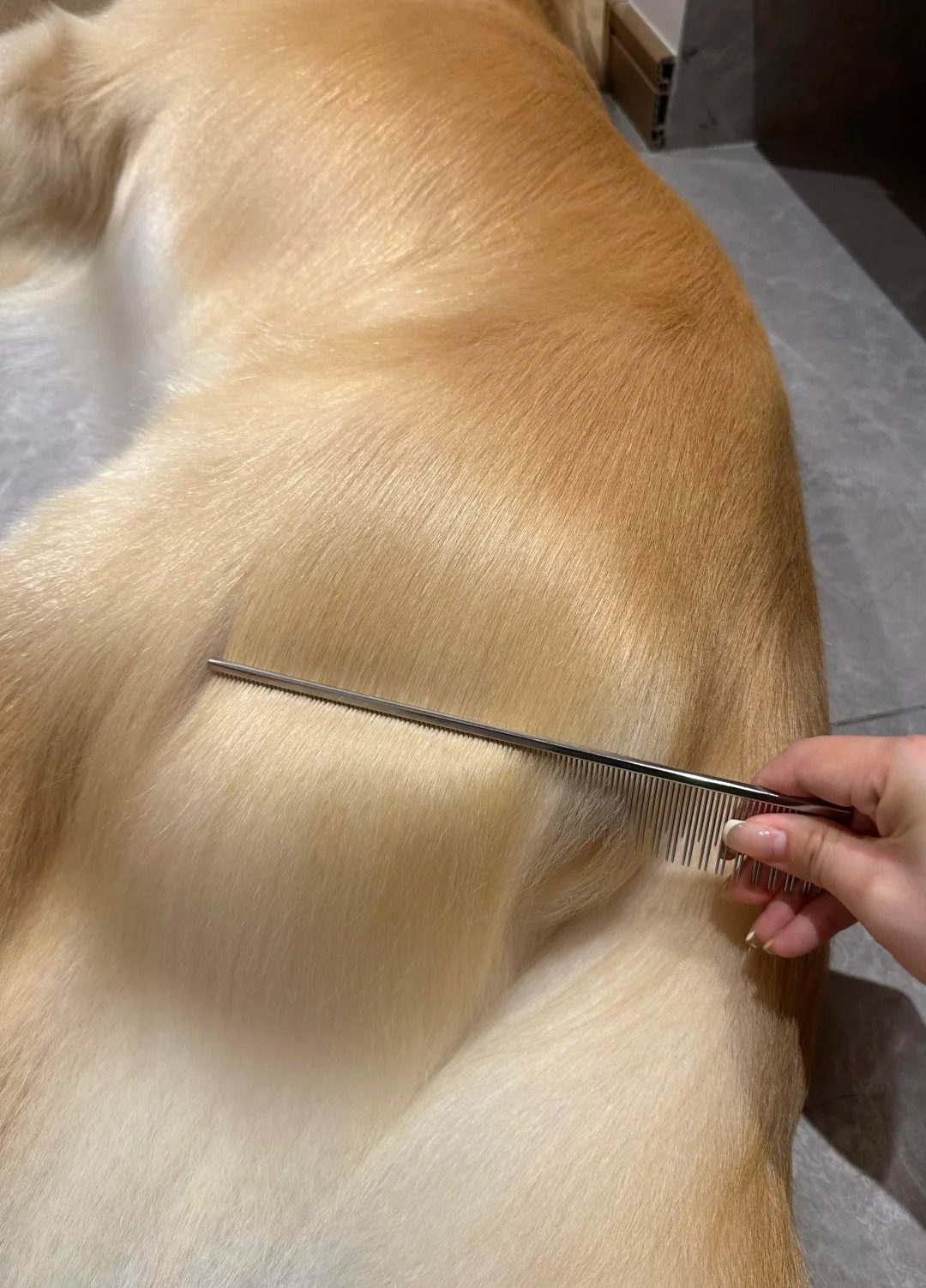
Long-coated or double-coated dogs (Golden Retrievers, German Shepherds, Corgis): Start with a slicker brush to loosen the topcoat, then follow with a metal comb for deep grooming. Make sure you reach the skin layer — not just the surface. During coat blows, brush daily.
If you have time, brush every day. If you do not, hit at least twice a week. Every skipped session doubles the matting and shedding problem later.
The best time to brush is right after a walk. The dog is slightly warm, coat is fluffed up, dead hair comes out easily. Right after waking up? Do not bother. The coat is flat. Nothing comes off.
One mistake I made: never brush a wet dog. Wet hair stretches, breaks, and looks worse after brushing than before.
Fish Oil — The Effect Is Bigger Than You Expect
Shedding and diet are directly connected. This is not woo-woo stuff. It is nutrition.
Omega-3 and Omega-6 fatty acids are the foundation of skin health. When these are missing, the skin barrier thins. The coat becomes dry and brittle. More breakage. More shedding.
Fish oil is the most effective supplement source. Add pet-specific fish oil to your dog’s meals. In 4 to 6 weeks, you see visible improvement — increased shine, reduced shedding, fewer flakes.
I had a German Shepherd with a coat like straw. Every stroke left my hand covered in broken hair. Six weeks of fish oil later, the change was so obvious that neighbors asked if I had gotten a different dog.
Do not guess on dosage. Follow the label. Store it in the fridge. Use it within two months of opening.

Good Food Beats Good Brushing
Fish oil is a supplement. Protein is the foundation.
Dog hair is made mostly of keratin — a protein. If the protein in their food is poor quality, the hair is poor quality. And it falls out more.
Check the ingredient list. At least three of the first five ingredients should be identifiable animal proteins — chicken, turkey, salmon, lamb. Whole meats, not vague “meat meals.”
Quick side note: grains are not evil. But cheap fillers like corn, wheat, and soy — if they sit at the top of the list — they crowd out quality protein. The rule is: meat first, fillers last.
If your current food has more than two grains in the top five ingredients — switch bags. You will see the difference in a month.
Bathing Too Often Makes Shedding Worse
Sounds backward, right? But frequent bathing strips the skin’s natural oil layer. The skin dries out. The barrier weakens. Dry, cracked skin sheds more hair.
A healthy indoor dog needs a bath every 4 to 6 weeks at most. If you wipe paws and belly with a damp towel after walks, you can stretch that interval even longer.
If the dog smells but is not due for a bath — waterless shampoo or pet wipes work well for spot cleaning. No full soak required.
Humidifiers Are Your Winter Friend
Those days when the heat is cranked up and the air feels dry enough to make your nose bleed — your dog’s skin suffers the same way.
Dry air pulls moisture from the skin’s surface. Skin cracks. Dander increases. Hair becomes brittle. Shedding goes up.
Place a humidifier in the room where your dog spends the most time. Keep humidity between 40 and 60 percent. Good for you. Good for them.
Cheap alternative: place shallow bowls of water around the house. Natural evaporation helps. Not as effective, but better than doing nothing.
The Three-Layer Cleaning Strategy
No matter how well you brush and feed, some hair will end up on the floor and furniture. But with a smart setup, cleanup does not become a daily nightmare.
Layer one: use a rubber squeegee or scraper on carpets and upholstery weekly. Rubber pulls embedded hair out of fabric fibers. It clumps together, and you pick it up by hand. Faster than vacuuming and emptying the canister.
Layer two: use a vacuum with a HEPA filter. Standard vacuums blow fine dander back into the air — and that is the real allergy trigger. HEPA traps those particles.
Layer three: an air purifier. Place it in your dog’s main area. Run it 24/7. It continuously filters floating hair and dander from the air. You will notice the difference the first time you walk in and take a breath.
These three items together cost a few hundred dollars. But the time saved on cleaning and the reduction in allergy symptoms are worth far more.
Final Thoughts
Reducing dog shedding boils down to three actions: brush properly, feed well, manage the environment. Do all three, and shedding drops noticeably. Skip any one, and the whole system falls apart.
You will never stop a dog from shedding entirely. But you can keep that hair on the dog — instead of on your black clothes.
Five minutes of brushing daily. A few extra seconds reading ingredient labels. Enough water for the dog, enough moisture in the air. These small things add up. One day, you will walk out the door in dark clothing, glance down, and realize — huh. I do not need to grab the lint roller this time.