

A cat at the bedroom door before dawn is hard to ignore. It is tempting to call the problem “hunger” and buy a feeder. Sometimes that helps. But a cat may also be active at dawn, expecting interaction, or showing a change that needs medical attention. I would work through those possibilities before deciding how to respond at 4 a.m.
Start with what changed
If this is a new behavior, especially in an older cat, do not begin with a plan to ignore it. Note whether the cat is also drinking more, losing weight, eating differently, vocalizing at other times, using the litter box differently, or seeming uncomfortable. Book a veterinary appointment for those changes. A cat that suddenly cannot settle at night is giving you information; the timing alone does not tell you why.
If your cat otherwise seems well and has woken you at roughly the same time for months, look at the routine around that hour. For three mornings, write down when the noise starts, what the cat does, what you do in response, and when food arrives. A phone note is enough. The detail that matters is whether waking you reliably starts breakfast, play, conversation, or access to the bedroom.
Make breakfast independent of your waking
If food seems to be the draw, a timed feeder can remove the connection between “human gets up” and “food appears.” Put it somewhere away from the bedroom. Begin with a small portion from the cat’s normal daily ration near the time the cat usually wakes you, then adjust the schedule gradually toward the morning time you want. Keep the total amount of food the same unless your veterinarian has advised a change. If the cat also begs while people are eating, the same link between persistence and food may be at work. This guide to stopping a cat from begging for human food explains how to change that reward pattern without replacing table scraps with extra calories.
You do not have to buy a feeder to test the idea. Once you are up, complete a short, predictable task before preparing breakfast, so the first movement from the bed is no longer the signal for a meal. A feeder is most useful when the cat is very persistent or your wake-up time varies. If the cat needs a prescription diet, measured wet food, or medication with meals, check that the device and schedule suit those needs first.
The feeder will not solve every early wake-up. A cat that continues to call from the bedroom after food has been dispensed may be seeking contact, activity, or access instead. That is useful feedback, not a reason to keep increasing the portion.
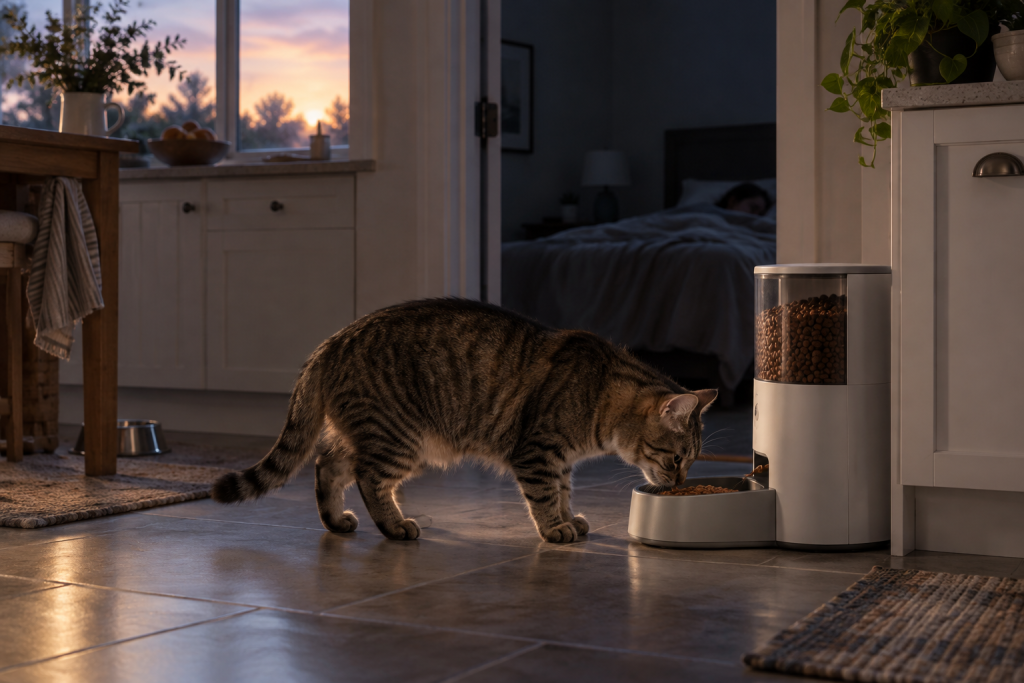
Give the evening a better rhythm
Some cats sleep for long stretches while the household is out, then want activity when people are ready for bed. Try a short, interactive play period in the evening with a wand toy or another toy your cat will actually chase. Let the cat catch it a few times; stop if the cat loses interest or seems tired. Follow play with a measured part of the usual evening food rather than an extra meal.
During the day, a window perch, hiding places, and a food puzzle can give a cat more to do independently. Introduce a puzzle with an easy setting first and count its contents as part of the daily ration. Put wand toys and strings away when you are not supervising. The point is to offer opportunities for activity, not to force a cat to stay awake or exercise until exhausted.

Choose a response you can repeat safely
Once health concerns have been considered and the routine is in place, keep the early-morning response boring and consistent. Feeding, playing, calling to the cat, or getting up to chase it can all become part of a familiar 4 a.m. sequence. Wait for a quiet moment before giving attention when you can. If your cat is distressed or behaving differently from usual, check on it rather than treating every sound as a training problem.
If you prefer to close the bedroom door, prepare a comfortable area outside it with water, litter, a resting place, and safe enrichment. Help a cat that normally sleeps with you get used to that arrangement gradually during the day. I would avoid motion-triggered sprays or other startling devices at the door; they may stop an approach without addressing why the cat is there.
If the wake-ups continue
Return to your three-morning notes. Does the cat wake at the feeder time, before it, or after the food is gone? Did the waking start with a change in work hours, household members, or feeding schedule? These answers determine whether to adjust the routine, offer more interaction at another time, or ask your veterinarian for help. There is no reliable one-week deadline for this to work. A persistent or worsening pattern deserves a fresh look, particularly if the cat is older or has other symptoms.
Sources
Feline Veterinary Medical Association: Training Techniques for Addressing Undesirable Behaviors; VCA Animal Hospitals: Cat Behavior Problems—Nocturnal Activity; FelineVMA: How to Feed a Cat.
Editorial note: The illustrations on this page were generated for DailyTrail to show the setups described. They are not photographs of the author’s animals. This article provides general care information and does not replace advice from a veterinarian familiar with your cat.