
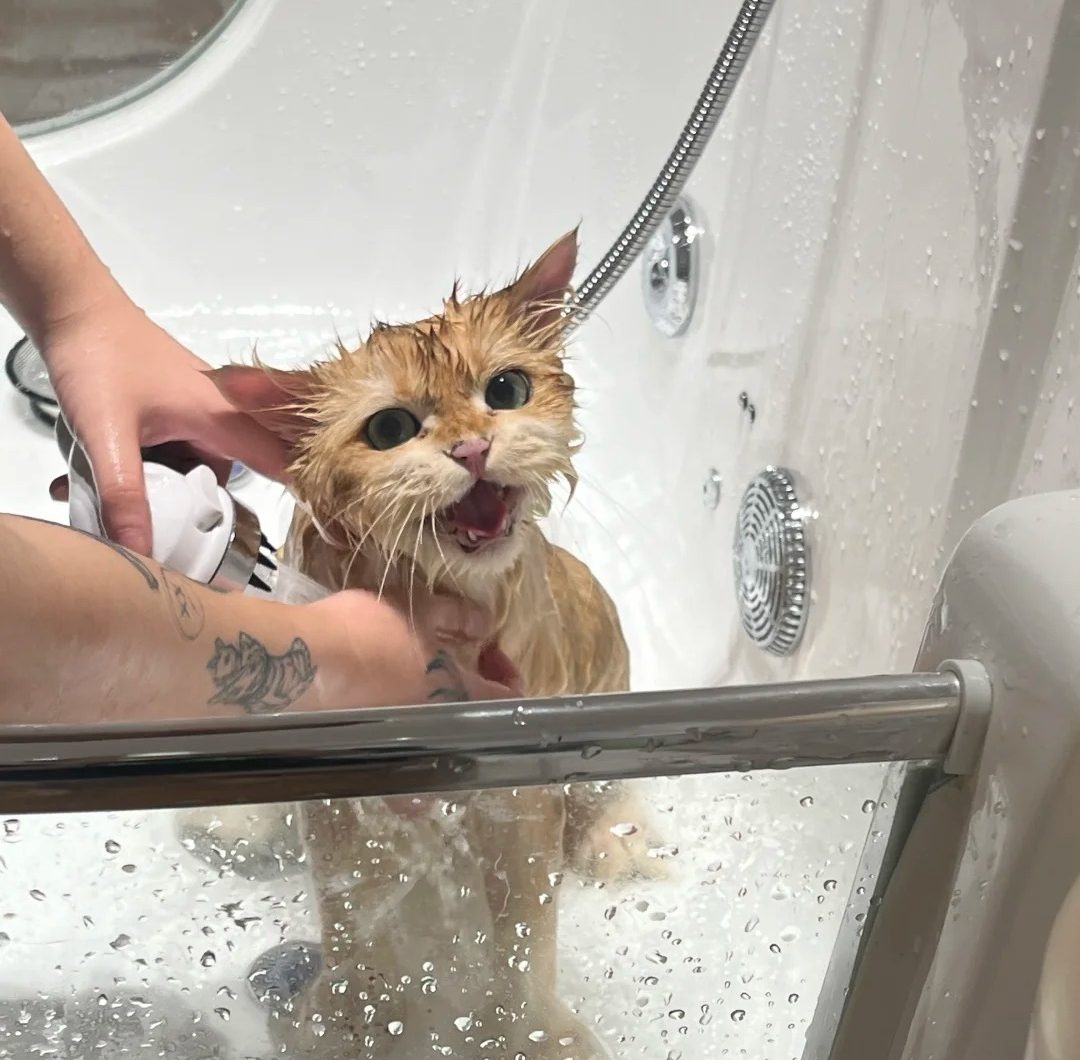
Sometimes the decision has already been made: a cat has a non-toxic mess that cannot be removed with a damp cloth, or a veterinarian has prescribed a medicated wash. At that point, the useful question is no longer how often cats should be bathed. It is how to complete this one bath without losing control of the cat, leaving product in the coat, or turning a necessary job into a prolonged struggle. If you are still deciding whether washing is needed, start with this guide to when a cat actually needs a bath.
Check the substance before adding water
Do not automatically wash off paint, motor oil, household cleaner, concentrated essential oil, a dog flea product, or any unknown substance. Water or shampoo may spread some materials, and the cat may swallow more while grooming. Move the cat away from the source, prevent licking if you can do so safely, keep the product container, and call a veterinarian or animal poison service for instructions. Tell them the product name, where it touched the cat, approximately when it happened, and whether the cat has licked it.
A medicated bath also follows its own instructions. Use the product, dilution, contact time, and schedule given by the treating veterinarian. A general bathing article cannot replace those directions.
Prepare the room before bringing in the cat
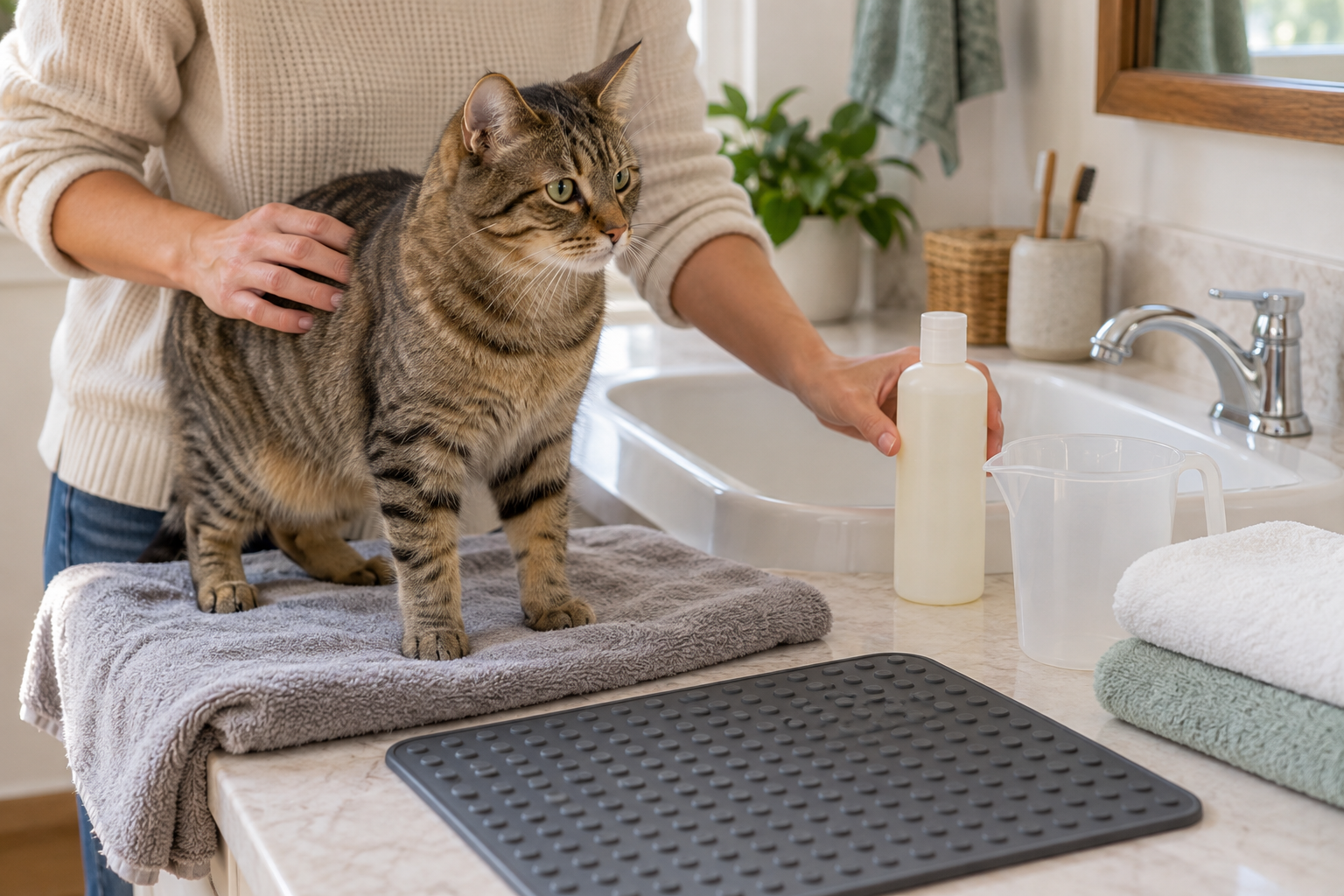
Choose a warm room with a door you can close. Place a non-slip mat in a sink or tub and put a rinsing cup, cat-safe shampoo if needed, and two or more dry towels within reach. Remove breakable items and close the toilet lid. Test the water with your wrist: it should feel lukewarm, not hot. The exact depth matters less than secure footing; use only enough water to wet and rinse the coat without making the cat swim or struggle to keep its head above water.
Brush loose hair before the bath if the cat accepts it. Do not pull at a tight mat or try to cut one close to the skin. Water can make a dense tangle harder to handle, and a painful mat may need a veterinarian or experienced groomer. Plan for another adult to help only if that person can remain calm and understands how to support the cat without squeezing its chest or pinning it down.
Wet the body gently and keep the face dry
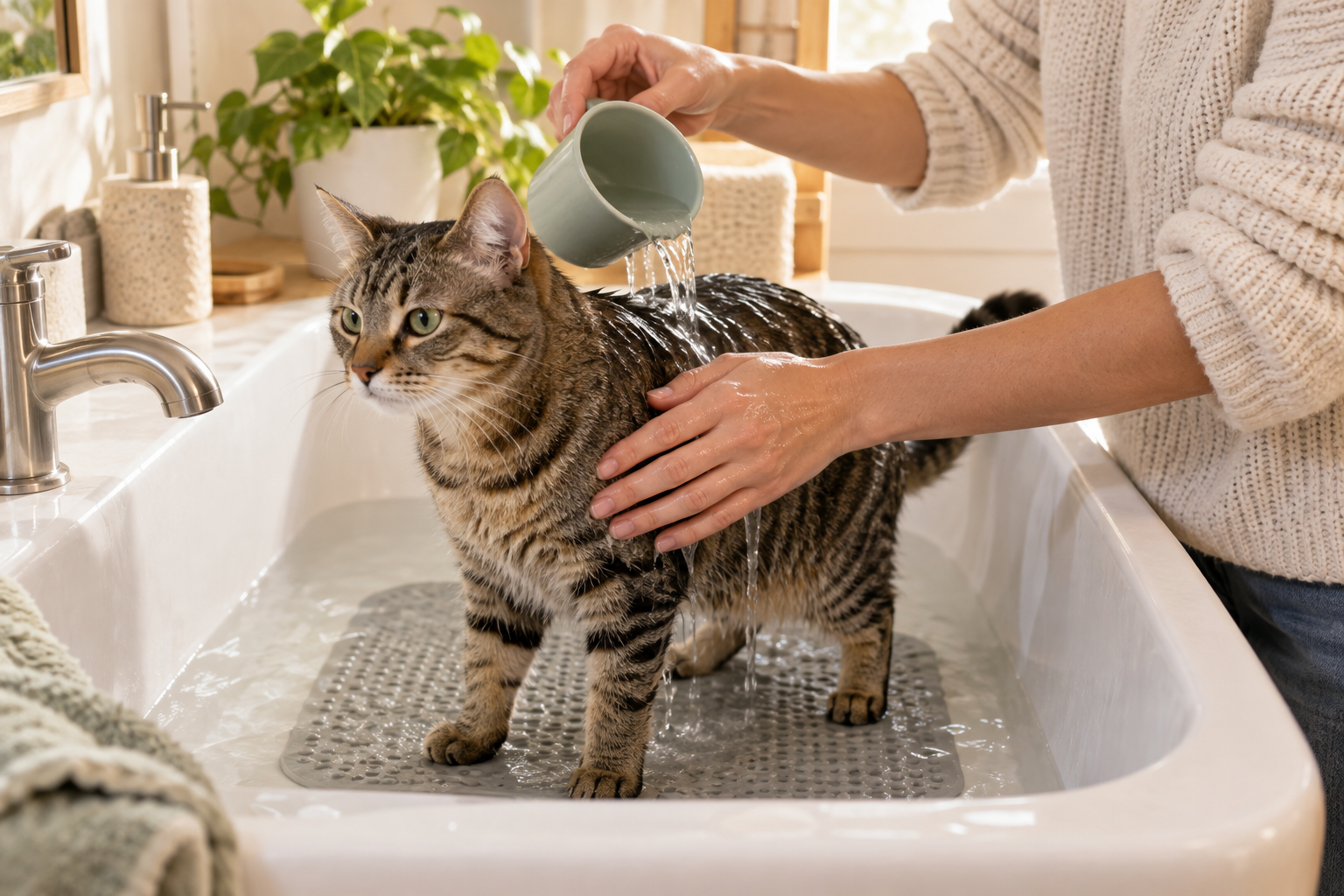
Let the cat stand on the non-slip surface. Use a cup or a gentle handheld flow to wet the shoulders, back, sides, belly, legs, and tail as needed. Keep water out of the eyes, nose, mouth, and ear canals. A damp cloth is safer for ordinary dirt around the face. Work in a steady order rather than repeatedly turning the cat or lifting its feet.
If shampoo is needed, use a product made for cats and follow its label or the veterinarian’s directions. Do not substitute human shampoo, dish detergent, dog shampoo, or a dog flea product. The correct amount depends on the product concentration and the area being washed, so a universal spoonful or “pea-sized” rule is unreliable. Apply only where needed and do not let the cat lick the lather.
Rinse by checking the coat, not the clock
Rinse with clean lukewarm water until the coat no longer feels slippery and no foam appears when you part and press the fur. Check the chest, belly, armpits, groin, and underside of the tail, where product can remain hidden. There is no dependable rule that rinsing must last a fixed number of minutes or twice as long as washing. Coat length, density, and the product determine how much rinsing is necessary.
Keep the bath brief, but do not rush past a complete rinse. If the cat is struggling violently, breathing with an open mouth, becoming weak, or cannot keep secure footing, stop. Move the cat onto a towel and contact a veterinary team if its breathing or behavior does not promptly return to normal. A groomer or veterinary clinic is the safer setting when a necessary bath cannot be completed without force.
Blot the coat and keep the room warm
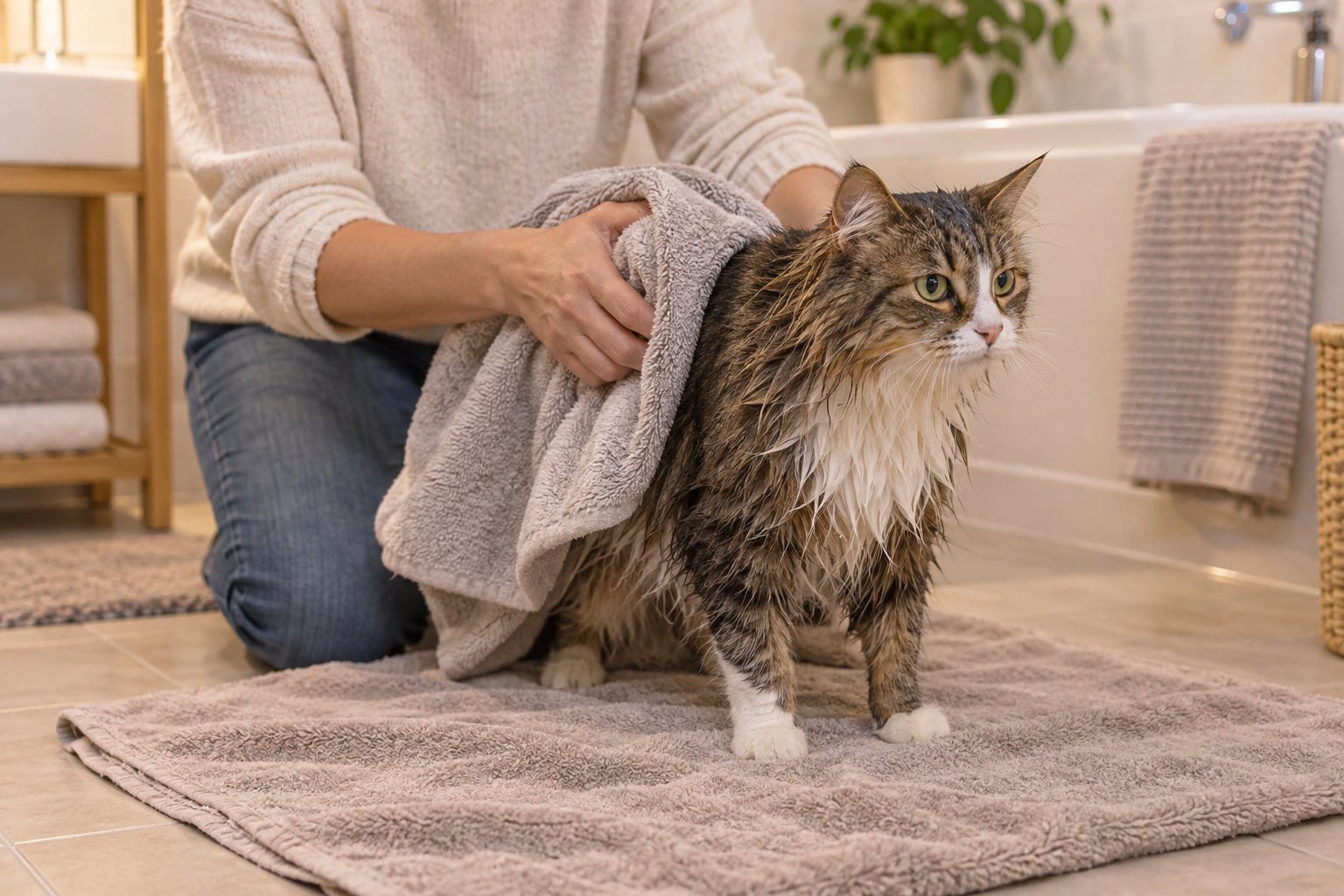
Lift or guide the cat onto a dry towel and blot the coat. Replace the towel when it becomes soaked. Avoid vigorous rubbing, especially on long hair, because friction can tighten tangles. Keep the cat indoors in a warm, draft-free room until dry, with access to water, a litter tray, and a quiet hiding place.
A noisy dryer can frighten a cat, and hot air can burn skin or cause overheating. Do not place a cat in an enclosed cage or drying box with a heat source. If a dense coat cannot be dried comfortably with towels and room air, ask a veterinarian or experienced cat groomer for help rather than improvising with prolonged heat.
Watch the cat after the bath
Once the cat has settled, check for shivering, persistent rapid breathing, redness, repeated licking, or a coat that still feels soapy. Call the veterinarian if the bath followed chemical exposure, if a medicated product caused a reaction, or if the cat remains distressed or unwell. For an ordinary non-toxic mess, return to brushing and spot cleaning rather than putting the next bath on a calendar.
Sources
Cats Protection: Should I Bathe My Cat?; VCA Animal Hospitals: How to Bathe Cats with Medicated Shampoo; ASPCA: Poisonous Household Products.
Editorial note: The illustrations on this page were generated for DailyTrail to show the bathing setups described. They are not photographs of the author’s animals. This article provides general care information and does not replace advice from a veterinarian familiar with your cat.