
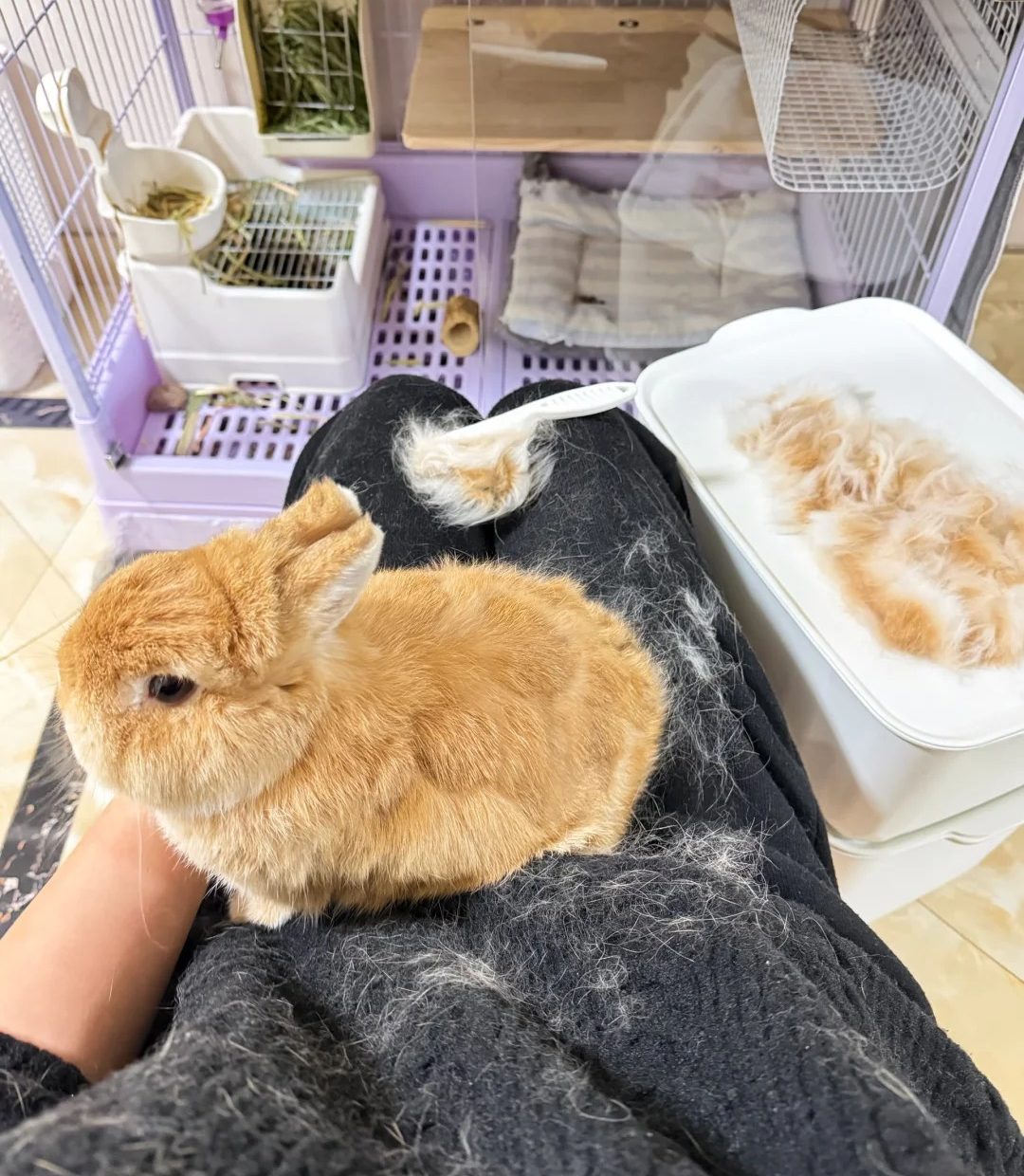
Grooming a rabbit is less about making the coat look tidy than noticing what the fur is hiding. When I check a rabbit, I work from nose to tail and compare what I see with that animal’s normal condition: Is the coat separating cleanly? Is the skin dry and unbroken? Are the feet comfortable on the floor? Is the rear clean enough that flies will not be attracted? That turns grooming into a useful health check instead of a rushed battle with a brush.
Let coat type and shedding set the schedule
There is no single brushing interval that fits every rabbit. A short, smooth coat may need only brief regular sessions between molts, then more frequent attention while loose fur is coming away. A long or woolly coat can tangle quickly around the neck, chest, legs and rear and may need checking every day. I let the amount of loose fur, the coat texture and the rabbit’s ability to groom determine the frequency.
Grooming removes loose fur before the rabbit swallows more of it, but hair in the stomach is not usually a stand-alone diagnosis. If a rabbit eats less, produces fewer or smaller droppings, sits hunched or seems unusually quiet, do not treat brushing or a “hairball remedy” as the solution. Reduced appetite and gut movement need prompt advice from a rabbit-experienced veterinarian.
Set up before touching the coat
I prepare a non-slip towel on the floor or another low, secure surface, with the brush, comb and a small container for loose fur within reach. Working low reduces the distance of a fall if the rabbit suddenly twists. I avoid placing a rabbit on its back or holding it in a position that makes it freeze. A motionless rabbit may be frightened rather than relaxed.
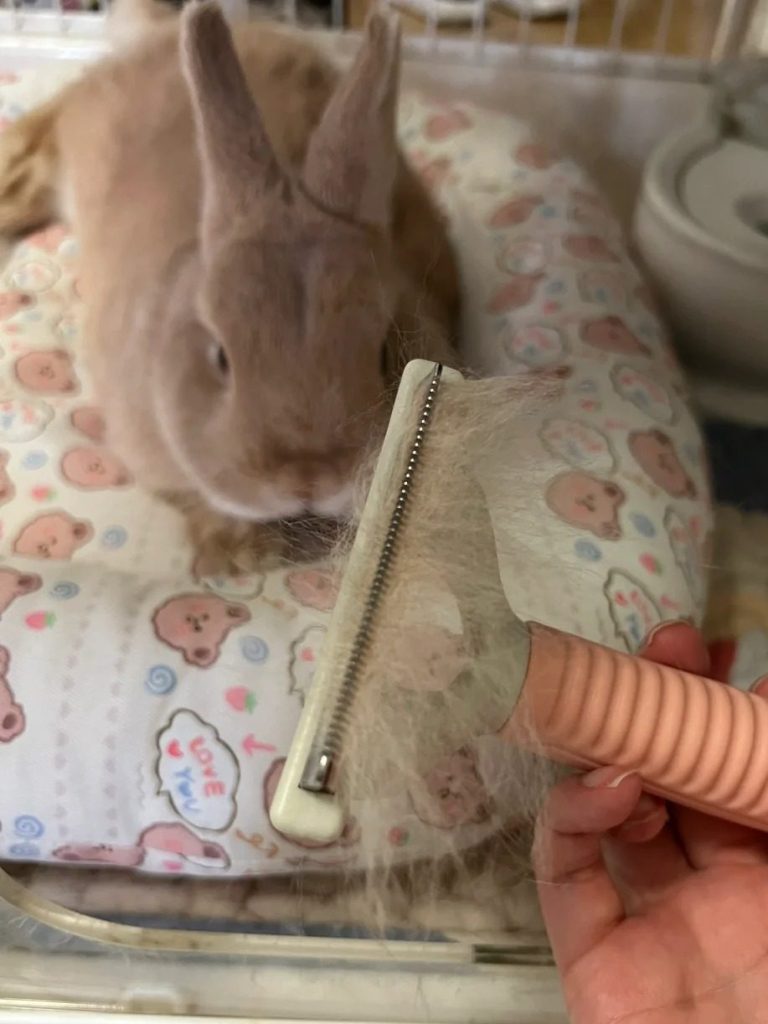
Begin with a hand over the coat so you can feel where the skin lies. Use short, light strokes and keep the other hand calmly in contact with the body. The original photograph below shows a useful principle: the tool stays almost flat to the coat instead of being pressed toward the skin. Stop if the rabbit repeatedly tries to escape, breathes rapidly or becomes tense. Several calm two-minute sessions are more useful than finishing the whole body by force.
Choose tools by what they do
A soft rubber grooming tool can lift loose surface fur from many short coats. A fine comb helps find small tangles in longer fur, while fingers are often best for separating a loose knot. The safest tool is the one you can control without scraping skin or pulling the rabbit. Check the skin after the first few strokes; redness tells you the pressure or tool is wrong.
Do not mist the coat just to control static. Damp undercoat is difficult to assess and dry, and wetting can tighten an existing tangle. I collect loose fur with slightly damp hands after brushing instead. Around the eyes, ears, genitals and thin skin under the front legs, use fingers and a comb very cautiously rather than making blind passes with a slicker brush.
A mat against the skin is not a home scissor job
A small, loose tangle may come apart when you support the fur at its base and tease from the outer edge with fingers or a comb. Stop if the skin lifts with the mat or the rabbit reacts. Rabbit skin is thin and can be drawn up inside a tight mat, so it is very easy to cut skin while believing you are cutting only fur. Rounded scissor tips do not remove that risk.
Ask a rabbit-experienced veterinarian or an experienced rabbit groomer to remove a tight, widespread or felted mat, especially under the chin, in the armpit, beside the genitals or close to the tail. A badly matted rabbit may need veterinary clipping and pain or sedation decisions that cannot be made safely at home. Red, moist, broken or foul-smelling skin also needs veterinary assessment rather than cosmetic trimming.
Check the rear every day
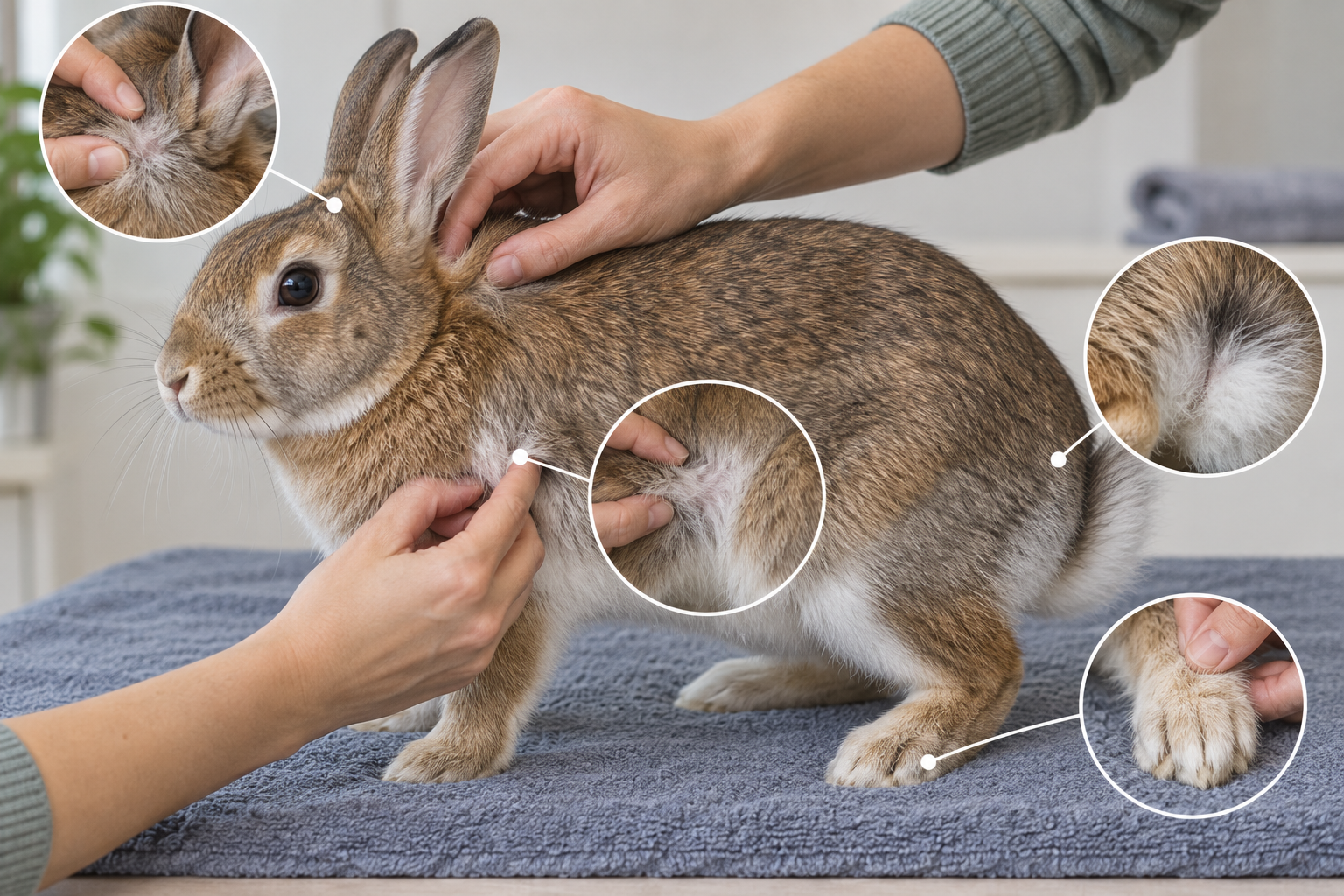
A clean rear should be confirmed, not assumed. Look beneath the tail at least daily and more often in warm weather or when a rabbit has previously been soiled. Check the skin as well as the fur for urine, soft caecotrophs, dampness, redness, wounds, fly eggs or maggots. Flystrike can progress quickly; finding eggs or maggots is an emergency that requires immediate veterinary care.
A repeatedly dirty bottom is a symptom, not a grooming personality. Arthritis, obesity, dental pain, urinary disease, diarrhea, an unsuitable diet or an environment the rabbit cannot keep clear of may all contribute. Clean and dry the area as directed by a veterinarian, but also arrange an examination to find the cause. Cutting crusted material with scissors near the skin can create a wound and should be avoided.
Avoid routine baths
Healthy rabbits usually keep themselves clean and do not need whole-body baths. Immersion is stressful, a struggling rabbit can injure itself, and dense wet fur can leave the animal chilled. If something toxic gets on the coat, call a veterinarian or animal poison service for instructions rather than guessing which shampoo will remove it safely.
When illness or limited mobility causes soiling, a veterinarian may recommend a controlled bottom wash. Follow that individual plan, use a non-slip surface and a helper, and keep the rest of the rabbit dry. PDSA and the Rabbit Welfare Association & Fund both stress that persistent soiling needs its cause treated. Do not rely on perfumed wipes, powders or a full bath to disguise it.
Add nails, ears and feet to the same check
Look at nail length and direction while the rabbit is standing normally. Nails that are very long, curved or changing the way the foot rests should be trimmed by someone who can identify the quick. If you have not been shown how, ask a veterinary nurse or rabbit-experienced professional for a demonstration before attempting it. A bleeding nail, torn nail or painful foot needs appropriate care rather than another clip.
For ears, inspect only what is visible. Normal wax varies, but crusts, a strong smell, discharge, frequent head shaking or scratching can indicate mites or infection. Do not insert cotton swabs or pour a cleaner into the ear unless a veterinarian has advised that product and method. Check the underside of each hind foot for thinning fur, redness or sores; hard, wet or abrasive flooring can make pressure injuries worse.
Keep the living area dry without stripping it bare
Remove wet litter and spoiled food as soon as you find them, refresh water and keep hay dry. How often the entire litter area needs changing depends on its size, absorbency, the number of rabbits and where they urinate. The useful end point is a dry, clean resting area without ammonia smell, not a universal weekly reset.
During each grooming check, I record anything that may matter later: a new knot, the location of a sore patch, rear-end soiling, nail damage, appetite and droppings. A dated note or photograph makes it easier to tell whether a problem is improving and gives a veterinarian better context than “it appeared recently.”
Sources used for this guide
- House Rabbit Society: Grooming
- House Rabbit Society: How to Clipper a Rabbit Safely and Kindly
- PDSA: Keeping Your Rabbit Healthy
- PDSA: Urine Scald, Dirty Bottoms and How to Clean a Rabbit
- Rabbit Welfare Association & Fund: Flystrike in Rabbits
- Rabbit Welfare Association & Fund: When and How to Safely Bathe Your Rabbit
Editorial note: The body-check illustration on this page was generated for DailyTrail to show the areas described. It is not a photograph of the author’s animal. The grooming photograph was already part of this article. This guide provides general husbandry information and does not replace advice from a veterinarian familiar with rabbits.
[…] arthritis, urinary disease or an unbalanced diet can make normal self-cleaning difficult. Our rabbit grooming and cleaning guide explains a gentle inspection routine. If you see broken skin, a strong odor, fly eggs or maggots, […]
[…] During routine cleaning, look at the heel fur for thinning, redness, scabs or moisture. The rabbit grooming and cleaning guide shows how to combine that check with coat and bottom care without forcing the rabbit onto their […]