
When I review a rabbit’s diet, I start with two ordinary clues: what has actually disappeared from the hay rack, and what has appeared in the litter tray. A full pellet bowl can make a feeding routine look generous while hiding the more useful question—whether the rabbit is eating enough long-stem fibre throughout the day.
This guide is a practical starting point for a healthy adult pet rabbit. Young, pregnant, nursing, underweight or unwell rabbits—and rabbits with dental, urinary or digestive problems—need an individual plan from a veterinarian experienced with rabbits. Age labels alone do not tell us how much food a particular rabbit needs.
Build the diet around hay and grass
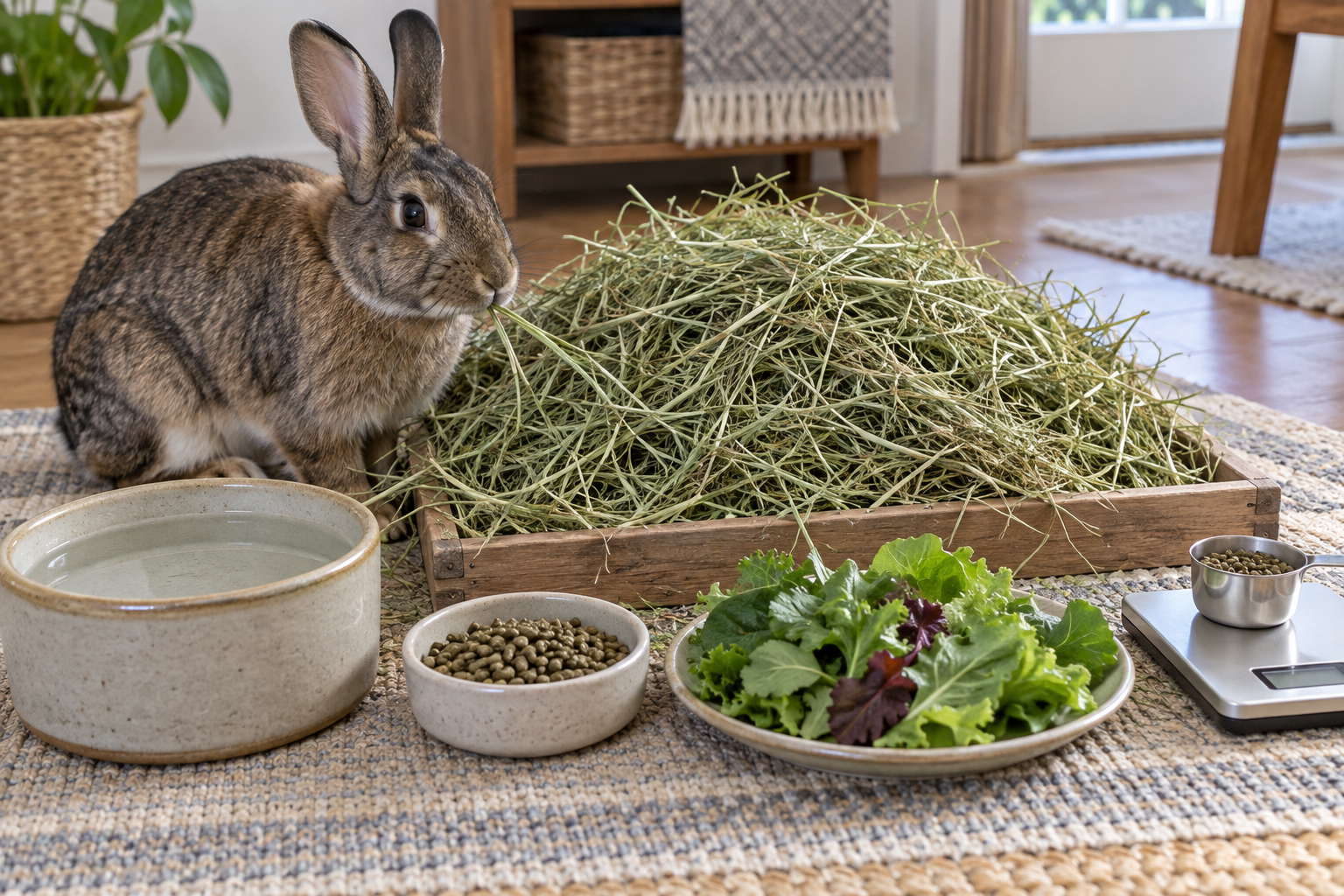
Fresh grass or good-quality grass hay should make up most of an adult rabbit’s diet and remain available at all times. Timothy, orchard and other suitable grass hays can all work. Variety matters less than whether the hay is clean, dry, fragrant and coarse enough to encourage steady chewing.
I check a new handful before it reaches the rack. It should smell fresh rather than musty, and it should not feel damp or release a cloud of dust. Any hay with mould, unusual heat, wet clumps or a sour smell is discarded. Lawn-mower clippings are unsafe because they ferment quickly; freshly hand-picked grass from a pesticide-free, uncontaminated area is a different product.
Placement often changes how much hay gets eaten. A generous rack or pile beside the litter area lets a rabbit forage while toileting. Refill it before it becomes a layer of rejected fragments. If a rabbit that normally eats hay begins avoiding it, I would not solve the problem by adding more pellets. Reduced hay intake can accompany dental pain or illness and deserves attention.
Use pellets as a measured part of the meal
Plain, uniform pellets are easier to portion than colourful muesli-style mixes, which allow a rabbit to pick out preferred pieces. Choose a product intended for the rabbit’s life stage, read its feeding guide and use that as a starting point rather than a universal rule. Body condition, activity, hay intake and health all affect the appropriate amount.
I measure pellets instead of topping up by eye. That makes a change in appetite visible and prevents yesterday’s leftovers from disappearing under a fresh scoop. Store the bag in a cool, dry place, keep the lot and expiry information, and avoid buying more than can be used while it is fresh. A sudden increase or decrease in pellet consumption is information, not merely fussiness.
Introduce leafy greens one at a time
Washed leafy greens can add moisture, variety and opportunities to forage. I introduce one suitable green in a small portion, keep the rest of the diet stable, and watch appetite and droppings before adding another. This is more useful than following a long “safe foods” list without considering the rabbit in front of you.
Offer only plants that have been identified confidently and are free from pesticides, roadside contamination and mould. Unknown garden plants should stay out of the enclosure. A rabbit-experienced veterinarian can help choose greens when calcium intake, bladder disease, weight or another medical issue changes the usual advice.
Fruit and root vegetables are better treated as occasional small extras because of their sugar content. Seeds, nuts, cereal mixes, yoghurt drops and sweet human snacks do not belong in a routine rabbit diet. A treat should come from the day’s allowance; it should not displace hay.
Make water easy to reach and easy to check
Clean drinking water must always be available. A heavy ceramic bowl allows a natural drinking position and is easy to see, although a bottle can be used if it works reliably for that rabbit. Whichever system is chosen, I wash it daily and check that it is full, clean and functioning. With bonded rabbits, more than one water point reduces competition and provides a backup.
Water intake can shift with weather and the moisture in fresh foods, but a marked change matters. A tipped bowl, blocked bottle or rabbit that is drinking much more or less than usual needs investigation rather than an automatic change in diet.
Change food gradually and keep a short record
Rabbits should not be switched abruptly from one pellet, hay or group of greens to another. The RSPCA advises making dietary changes gradually over several weeks. During a transition, I keep the familiar hay available, mix foods in stages where appropriate and record what is offered, what is left and whether the droppings change. Hay should never be withheld to force a rabbit to accept another food.
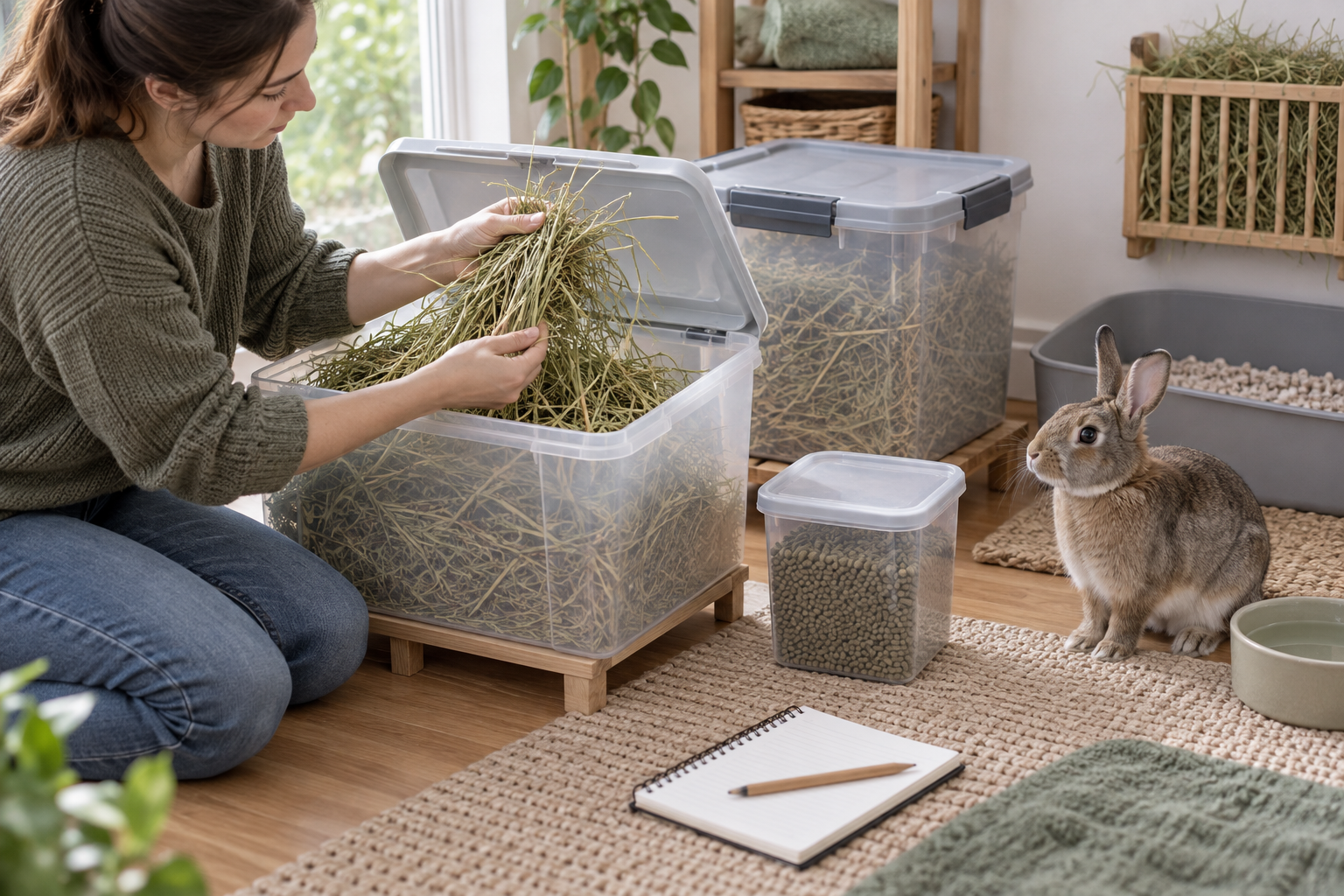
A useful log is brief: hay eaten, measured pellets offered, new greens, water problems, droppings and a regular weight taken on the same scale. Small or fewer faecal pellets, repeated uneaten cecotropes, weight loss or a change in food preference can show that the routine needs closer review. Our guide to common rabbit health problems explains how to organize those observations before speaking with a veterinarian.
Feed the individual rabbit, especially in a pair
Two rabbits sharing a space do not necessarily share food evenly. I place hay where both can reach it and watch the first minutes after measured pellets or greens are served. Separate dishes, spaced feeding points or brief supervised separation can reveal whether one rabbit is taking most of the portion. The feeding area should also stay dry and away from soiled bedding; the indoor rabbit living-space guide shows how hay, litter and water can be arranged together.
Growing rabbits, pregnant or nursing rabbits, seniors and rabbits recovering from illness may need different hay, pellet or energy levels. Those decisions should be based on growth, body condition, examination findings and the specific food—not a fixed age chart copied from the internet. An orphaned baby rabbit needs urgent expert guidance; improvising milk replacer or feeding technique can be dangerous.
Know when the feeding problem is a medical problem
A rabbit eating less, refusing favourite foods or producing fewer or smaller droppings may be in pain or developing gastrointestinal trouble. Gastrointestinal stasis is a serious slowing of gut movement with several possible causes; it should not be assumed to be a simple result of “the wrong food.” Contact a rabbit-experienced veterinarian promptly when appetite or faecal output falls. Complete refusal of food, no droppings, a swollen abdomen, marked lethargy or obvious pain warrants emergency veterinary care.
The most useful home routine is therefore simple but observant: keep fresh hay and water available, measure concentrated foods, introduce changes slowly, and notice departures from the rabbit’s normal pattern. The record helps a veterinarian act on specific information if something changes; it does not turn home observation into a diagnosis.
Sources and further reading
- Merck Veterinary Manual: Diet for Rabbits
- RSPCA: What should I feed my rabbits?
- VCA Animal Hospitals: Bunny Care Basics
- VCA Animal Hospitals: Gastrointestinal Stasis in Rabbits
- RSPCA: Dietary enrichment for rabbits
Editorial note: The illustrations on this page were generated for DailyTrail to show the feeding and storage setups described. They are not photographs of the author’s rabbits. This article gives general feeding guidance for healthy pet rabbits and does not replace an individual diet plan from a rabbit-experienced veterinarian.