
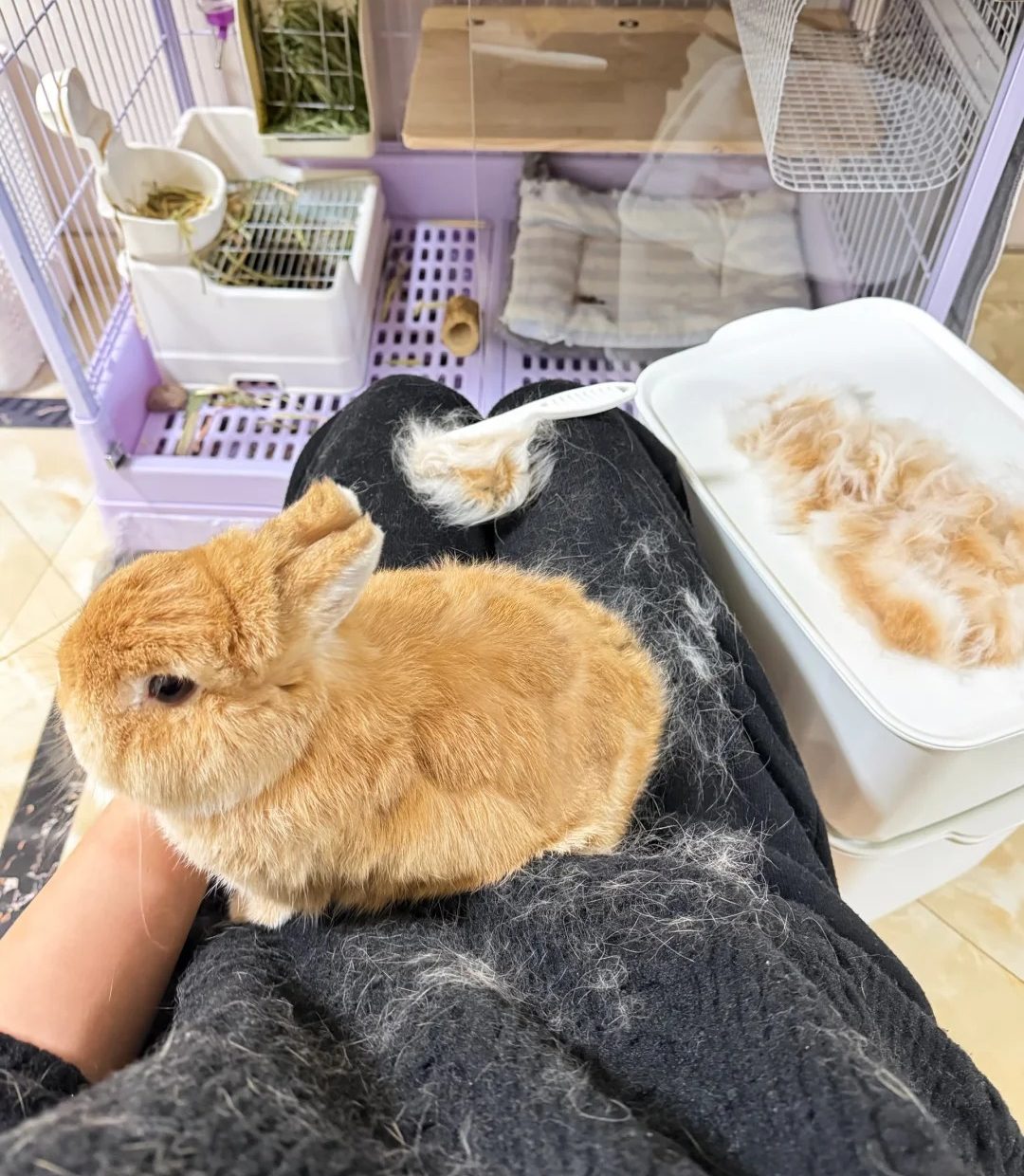
You ever see a rabbit that looks like it hasn’t been brushed in months? Mats everywhere, dried poop hanging off the back end, looking like they’re dragging a little pebble collection every time they hop?
First time I saw one at a pet store, I thought — what is this owner even doing?
Then I got a long-haired rabbit myself. And suddenly I understood that feeling of “I swear I just brushed you yesterday, how is this already a knot?” Rabbit grooming takes more regular effort than cats or dogs — not because rabbits are less clean, but because they can’t untangle the mess they make.
What I’m sharing here came from trial and error, wrong tools, and a few unfortunate haircuts.
Shedding Season — Twice a Year, Six Months at a Time
Every rabbit owner knows this joke.
Rabbits shed seasonally — big molts in spring and fall. But indoor rabbits, with all that artificial light and steady temperatures, tend to shed year-round. Long-haired ones are even worse. The pile of fur I brush off mine every day could make a whole second rabbit.
Key rule during shedding season: brush, brush, and brush some more.
When they’re blowing coat, brush at least two to three times a week. Long-haired rabbits? Daily, no excuses. If you skip it, all that dead fur tangles into the healthy coat, mats form, and the skin underneath can’t breathe. Next thing you know, you’ve got irritation and infections.
Brushing — Tools Matter More Than Technique
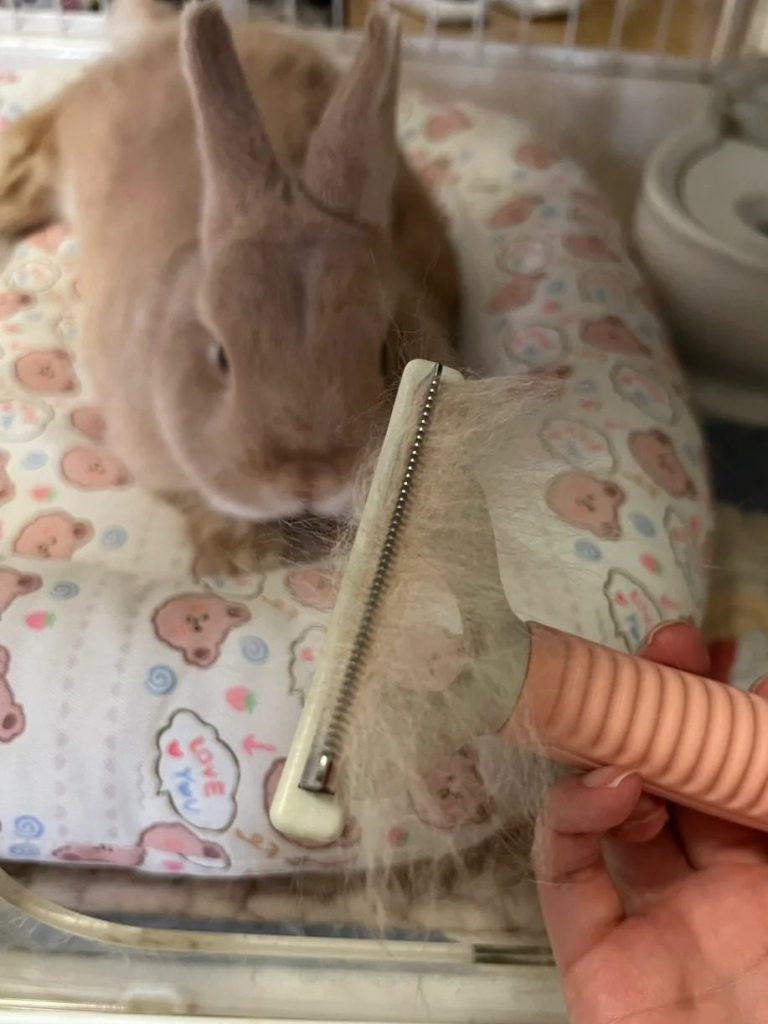
Rabbit fur is not the same as cat or dog fur. It is finer, more delicate, and breaks easily. Use the wrong brush, and you are not just missing the dead hair — you are ripping out the good stuff too.
For short-haired rabbits:
- Rubber or silicone grooming brushes — they pull off loose hair and dead skin without irritating their skin
- Soft bristle brush — good for surface grooming, removing dust and loose surface fur
For long-haired rabbits:
- Wide-toothed metal comb — this one gets through the top layer and down to the undercoat, where mats start forming
- Slicker brush — good for the main areas, but go easy. Press too hard, and you will scratch their skin
One trick that actually works: lightly mist the fur with water before brushing. Not soaking wet, just a tiny spritz. It cuts the static, so the loose hair sticks to the brush instead of flying all over your face. Trust me, your lungs will thank you.
When is the best time to brush? When your rabbit is relaxed — chilling in their favorite spot. Do not do it when they are spooked or in the middle of eating. You will get nowhere.
Mats — Do Not Pull, Just Cut Them Out
Long-haired rabbits get mats in their armpits, groin, behind the ears, and around the tail. Those are the hot spots.
If the mat is not too tight:
- Gently tease it apart with your fingers, starting from the edges and working in
- Use the comb to work through the ends first — never pull from the root, that hurts
If the mat has turned into a solid lump stuck right against the skin:
- Just cut it off. Use round-tip scissors, snip right at the base. Do not try to comb it out — you will tear the skin.
- Always point the scissors away from the rabbit’s body. That tip is the only thing between you and a bleeding bunny.
- If the mat is big or in a tricky spot — near the eyes, ears, or genitals — let the vet or a groomer handle it.
Losing a patch of fur looks ugly for a few days. Ripping the skin? That is weeks of healing.
Bathing — Skip It If You Can
Rabbits do not need regular baths. They groom themselves all day long.
Water baths are actually risky for them:
- They panic in water — thrashing around can break bones or injure their spine
- Wet fur takes forever to dry, and during that time they can get dangerously cold
- The stress alone can trigger GI stasis — yes, that life-threatening gut slowdown
- It also strips their natural oils, leaving skin dry and itchy
When do you actually need to bathe them?
- If the vet prescribes a medicated bath
- If they got into something toxic that has to be washed off
- If they have severe diarrhea and the back end is completely covered in waste
If you absolutely have to do a spot clean:
- Only clean the dirty area — tail, back legs, whatever got messed up
- Use a rabbit-safe mild shampoo
- Water should be lukewarm — not cold, not hot
- Rinse well, towel dry, wrap them up until they are mostly dry
- Keep them warm until they are completely dry
In most cases, a damp towel works fine. You do not need to dunk the whole rabbit.
Bottom Hygiene — The Forgotten Area
This one is easy to miss, and it causes more problems than you would think.
Long-haired rabbits get urine and soft poop stuck in the fur around their rear. If you leave it, the skin gets irritated, burns, and gets infected. And in warm weather, it attracts flies — which is a whole other nightmare you do not want to deal with.
Daily maintenance:
- Check the rear area once a week — or more if they are prone to messes
- If you see stains, wipe with a warm damp cloth — do not run water directly on them
- If it is dried on, gently clip off the crusty bits, then wipe
- Keep the fur around the rear trimmed short — regular trims prevent stuff from sticking in the first place
If your rabbit constantly has soft poop stuck back there, the problem is most likely diet, not grooming. Fix the food first.
Environment — Clean Space, Clean Rabbit
The cleaner your rabbit’s living area, the cleaner your rabbit stays.
Cleaning schedule:
- Scoop the litter box daily — wet bedding and poop, out it goes
- Replace all bedding weekly, and wipe down the cage or pen with warm water and a pet-safe cleaner
- Wash food bowls and water bottles every day — do not just rinse, actually scrub them. That slippery film on the inside? Yeah, that is bacteria
Tools that help:
- Small broom and dustpan — honestly better than a vacuum for hay and poop
- Vacuum for the surrounding area — just be careful not to scare your rabbit with the noise
A Simple Brushing Routine That Works
I have been doing this for years. Nothing fancy, but it gets the job done.
- Wait until your rabbit is relaxed — usually evening time works best
- Put them on a non-slip surface — a towel on a table works great
- Start from the back, lightly brush against the fur direction — this lifts dead hair to the surface
- Then brush in the direction the fur grows, pulling out the loose stuff
- Move to the sides, the hips, and the tail area
- Finish with a soft brush or just your hands to catch any remaining loose fur
About 10 minutes per session. If your rabbit gets restless, split it into two shorter sessions.
Final Thoughts
Rabbit grooming comes down to three things: regular brushing, spot cleaning, and a clean environment. None of it is hard. But skipping any one of them shows up pretty fast.
Long-haired rabbit owners? You are going to be best friends with your comb. Short-haired owners? You have it easier, but shedding season still demands attention.
Every time I finish a session and look at that pile of fur on the table, I know it was worth it. And my rabbit, with their clean, fluffy coat, probably agrees — even if they do not show it.