
Rabbits are prey animals, which means they evolved to hide illness. By the time a rabbit looks sick, the problem is often advanced. That is why the most important skill for a rabbit owner is not treating illness — it is recognizing the early warning signs before they become emergencies.
“When did you last weigh him?”
I could not answer. He looked fine, he was eating, so I figured there was no need to track that stuff, right? Turned out his teeth had already overgrown, and he’d lost nearly 10 percent of his body weight in two weeks. I hadn’t noticed a thing.
That was a wake-up call.
Rabbits are the kind of animal where “totally fine” and “emergency” are only a few hours apart. They are not like dogs that whine or limp when something hurts. They just sit there and take it, until the problem gets too big to hide.
Here are the most common issues indoor rabbits run into. And honestly? Most of them are completely preventable.
Dental Problems — If You Don’t Grind, You Don’t Survive
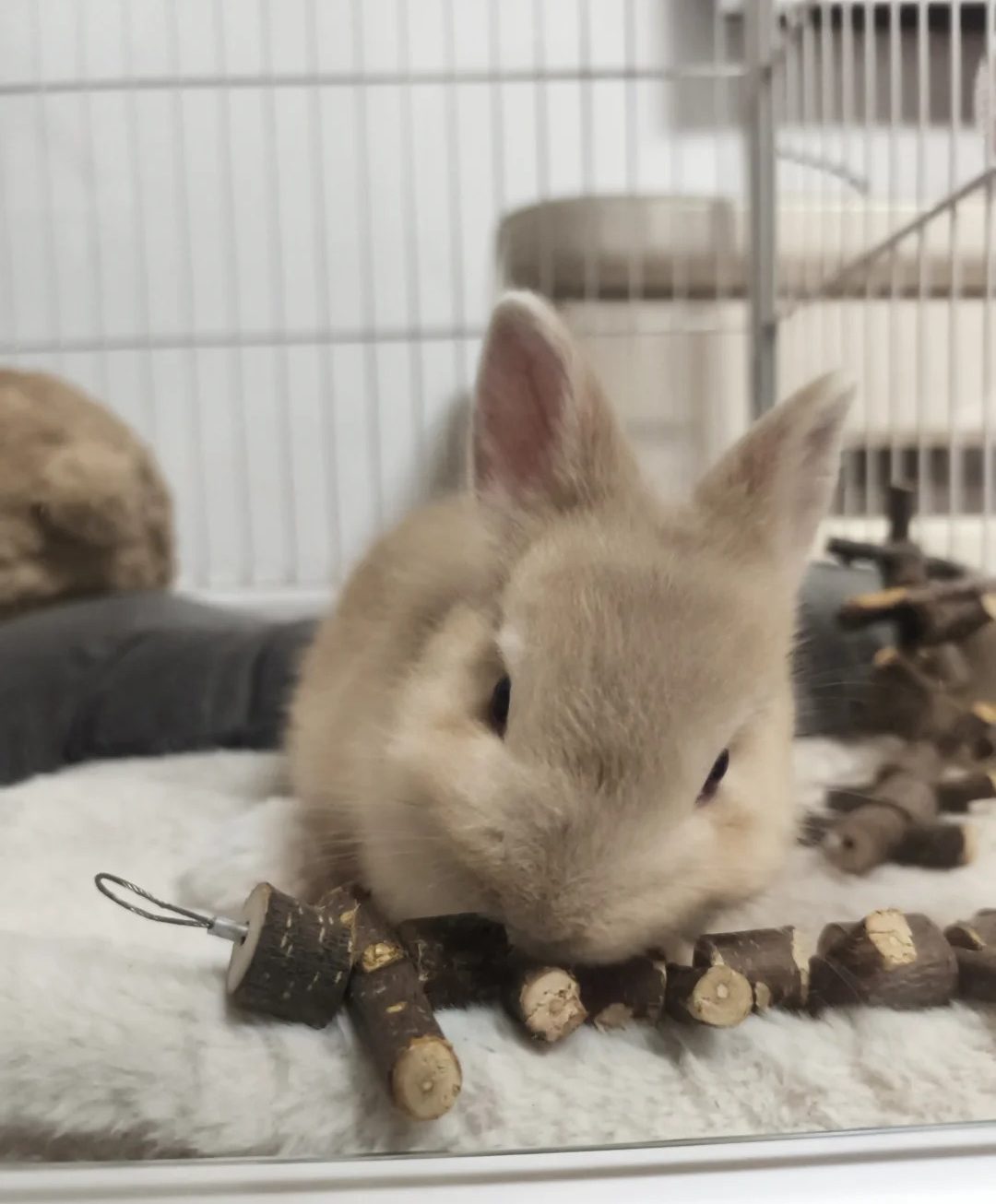
Rabbit teeth keep growing their entire life. They can grow 5 to 6 inches (12 to 15 cm) a year if you let them.
Normally, chewing hay wears them down at the same rate they grow. But if they are not eating enough hay, the teeth get too long. Sharp points form. They dig into the tongue and cheeks. Then your rabbit stops eating. Then the gut goes quiet. Then… trust me, you do not want to get to that “then.”
Prevention:
- Unlimited Timothy hay. This is not a snack. It’s their dentist.
- Check their teeth weekly — just open their mouth and take a quick look. Front teeth too long? Crooked? Gums looking red or swollen? If you are not sure, have your vet check at their annual exam.
- Watch for drooling, wet chin, eating slower than normal, or only picking soft foods — those are signs something hurts.
Honestly, rabbit dental surgery is expensive. A bag of hay costs a few bucks. Pick your battle.
GI Stasis — The Big One
GI stasis is the leading cause of death in rabbits. The gut stops moving. Food and gas build up in the stomach. Then they stop eating and drinking. Body temperature drops. Things go downhill fast.
What triggers it:
- Not enough fiber — hay is too low
- Stress — changes in routine, loud noises, new pets
- Pain — from teeth, joints, or something else
- Dehydration
Prevention:
- Unlimited hay — this is your first line of defense
- Check their poop every day — normal ones are round, dry, and even-sized. Smaller, fewer, or no poop at all means something is off
- Watch their food intake — if the pellets you put in the morning are still there at night, something might be wrong
- Keep their environment calm and consistent — rabbits are not fans of change
If your rabbit has not eaten for 6 to 8 hours, do not wait until morning to call the vet. Honestly, you should be calling now.
Sore Hocks — The Price of No Paw Pads
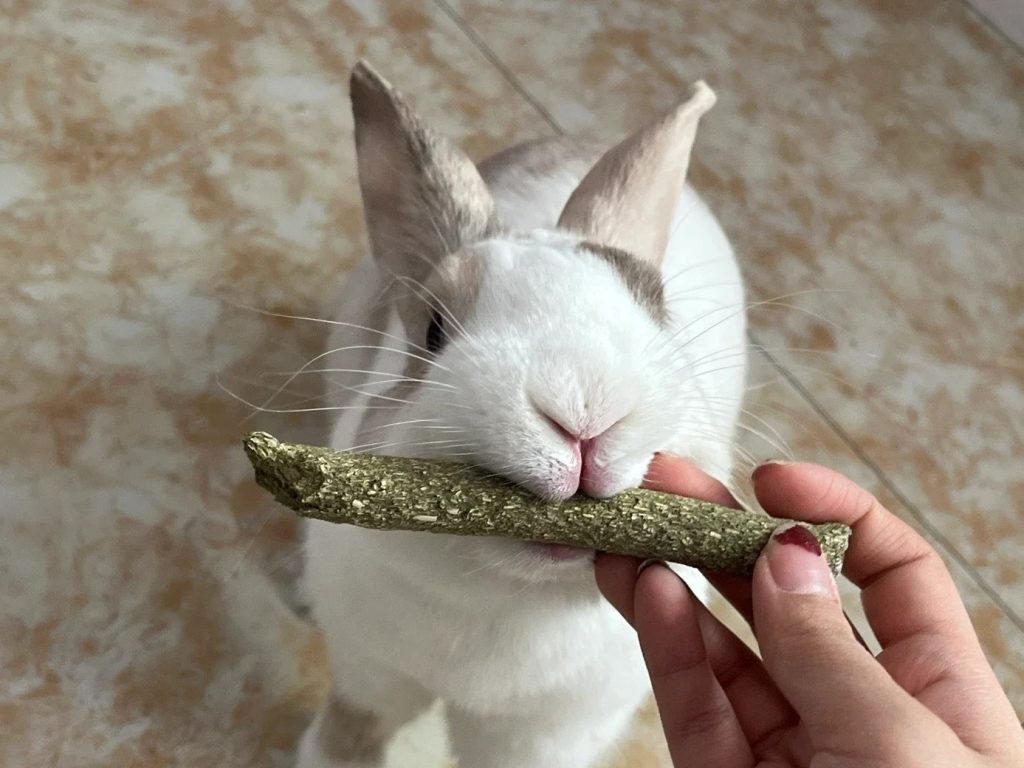
Rabbits do not have paw pads. Just a thin layer of skin and fur on the bottom of their feet. When they stand on hard, wet, or uneven surfaces for too long, the fur wears off, the skin cracks, gets infected, and turns into painful sores.
It hurts so much that some rabbits stop moving around. Then their muscles waste away. Then everything goes downhill.
Prevention:
- Flooring needs to be flat, dry, and soft — carpet, fleece blankets, foam mats all work
- If you have a wire-bottom cage, throw it out. I am not kidding. Do not argue with me on this one.
- Keep their litter box clean — wet bedding softens the skin and makes it more prone to damage
- Check their feet regularly — any bald spots? Redness? Scabs? Catch it early before it becomes a big problem
Respiratory Infections — A Wet Nose Is Not Always a Cold
Rabbits sneeze now and then — fair enough, they have noses right in the middle of all that hay dust. But watch out for these signs:
- White or yellow discharge from the nose
- Sneezing more than usual — like multiple times in a row
- Front paws looking matted and wet — they wipe their nose with their paws, and if they do it a lot, the fur gets crusty
These are signs of an upper respiratory infection, usually bacterial — Pasteurella and Bordetella are the usual culprits.
Prevention:
- Keep the area well ventilated — do not put them in a stuffy little room
- Use dust-free bedding — some cheap wood shavings are awful for their lungs
- Keep stress low — stress weakens the immune system, and bacteria that were just hanging around can suddenly take over
- If you see symptoms, get a culture done at the vet so they know exactly what they are dealing with
Do not just hope it clears up on its own. Respiratory infections in rabbits do not just go away. They turn into chronic sniffles that stick around forever.
Urinary Issues — Calcium and Bladder Stones
Rabbits process calcium differently than we do — they flush the extra out through their urine. That is why rabbit pee sometimes looks chalky, cloudy, or even slightly pink. That is not always a problem.
But if you start seeing gritty, sand-like sediment, or if your rabbit is hunched over, straining, or crying out when they pee — that might be bladder stones or sludge.
Prevention:
- Go easy on high-calcium veggies — alfalfa hay, spinach, parsley, dandelion greens. Not saying you cannot give them, just not every single day in large amounts.
- Keep water intake up — the more they drink, the less stuff stays in the bladder to form stones
- Do not overfeed pellets — most commercial pellets have added calcium, so too many pellets means more calcium in their system than they need
Those Funny Little Pellets They Eat
Here is something that freaks out a lot of new owners. Sometimes rabbits eat soft, squishy droppings straight from their bottom. Looks like poop, but not quite.
Those are cecotropes — not regular poop, but nutrient-packed little bundles full of protein, B vitamins, and gut-friendly bacteria. Rabbits eat them, usually at night or early morning, to absorb those nutrients a second time.
If you start seeing a lot of cecotropes left uneaten in the cage — and they are getting mushy and stuck in their fur — that is a sign something is off in their diet. Usually too many pellets, too much fruit, not enough hay. Adjust and watch closely.
Daily Observation — A Few Minutes a Day Saves You a Vet Bill
You do not need fancy tools to check your rabbit’s health. Just your eyes and hands.
Every day, take two minutes and do this:
- Watch them eat — do they pause mid-meal? Only pick at the soft bits? Chewing with their head tilted? — teeth
- Watch them poop — pellets looking normal today? Enough of them? — digestion
- Watch them move — moving normally? Any limping? Dragging back legs? — joints and feet
- Watch them breathe — open-mouth breathing? Wet nose? — respiratory
- Weigh them once a week — same time, same scale. If the number drops suddenly, that is your first warning sign
All of this takes maybe five minutes. If five minutes sounds like too much, go look up the cost of an emergency vet visit. Then come back and do your five minutes.
Final Thoughts
Rabbits are different from cats and dogs — from their teeth to their digestion to the way they handle pain. They do not whine. They do not limp dramatically. They will even fake being okay when they are not, because that is how they survive in the wild.
So caring for a rabbit really comes down to one thing: do things before they tell you something is wrong. Hay getting low? Fill it. Poop looking small? Figure out why. Rabbit being quieter than usual? Go check on them.
If they are showing you something is wrong, it is already late. But if you spend five minutes a day just watching and checking, you will avoid most of the big problems.
You chose to have this rabbit. You are their health care system. Do it right.