
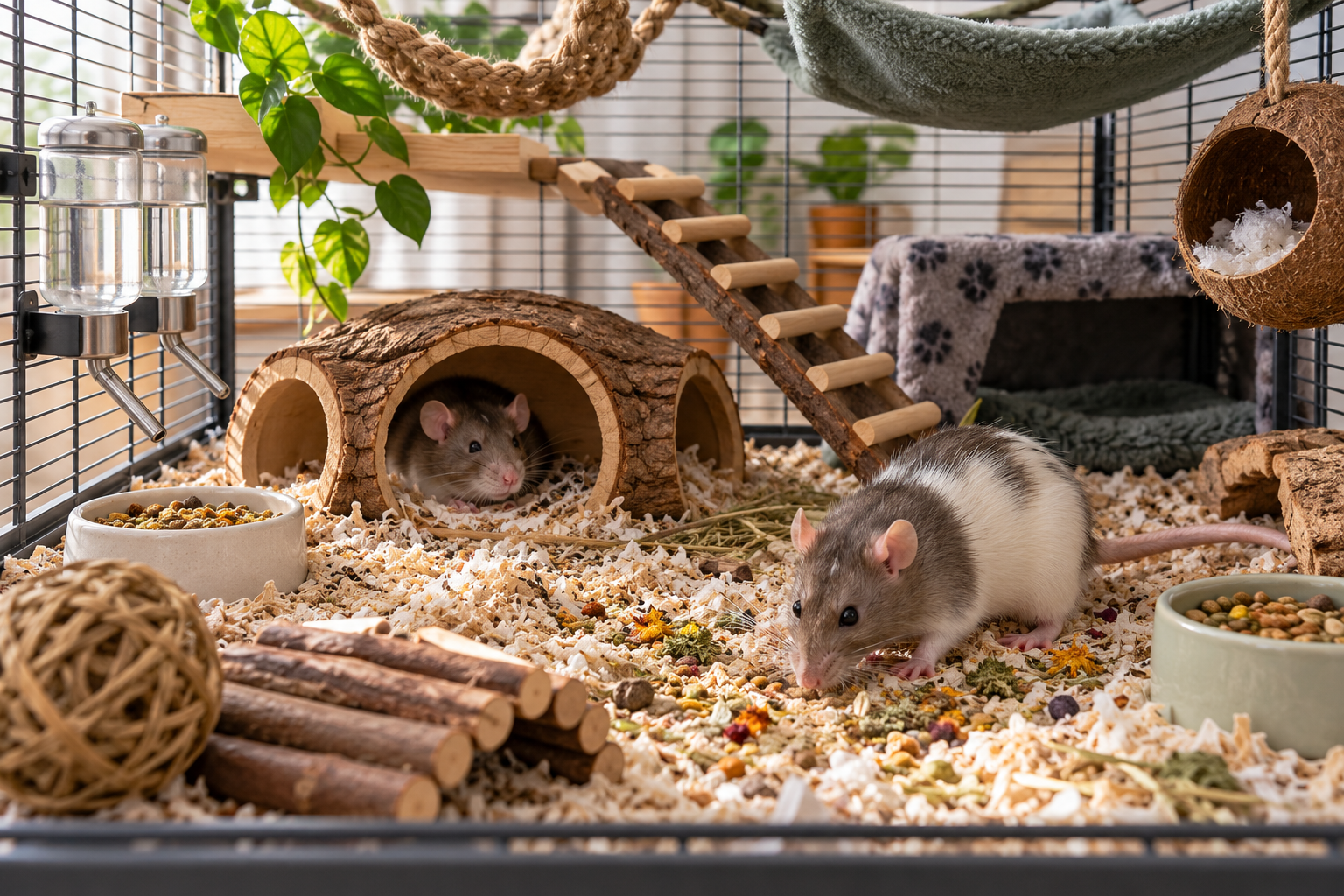
A rat that disappears into its hide after a noisy afternoon may simply need quiet. A rat that suddenly stays hidden at its usual feeding time, leaves food untouched, and breathes differently needs a different response. I would start with what changed for this particular animal, rather than trying to label one posture as “stress.” The same behaviour can have more than one cause, and rats may hide illness.
The RSPCA's signs-of-concern sheet recommends learning each rat's usual behaviour so a change stands out. That is more useful than expecting every rat to be equally bold. A newly adopted rat may take time to explore; a familiar, confident rat that abruptly retreats from everything is telling you something new.
Watch at the rat's active time
Rats rest much of the day and are often active around dawn, dusk, and night. Before worrying that one has slept through the afternoon, check it when it normally comes out. Note whether it eats and drinks, moves around the cage, interacts with cage-mates, grooms, and investigates familiar objects. Look for a pattern across those activities, not one isolated moment.
For a few days, I would keep brief notes for each rat: when it came out, what food it accepted, whether it was chased from a bowl, and whether its breathing sounded different. A short video can help a veterinarian see an intermittent behaviour. Do not delay seeking help just to complete a record if the rat appears ill.
Signs that deserve a closer look
More hiding than usual, exaggerated attempts to escape, fear of familiar handling, or a sudden change in social behaviour may signal distress. A rat may also squeak during a tense encounter or groom its head and forepaws more than usual. The RSPCA lists these as possible warning signs, but none proves a single cause. Check what happened just before the change and whether the rat returns to normal once the disturbance ends.
Look at the whole group. Is one rat repeatedly chased, blocked from a hide, or unable to reach food? Raised fur during an attack, injury, and one rat hiding from another are more concerning than a brief disagreement that ends. Our guide to introducing pet rats explains which interactions need intervention. Even in a long-established group, new aggression can accompany pain or illness; ask a rat-experienced veterinarian if it appears suddenly.
Do not mistake stillness for comfort. During handling, a rat that repeatedly freezes, flees, or avoids the hand may need more choice and a slower approach. Our gentle handling guide covers that process without chasing or restraining the animal for routine contact.
Change the pressure points at home
Start with the simplest disturbance you can identify. If the cage is beside a television, a busy walkway, or an area where a dog or cat can stare at the rats, move the enclosure to a calmer place where the group can still be observed. The RSPCA notes that the sights, sounds, and smells of potential predators can cause stress. Allow uninterrupted daytime rest rather than waking a sleeping rat to check whether it wants to play.
Next, inspect the cage from a rat's point of view. Can each animal reach food, water, and a resting spot without passing a cage-mate that blocks the route? Are there several shelters and clear ways out of them? Add resources in more than one place and use hides with multiple exits. Our rat cage setup guide explains how to provide safe climbing, rest, and foraging space. Change one or two things, then watch whether the rats actually use them; replacing every familiar item at once makes it harder to tell what helped.
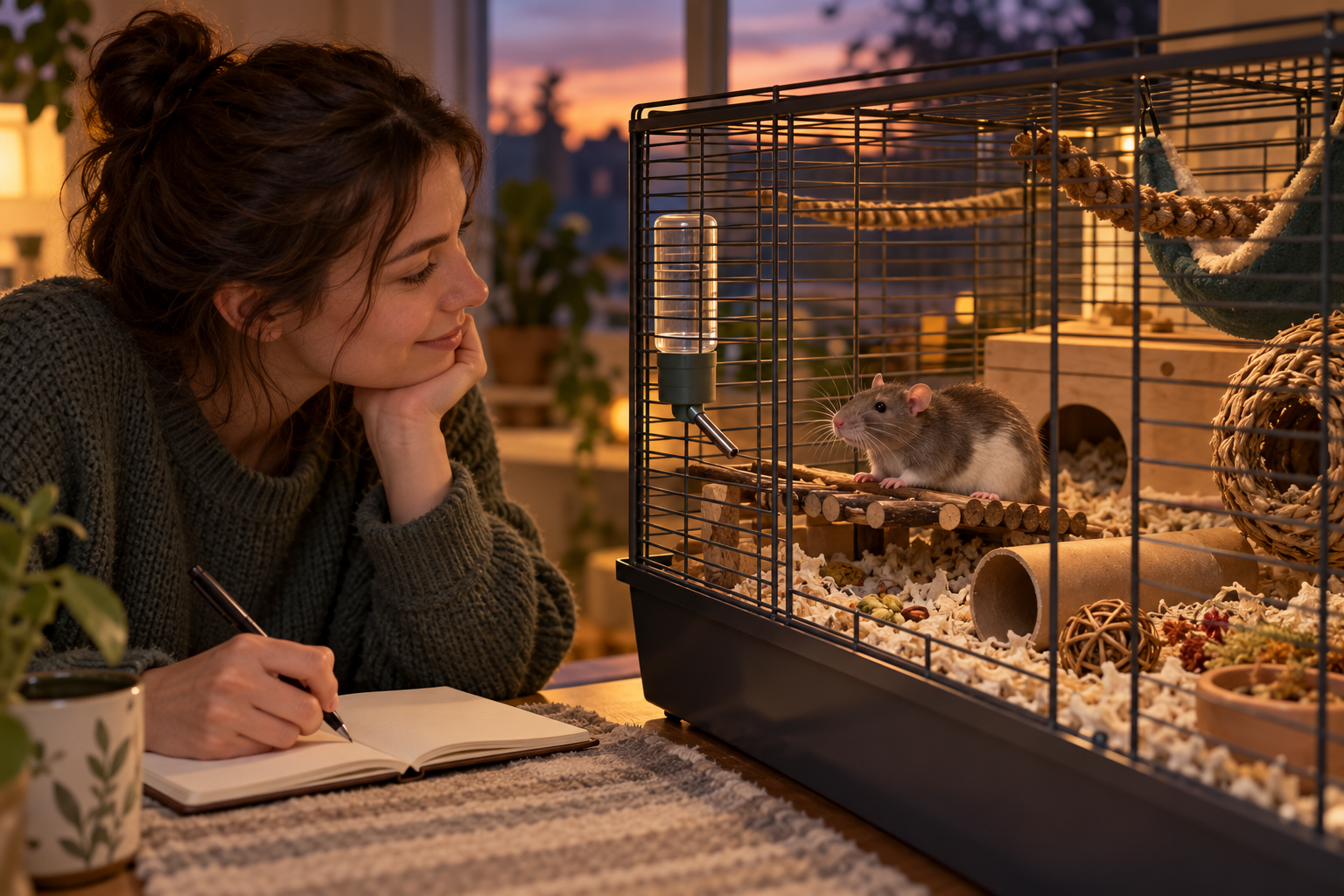
Keep the enclosure clean and ventilated, but check whether bedding is dusty, damp, or strongly scented. Woodgreen's rat health guidance notes that poor ventilation, dusty substrate, temperature changes, and social bullying can worsen respiratory problems. A cage adjustment may remove an irritant; it cannot treat an infection. Avoid exercise balls: the RSPCA's behaviour guidance says they restrict exploration and can cause substantial stress. Offer supervised exploration in a secure area instead when the rats are ready.
When to call the vet
Contact a veterinarian promptly if a rat stops eating or drinking, has noisy or difficult breathing, persistent sneezing or discharge, diarrhoea, weight loss, an injury, or a marked drop in activity. Do the same if a normally social rat suddenly isolates itself or if the group becomes unexpectedly aggressive. The RSPCA's concern sheet treats these as possible signs of illness or pain, not a problem to solve only by making the cage quieter.
While arranging advice, keep the rat in a safe, familiar, well-ventilated setup and note what you have seen. Tell the vet when the change began and what happened to appetite, breathing, activity, and group contact. If a cage-mate is injuring or preventing the rat from accessing necessities, separate them safely and seek guidance; do not leave them to “work it out.”
A useful home change is one you can connect to an observation: the rat comes out to eat after the cage moves away from a noisy room, or both rats can reach water after a second bottle is added. If behaviour does not improve, worsens, or comes with a physical sign, let a veterinarian assess it rather than treating “stress” as the final diagnosis.
Sources and further reading
- RSPCA: Signs of concern in rats
- RSPCA: Pet rat behaviour
- RSPCA: Keeping pet rats together
- Woodgreen Pets Charity: Rat health
Editorial note: The illustrations on this page were generated for DailyTrail to show the setups described. They are not photographs of the author's animals. This article provides general husbandry information and does not replace advice from a veterinarian familiar with rats.