
An open cage door is an invitation, not a cue to reach in and catch a rat. When I think through a first handling session, I start with a smaller question: will the rat approach a still hand and choose to leave again? That gives an owner something useful to observe before attempting a lift. A rat that comes close for food may still dislike being held, and trust is easier to build when it can retreat.
The RSPCA's rat guidance recommends getting rats used to your voice and presence, then letting them investigate your hands in their own time. Woodgreen Pets Charity advises allowing newly arrived rats to settle before regular handling. Neither recommendation means ignoring a rat that needs prompt medical care; it means routine contact should begin without a chase.
Start while the rat is awake
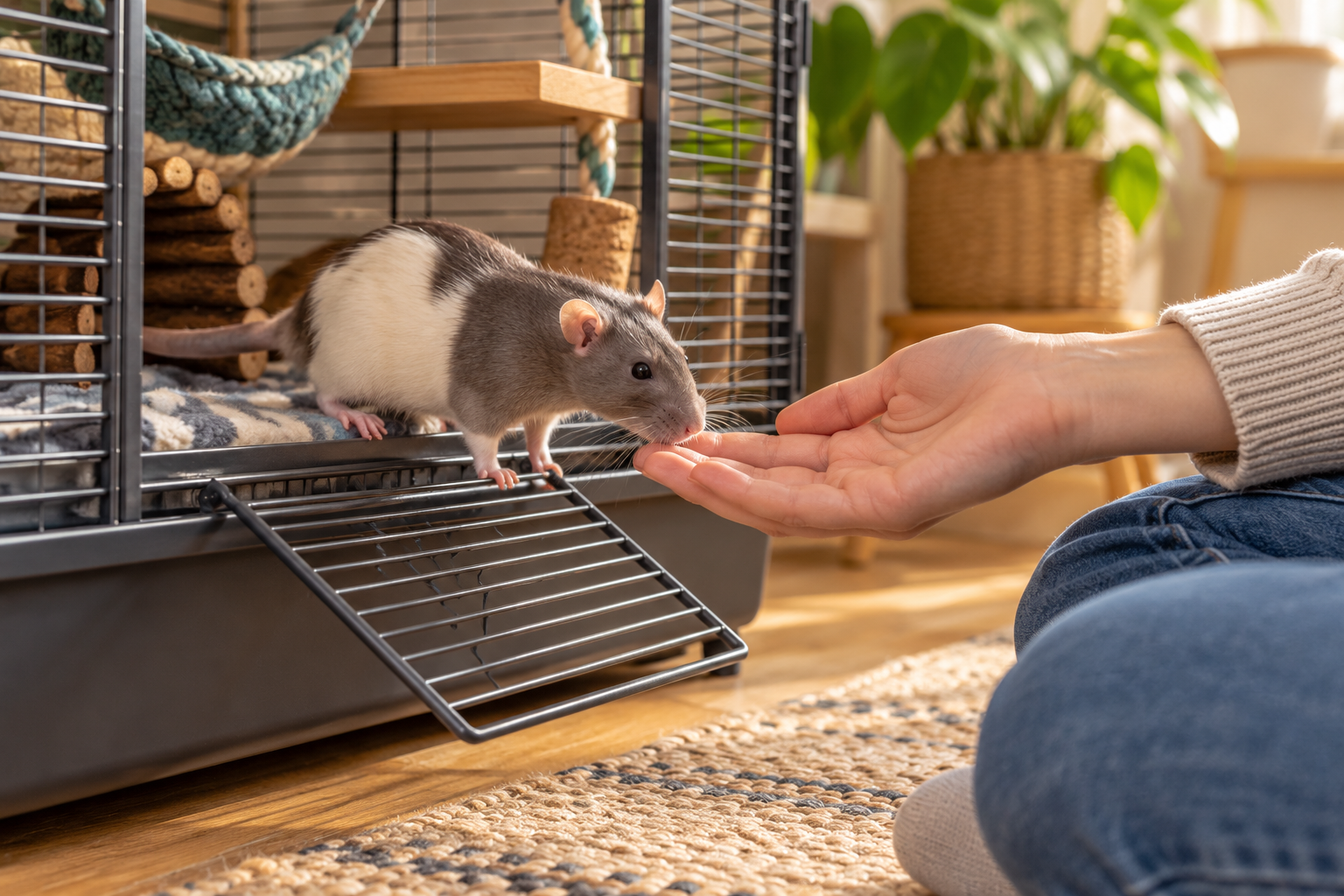
Choose a quiet morning or evening when the rat is already active. Check that doors and windows are secure, other pets are elsewhere, and there is a low, enclosed place for practice. Sit near the cage and speak normally. Open the door, rest a hand where the rat can see it, and wait. Reaching down suddenly from above a sleeping rat can be frightening.
Offer a small portion of the rat's usual food near your hand. If the rat sniffs, steps onto your fingers, takes the food and walks away, let it. You can repeat the same calm setup later. Do not block the exit to make the interaction last longer. A tunnel or familiar carrier can help move a timid rat into a secure play area without grabbing it; Woodgreen describes letting a rat walk into a tunnel and then allowing it to climb onto a person at its own pace.
Notice the choice the rat makes
Instead of counting sessions, watch for changes in behaviour. Does the rat approach again after retreating? Will it put more than its front feet on your hand? Does it keep exploring and taking food, or does it freeze, hide, or rush away whenever the hand moves? Those observations tell you whether to keep the same stage, make it easier, or pause.
Do not assume a rat is comfortable because it remains still. If it repeatedly avoids your hand, give it room and try a shorter session when the environment is quieter. Sudden new reluctance, a bite that is unusual for this rat, poor appetite, breathing changes, or signs of pain call for a veterinarian familiar with rats. Handling practice cannot solve illness.
Lift only when you need to, and support the whole body
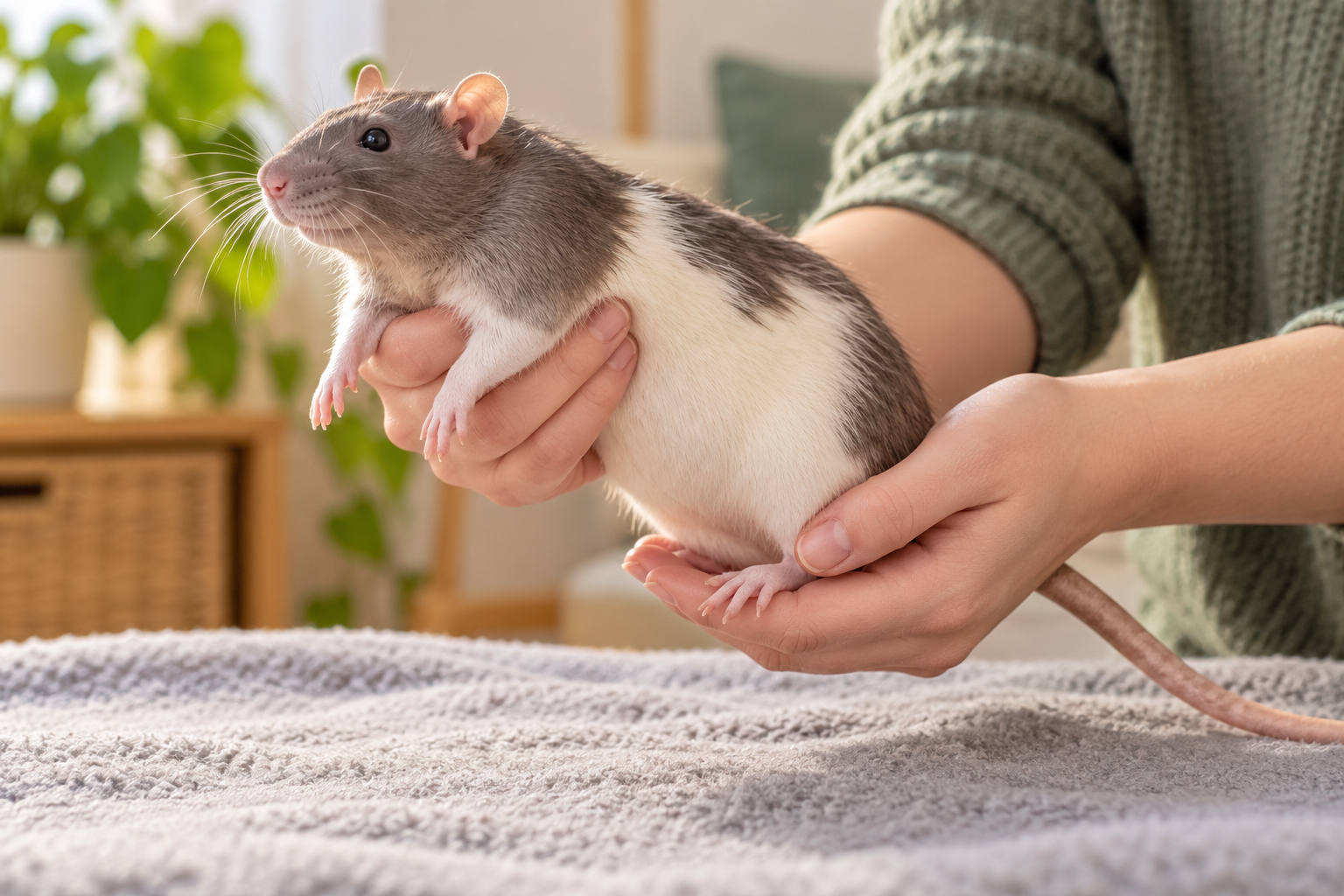
When the rat is alert and tolerates your hand nearby, let it sniff first. Place one hand underneath the body behind the front legs and bring the other under the hindquarters. Lift smoothly just above a low padded surface, with the rat close to your body. Return it before it struggles hard. You can make the next attempt shorter rather than holding on until the rat gives up.
The RSPCA and Woodgreen both warn against lifting a rat by its tail. Never scruff it or hold it high above the floor. If a child is involved, an adult should supervise while the child sits and lets the rat walk onto a lap or hands over a safe surface.
Make contact useful, not unavoidable
Some rats will climb onto an arm or lap yet resist being restrained. That can still be a good relationship. Let them explore a secure area with a way back to a familiar hide. A short, predictable lift for a necessary health check or carrier transfer is different from repeatedly picking a rat up for a cuddle it does not seek.
If your rats are also learning to share a home, keep handling sessions separate from introductions. Our guide to introducing pet rats explains how to watch their interactions with one another. After handling, return each rat to the correct secure enclosure and check that doors latch properly.
Keep a small record of what happened: whether the rat approached, accepted food, stepped onto a hand, tolerated a brief lift, or chose to retreat. Progress may be uneven. The useful goal is a rat that can be moved safely when necessary and has learned that your hands do not trap it every time they appear.
Sources and further reading
- RSPCA: Keeping pet rats together and handling them
- RSPCA: Rat health and handling safety
- Woodgreen Pets Charity: How to handle your rats
- SPCA New Zealand: Caring for rats
Editorial note: The illustrations on this page were generated for DailyTrail to show the handling setups described. They are not photographs of the author's animals. This article provides general husbandry information and does not replace advice from a veterinarian familiar with rats.