
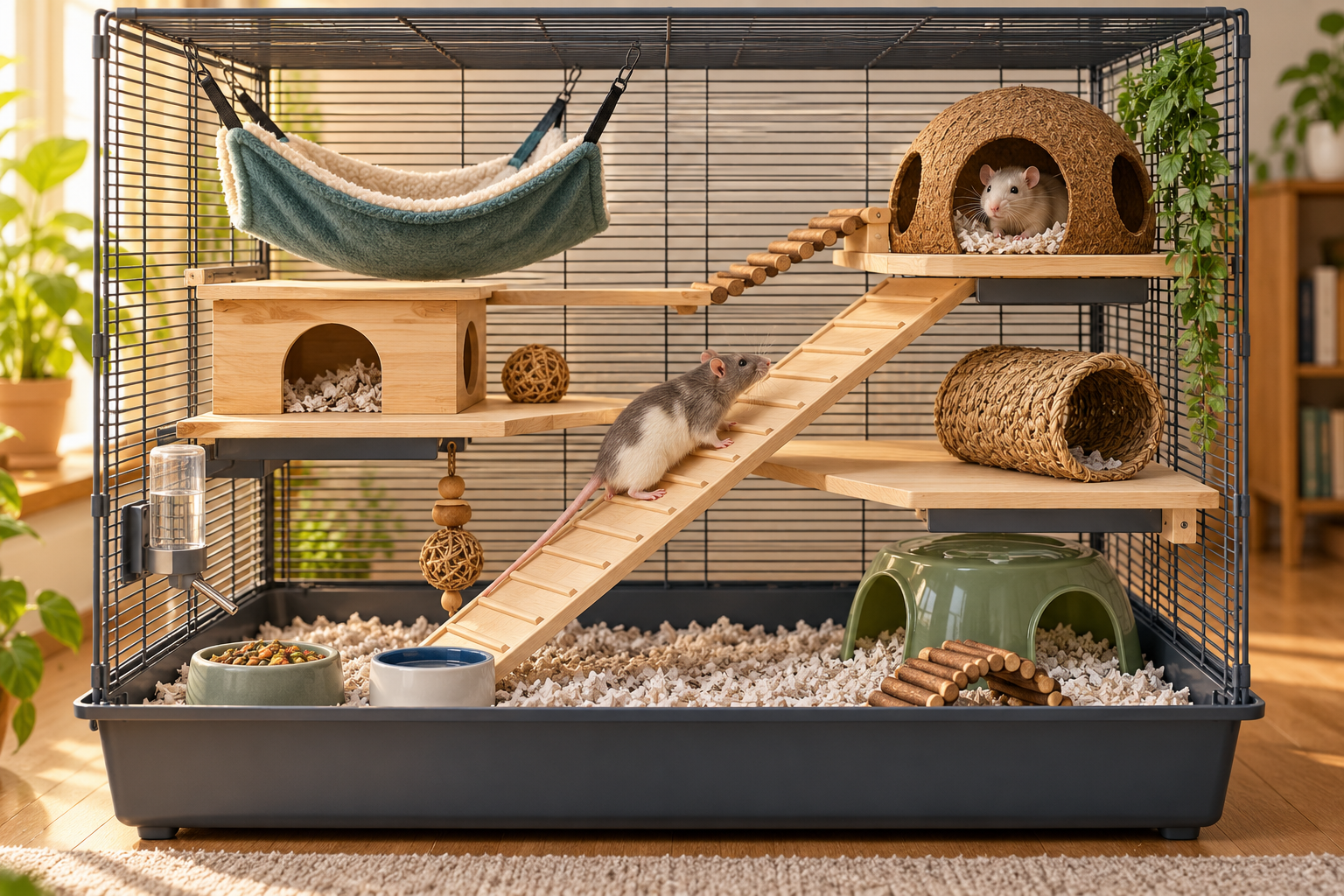
A tall cage can still be a poor home if a rat has to cross a long drop to reach food, sleep beside a wet corner, or compete for the only hide. I would plan the route through the cage before adding more toys: where can each rat rest, climb, eat, drink, and move away from a cage-mate? Once those routes work, enrichment has room to do its job.
This guide is for domestic pet rats living in a compatible group. Rats need the company of other rats; a larger cage does not replace a companion. The RSPCA's guidance on keeping rats together also recommends multiple resources so one rat cannot block another from food or shelter. If you are introducing unfamiliar adults or seeing injuries, get experienced advice rather than simply putting them together in a newly furnished cage.
Start with usable floor area and safe routes
Choose a secure, well-ventilated cage with enough room for the rats to stand upright, turn, climb, and move past one another. Check the bar spacing against the smallest rat, especially a youngster: if its head can pass through, the opening is too wide. Doors should latch securely and open wide enough for cleaning and gentle handling. Place the cage where the rats can rest undisturbed, away from direct sun, drafts, kitchen fumes, and the reach of cats or dogs.
Lay out solid surfaces before hanging accessories. A deep solid base can hold bedding for digging; broad, stable shelves create rest stops. Cover any wire walking surface so feet do not have to bear weight on mesh. Connect levels with secure ramps, ropes, or climbing structures, but break up long falls with shelves or hammocks. Test each attachment by hand and watch the rats use the route. A path that looks easy from outside may make an older or less agile rat hesitate.
Give them more than one place to rest
Put an enclosed hide on the lower level and another sheltered place higher up. A hide with more than one exit lets a rat leave when a cage-mate approaches. Soft washable hammocks can offer a different resting surface, but inspect seams and fasteners often. Remove fabric that develops loose threads or holes that could catch a foot.
For a group, distribute shelter, food, and water rather than putting every valuable item in one corner. If one rat regularly guards a doorway or bowl, add another access point and observe whether the other rats can use it. The aim is not to fill every shelf. Leave clear routes, especially around doors and water, so each rat can get through without squeezing past another.
Build a base that can be cleaned and explored
Use low-dust, absorbent bedding suitable for rats, with enough depth in at least part of the base for digging. Plain paper bedding is one option. Avoid fluffy cotton-type nesting material that can separate into fine strands. Offer safe paper for nesting and change wet material before ammonia odor builds up. The RSPCA's rat environment guide stresses ventilation, room to explore, and regular cleaning; SPCA New Zealand also warns that accumulated urine can harm respiratory health.
Spot-clean wet corners and check the sleeping areas daily. Wash bowls and refresh water; clean larger sections as needed for the number of rats and the cage size. A fixed weekly timetable is less useful than noticing damp bedding, odor, and where the rats actually sleep. When doing a full clean, keep some clean familiar-smelling material if practical so the cage does not become a completely unfamiliar place at once.
Make food something to find
A food bowl is useful for checking what was offered, but it need not be the only way rats eat. Take a portion of their usual daily food and scatter it through clean bedding, tuck it into a cardboard tube, or place small amounts in several reachable locations. Count that food as part of the daily ration, not an extra meal. Keep water easy to reach even when one rat is using a favourite shelf.
Start with easy hiding places and see whether every rat finds food. If one rat is slower, older, or being pushed away, spread portions more widely and keep an accessible bowl as well. Remove uneaten fresh food before it spoils. The RSPCA describes foraging as a normal behaviour that can be encouraged with food already included in the daily allowance.
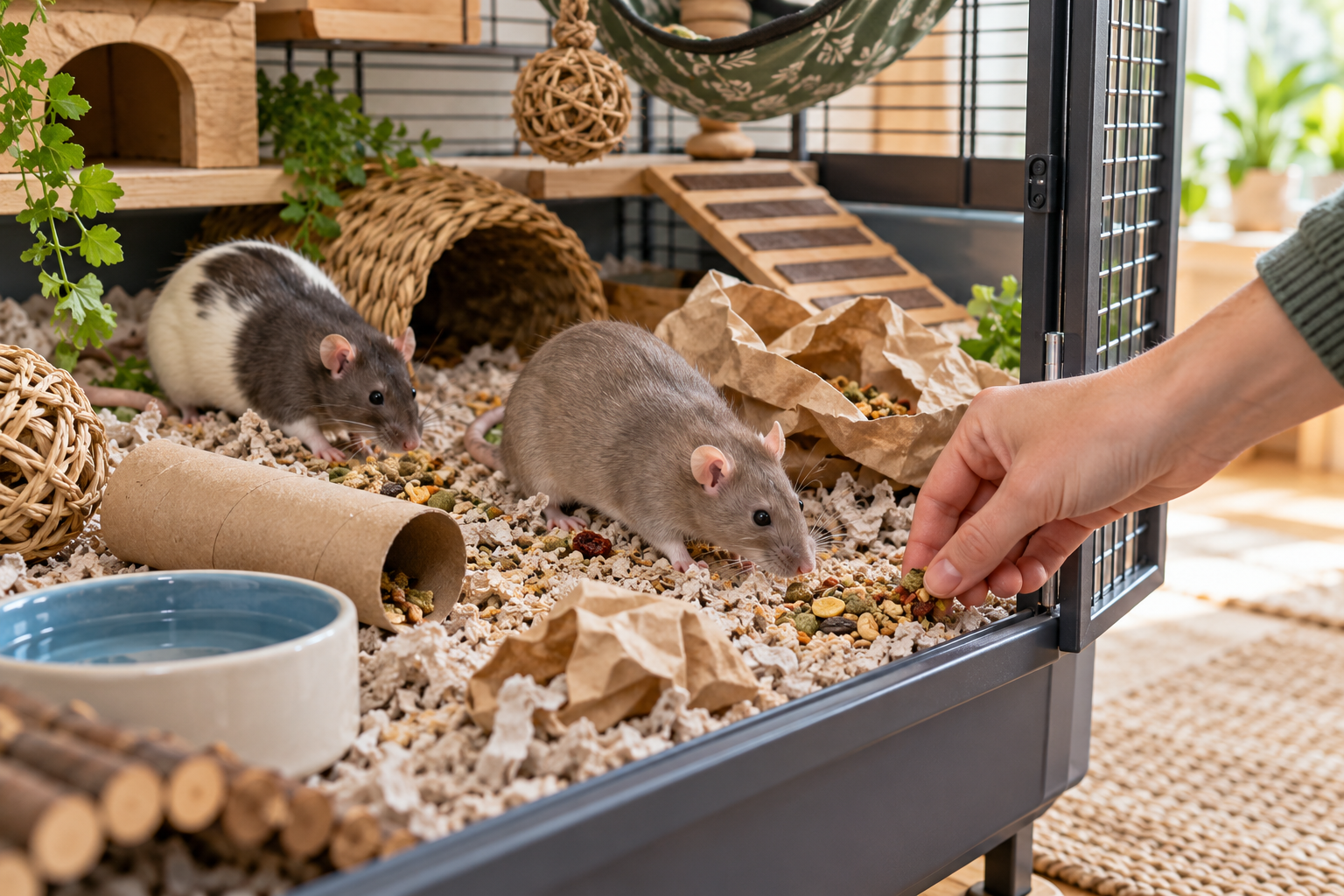
Watch the rats, then adjust the layout
After changing the cage, spend a few evenings watching where the rats choose to travel and sleep. Can the least agile rat reach the upper shelf? Does anyone avoid a narrow passage? Is bedding damp under the water point? Move one thing at a time, then look again. This makes the reason for a change easier to judge than rebuilding the entire cage every few days.
Cage enrichment does not replace supervised time in a rat-safe area outside the cage. Secure cables, gaps, toxic plants, and access by other pets before opening the door. If a rat suddenly stops climbing, eats less, breathes noisily, sits hunched, or develops a wound, contact a veterinarian familiar with rats. Altering the furniture can make access easier while you seek care, but it cannot diagnose or treat illness.
Sources and further reading
- RSPCA: Creating a good home for rats
- RSPCA: Keeping pet rats together
- RSPCA: What to feed pet rats
- SPCA New Zealand: Caring for rats
- VCA Animal Hospitals: Housing rodents
Editorial note: The illustrations on this page were generated for DailyTrail to show the setups described. They are not photographs of the author's animals. This article provides general husbandry information and does not replace advice from a veterinarian familiar with rats.
[…] rat cage setup guide shows how to arrange solid levels, rest areas, and foraging routes. During introductions, keep the […]