

A “safe food” list can create the wrong impression. A food may be non-toxic in a small amount and still be a poor daily diet. When I review a hamster’s feeding setup, I start with the staple food, then look at extras, water and whatever has been carried into the nest.
Species and health history matter, but they do not turn fruit, seeds or homemade mixtures into complete nutrition. A Syrian, dwarf or Chinese hamster should have a diet selected for that individual with guidance from a veterinarian familiar with small mammals, particularly when weight, teeth, stool, drinking or appetite has changed.
Build the diet around a complete staple
A complete, balanced pelleted diet formulated for hamsters provides a more dependable base than a bowl assembled from human foods. Uniform pellets also reduce selective feeding. Seed-heavy mixes can encourage a hamster to pick out high-fat favorites and leave the less appealing components, so the bowl may look full while the overall diet becomes unbalanced.
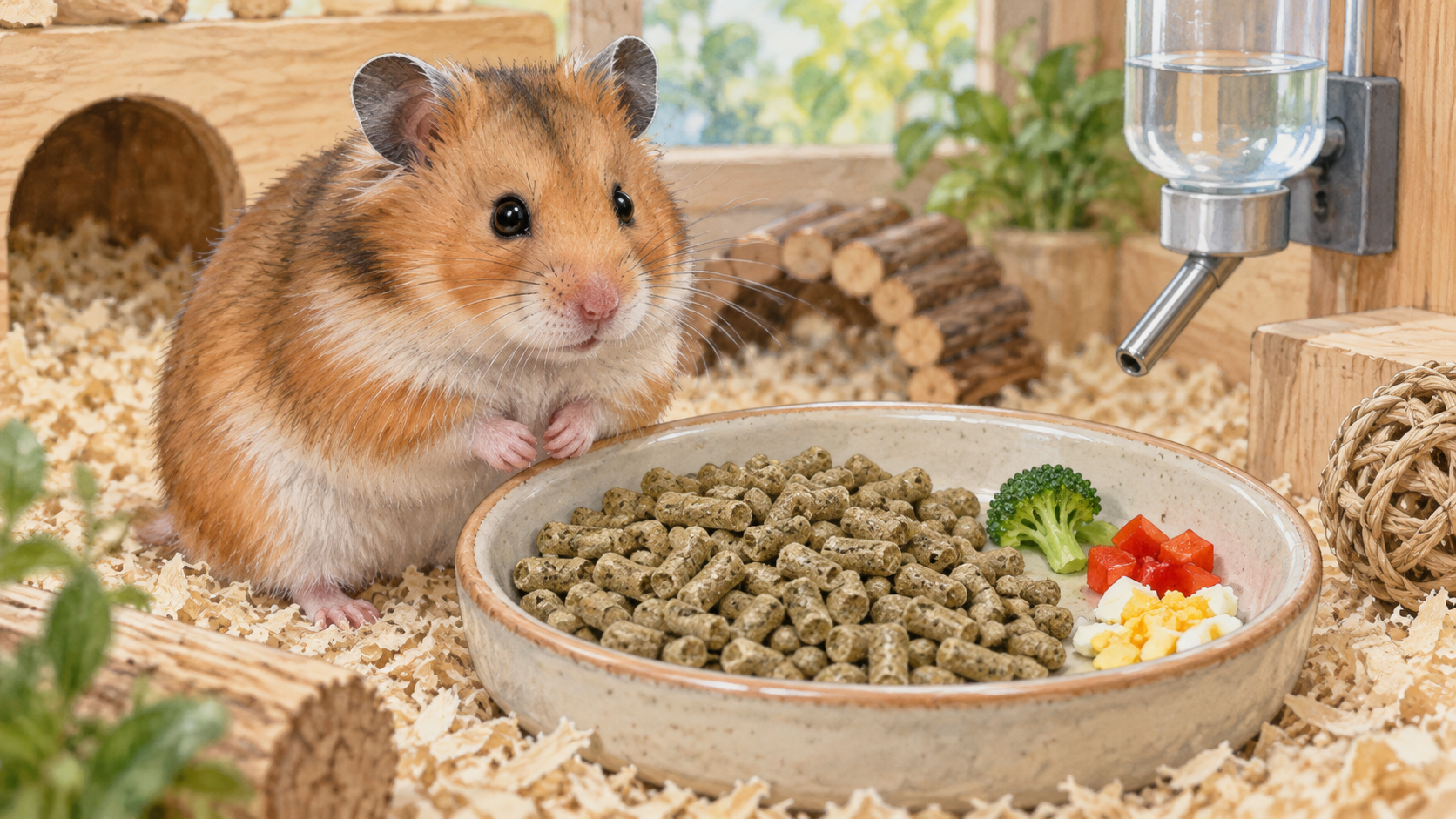
Read the label for the intended species and feeding directions, store the bag dry and sealed, and check the expiry date. Do not add vitamin drops or powders just because they are sold for small pets; a complete diet should already supply its intended nutrients, and supplements can change the balance.
When changing staple food, avoid an abrupt switch unless the veterinarian directs it. Mix increasing amounts of the new food into the familiar food over several days while watching appetite, stool and body weight. A hamster that stops eating, develops diarrhea or becomes quiet needs veterinary advice rather than another diet experiment.
Use extras as variety, not a second meal
Merck’s pet-owner guidance limits fruits, vegetables and other treats to no more than about 10% of the total diet. That is a ceiling, not a target. Because hamsters are small and hide food, the amount actually eaten is easy to overestimate.
Examples commonly used in small quantities include washed broccoli, bell pepper, cucumber or leafy greens, and an occasional small piece of plain cooked egg or a mealworm. Introduce one item at a time. Remove uneaten moist food before it spoils, and stop the new item if stool softens or the hamster eats less of the staple.
Fruit is optional. It is not needed to make a complete pellet diet balanced, and sugary foods deserve particular caution in dwarf hamsters because some dwarf types are more prone to diabetes. Do not create a universal “one blueberry” or “half a strawberry” rule: the fruit size, hamster species, body condition and rest of the diet all change the amount. If diabetes is suspected or diagnosed, ask the veterinarian for an individual plan.
Keep several categories out of the enclosure
Avoid chocolate, caffeinated drinks, alcohol, highly salted or seasoned foods, candy and foods containing onion or garlic. RSPCA guidance specifically advises against grapes and rhubarb because they may be poisonous to rodents. Apple flesh is sometimes offered as an extra, but the seeds and core should be removed.
Do not feed raw meat, raw egg or a homemade wet mixture as the everyday staple. Besides being nutritionally uncertain, moist animal products spoil quickly when carried into a warm nest. Sticky foods can also be difficult for a hamster to remove from its cheek pouches. When a product contains several ingredients and you cannot confirm each one, leave it out and ask an exotic-animal veterinarian.
Avoid sudden diet changes and do not rely on color, “natural” wording or an ingredient you recognize as proof that a product is balanced. A yogurt drop may sound wholesome while adding mostly sugar and fat. The question is what role it serves in the whole diet.
Check the stash, not only the bowl
Hoarding is normal. A hamster may empty the dish and still have plenty of food stored below the bedding, so topping up a bowl automatically can lead to unnoticed excess. I look at where food is going before deciding that it has all been eaten.
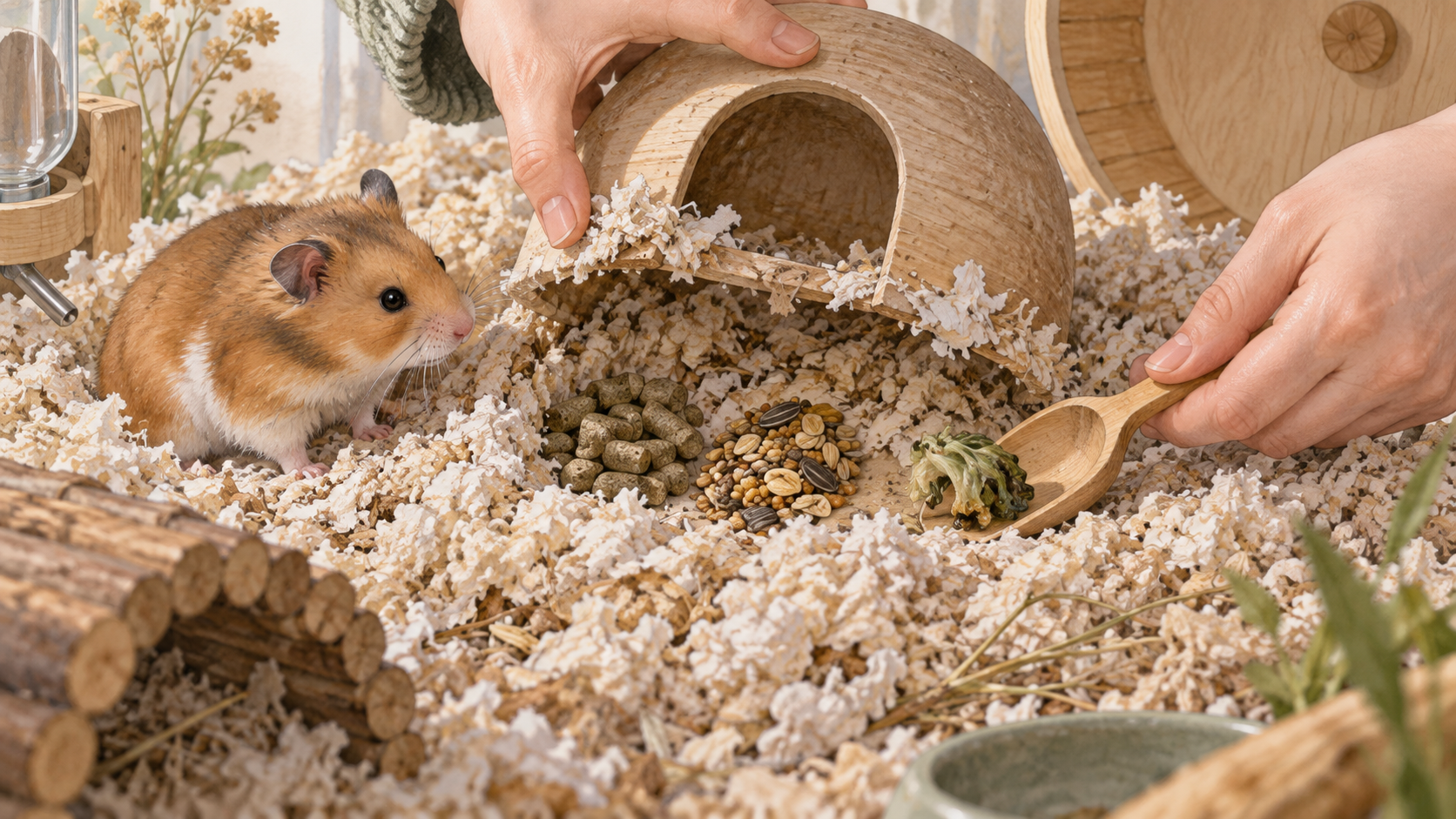
Check likely storage places gently during normal spot cleaning, preferably when the hamster is awake. Remove wet, moldy or foul-smelling food and damp bedding. Dry pellets or seeds that remain clean do not require the whole nest to be destroyed. The goal is to prevent spoilage without repeatedly removing every familiar scent and hiding place.
Scattering part of the measured staple or hiding it in clean paper tubes can support foraging. It should not make it impossible to judge whether the hamster is eating. Our hamster exercise and enrichment guide explains how to combine food-search activities with a safe enclosure.
Water is part of the feeding check
Fresh water should always be available. Check the bottle or bowl every day for leaks, contamination and blocked flow rather than assuming a full bottle is working. Marking the water level can make a real change easier to notice. A leaking bottle also creates damp bedding and can spoil a food cache.
A sustained increase or decrease in drinking, wet fur around the mouth, difficulty chewing, dropping food or weight loss is not a cue to add softer treats without an examination. Dental disease, cheek-pouch problems and systemic illness can all alter feeding.
Know when observation should become a veterinary call
Contact a veterinarian familiar with hamsters promptly if the hamster stops eating, produces markedly fewer droppings, has diarrhea or a soiled rear, becomes unusually quiet, loses weight, or develops a persistently swollen cheek. Drooling, bad odor from the mouth, pawing at the face, blood, or food falling from the mouth can indicate dental or cheek-pouch trouble.
If an unsafe food may have been eaten, keep the packaging or ingredient list and call the veterinarian or an animal poison service for instructions. Do not induce vomiting or give a home antidote; hamsters cannot be safely managed as scaled-down dogs or cats.
A feeding record that reveals problems
Once a week, note the hamster’s weight on the same small scale, the staple offered, any fresh extra, water use, stool appearance and whether wet food was found in the stash. A trend matters more than one isolated number. Bring the food package and this record to the appointment if appetite, weight or drinking changes.
Sources used for this guide
- Merck Veterinary Manual: Providing a Home for a Hamster
- Merck Veterinary Manual: Hamsters
- RSPCA: What to Feed a Pet Hamster
- PDSA: Hamsters as Pets
Editorial note: The illustrations on this page were generated for DailyTrail to show the feeding and food-storage checks described. They are not photographs of the author’s animals. This article provides general husbandry information and does not replace advice from a veterinarian familiar with hamsters.
[…] choosing a staple diet, portioning extras and checking a hidden food cache, see the hamster safe-food and feeding guide. The useful rule here is to measure what you offer and watch what is actually eaten, rather than […]