
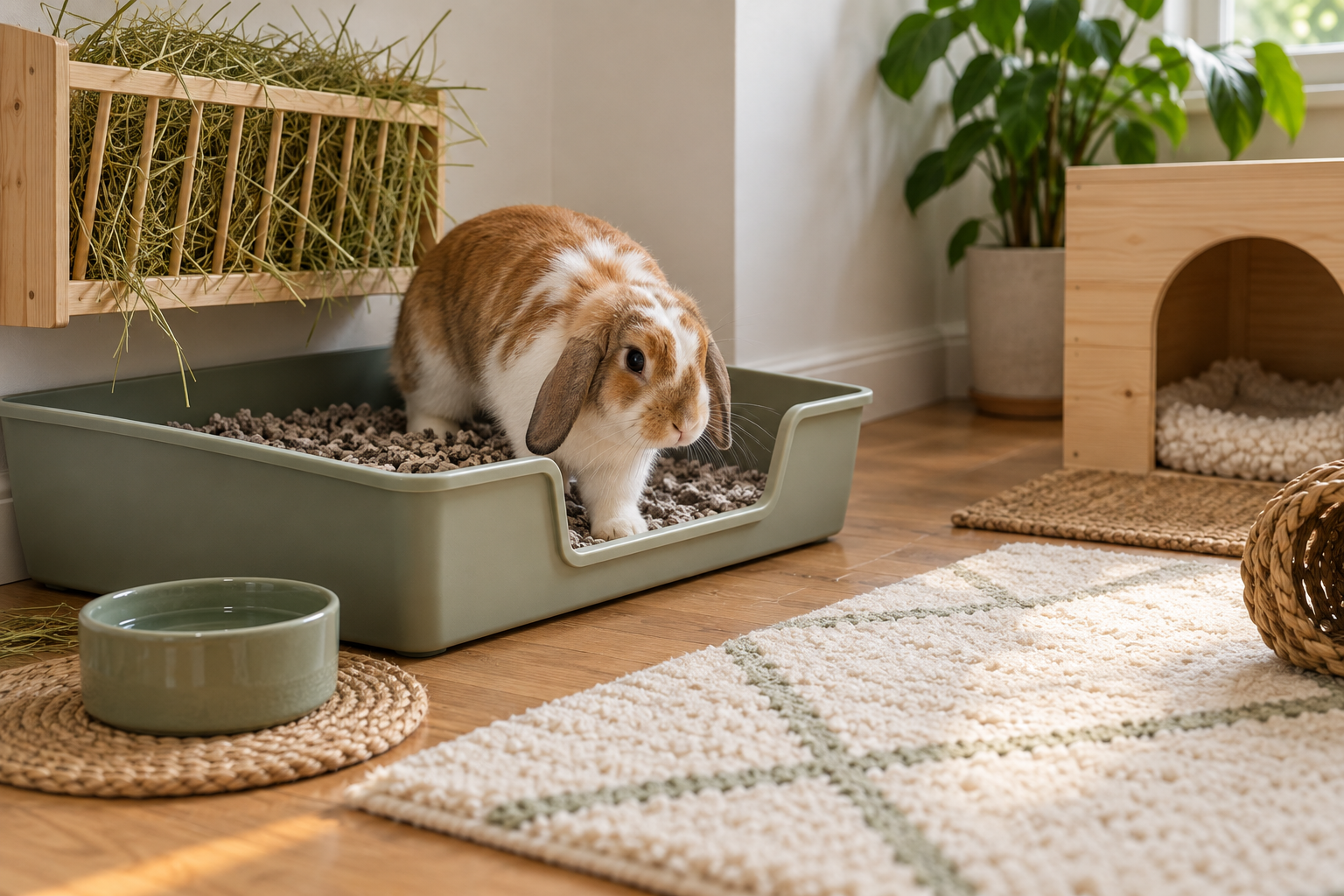
The first place I would look for a rabbit’s litter tray is the corner the rabbit already uses. Moving the toilet to a spot that looks tidy to us may only mean cleaning the original corner twice a day. Watch where urine usually lands, then build the setup around that choice.
This is a guide to arranging and maintaining a toilet area for a healthy pet rabbit. A sudden change in urination, repeated straining, blood, a wet or soiled rear, reduced appetite, or fewer droppings needs a rabbit-experienced veterinarian. A tray cannot solve pain or illness.
Start with the corner and an easy entrance
Put a tray in the chosen toilet area, away from the sleeping space but available at all times. If the rabbit uses several corners, start with trays in those places and adjust only after a pattern becomes clear. For a bonded pair, the RSPCA suggests one tray per rabbit plus an extra. In a larger room, an extra tray near a frequently used area can be more useful than expecting a rabbit to cross the whole space.
The rabbit needs to turn around and sit comfortably inside the tray. A low entrance helps a small, older, or less mobile rabbit step in without a jump; the remaining sides should contain litter. Check the edge for sharp plastic and watch whether the rabbit can enter and leave without slipping. A high-sided cat box may work for a mobile adult if one side has a safe, low opening. If mobility has changed, ask a vet about the cause while you make the entrance easier.
Choose litter for the rabbit, not the cat
Use an absorbent, rabbit-safe material such as paper-based, non-clumping, non-expanding litter. The RSPCA also lists newspaper, shredded paper, hay and straw among suitable toilet-area materials. Avoid clumping or expanding cat litter: rabbits investigate and chew materials in their space, and a product designed for cats is not automatically safe for them. Scented products are unnecessary. If a new litter is dusty, strongly scented, or the rabbit tries to eat a large amount of it, change the material and ask a rabbit-experienced vet for advice.
Put enough litter in the base to absorb urine without making the surface unstable. Then inspect it after the rabbit has used it: are the feet staying dry, does liquid pool at the bottom, and can you lift out wet material without scraping the tray? Those observations tell you more than a fixed depth printed on a checklist.
Make hay available at the toilet
Many rabbits eat hay while using the litter area. A rack above or beside the tray can make hay easy to reach while keeping most of it away from wet litter. Check that the rabbit can reach the hay without stretching awkwardly or putting its head through an opening that could trap it. Replace any hay that becomes wet or soiled. Keep another clean hay supply available as well, so toilet placement does not limit eating.
This arrangement works best when the rabbit can approach it calmly. A tray beside a noisy appliance or in a busy doorway may be avoided even if the litter itself is suitable. Our indoor rabbit living-space guide explains how to arrange feeding, resting and toilet areas without crowding the enclosure.
Help the rabbit recognize the new tray
Place a few droppings and a small amount of used, non-soaked litter in the new tray so it smells familiar. Clean the previous accident spot and give the rabbit time to find the new setup. The House Rabbit Society advises using the corner the rabbit has chosen, and the RSPCA recommends putting some used material in the tray. Neither source suggests punishment. Scolding after an accident will not explain where the toilet is and may make the rabbit wary of the person approaching it.
Expect some dry droppings outside the tray, especially when the rabbit is exploring or marking territory. Urine location is a more useful way to judge whether the tray placement works. If urine repeatedly appears beside the tray, check the entrance, size, position and litter before adding more training steps. A rabbit that backs up against an edge may need a different tray shape. Watch the rabbit actually use it rather than guessing from where the puddle ended up.
Clean it without erasing every clue
Remove wet litter and soiled hay every day, and wash the tray as needed so residue and odor do not build up. Rinse and dry it before replacing litter. A clean toilet area also makes changes in urine and droppings easier to notice. When moving a tray or changing litter, keep one familiar element at first instead of changing the location, material and hay arrangement on the same day.
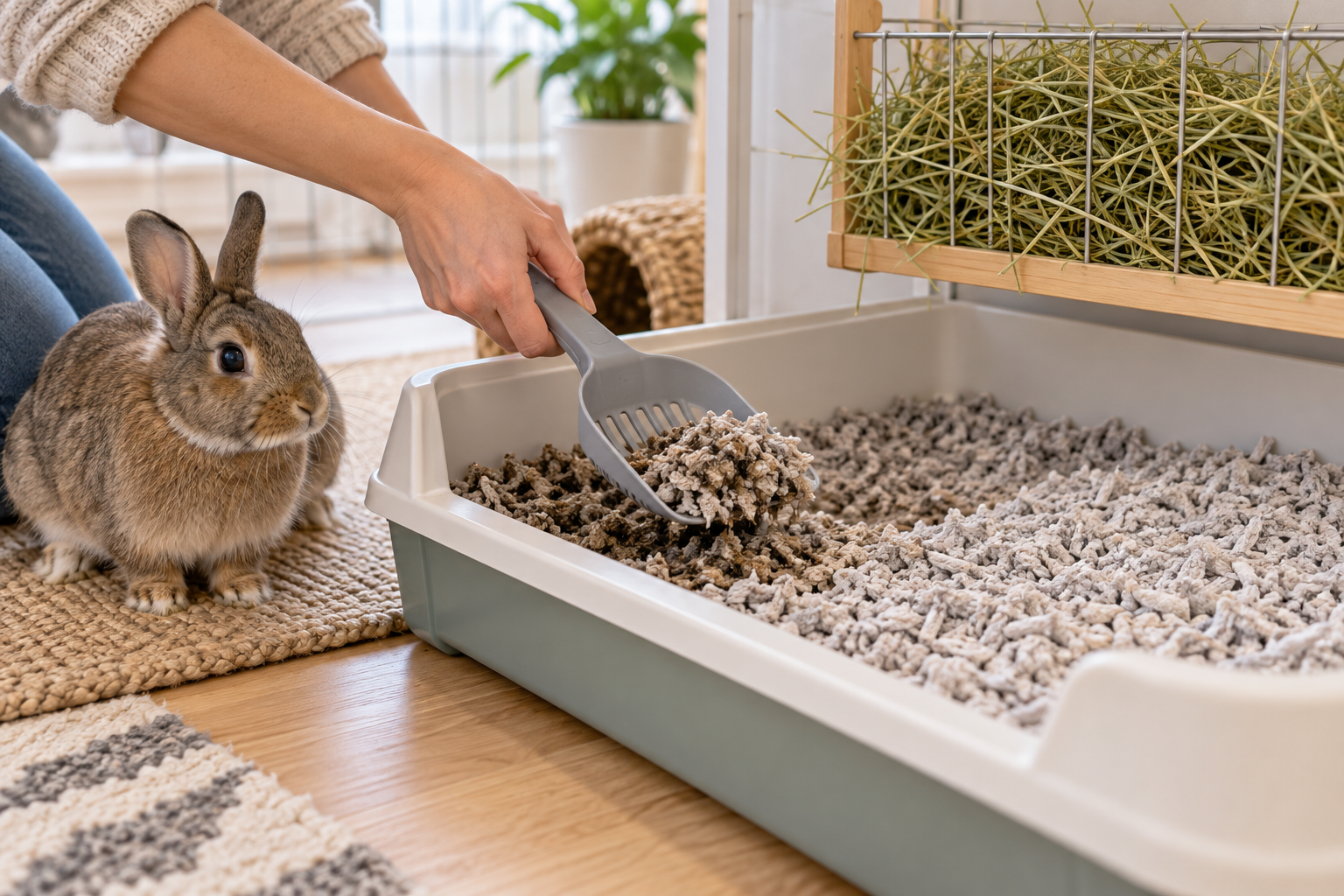
A brief daily check is enough to record whether urine is appearing in the usual place, whether droppings remain plentiful and similar in size, and whether the rabbit's rear and feet are dry. This information is useful if a vet visit becomes necessary. The rabbit health-check article explains what else to observe and when to call.
If a rabbit that used the tray reliably suddenly stops, do not assume the training has been forgotten. Pain, urinary problems, limited mobility, stress or a changed environment may be involved. Contact a rabbit-experienced veterinarian promptly if the change continues or comes with straining, reduced urine, blood, reduced appetite, fewer droppings or an unclean rear. Not passing urine, marked discomfort, or stopping food and droppings calls for urgent veterinary care.
Sources and further reading
- RSPCA: Keeping rabbits in your home
- RSPCA: Creating a good home for rabbits
- House Rabbit Society: How to care for a pet rabbit
- VCA Animal Hospitals: Rabbits as pets
Editorial note: The illustrations on this page were generated for DailyTrail to show the setups described. They are not photographs of the author's animals. This article offers general care information and does not replace advice from a veterinarian familiar with rabbits.