
The gap behind a cabinet is easy to overlook until a ferret disappears into it. Before adding tunnels or toys, I would walk the room at floor level and ask one question: if the ferret gets into that space, can I reach it without moving something heavy? If the answer is no, access needs to be blocked before play starts.
Here, “free-roam” means supervised time in a prepared indoor area. It does not mean opening the cage and allowing access to the whole house. A manageable room with secure boundaries gives a curious animal room to investigate while making it possible to notice chewing, climbing, and attempts to squeeze into trouble.
Start with a room you can actually control
Choose an area where you can close the door, keep other pets out, and interrupt household traffic. Kitchens, utility rooms, and rooms with accessible appliances add complications: a gap beside a fridge can lead somewhere much harder to inspect. Start with a simpler space if those hazards cannot be fully excluded.
Check the door from both sides. Look at the gap underneath, the hinge side, and any opening beside the frame. An ordinary baby gate may have spaces a ferret can squeeze through or a surface it can climb. A boundary has to work for this animal, not just look substantial from standing height. Do not test a questionable gap by letting the ferret try it.
Tell everyone at home when play is taking place. Close windows securely and keep exterior doors outside the permitted area. Screens and an open doorway behind a person are poor substitutes for a secure boundary. If someone must enter, locate every ferret first and control the opening; carrying a laundry basket through while watching a phone is an easy way to miss an escape.
Check below furniture and inside it
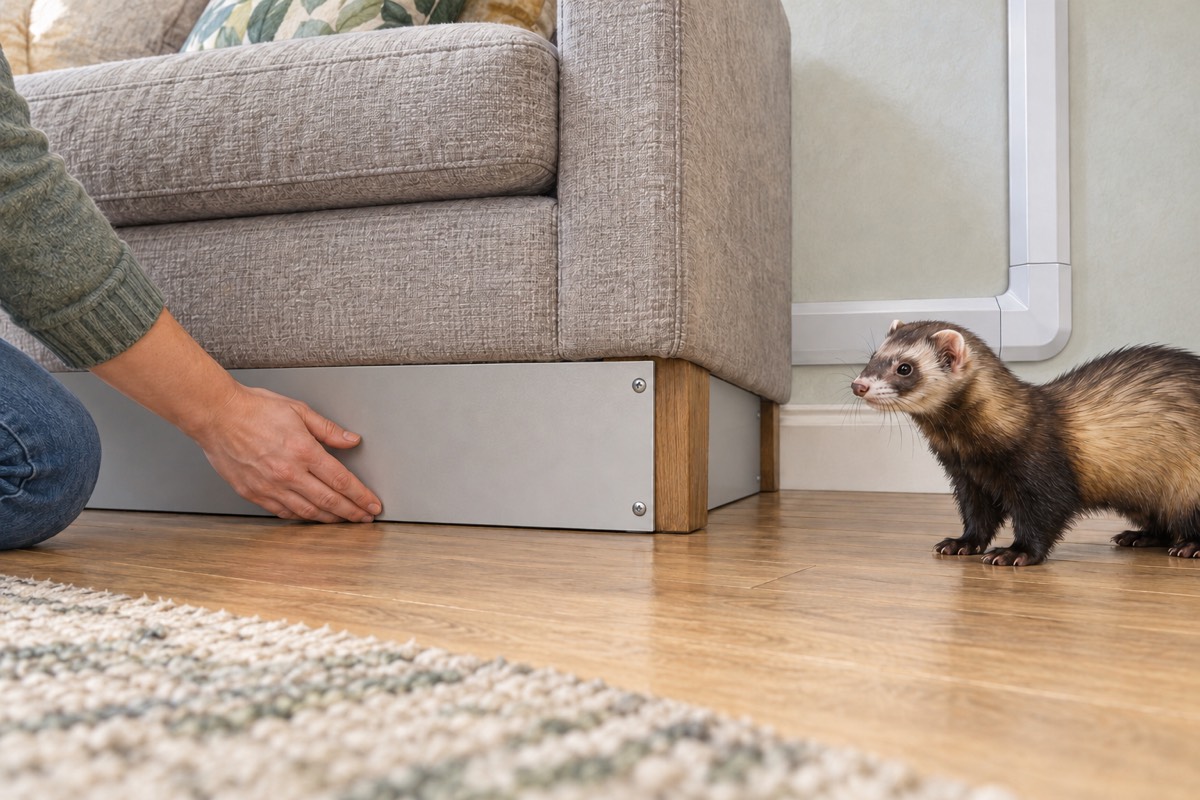
Get low enough to see the underside of sofas, chairs, drawers, and cabinets. Look for loose backing fabric, exposed foam, and openings into hollow bases. Ferrets can get inside upholstered furniture rather than merely underneath it. A throw over the sofa does not prevent access through the underside.
Exclude recliners, sofa beds, rocking furniture, and other moving mechanisms from the play area. Keeping a mechanism still during one session leaves a risk when somebody uses it later. If access cannot be reliably prevented, choose another room. Never fold, recline, or move furniture until every ferret has been located and secured elsewhere.
Where a fixed barrier is appropriate, it should be rigid, secure, smooth at its edges, and checked along its whole perimeter. Towels pushed into holes can be dragged away; loose panels can tip or leave a new gap at the side. Do the work with the ferret safely housed elsewhere, then check the finished barrier by hand before the next session. If furniture must be moved for inspection, use help rather than risking a heavy item falling.
Also look upward. A low box, curtain, or nearby chair may give access to a windowsill or shelf that seemed unreachable. Arrange enrichment so it does not become a staircase to an unsafe surface. Inspect again after moving furniture, changing curtains, or bringing a new item into the room.
Remove the things a ferret can carry away
A clear floor is only the beginning. Check bags, low shelves, coat pockets, and the space beneath cushions for earplugs, hair ties, shoe insoles, rubber bands, balloons, and small toy parts. Foam and rubber deserve particular attention because swallowed pieces can cause intestinal obstruction. VCA's housing guidance specifically highlights these materials and damaged toys.
Put medicines, cleaning products, cosmetics, plants, and bins outside the accessible area. A zipped handbag on the floor is still something to investigate. Clear dropped leaves and other debris as well as the plant itself. Finish cleaning before the animal comes out, following product directions for rinsing, drying, and safe re-entry.
Keep electrical leads completely inaccessible wherever possible. Unplug and remove unnecessary chargers; route remaining cables behind a secure barrier or suitable fixed cover that the ferret cannot get behind or chew through. A cable hidden beneath a rug remains accessible to digging. Check covers and edges after every session in which the animal has been investigating them.
Laundry and open containers need a household rule too. Check bags, blankets, and baskets before lifting or carrying them. Keep appliance doors closed, and account for every ferret before starting a washing machine or dryer. Buckets, toilets, and deep containers of water should be outside the area. Drinking water belongs in a stable, accessible bowl.
Add exploration without creating new hiding hazards
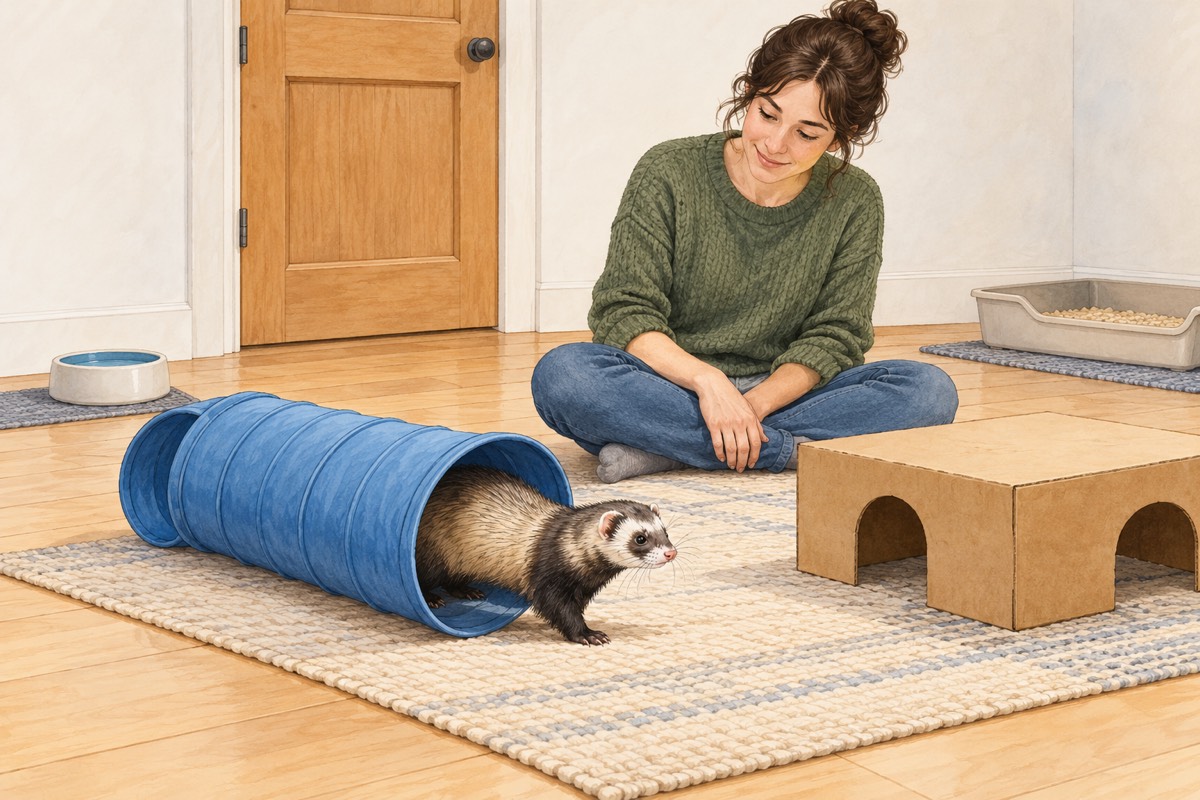
Once the boundaries are secure, give the ferret things it can investigate safely. Start with a low cardboard box with easy exits and a tunnel wide enough to move through comfortably. Check for staples, tape, loose pieces, and sharp edges. Position the entrances so you can see that they remain clear, and replace cardboard when it becomes wet or chewed apart.
A fabric tunnel needs checks of its seams, lining, and any supporting wire. Remove it if the ferret chews the material or exposes the support. A rigid tunnel should have smooth edges and enough internal space for the particular ferret; do not copy a diameter from a product photograph. Avoid a long enclosed route you cannot open or inspect if an animal stops inside.
Provide clean drinking water, a suitable litter tray, and a quiet retreat within the permitted area. Keep the tray away from food and water, and clean up accidents promptly. Leave enough open floor for movement between resources. A room packed with toys can be harder to supervise than a smaller selection with clear routes.
For ideas about interaction and choosing activities, our ferret playtime and social-needs guide covers that part of the routine. Start with a small selection and inspect each item before rotating it back into the room.
Use the first sessions to find what you missed
Stay in the room and watch where the ferret goes. Note repeated interest in a corner, scratching under a barrier, or chewing at a seam. If a boundary becomes questionable, return the animal to its secure enclosure and fix it before continuing. Supervision helps you notice a problem; it cannot make an accessible cable or furniture mechanism safe.
Keep prey animals, including rabbits, rodents, and birds, in a separate secure area. Ferrets are predators, and a cage inside the play room does not make a safe introduction. Manage dogs and cats separately too, rather than dividing attention between exploration and an unfamiliar interaction. Children need close adult supervision and a clear rule about doors and furniture.
Allow a shy ferret to use its retreat without being pulled out to keep the session going. Persistent hiding, aggression, reluctance to move, or a change from normal behaviour calls for a closer look at health and the environment. The amount and type of activity should suit the individual animal; this setup is intended to support regular exercise, not force an exhausted or frightened ferret to keep playing.
At the end, count and locate every animal before opening the room to normal use. Check favourite hiding places, inspect toys for missing pieces, and pick up anything stashed away. A short note about a newly tested gap is worth keeping for the next inspection. Repeat the check whenever the room changes, even if yesterday's session was uneventful.
If something may have been swallowed
Contact a veterinarian promptly if a piece of rubber, foam, or another object is missing and ingestion is possible. Do not wait for a complete set of symptoms or assume a playful ferret will pass it safely. Vomiting, poor appetite, marked lethargy, abdominal discomfort, or changes in droppings require urgent veterinary advice, especially after suspected chewing or ingestion.
For suspected poisoning, remove access to the substance and call the vet immediately. Keep the packaging or a photograph of the product if safe to do so. Do not induce vomiting or give oils, laxatives, or medicines without veterinary direction. Tell the clinic what may have been eaten, when it happened, and what signs you have noticed.
Sources and further reading
- VCA Animal Hospitals: Ferrets—housing
- RSPCA: Ferret behaviour and enrichment
- RSPCA: Poisoning in ferrets
- Blue Cross: Caring for your ferret
- RSPCA: Feeding and drinking water for ferrets
Editorial note: The illustrations on this page were generated for DailyTrail to show the setups described. They are not photographs of the author's animals. This article provides general husbandry information and does not replace advice from a veterinarian familiar with ferrets.