
You have watched the videos. You have read the articles. You think you are ready. Then the cat arrives, and within 48 hours, you are staring at a puddle of urine on your new rug, wondering where it all went wrong.
I have been there. More than once. Over the past decade, I have fostered, rehabilitated, and placed over 40 cats in permanent homes. I have made every mistake in the book, and I have learned from veterinarians who specialize exclusively in feline medicine. This is not a rehash of basic Internet advice. This is what actually works.
The First Mistake Almost Everyone Makes
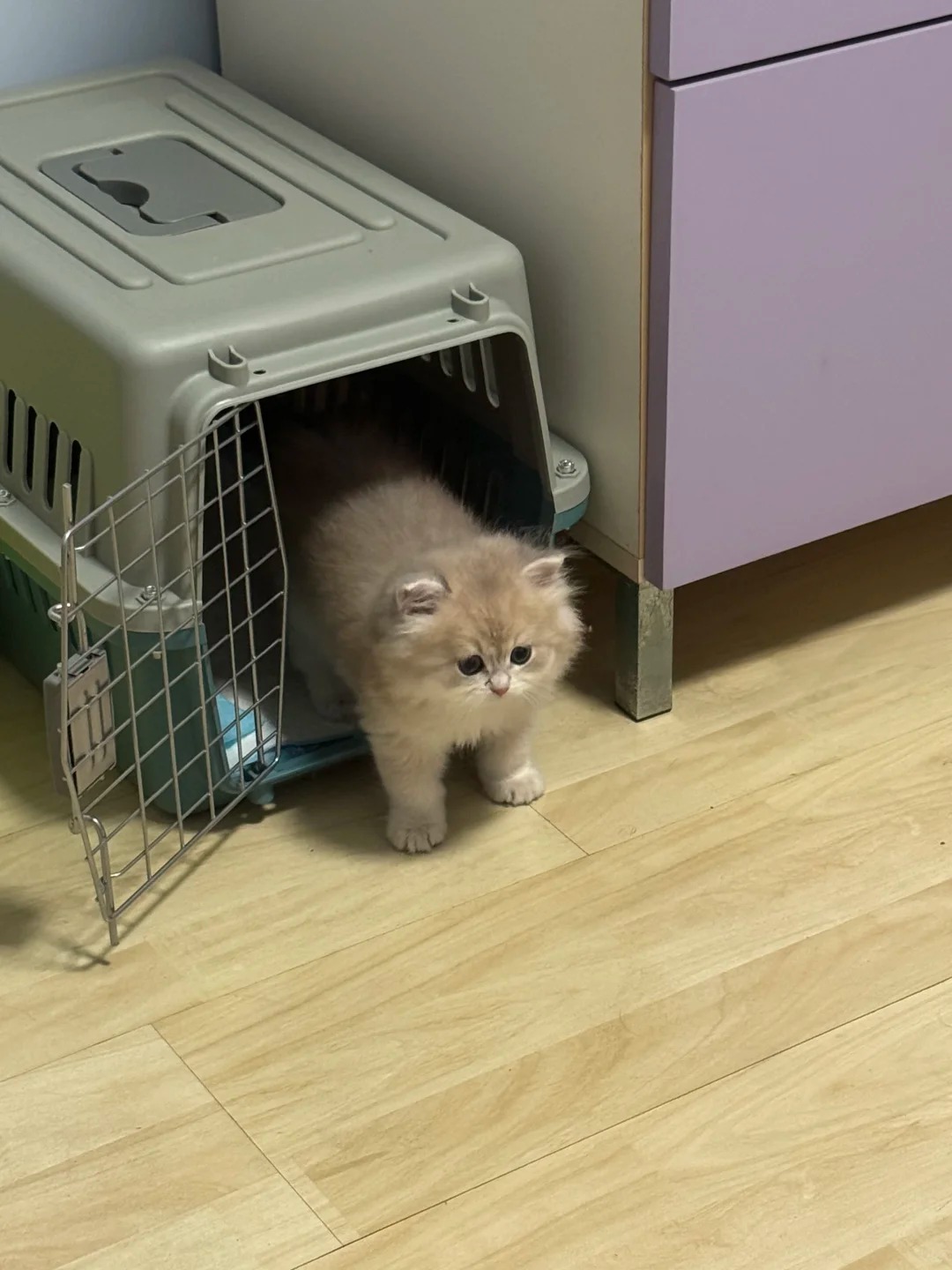
You bring the cat home. You open the carrier. The cat bolts under the bed and stays there for three days. You panic, thinking you have adopted a traumatized animal.
You have not. You just skipped the single most important step.
Start with one room. Not the whole house. Not even the whole floor. One room. A bedroom, a home office, a spare bathroom. This is the “safe room.” Inside it, put everything the cat needs: food, water, litter box, and a cardboard box with a hole cut in the side. That box is not decoration. It is the cat’s panic room, and it needs to be there.
Leave the cat in that room for at least three days. Visit regularly, but do not force interaction. Sit on the floor. Read a book. Let the cat approach you. When it finally does — and it will — that moment of trust is earned, not demanded. That trust carries forward for the next fifteen years.
Why Your Cat Hates Where You Put the Water Bowl
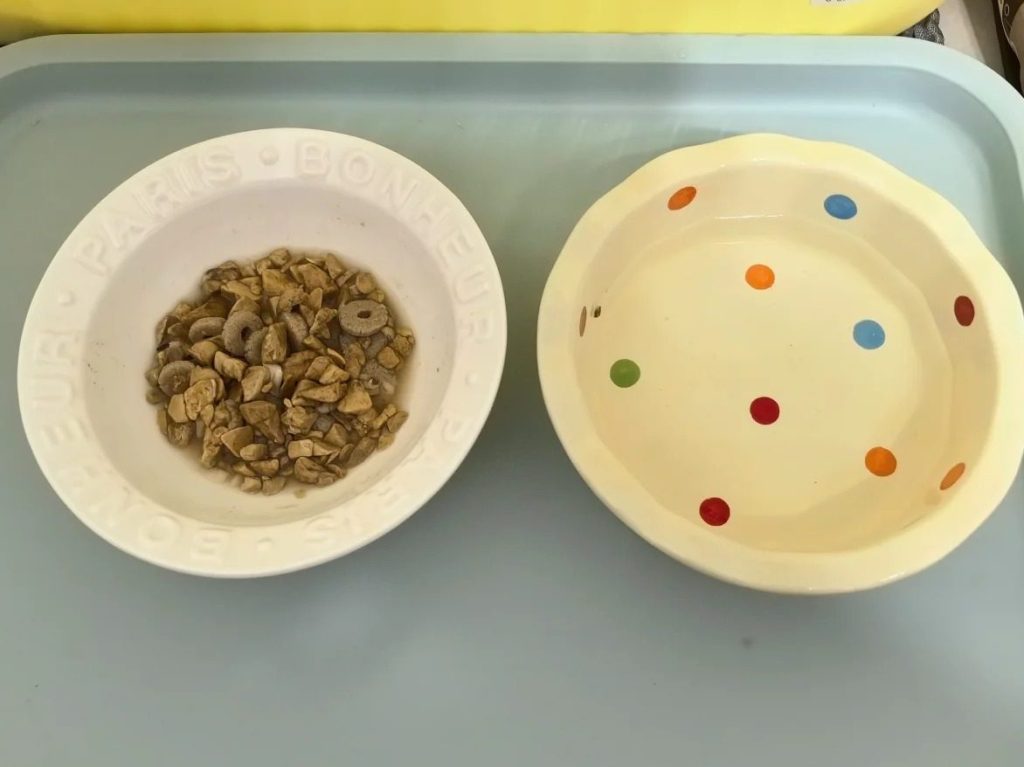
Here is something most guides get wrong. They tell you to put food and water next to each other. Convenient, right? Wrong.
Cats are hardwired to avoid drinking near their food. In the wild, a carcass near a water source means contamination. Your cat does not know the kibble is clean. It only knows the instinct that says don‘t drink there.
Move the water bowl at least three feet away from the food. Better yet, put it in a different room entirely. And do not stop at one bowl. Place at least three water bowls around the house — near the couch, by the window, next to your bed. Cats drink more when water is convenient. More water means healthier kidneys. It is that simple.
The Litter Box Rule You Cannot Break
You have heard the formula: one box per cat, plus one extra. You think it is excessive. It is not.
But here is the part nobody mentions: location matters more than quantity. Do not put the litter box in the laundry room next to the washing machine. Do not put it in a narrow hallway. Do not put it next to the cat‘s food.
Cats are vulnerable when they use the box. They need to see approaching threats. They also need privacy. The ideal spot is a quiet corner with at least two escape routes. Think of it like a public restroom stall — would you use one with a single exit and a door that does not lock?
Scoop twice a day. Not once. Twice. If you miss a day, do not be surprised if your cat finds a cleaner alternative — like your laundry pile or that expensive rug.
The Play Sessions That Actually Work
Your cat is not lazy. Your cat is bored.
Cats are built to hunt. In the wild, they spend hours stalking, chasing, and pouncing. In your apartment, they have a bowl of food that requires zero effort. That mismatch creates frustration, and frustration becomes behavioral problems — biting, scratching, yowling at 3 AM.
The fix is not more toys. The fix is structured play.
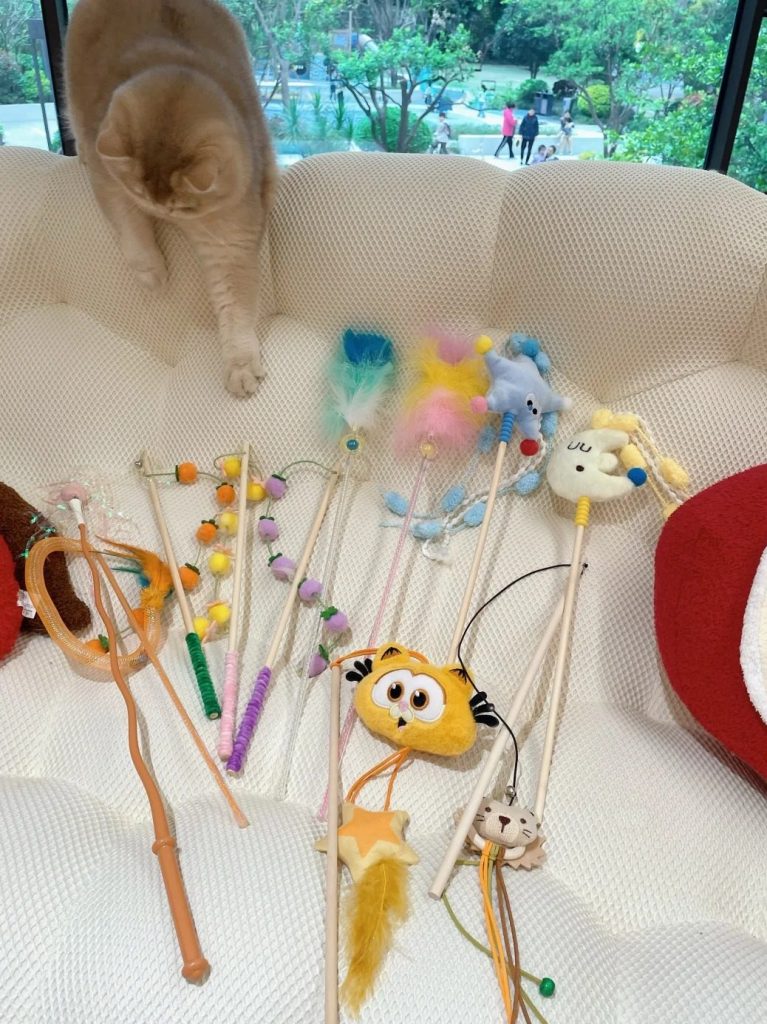
Twice a day, for ten to fifteen minutes, use a wand toy. Move it like prey: quick darts, sudden stops, hiding behind furniture. Let your cat stalk, chase, and capture. Let them win. At the end of the session, give them a meal. This completes the natural sequence: hunt, eat, groom, sleep.
Do this before bedtime, and your cat will sleep through the night. I have tested this with over a dozen fosters. It works every single time.
Scratching Is Not Destruction. It Is Communication.
Your sofa is not a scratching post. But to your cat, it looks like one. The solution is not punishment. The solution is giving your cat a better option.
Place a scratching post within three feet of every spot your cat currently scratches. Not across the room. Not in the next room. Right there. Cats scratch when they wake up. They scratch when they stretch. Put the post where they naturally want to scratch.
Vertical posts are better than horizontal ones. Sisal rope is better than carpet. And cardboard? Cardboard is great — but it wears out fast. Replace it monthly.
Do this, and your furniture survives. Skip it, and your security deposit disappears.
The Obesity Crisis Nobody Talks About
Indoor cats get fat. It is not their fault. It is ours.
We free-feed. We give treats for no reason. We confuse food with love. The result is an epidemic of diabetic, arthritic, miserable cats who live half as long as they should.
Portion control is non-negotiable. Measure every meal. Do not leave food out all day. If your cat finishes a meal and asks for more, that does not mean they need more. It means they are a cat. They would eat themselves into oblivion if you let them.
How do you know if your cat is the right weight? Look from above. You should see a waist — an inward curve between the ribs and the hips. If you see a straight line or a bulge, your cat is overweight. If you can see every rib, your cat is underweight. Adjust portions accordingly.
The Annual Vet Visit That Saves Lives
Cats hide pain. It is an evolutionary survival mechanism. In the wild, a sick cat is a target. By the time your cat shows obvious symptoms — vomiting, lethargy, weight loss — the disease is often advanced.
Routine blood work catches problems early. Kidney disease, diabetes, thyroid issues — all of these show up on blood tests months or even years before symptoms appear. For cats under seven years old, an annual wellness exam with blood work is standard. For seniors, twice a year is better.
Do not wait for something to go wrong. By then, it is often too late.
The Harness Training Myth
You want to take your cat outside. That is understandable. But a cat that has never worn a harness will panic the first time you put one on. The solution is slow desensitization.
Leave the harness on the floor for a few days. Let the cat sniff it. Then put it on for a few minutes, give a treat, take it off. Repeat daily, gradually increasing the time. Once the cat is comfortable indoors, try a short outdoor session in a quiet area.
Not every cat will accept a harness. Some will flop over and refuse to move. That is fine. Respect that boundary. A stressed cat does not need outdoor time. They need a window perch and a safe indoor environment.
What Nobody Tells You About Multiple Cats
Two cats are easier than one. This sounds counterintuitive, but it is true. Cats are social creatures. They groom each other. They play together. They keep each other company when you are at work.
But there is a catch. You need to introduce them properly. Keep the new cat in a separate room for at least a week. Let them smell each other under the door. Swap bedding so they get used to each other’s scent. Then do supervised visits. Rushing this process creates lifelong animosity.
And remember the litter box rule — one per cat, plus one extra. That is not optional.
Final Words
Bringing a cat into your home is not about adding a decorative accessory. It is about building a relationship with an independent being who will share your life for a decade or more. That relationship demands effort, patience, and a willingness to see the world through your cat‘s eyes.
If you take one thing from this guide, let it be this: your cat is not trying to annoy you. They are trying to tell you something. Learn to listen. The rest takes care of itself.