
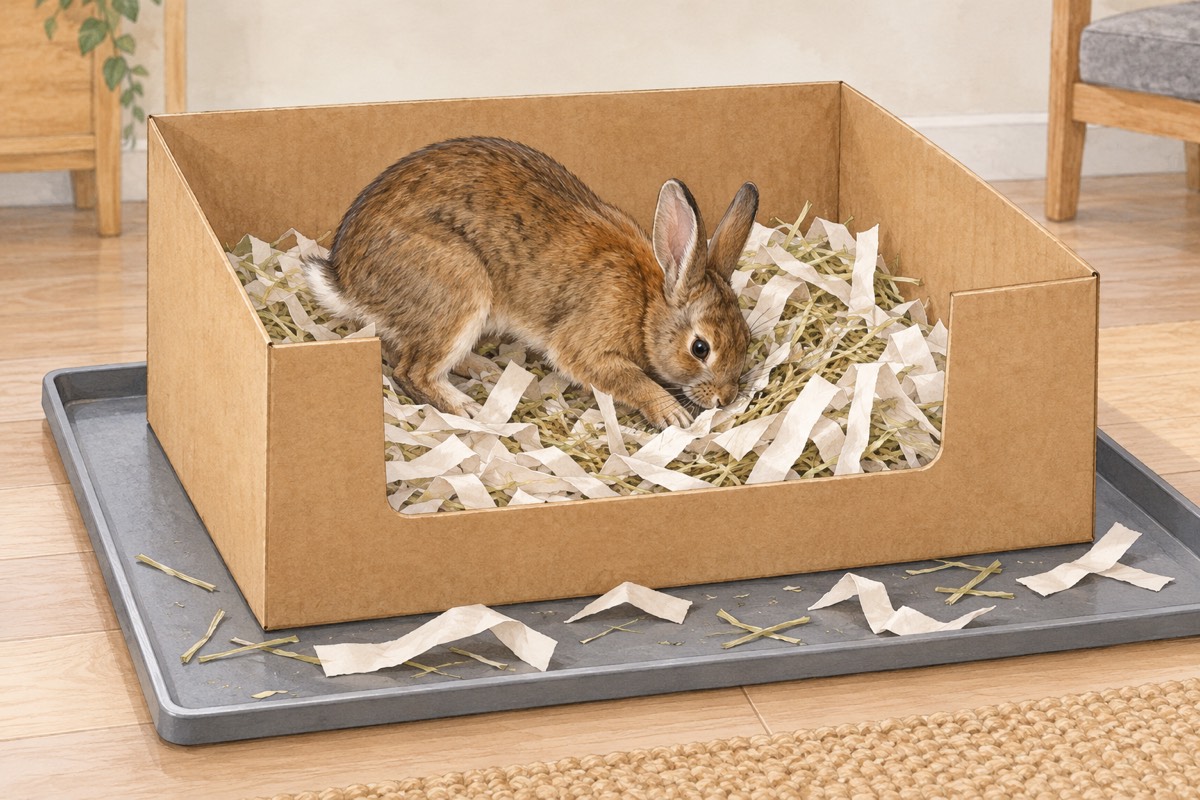
Paper kicked through an entrance is not necessarily a failed digging box. It may mean the rabbit is using it exactly as intended. The useful distinction is between loose material you can sweep up and a setup that scatters across the room, tips under the rabbit, or hides a wet base beneath a clean-looking surface.
For an indoor starting point, I would choose a roomy box with a low entrance, plain paper or hay, and a floor area that is easy to inspect. Some material will escape. The aim is to keep cleanup manageable while still letting the rabbit dig, turn, and leave freely—not to build a container so restrictive that the behaviour becomes difficult.
Choose the entrance before choosing the fill
The Rabbit Welfare Association & Fund suggests a digging box at least twice the size of the rabbit to allow movement. Treat that as a starting point, then look at how your rabbit fits: it needs room to turn and dig without its body pressing against every wall. A large plain cardboard box or a sturdy, washable tray can work. Check cardboard for staples, tape, plastic labels, and loose glued seams before use.
Higher back and side walls can catch material thrown behind the rabbit. Keep a broad, low entrance so getting in does not require an awkward jump. For a rabbit with reduced mobility, use a low-access tray and ask your rabbit-experienced vet about a suitable arrangement. Do not solve mess by making the entry harder to cross. A cut plastic edge must be completely smooth; if you cannot finish it safely, choose a different container.
Leave the top open for this simple indoor design. You can see the rabbit and the condition of the fill, and there is no lid to fall or a tiny entrance to squeeze through. Set the empty box down and press its corners. If it rocks, slides, or folds, correct that before adding material. Replace cardboard once chewing or moisture weakens its structure.
Start with paper or hay you can inspect
The RSPCA lists shredded paper and hay among suitable digging materials. For a first indoor trial, use clean, soft, plain paper without glossy coatings or unknown printing, or clean hay. Avoid long loops of material, string, staples, and shredded confidential documents with mixed plastic or metal pieces. Add enough loose material for the rabbit to move with its forefeet, leaving the entrance clear.
Hay is edible and may make the box interesting, but it still needs to stay clean. Keep a separate supply of fresh feeding hay available rather than relying on material the rabbit has been digging and toileting in. Paper is enrichment, not food: a little exploratory chewing differs from repeatedly swallowing it. If your rabbit eats substantial amounts of the fill, remove that material and discuss the choice with your vet.
Soil and sand appear in welfare guidance as digging options, but a product being sold for gardening does not make it suitable for a rabbit. Fertilisers, pesticides, additives, contamination, and dust need consideration. They are also harder to contain indoors. You do not need to start with them to offer useful digging. Avoid sawdust, clumping cat litter, scented products, and using hard litter pellets as the digging surface; the RWAF distinguishes comfortable digging material from toilet substrates.
Catch scatter without building a trap
Put the box within the rabbit's usual secure exercise area, away from food and water bowls and outside the line of a door. Leave room to approach and turn outside the entrance. Our indoor rabbit living-space guide shows how enrichment can fit alongside clear movement routes and separate resources. It must not become a step that gives access to electrical cables, plants, furniture gaps, or the top of an enclosure.
A larger shallow tray beneath the box can collect some of the scatter. Check its edges and stability too: the rabbit should not have to cross a slippery lip to reach the box. If you use a mat for grip, inspect it for chewing and remove it if fibres are being swallowed. Do not leave an accessible plastic sheet, bin liner, or absorbent puppy pad beneath loose fill where digging can uncover it.
Watch the direction in which material leaves during the first session. Rotating the box so its higher back faces the usual kicking direction may be enough to reduce scatter. If it still spills excessively, try a larger footprint or slightly less fill before raising the entrance. Make one change at a time so you can tell what helped. A lid and a small hole may contain paper, but they also change access, visibility, and escape options.
Invite investigation, then watch what happens
Place the box and let the rabbit approach. Do not lift it into the fill or hold it there for a photograph. An unfamiliar container may be sniffed, chinned, ignored, or used later. Keep its familiar retreat and normal routes available. If the rabbit is frightened, remove or simplify the new item and try again more gently.
A few pellets from the normal daily ration can encourage investigation, provided the rabbit is eating normally and the box is clean. There is no need to bury a meal deep enough to make it difficult to retrieve. Keep fresh hay and water available elsewhere. Avoid turning the digging box into a source of extra sugary treats each time it is used.
With a compatible pair, watch whether both can use the activity and move away. If one guards the entrance or repeatedly displaces the other, offer another digging opportunity in a separate part of their shared area rather than making them compete. A digging box supplements space, companionship, and other enrichment; it cannot compensate for a cramped home.
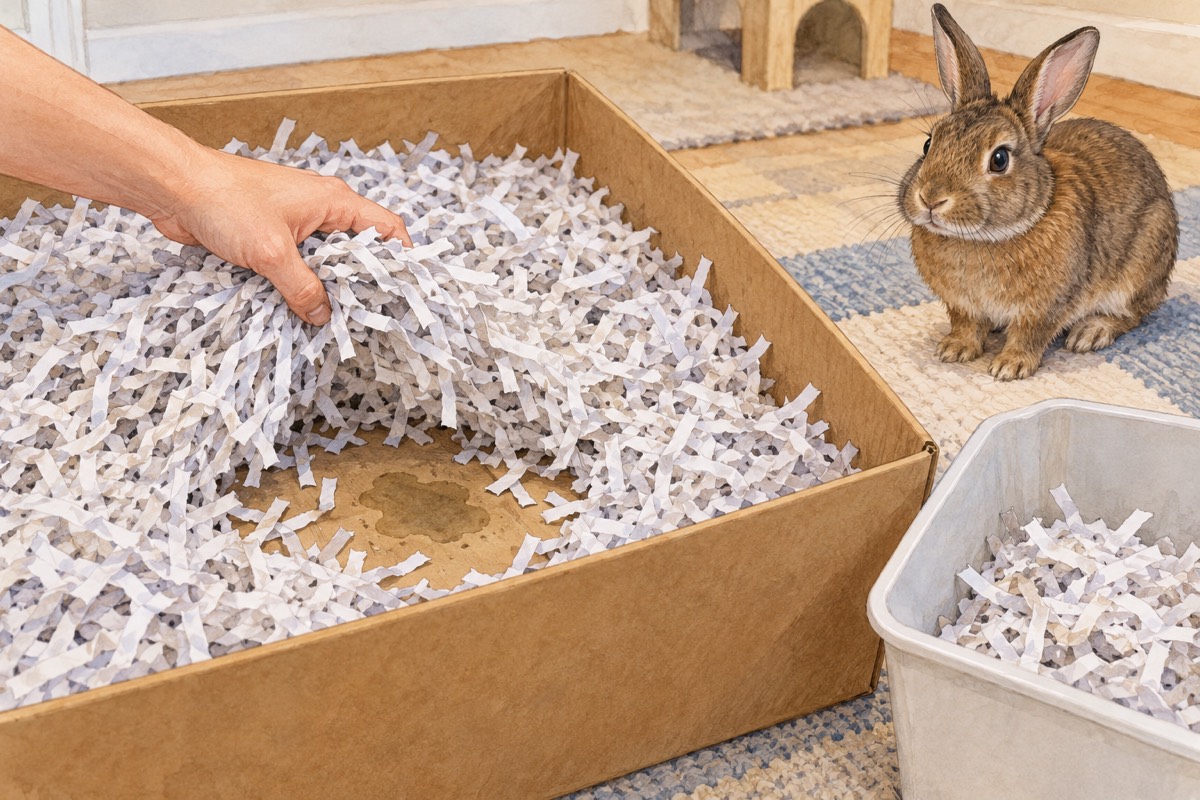
Lift the top layer when checking cleanliness
Check the box daily and after a session if you notice toileting. Remove droppings and damp or fouled material promptly. Look underneath the dry top layer: urine can reach the cardboard or tray while the visible paper still looks usable. Do not cover that wet patch with fresh fill and treat the job as finished.
If urine has soaked a cardboard base, replace the damaged box as well as the contaminated contents. A washable tray is often more practical for a rabbit that repeatedly urinates there. Empty it, wash away visible residue with a suitable cleaning method, rinse thoroughly, and let it dry before refilling. Keep rabbits away from cleaning products and wet surfaces. Routine cleaning does not require strong disinfectant every time; the RWAF cautions that repeated disinfectant exposure can irritate rabbits. Follow veterinary guidance if illness requires specific disinfection.
There is no replacement calendar that overrides the condition of the material. A heavily used box may need attention much sooner than one that stays dry. Discard fill that is damp, mouldy, foul-smelling, or contaminated, and replace worn cardboard before it collapses. Keep spare clean material ready so a quick change does not become a reason to leave a dirty box in place.
If it becomes the favourite toilet
Digging and scent-marking can overlap, so urine in the box is not something to punish. Keep proper litter trays easy to reach, and clean the digging materials when soiled. The rabbit litter-box setup guide covers toilet-corner placement and accessible tray entrances. If the rabbit consistently chooses this container as a toilet, consider using a washable version there and offering a second clean digging activity elsewhere.
A sudden change in toileting is a different question. Straining, a wet or dirty bottom, sore skin, difficulty entering trays, or reduced movement warrants veterinary advice rather than repeated changes of filler. The layout may need adjustment, but pain or urinary trouble should not be dismissed as a training problem.
If your rabbit loses interest in digging but otherwise eats and behaves normally, try changing the position or texture without repeatedly moving everything at once. If it eats less, produces fewer or no droppings, becomes hunched or unusually quiet, contact a vet immediately. Do not wait for it to resume playing or try home remedies for suspected swallowed material.
Sources and further reading
- Rabbit Welfare Association & Fund: Digging
- RSPCA: Rabbit enrichment, toys and activities
- Rabbit Welfare Association & Fund: Bedding and litter
- Rabbit Welfare Association & Fund: Disinfectants
- PDSA: Reduced appetite in a rabbit
- PDSA: Urine scald and dirty bottoms
Editorial note: The illustrations on this page were generated for DailyTrail to show the setups described. They are not photographs of the author's animals. This article provides general husbandry information and does not replace advice from a veterinarian familiar with rabbits.