
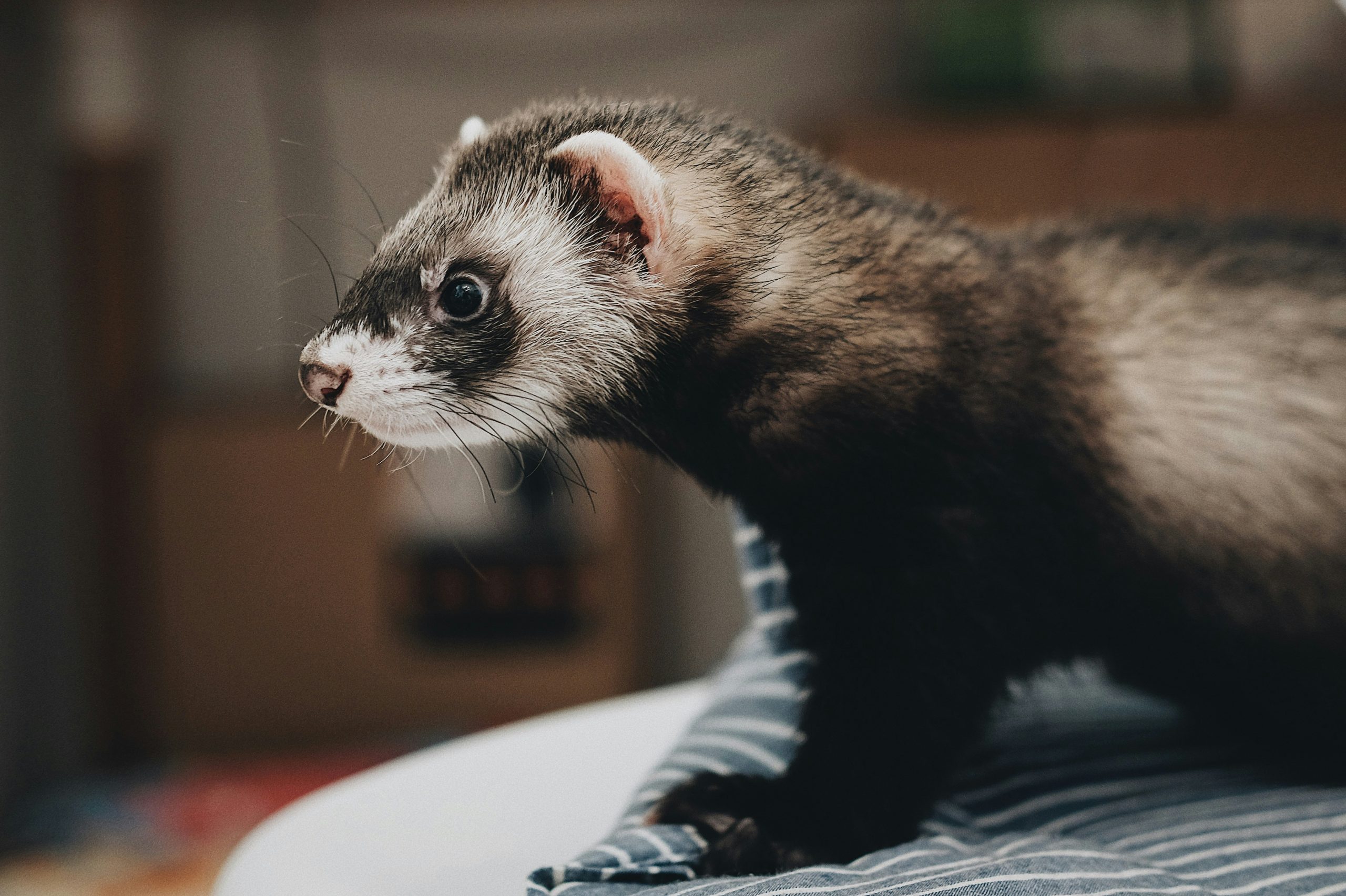
The question sounds simple: how many hours should a ferret spend out of the cage? The useful answer is less tidy than a number. Time matters, but so do the room, the choices available in it, and whether the ferret is actually exploring or merely waiting beside a closed door.
When I compare veterinary and animal-welfare guidance, I use two to four hours outside the enclosure each day as a practical starting range. The Merck Veterinary Manual gives that range and also stresses supervision. I would not turn it into a stopwatch rule. A young, energetic ferret may need several lively sessions; an older ferret may investigate for a while, nap, and return later.
Start with the animal in front of you
A ferret that wakes, eats normally, runs through a tunnel, digs in a box and settles afterward is giving you more useful information than a calendar reminder. I pay closest attention to changes from that ferret’s usual pattern. Repeatedly scratching at the enclosure, pacing the same route, nipping harder during release, or immediately searching for forbidden spaces can point to a routine that is too short or too predictable.
Those signs are not proof of boredom by themselves. A sudden drop in play, weakness, poor appetite, weight loss, vomiting, diarrhea, trouble breathing, or difficulty using the back legs deserves veterinary attention. Ferrets can become seriously ill quickly, so a marked change in energy should not be “fixed” only by buying another toy.
What good playtime looks like
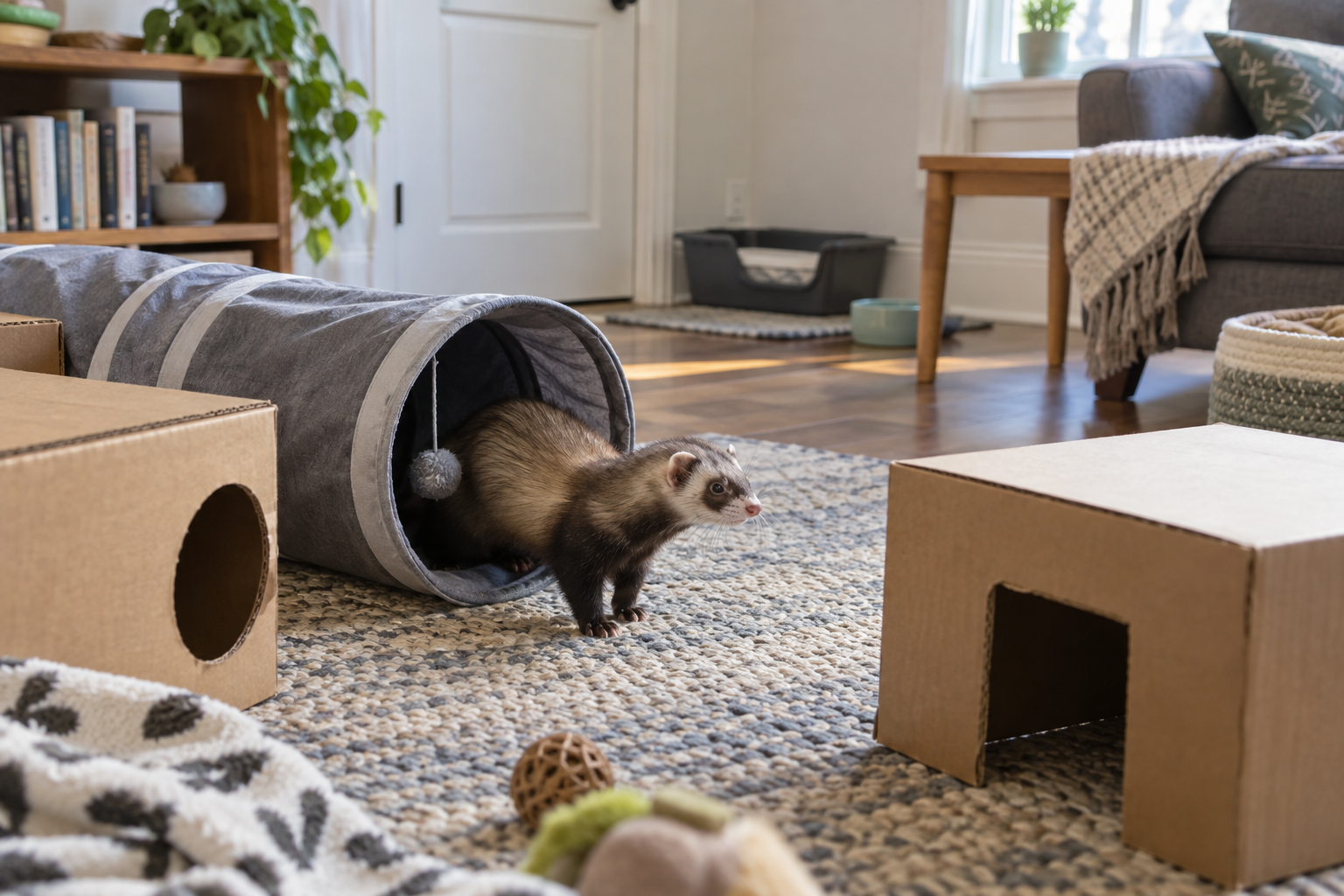
I do not count every minute as direct play with a person. Ferrets need a safe place where they can choose what to do: follow a scent trail, climb into a box, chase a rolling toy, wrestle with a compatible companion, or disappear into a fabric tunnel. Human interaction is part of the day, but independent investigation is valuable too.
The best sessions usually contain three things:
- Movement: tunnels, low obstacles and open floor space for running and turning.
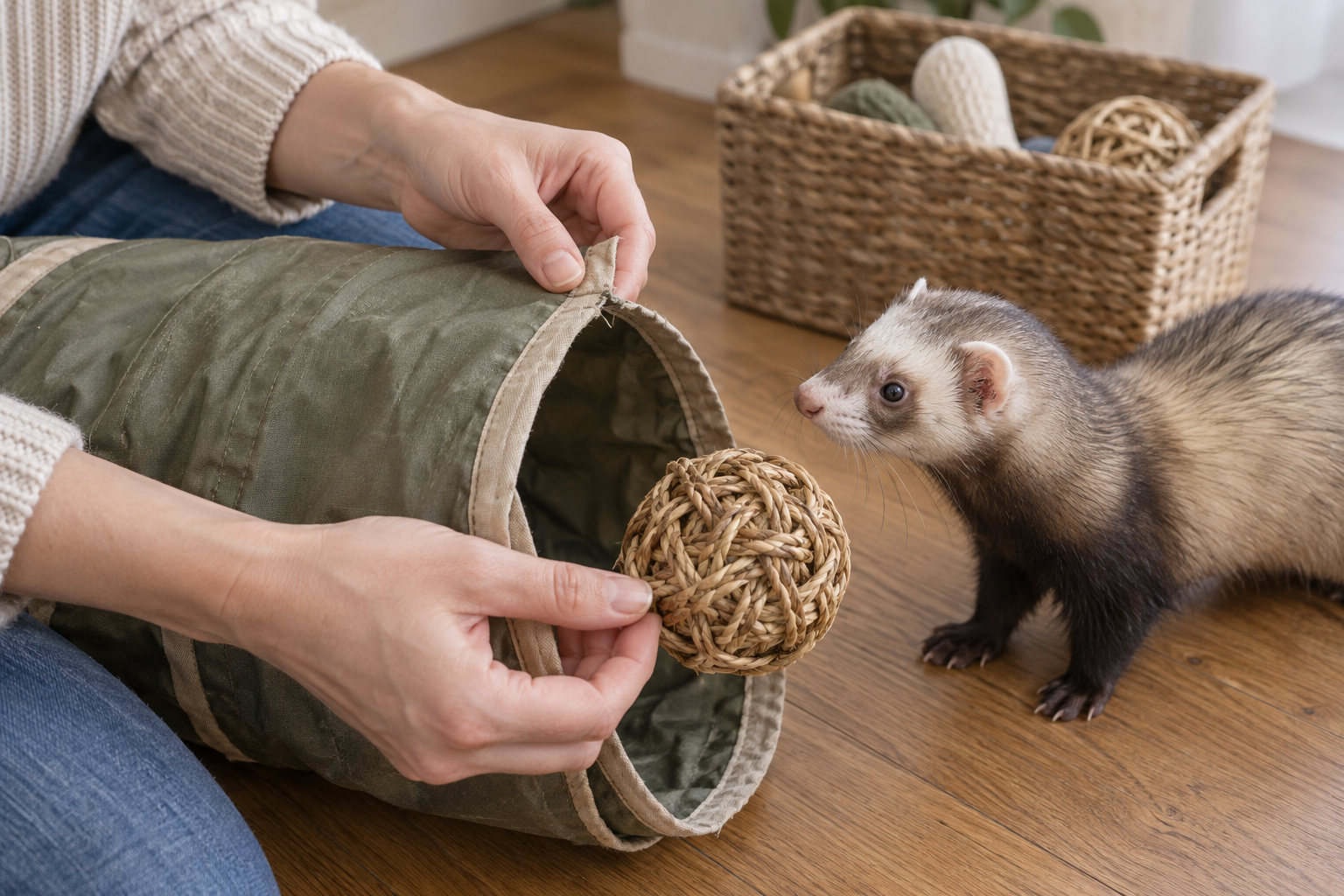
- Problem-solving: a few pieces of the normal food ration hidden in paper, a cardboard box with several exits, or a simple food puzzle designed for pets.
- Choice: an active zone and a quiet hiding place, so the ferret can leave the game instead of being handled continuously.
Novelty does not require a large toy budget. I would keep only a small selection in the room and swap one or two items every few days. Moving the same tunnel, cutting a second doorway in a plain box, or hiding food in a different safe place can make a familiar room worth checking again.
The room matters more than the toy pile
Before extending playtime, get down to floor level and look for the gaps a narrow animal can use. Recliner mechanisms, sofa linings, appliance spaces, floor vents, open toilets, foam, rubber, medication, cleaning products and exposed cords all deserve attention. Close doors and windows, block unsafe gaps firmly, and tell everyone in the home that the ferret is loose before starting a session.
I inspect toys with the assumption that they will be chewed. Cracked plastic, loose foam, frayed fabric, exposed stuffing and pieces small enough to swallow go in the bin. Cardboard boxes and paper bags can be excellent entertainment, but bags should have no handles and every tunnel needs an opening large enough to prevent trapping. The RSPCA’s enrichment guidance is especially useful here because it treats digging, hiding, foraging and exploration as normal behavior rather than mischief.
A routine that can survive a workday
A single long evening session works in some homes, but many ferrets wake and play in bursts. Splitting the time often fits both the animal and the owner better. One realistic weekday might include 30 to 45 minutes while breakfast is being prepared, a longer supervised period after work, and a final short wander before bed. The total can still reach the recommended range without requiring anyone to sit on the floor for four uninterrupted hours.
Build the routine around repeatable cues. Check the room, close the door, bring out the same litter tray and water bowl, and then release the ferret. At the end, use a small portion of the normal food ration to guide the ferret back rather than turning every return to the enclosure into a chase. On a genuinely difficult day, a shorter safe session is better than hurried freedom in an unprepared room; the missed time should be an exception, not the weekly pattern.
If behavior has become difficult, keep a plain seven-day note: release time, rough duration, what was available, energy during play, appetite, stool and anything unusual. This separates a vague feeling that the ferret is “acting out” from a visible pattern. It also gives a veterinarian more useful information if the change turns out to be medical.
Companionship changes the plan, but does not replace it
Ferrets are social animals, and welfare organizations commonly recommend keeping compatible ferrets together. The RSPCA’s guidance on companionship also makes the important point that introductions must be handled carefully. Two animals sharing a home still need enough space, several sleeping places, more than one feeding or drinking point, and somewhere to get away from each other.
A lone ferret needs more deliberate interaction with people, but adding a second ferret is not an automatic cure for boredom. Temperament, health, sex and neuter status, age, space and the introduction process all matter. If a pair regularly blocks access to food, screams during encounters, draws blood, or leaves one animal hiding and reluctant to emerge, separate them safely and seek experienced veterinary or behavior advice.
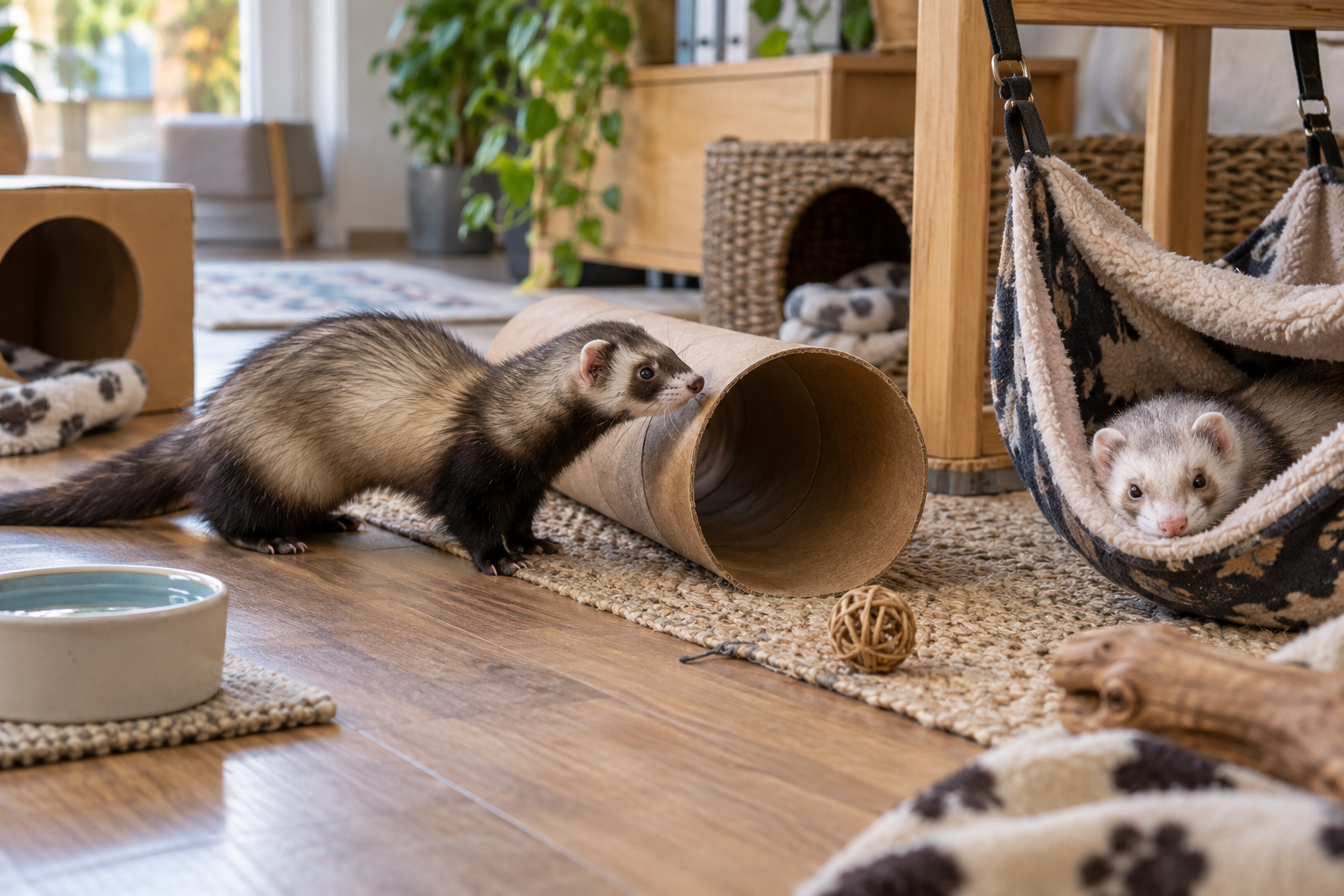
My practical test is simple: after a week, is the ferret using more of the room, showing a mix of active play and relaxed rest, and returning to normal eating and sleeping patterns? If so, the routine is probably doing useful work. If the animal remains frantic, withdrawn or suddenly less active, adjust the environment and look for a health cause rather than chasing a perfect number of hours.
Sources and further reading
- Merck Veterinary Manual: Providing a Home for a Ferret
- RSPCA: Understanding ferret behavior
- RSPCA: Company for ferrets
- PDSA: Ferrets as pets
Editorial note: The illustrations on this page were generated for DailyTrail to show the setups described. They are not photographs of the author’s animals. This article provides general husbandry information and does not replace advice from a veterinarian familiar with ferrets.