
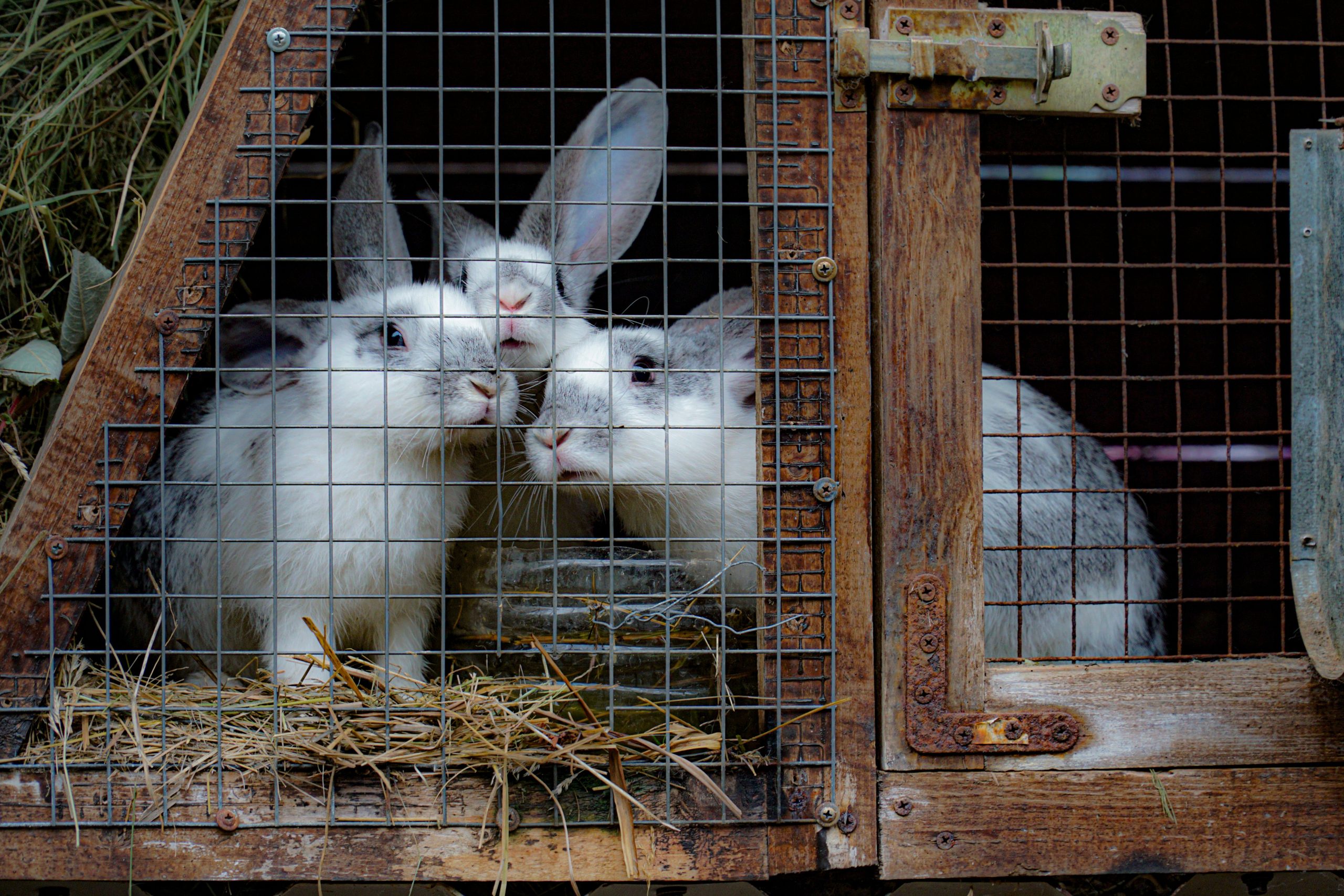
Setting up a rabbit living space is not as simple as buying a cage and throwing in some hay. Wire-bottom cages cause sore hocks. Balcony placements expose them to temperature swings and predators. The wrong setup can injure your rabbit before you even realize there is a problem.
Two weeks later, my rabbit had sores on her feet. Took her to the vet, and the first thing he said was: “You know rabbits don’t have paw pads, right? You’re basically making her stand on a grill all day.”
I threw that cage out the same day.
Rabbits are not like cats or dogs. Their living space is not just “somewhere to stay.” Their health and personality — a lot of it comes down to how you set up that space.
The Cage Is Not a Prison, It Is a Home Base
A lot of people get stuck on the whole “cage vs. free roam” debate. But it does not have to be all or nothing.
The cage is your rabbit’s safe room — not a jail cell. It is their home base, a place they can walk into whenever they want and walk out of whenever they want. Let them roam freely during the day (with supervision), and they go back to the cage at night to sleep. This setup gives them both freedom and a space that feels like theirs.
The basics:
- The floor must be flat and solid — no wire mesh. Rabbits do not have paw pads. Standing on wire for hours causes sore hocks, which are painful and take forever to heal.
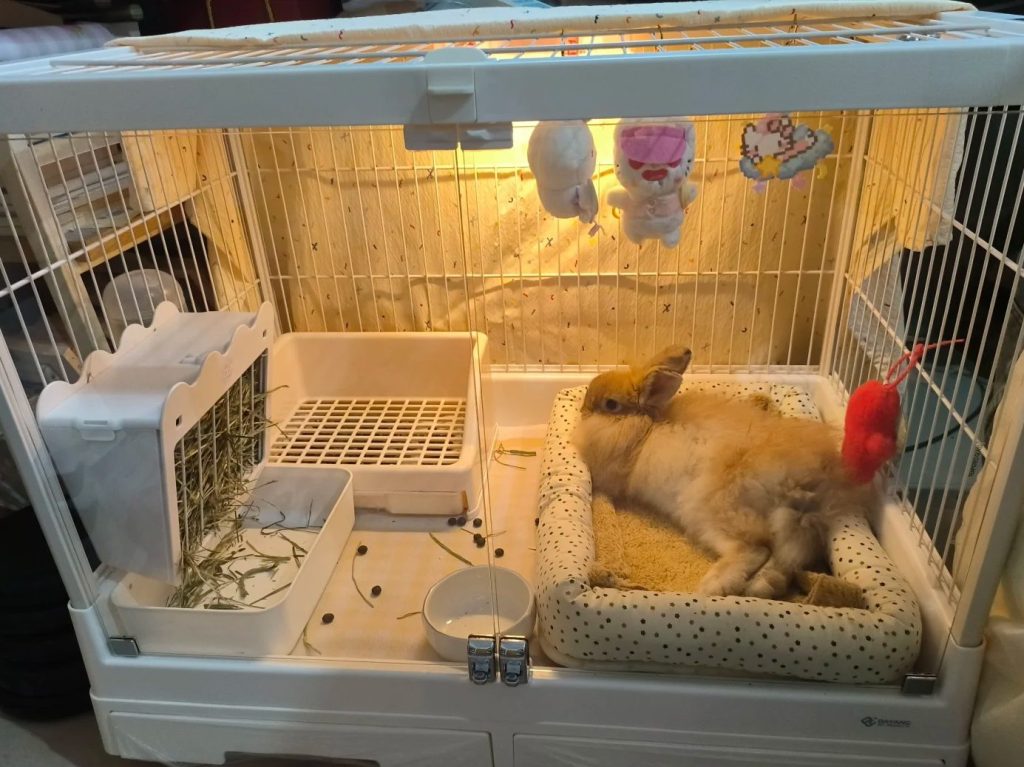
- Size: at least big enough for your rabbit to take three or four hops in a row, and to stand up fully without hitting the ceiling. Bigger is always better. If you are using a commercial cage, consider attaching an exercise pen to expand their space — do not keep them locked in a tiny cage all day.
- Put the cage in a quiet but lived-in room — not the garage, not the basement, not some corner nobody walks past. Rabbits are social. They need to see you and hear you to build trust.
Flooring — What You Put Down Matters
What covers the floor of the cage and pen is what your rabbit’s feet and joints touch all day long. Pick the wrong stuff, and you are looking at foot problems or joint issues down the road.
Good choices:
- Carpet or fleece blankets — cut to size, lay flat. Soft, non-slip, warm in winter. A bit of a pain to wash, but washing fleece is way easier than dealing with infected feet.
- Foam mats or yoga mats — put them down under the fleece for extra padding and insulation. Just watch out — some rabbits chew them. If yours starts nibbling, swap it out.
- Cardboard — cheap and easy to replace. But not great as the only layer — too thin, gets wet, and stays damp, which is bad for feet over time.
Avoid these:
- Wire flooring — already covered that one
- Pine or cedar shavings — the fumes are harsh on rabbit respiratory systems
- Thin plastic sheets — way too slippery. Bad for joints when they hop around
Inside the cage, add a soft resting pad or small bed — something soft for them to lounge on. Old towels, pet beds, or a rabbit-specific sleeping mat all work fine.

Litter Box Setup — Yes, You Can Litter Train a Rabbit
Rabbits can absolutely learn to use a litter box. Setting it up correctly from the start makes all the difference.
How to set it up:
- Put a cat litter box or rabbit-specific pan in one corner of the cage
- Line it with paper pellet litter — good absorption, dust-free, and safe if nibbled. Stay away from clumping clay litter — rabbits eat it, and it blocks their gut.
- Top it off with a layer of hay — rabbits like to eat and poop at the same time, so having hay right there encourages them to use that spot
- Move any stray poop and urine-soaked bedding into the box — the smell tells them “this is where you go”
Patience is key. They will not nail it overnight, but they get better with time.
Exercise Area — They Need to Run and Jump
Rabbits need at least 3 to 4 hours of supervised free-roam time every day. Kept in a cage too long, and they develop behavioral issues — repetitive pacing, aggression, destructive chewing.
Before letting them loose, do this:
Protect your wires: This is the biggest one. Rabbits love chewing cords — they do not know what electricity is. Use cable protectors (cord covers) to wrap every low-hanging wire, or lift them out of reach entirely.
Protect your furniture: Those teeth are always looking for something to grind on. If you do not want your table legs turned into modern art, wrap them with furniture protectors or block access with barriers. Skip this step, and you will eventually have a solid wood table leg with custom rabbit carvings.
Add hiding spots: Rabbits are prey animals. They need places to duck into when they feel scared. Put cardboard boxes, tunnels, or small pet tents around the room. A cardboard box with a hole cut in the side — costs nothing, and your rabbit will love it more than anything you bought at the store.

Temperature and Environment
Rabbits have a much narrower comfort zone than humans.
Ideal range: 60°F to 70°F (about 15°C to 21°C). They can handle short stretches outside that range, but not for long.
Summer: Once it hits 78°F (around 26°C), rabbits are at risk of heatstroke. Give them a ceramic tile or a cooling stone to lie on, set up a fan (not blowing directly on them), and keep them in the shade. Do not put the cage right in front of an AC vent.
Winter: Usually not a problem indoors, but keep the cage away from drafty windows and doors. Add extra bedding — fleece, towels, whatever gives them a warm place to nestle into.
Humidity: Keep it dry. Damp environments lead to respiratory and skin issues.
Noise and Light
Rabbits hear way better than we do. They get used to background TV and human voices, but sudden bangs, yelling, or barking scare the heck out of them. If you have kids, teach them not to run at the cage or slap the top of it.
Light-wise, rabbits need a natural day-night cycle. Daylight or indoor light during the day — dark and quiet at night. Do not keep a light on 24/7.
Toys That Actually Work for Rabbits
Rabbits need mental stimulation. Toys are not optional.
Things that work:
- Chew toys — untreated willow, pine cones, apple branches, plain wood blocks. They will spend hours on these.
- Tunnels — fabric or collapsible tunnels they can run through.
- Cardboard boxes — any sturdy box with a few holes cut in it becomes a perfect playhouse.
- Foraging toys — stuff hay or a few treats into a toilet paper roll, fold the ends, and let them figure out how to get it out.
Skip toys with small plastic parts — rabbits chew them off and swallow them, and that causes blockages.
Multiple Rabbits — Space Adjustments
If you have more than one rabbit, the setup changes.
Each rabbit needs their own space. Even bonded pairs need separate resting spots where they can get away from each other if they want to. Provide at least two hideouts or beds to avoid conflict over resting places.
When introducing a new rabbit, keep them in separate exercise areas for a while. Let them see and smell each other through a pen barrier, but no direct contact. This process can take weeks or even months — do not rush it.
Final Thoughts
Your rabbit’s living environment is basically a little ecosystem — food, water, running space, hiding spots, a toilet, toys. Every piece affects their health and mood.
You do not have to spend a fortune. Cardboard boxes are free. Tunnels can be DIYed from fabric and wire. You probably already have old blankets at home. The important part is thinking through the setup, not just throwing stuff together.
A rabbit in a well-designed space behaves better, bonds with you faster, and gets sick less often. Take the time to set it up right — they live in there, and you look at it every day. It is a win-win.