
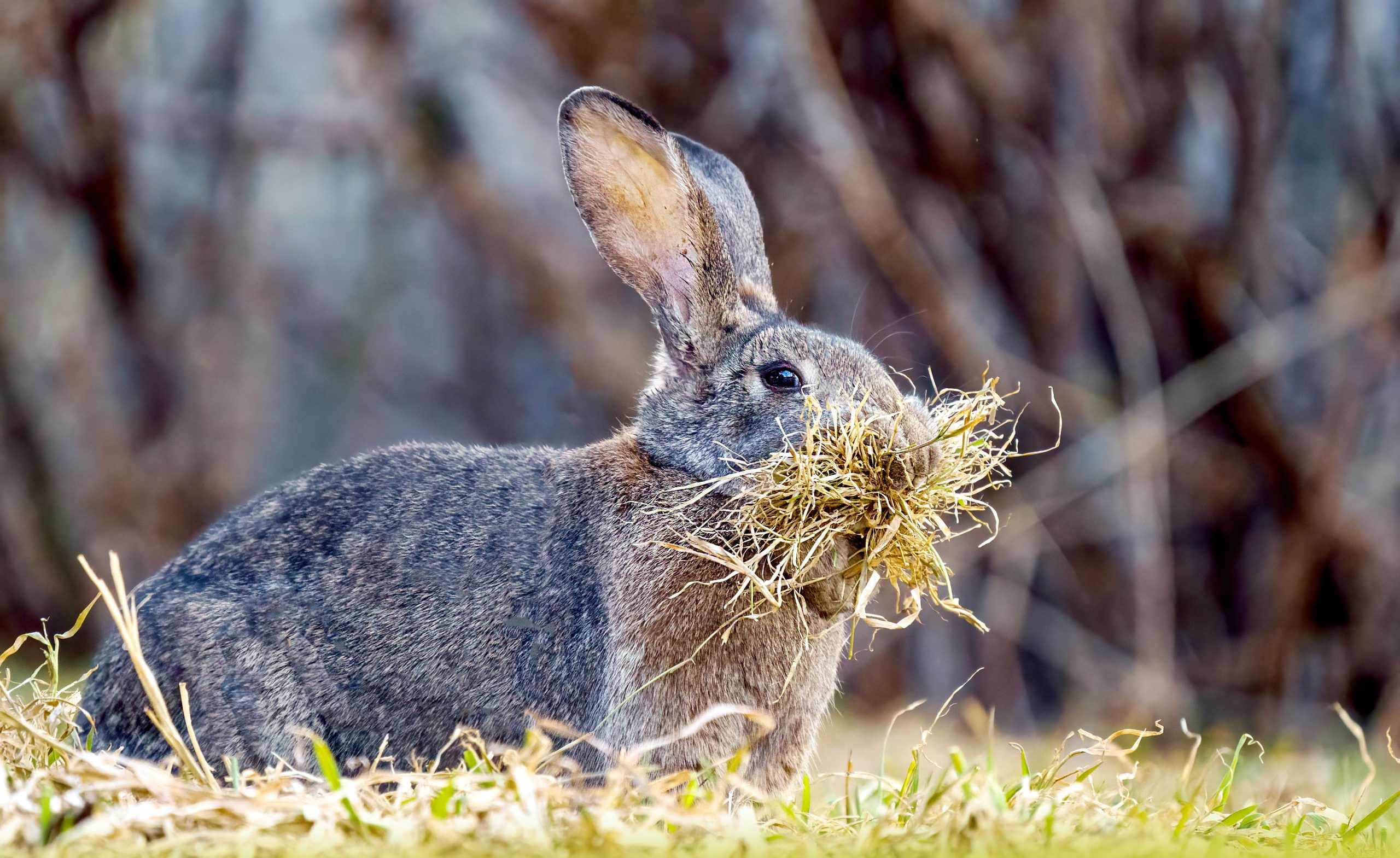
You know what the most common emergency vet visit is for rabbits? Not injuries. Not infections. It is GI stasis. Basically, their digestive system just… stops moving. And most of the time? It is directly linked to what they ate.
When I first got a rabbit, I figured feeding them was kind of like feeding a cat or dog — put some pellets in a bowl, give them water, toss in a carrot now and then. Then my rabbit got diarrhea, stopped eating, and his belly ballooned up like a little drum. Rushed him to emergency, and that was when I learned — almost everything I was doing was wrong.
Rabbits have a completely different feeding logic than other pets. What follows is what I learned from vets and tested on my own rabbits.
Timothy Hay — Not a Side Dish, the Main Course
If you remember one thing from this entire article, let it be this.
Your rabbit needs unlimited access to Timothy hay every single day. Not a handful. Not a bundle. Unlimited — as in, the pile should never empty.
Why? The long fibers in hay keep the rabbit’s digestive system moving. Their gut is designed specifically to process massive amounts of roughage. Without enough fiber, their intestines slow down. And when they slow down enough, they stop — that is GI stasis, and it is often fatal.
Hay also grinds down their teeth. Rabbit teeth grow continuously throughout their lives. If they do not get enough wear, the teeth overgrow, form sharp points, and dig into their cheeks and tongue. Then they stop eating. Then things get worse.
Do not replace Timothy with alfalfa hay for adult rabbits — alfalfa has too much protein and calcium. Fine for babies or nursing mothers. But for adults? Timothy hay, orchard grass, or oat hay are what you want.
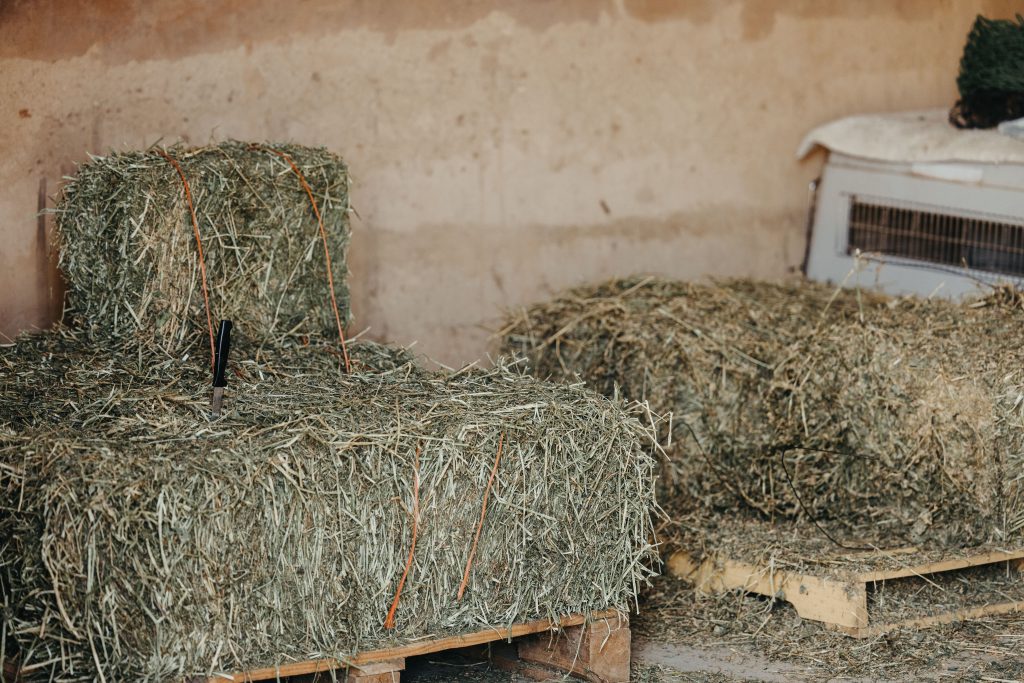
Pellets — Only a Small Handful per Day
Pellets are not the main meal. They are a supplement. And they are the thing people overfeed the most.
The right amount?
Adult rabbits get about 1/4 cup of pellets per 5 pounds of body weight per day. That is it.
I know. It looks like barely anything. But pellets are concentrated — they provide vitamins and minerals that hay does not have enough of. Give too many, and your rabbit will fill up on pellets and leave the hay. And they need that hay way more.
When choosing pellets, look at the ingredients: pick a plain, hay-based pellet. Timothy hay should be the first ingredient. Avoid the colorful mixes with corn, seeds, dried fruit bits — those are treats, not food. Your rabbit does not need those sugars and fats.
Fresh Vegetables — Two Cups Daily, Mix It Up
Rabbits need vegetables. Fresh leafy greens provide water, vitamins, and variety.
The daily amount is roughly 2 cups (packed) of fresh greens per 5 pounds of body weight. Mix different types — dark leafy greens are the best choice.
Safe and recommended veggies:
- Romaine lettuce
- Red leaf lettuce
- Carrot tops
- Dandelion greens
- Cilantro
- Celery leaves
Veggies to avoid or limit:
- Iceberg lettuce — too much water, almost no nutrition, and can cause diarrhea
- Large amounts of spinach or beet greens — high in oxalates, okay occasionally in small amounts, but not every day
- Any wilted or spoiled greens — just no
When introducing new vegetables, go slow. One new type at a time, in small amounts. Watch for soft stools or digestive upset. Their gut needs time to adjust to new stuff.
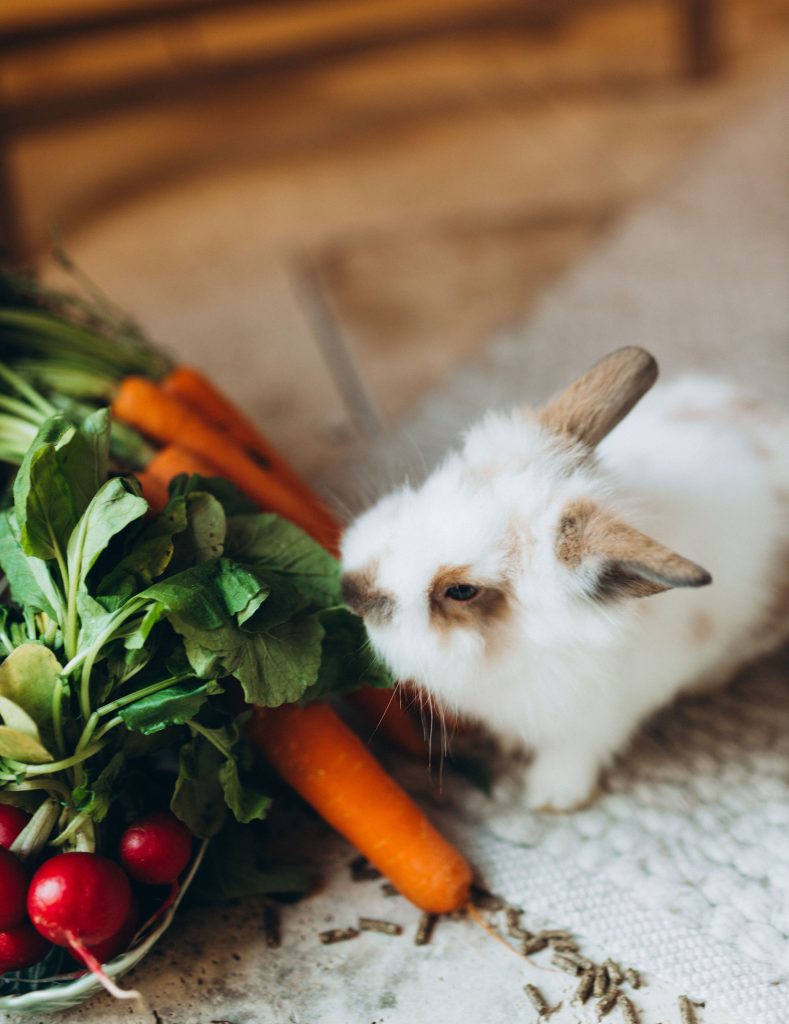
Fruits and Treats — Very Little, Very Occasionally
Rabbits love sweet stuff. It is their weakness — kind of like how we cannot resist dessert.
But their digestive systems are not built for sugar. Fruit sugar (fructose) hits them hard. Too much, and their gut bacteria get thrown off balance. Soft stools, diarrhea, long-term health issues.
Fruit amount: no more than 1 to 2 small slices per 5 pounds of body weight per day. Think about one tablespoon total.
Use fruit as an occasional reward — a small piece of apple after nail trimming, a thin slice of banana, a few blueberries. Not an everyday thing.
Commercial treats — the colorful, sugary, starchy ones marketed for rabbits — I would skip them entirely. They do nothing good except make your rabbit overweight and less interested in hay.
Water — Fresh, Clean, and Always Available
Water seems simple. But it is easy to overlook.
Rabbits need unlimited access to fresh drinking water, changed daily. You can use a sipper bottle or a ceramic/stainless steel bowl. I personally prefer bowls.
Why? Rabbits drink more efficiently from a bowl. A full bowl lets them take in a good amount quickly. With a sipper bottle, some rabbits just do not drink enough.
One catch: if your rabbit uses a bowl and you are going out for a few hours, put out an extra bowl in case they tip it over. Or use a heavy, tip-proof bowl.
In winter, if your house runs cool, the water can get really cold — rabbits are not big fans of ice water. Put the bowl in a slightly warmer spot, or use a heated bowl base (just be careful with safety). In summer, keep it in the shade so it does not warm up.
Signs of Digestive Trouble
The most direct way to check your rabbit’s health is to look at their poop. I know, not glamorous. But it tells you everything.
Normal poop:
- Dry, round, even-sized pellets
- Light to dark brown
- Mild hay smell
Warning signs:
- Pellets get smaller, fewer, drier — could mean they are eating less
- Pellets are misshapen or stuck together in strings — likely not enough fiber
- No poop at all — emergency, call the vet immediately
- Uneaten cecotropes left around the cage — cecotropes are those soft, grape-like droppings rabbits normally eat directly from their bottom for extra nutrition. If you see a lot of them uneaten, or they are overly mushy, something is off in the diet
If your rabbit stops eating for 6 to 8 hours, that is an emergency. They cannot go a day or two without food like a cat or dog can — their digestive system cannot handle the pause.
Feeding Changes at Different Life Stages
Baby rabbits (under 8 weeks): Mother’s milk or milk replacer, gradually introduce alfalfa hay and baby pellets.
Up to 6 months: Unlimited alfalfa hay, unlimited baby pellets, start introducing grass hay (Timothy).
6 months to 1 year: Gradually reduce alfalfa, transition to adult pellets.
Adult rabbits (1 year+): Unlimited Timothy hay, measured adult pellets, daily vegetables, occasional fruit.
Senior rabbits (7 years+): May need more vegetables, possibly a senior pellet with slightly higher protein to maintain muscle. But hay is still the core.
Final Thoughts
A rabbit’s digestive system is the most delicate part of their body. Their energy, their immunity, their dental health — everything starts with what goes in their mouth.
Raising a rabbit is not complicated when you boil it down: they should be eating hay, not snacks. Stick to that rule, and your rabbit will be with you through many winters.
Every time you open that hay bag and your rabbit starts circling your feet in excitement — that is their way of telling you “you got this right.”