
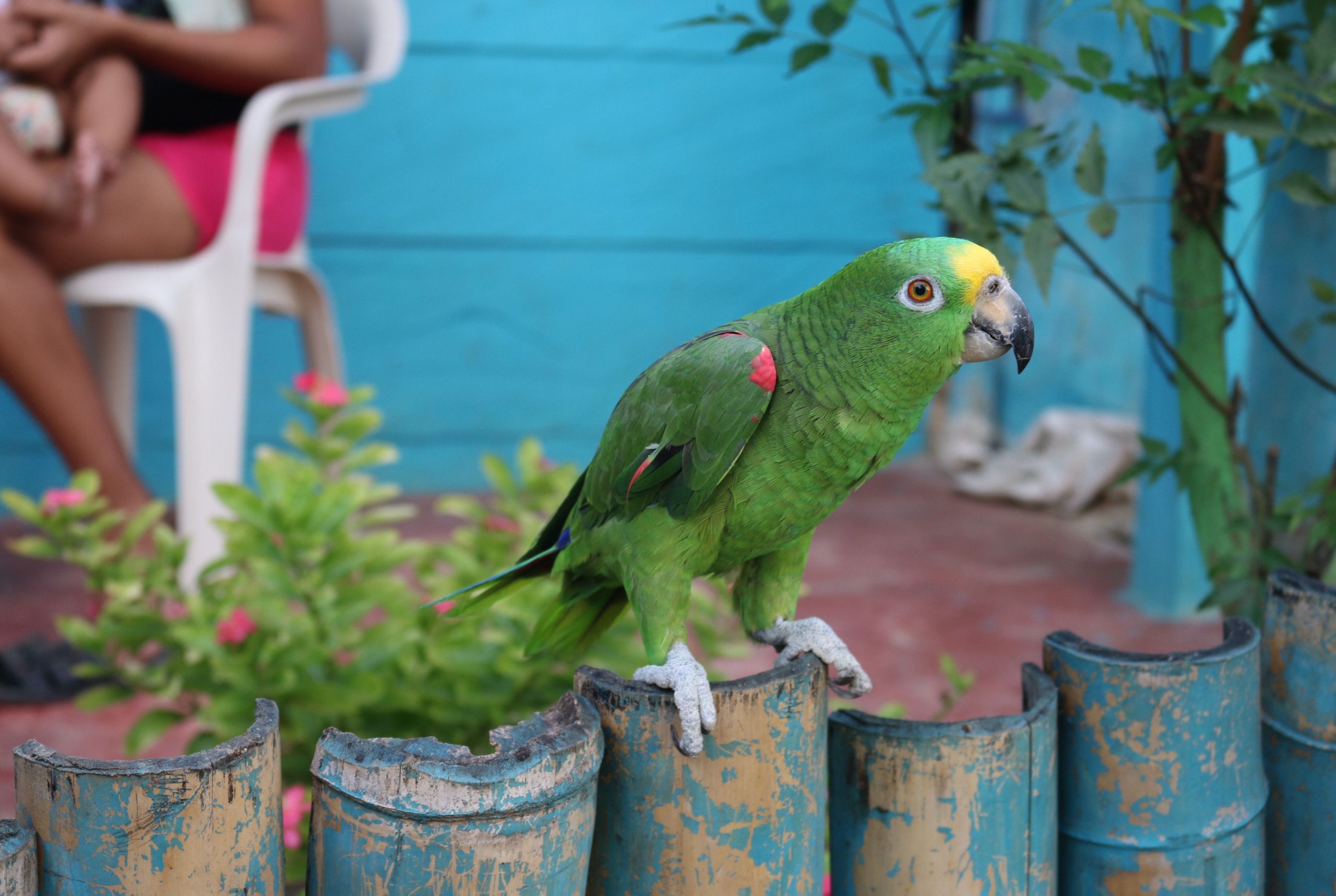
A full food bowl does not prove that a parrot has eaten a balanced meal. Seed hulls can make the dish look untouched, and a selective bird may remove only sunflower seeds or other favorites while leaving the rest. When I assess a feeding routine, I start with three questions: What was offered, what was actually eaten, and did the bird’s weight and droppings stay steady?
Those questions matter because “parrot” covers birds with very different natural diets. A budgie, an African grey, a macaw and a nectar-feeding lorikeet should not all receive the same menu or the same percentages. The practical goal is a diet appropriate for the species, life stage and health status, with changes made slowly enough to confirm that the bird continues to eat.
Start by identifying the bird and its current diet
Write down the species, the food brand and formula, everything offered in a normal week, and which items disappear first. Measure portions consistently for several days rather than relying on the level in the bowl. A gram scale is useful if the bird will step onto it calmly; record weight at the same time of day and ask an avian veterinarian what change is meaningful for that individual.
Most companion parrots benefit from an appropriate formulated diet rather than an unrestricted seed-and-nut mixture. Merck notes that seed-heavy diets commonly lack vitamin A, calcium and certain amino acids, while selective eating makes a mixed bowl less balanced than it appears. Formulated food is not interchangeable across every species, however. Lorikeets and lories require a nectar-based plan, and some species have particular sensitivities. Check the label for the intended species and life stage, and have an avian veterinarian review the plan for a young, breeding, ill or underweight bird.
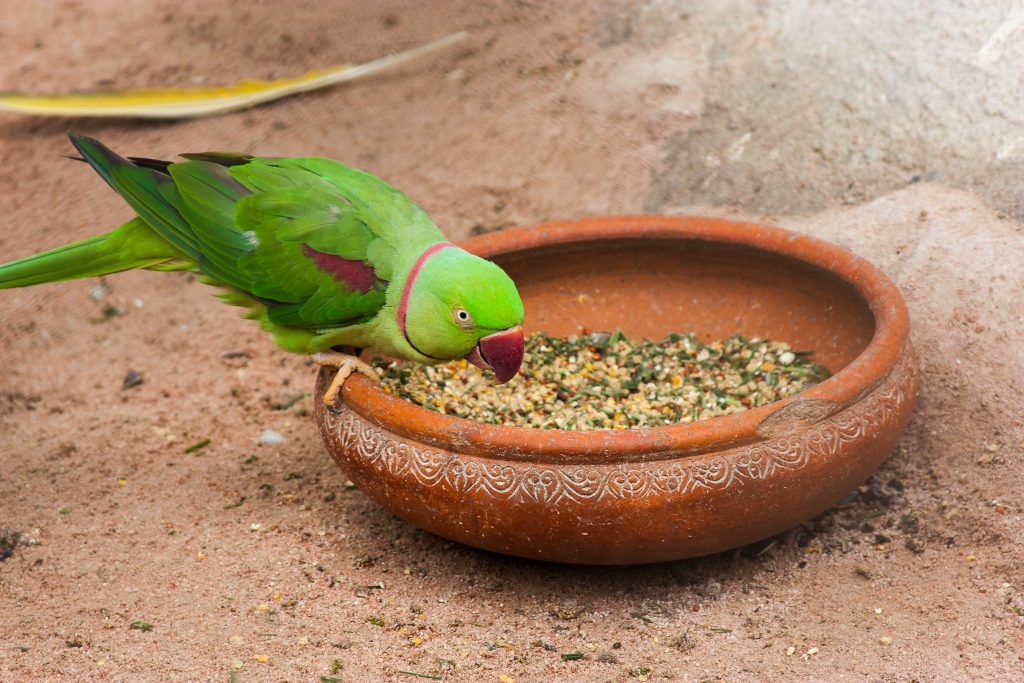
Change a seed-based diet without creating a fasting problem
The unsafe shortcut is to remove the familiar food and assume hunger will force the bird to eat pellets. Some parrots do not recognize a new shape or texture as food. A rapid conversion can leave a bird underfed even while the new bowl looks full.
Introduce the formulated food while the familiar diet remains available. Watch for the bird to crack, chew and swallow the new food rather than merely scatter it. During the transition, track body weight and the amount and frequency of droppings. If weight trends downward, droppings become noticeably fewer, or the bird is quiet and not eating, stop tightening the change and contact an avian veterinarian. Sick or underweight birds should not begin a diet conversion without veterinary supervision.
There is no single conversion calendar that fits every parrot. Placement can help: offer pellets where the bird normally eats, try an appropriate size or texture, or present them during a calm shared mealtime. Avoid coating seed hulls with powdered vitamins and do not add supplements to drinking water unless a veterinarian directs it. Merck warns that water additives may alter taste and reduce drinking, while a bird already eating a complete formulated diet can be harmed by unnecessary supplementation.
Fresh foods add variety, but they do not replace a complete plan
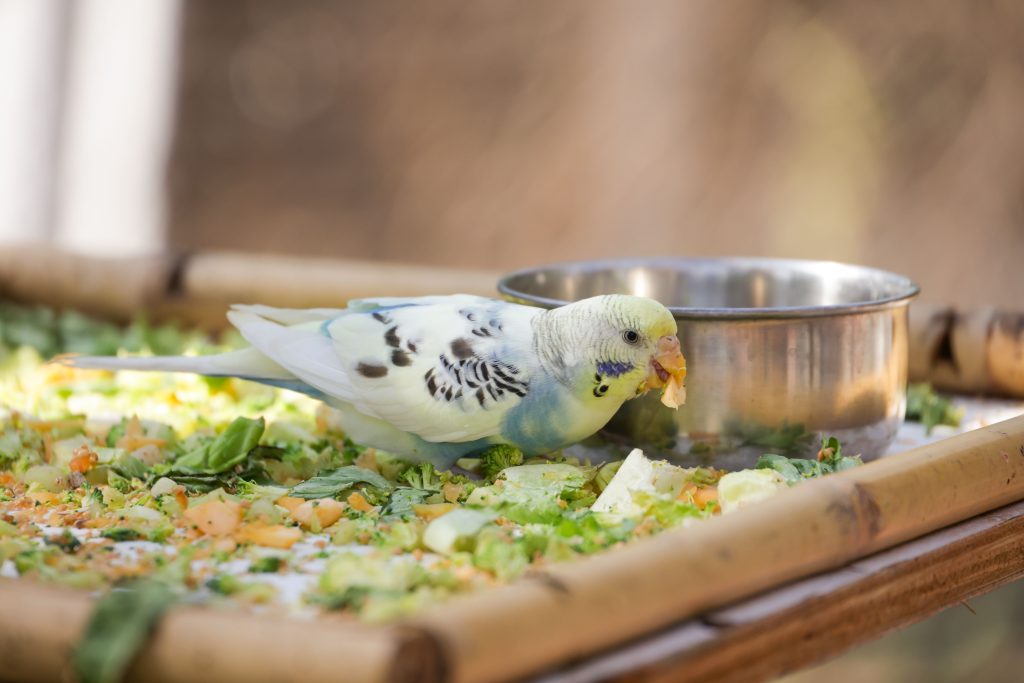
Offer washed vegetables in pieces the bird can handle. Dark leafy greens, carrots, sweet pepper, broccoli and squash are useful examples, but variety matters more than building a rigid “superfood” list. Fruit can be offered in smaller amounts because it is generally higher in sugar. Remove moist food before it spoils, especially in a warm room, and wash the dish before the next serving.
Keep avocado, chocolate, caffeine and alcohol away from parrots. Fruit pits and apple seeds should also be removed. Claims about other foods are often repeated without species, dose or preparation details, so I would check an uncertain ingredient with an avian veterinarian or poison-control resource instead of expanding a long “toxic” list from memory. Do not feed raw dry beans; properly cooked legumes may be suitable for some birds as a small part of a broader plan.
Nuts and seeds can still be useful as small training rewards or for foraging, depending on the species and the rest of the diet. A fixed rule such as “one almond per bird” ignores the difference between a budgie and a macaw. Count these energy-dense foods as part of the day’s intake and adjust with professional guidance if the bird is overweight or has liver disease.
Water, bowls and foraging are part of nutrition
Provide fresh water at all times. Empty and wash bowls daily, and replace water sooner when food or droppings contaminate it. If a bottle is used, confirm that water is flowing; a clean-looking bottle is useless if the valve is blocked. Place bowls where droppings cannot fall directly into them.
Foraging should make the bird work a little, not make food impossible to find. Begin with an easy paper cup, a loosely folded wrapper around a familiar dry item, or vegetables clipped at a second feeding point. Watch how the bird responds and remove damaged hardware or frayed material. Our budgie daily-care guide shows how food, water, cage layout and daily observation fit together.
What I would record for one week
- Morning weight when the bird accepts weighing without distress.
- Food offered, including treats and food used during training.
- Foods clearly eaten rather than shredded or thrown.
- Changes in appetite, water intake, activity and droppings.
- Any regurgitation, vomiting, weakness or difficulty perching.
The record is most useful when it captures a change from that bird’s usual pattern. Poor feather condition alone does not diagnose a dietary deficiency, and a new food does not explain every change. See our parrot feather-care guide for signs that belong with routine observation and signs that need veterinary assessment.
Arrange veterinary advice promptly if the bird stops eating, produces far fewer droppings, loses weight, vomits, becomes weak or sits fluffed and inactive. Diet correction cannot replace an examination when illness is already present. Bring the food packaging and your feeding record; they give the clinician something concrete to evaluate.
Sources used for this guide
Merck Veterinary Manual: Nutritional Disorders of Pet Birds · Merck Veterinary Manual: Feeding a Pet Bird · Merck Veterinary Manual: Nutrition in Psittacines · Association of Avian Veterinarians: Basic Care for Companion Birds
Editorial note: The photographs on this page illustrate feeding situations and are not photographs of the author’s animals. This article provides general husbandry information and does not replace an individual feeding plan or medical advice from a veterinarian experienced with birds.
[…] diet is balanced. Arrange an avian veterinary check and discuss any dietary transition there. Our parrot feeding guide explains why a full bowl does not prove adequate intake and why changes need to suit the species. […]