
When a goldfish tilts after a meal or you do not notice waste for a day, “constipation” is an easy label to reach for. I would pause before treating it as a diagnosis. Buoyancy trouble, a swollen body or reduced activity can have more than one cause, including poor water quality. The safest starting point is to check the aquarium and the feeding routine, then seek help if the fish is unwell or the change persists.
Prevent the problem you can control: excess food
Goldfish will often come to the glass whenever someone approaches, but that is not a reliable measure of hunger. The RSPCA identifies overfeeding as a common goldfish care problem. Uneaten food also breaks down in the aquarium and adds to the waste the filter must process. Offer a modest amount of a complete goldfish food, watch what is actually eaten, and remove leftovers rather than adding more because the fish still appears interested.
The RSPCA suggests feeding once daily an amount eaten in under two minutes. Use that as a practical starting point and adjust for the fish, food size, water temperature and veterinary advice. If there are several fish, place food in more than one area so a fast swimmer does not take it all. Record the portion for a week if family members share feeding duties; double feeding is easy to miss.
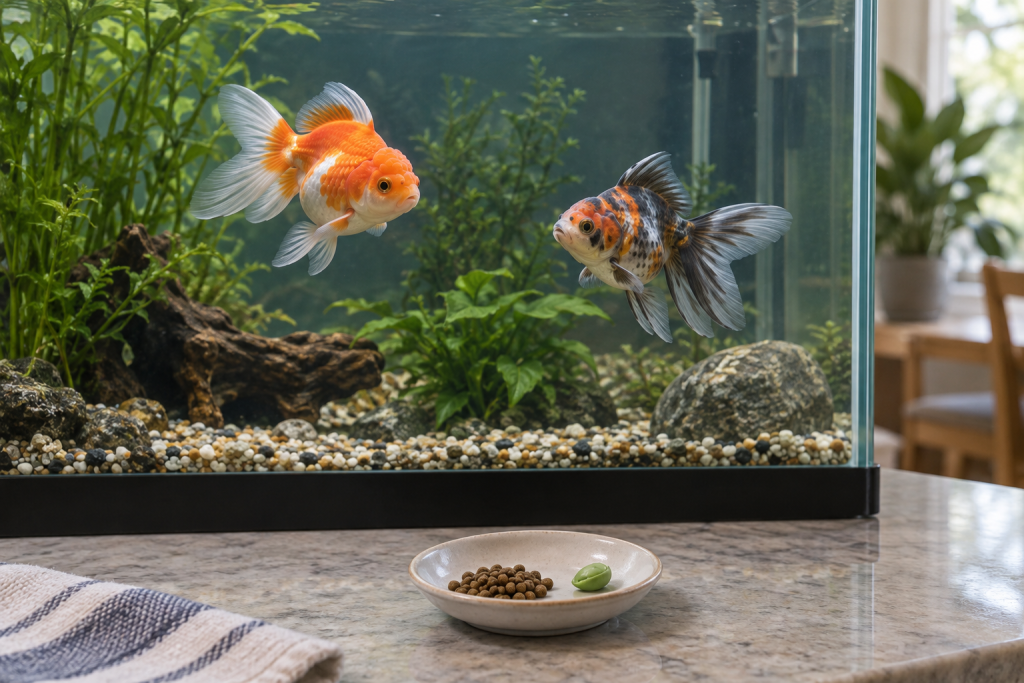
For fancy goldfish with shortened bodies, sinking pellets are often preferable to floating food. RSPCA and Merck note that taking in air at the surface can contribute to buoyancy problems in these fish. Choose a suitable pellet size and watch whether each fish can take it comfortably. Dry pellets are not automatically a cause of intestinal blockage, and soaking every pellet for a fixed number of minutes is not a proven cure.
Variety is useful; peas are not a diagnosis or cure
A complete goldfish food should remain the staple. The RSPCA suggests occasional variety such as suitable frozen foods or vegetables and mentions scalded peas as a supplement. Offer small, softened pieces that the fish can eat, remove leftovers promptly, and avoid turning a pea into a one-size-fits-all treatment for a fish that floats or has a swollen belly.
Similarly, a weekly fasting day or a 24–48-hour fast should not be presented as routine prevention or a way to confirm constipation. Feeding needs change with temperature and individual condition. The RSPCA advises limiting feeding when water falls below 8°C (46°F), because goldfish metabolism slows; avoid applying a fixed temperature rule to every indoor tank. Do not make sudden temperature changes to “speed digestion.”
If the fish looks abnormal, test the water first
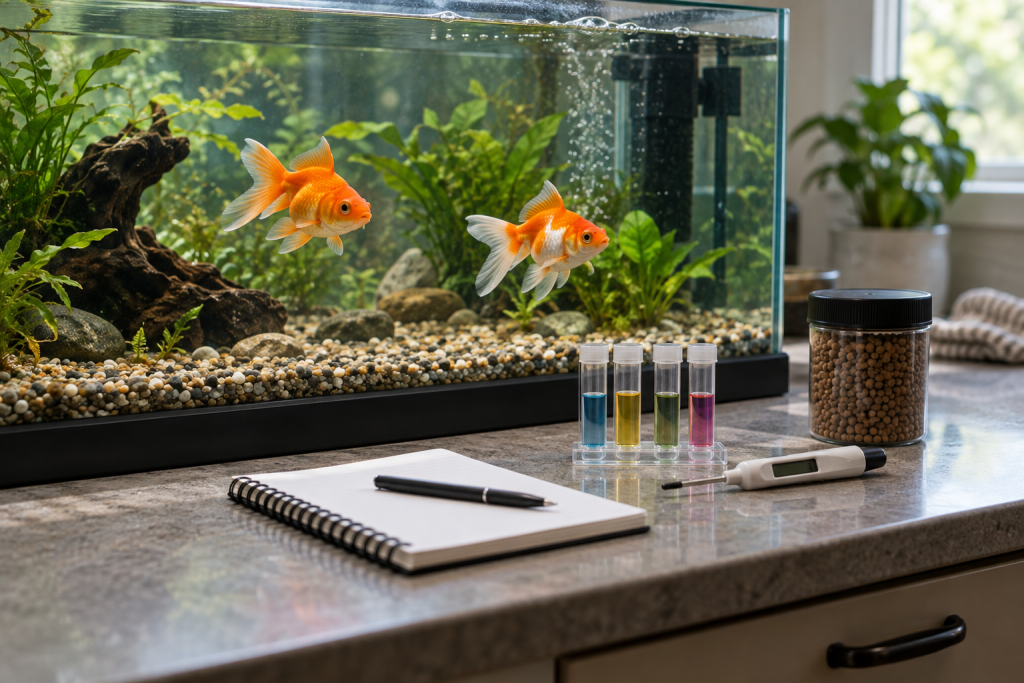
Check ammonia, nitrite, nitrate, pH and temperature, and make sure the filter and aeration are working. A fish that is gasping, losing balance, sitting on the bottom or refusing food needs prompt attention. Poor water quality can cause serious illness, and a feeding adjustment alone will not fix it. If the test results are abnormal or the maintenance history is unclear, follow these goldfish water-change steps to plan a measured change without shocking the fish. Record when the behavior began, what food and amount were given, and whether other fish show signs too.
Feces vary with diet and are easy to miss in a filtered tank. A pale or string-like strand, or not seeing feces for several hours, cannot by itself prove constipation. Buoyancy changes also should not be assumed to be a blocked intestine. If the fish remains tilted, is swollen, has raised scales, seems distressed, or does not improve after water and feeding checks, contact an aquatic veterinarian. Avoid human laxatives, oils or improvised treatments.
A routine that makes changes easier to spot
Keep the main meal consistent, measure the food, and note how quickly it disappears. Check the fish at the same time each day: swimming, breathing, appetite and body shape. Test water regularly and after any unusual behavior. A short note is more useful than trying to remember whether a goldfish has passed waste. If a change follows a new food, a larger portion or a missed water change, that detail helps you and a veterinarian decide what to do next.
Sources
RSPCA: How should I care for my goldfish?; Merck Veterinary Manual: Fish Taxonomy; Merck Veterinary Manual: Disorders and Diseases of Fish.
Editorial note: The illustrations on this page were generated for DailyTrail to show the setups described. They are not photographs of the author’s fish. This article provides general aquarium care information and does not replace advice from an aquatic veterinarian.