
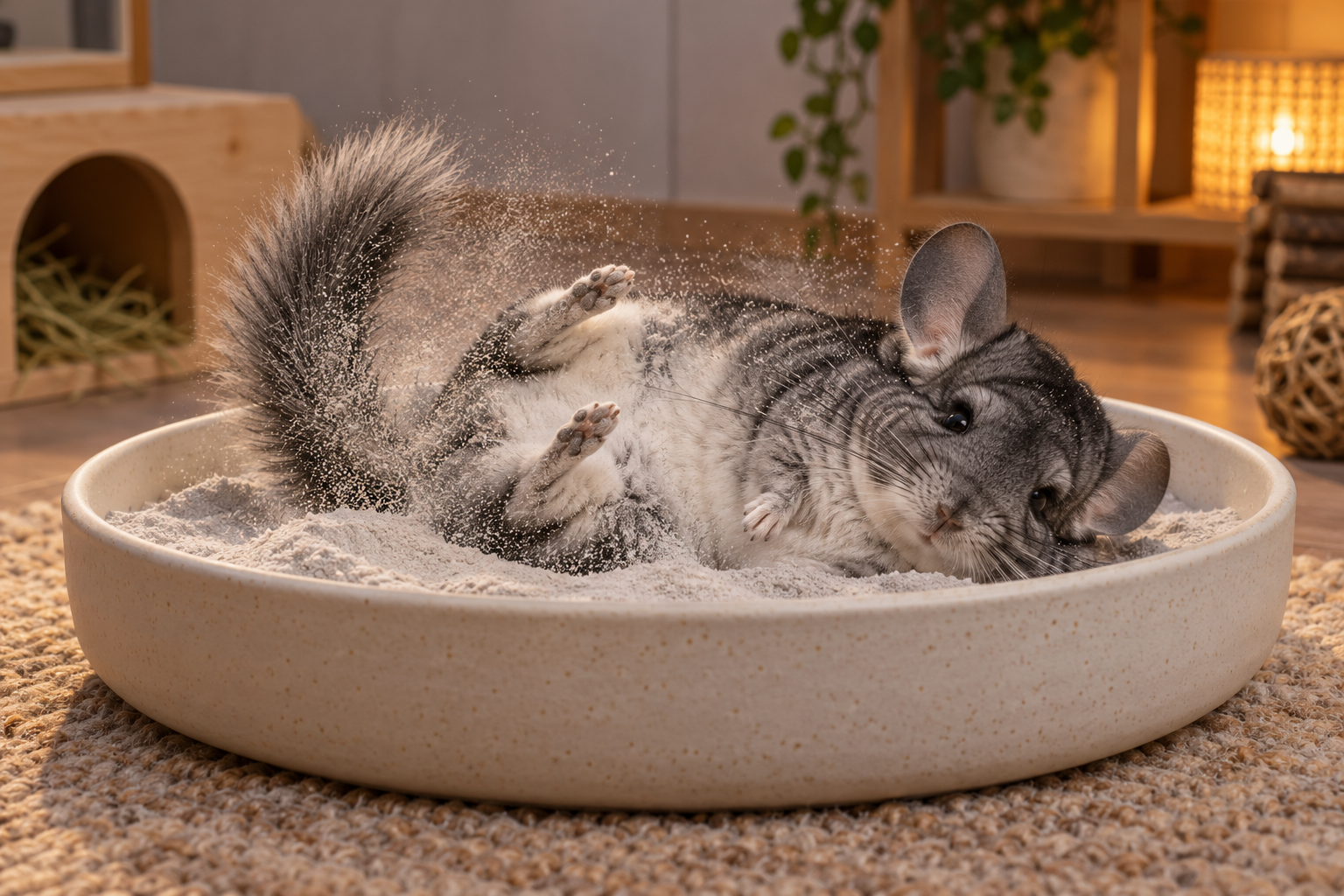
A chinchilla can turn a tidy bath into a cloud of dust in seconds. That is normal. The question after it hops out is whether the material is still clean enough to use again. I would check the tray itself, look for urine or droppings, and notice whether the chinchilla rolled freely, rather than topping up the bath and leaving it in the cage all day.
Chinchillas rely on a specialist dust bath to remove oil from their dense coat. The RSPCA, PDSA, and VCA Animal Hospitals all describe regular access to clean bathing material. Their details on depth and session length differ, so a rigid number is less useful than a tray the animal can roll in safely, a short supervised session, and clean dust each time it is offered.
Choose a bath that stays stable
Use a container wide enough for the chinchilla to turn and roll without scraping its body against the sides. It should sit securely on a solid, low surface. A heavy ceramic bath can resist tipping, but check its edges and opening for sharp spots or places where a foot might catch. A bath that is too narrow forces a half-roll and can throw dust into the cage without cleaning the coat well.
Choose commercially sold bathing material specifically intended for chinchillas. Names vary between suppliers: some call it chinchilla dust and others chinchilla sand. Read the packaging rather than assuming any fine-looking sand will do. The Blue Cross care guide warns against ordinary play or builders' sand because its coarser particles can damage fur and skin. Do not substitute talcum powder, scented products, or materials intended for another species.
Add enough material for a full roll, following the product directions and the size of your bath. You should still be able to see a clear way in and out, and the dust should not spill into food or water. If the bath is enclosed, check that the opening remains easy to enter and the interior can be inspected and cleaned. A larger bath may need more material than a small one, so judge the usable layer rather than copying a depth from a different container.
Offer the bath when the chinchilla is active
Bring out the bath during the animal's normal active period and watch from nearby. Let the chinchilla enter and leave by choice. Rolling, turning, and shaking excess dust from its coat are the behaviours the setup is meant to support. Do not place it in the bath or hold it there. If it ignores the tray, try again later rather than forcing a session.
Guides vary slightly: the PDSA describes a daily bath limited to around 10 minutes, while the Blue Cross suggests about 20 minutes and VCA gives a 10–15 minute window. Each recommends removing the bath afterward. I would treat those as short-session guidance, not a stopwatch rule: watch that the animal can use the bath, then take it out before it becomes a toilet or a permanent dusty fixture. Ask a chinchilla-experienced veterinarian about frequency if your animal has an eye, skin, or respiratory problem.
Do not give a routine water bath. Chinchilla fur is exceptionally dense and difficult to dry thoroughly; the Blue Cross warns that bathing with water can lead to hypothermia. If the coat has been contaminated with something that dust will not remove, seek veterinary advice rather than trying to soak and dry the animal at home.
Check the dust after every use
Once the chinchilla has left, look into the bath before putting it away. Remove visible droppings and loose hay, and inspect for damp patches, clumps, or a urine smell. The RSPCA advises removing or sieving the material after use so it does not become soiled. Sieving can remove dry debris; it cannot make damp or urine-contaminated dust clean. Discard that material and wash and dry the bath before refilling it.
Even if the dust looks clean, replace it regularly instead of reusing the same batch indefinitely. VCA and the Blue Cross describe changing it at least weekly. Treat that as the latest routine point, not permission to keep visibly dirty dust for seven days. A group of chinchillas, repeated toilet use, or a damp room may call for earlier replacement.
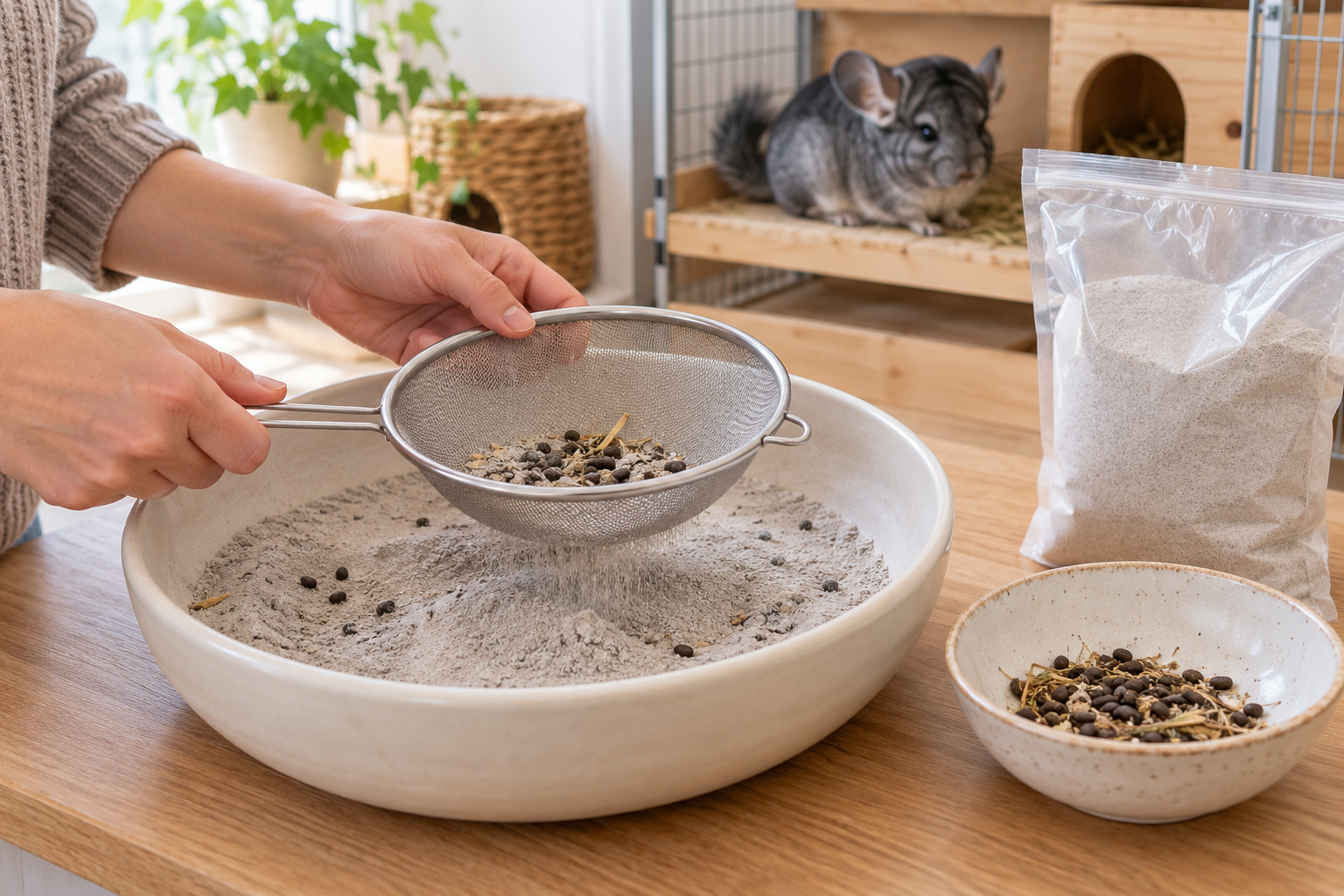
After emptying the tray, remove residue with a pet-safe cleaning method suited to the container and let it dry fully. Avoid adding new dust to a still-damp bath. Store clean dust sealed and dry, away from splashes and bedding. When you put the bath back out, check that the surrounding cage floor is not accumulating a thick dusty layer around water, hay, or sleeping areas.
What the coat and eyes can tell you
A bath that is available does not automatically mean the coat is healthy. While the chinchilla is active, look for fur that remains greasy, clumped, matted, damp, or patchy despite normal bathing. Check whether it is rubbing an eye, squinting, or showing discharge. Dust getting around the eyes can cause problems, and a sudden change in grooming can also accompany illness. Do not assume that adding more dust or longer sessions will fix these signs.
Watch its wider routine as well. The PDSA health guidance recommends checking appetite, energy, eyes, skin, and behaviour. The RSPCA says to seek veterinary advice immediately if eating or drinking changes or droppings decrease or stop. That matters more urgently than whether the bath has been offered today.
If your chinchilla stops rolling in a familiar bath, first check that the tray is accessible, stable, and clean. Notice any recent change in material, room temperature, noise, or cage layout. If the change persists or comes with eye irritation, breathing changes, poor appetite, fewer droppings, or an abnormal coat, contact a veterinarian experienced with chinchillas. The bath is one part of care, not a diagnostic test or treatment.
Sources and further reading
- RSPCA: Creating a good home for chinchillas
- RSPCA: Chinchilla health and welfare
- PDSA: Chinchilla health
- Blue Cross: Chinchilla care
- VCA Animal Hospitals: Chinchilla housing
Editorial note: The illustrations on this page were generated for DailyTrail to show the setups described. They are not photographs of the author's animals. This article provides general husbandry information and does not replace advice from a veterinarian familiar with chinchillas.
[…] the room dry also matters for the coat. Our chinchilla dust-bath setup and cleaning guide explains how to offer clean bathing material without leaving a soiled tray in the cage. A dust bath […]