
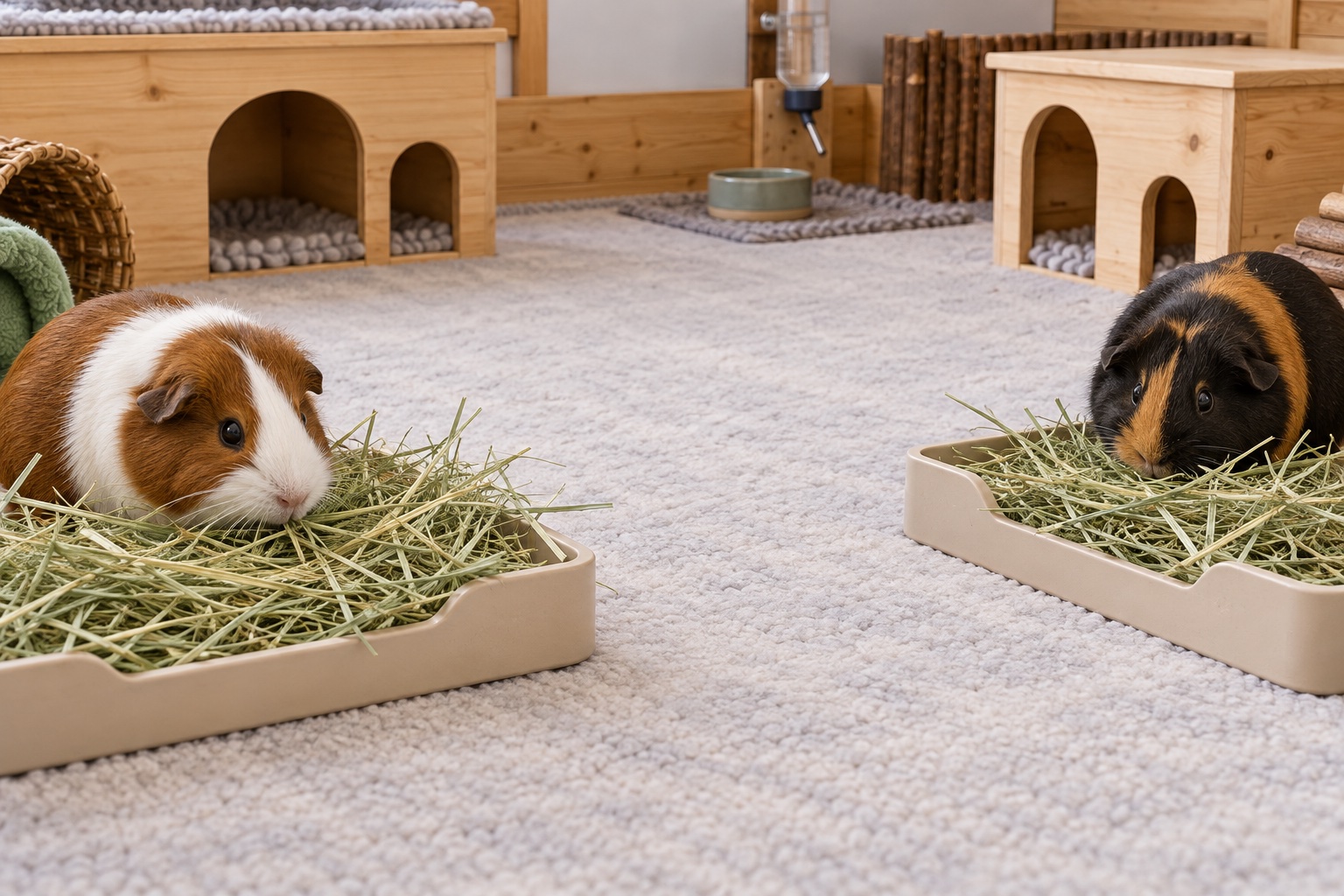
A hay area can look full from above while the bottom is damp and the easiest strands have already been pulled out. I would check it at guinea-pig height: is there clean hay within comfortable reach, can each animal eat without being pushed away, and what is happening underneath the pile?
The point of this setup is reliable access to good hay, not a perfectly tidy enclosure. Some hay will be pulled out, slept on, or discarded during foraging. Trying to prevent every wasted strand can produce a feeder that is harder to eat from than the loose hay it replaced.
This guide covers arranging and maintaining the feeding area for companion guinea pigs. It is not a complete diet plan, and a new reluctance to eat hay needs attention even if pellets or vegetables are still being eaten.
Begin with hay they can eat all the time
Good-quality grass hay, such as timothy or orchard grass, should remain available throughout the day and night. It supplies fibre for digestion, and the prolonged chewing helps wear continually growing teeth. A hay station must make that food accessible between your visits, rather than rationing it until the next cleaning time.
Choose hay that is dry, smells fresh, and has no visible mould or obvious contamination. Avoid very dusty material. Colour and texture vary between crops, so a green label or a particular cut is not enough to judge the contents. Open and inspect each new bag. Do not confuse straw used for other purposes with suitable feeding hay.
If your guinea pigs have particular nutritional needs, ask their veterinarian which hay is appropriate. Do not replace the whole feeding plan with a special hay, treats, or supplements because of an online generalisation. Pellets, fresh foods, vitamin C, and water still need to be considered separately.
Choose a location you can inspect underneath
Set the hay area on a dry, stable part of the enclosure with comfortable footing. Keep it away from water that can drip from a bottle or splash from a bowl. Moving the hay should not make water harder to reach: both resources need to remain convenient.
Look for the cause if hay becomes wet in the same place repeatedly. Check a bottle’s fitting and spout, a bowl’s stability, and the bedding beneath. A guinea pig may also urinate while spending time in the hay area. A washable tray with suitable absorbent bedding underneath can make that patch easier to manage, but it still needs checking and replacement when wet.
Keep the area accessible for spot cleaning without dismantling a favourite shelter or lifting animals out each time. If you use overhead cover, it must be secure and leave good ventilation and more than one practical way out. Do not turn the only feeding place into a narrow dead end.
Start with a low, open feeding option
A loose pile in a broad, shallow, easy-entry tray is a practical starting arrangement. Use a stable, intact tray with smooth edges, enough room to approach comfortably, and no slippery entrance or high lip that requires jumping. For an older animal or one with sore feet or reduced mobility, make access especially simple and discuss persistent difficulty with its veterinarian.
Put fresh hay loosely within reach. Avoid pressing it into a solid block or packing stems upright towards the face. The animal should be able to select and pull strands in a normal feeding posture, with its feet supported. Watch a real feeding session rather than judging accessibility from the empty tray.
A tray does not make hay immune to urine. Inspect the lower layer and bedding, not only the fresh-looking top. Keep another clean hay supply available while you empty and dry the first tray. The replacement should be ready before you remove the only usable food source.
Judge a rack by how it works for your animals
A well-designed hay rack can help keep part of the supply off wet bedding. It is an option, not a requirement to remove every loose hay pile. If you choose one, fit it securely at a height that lets the guinea pigs eat comfortably without standing upright or stretching awkwardly.
Check openings, edges, joints, and the top. Could an animal push its head through and become stuck? Could a foot catch, or could it climb into a space it cannot leave? Avoid exposed wire ends, loose fittings, loops, and damaged material. Do not improvise a feeder from a hanging wire ball, mesh bag, or tied net simply to contain the hay.
There is no one gap measurement that guarantees safety for every adult, youngster, and feeder shape. Assess the actual animals and design, and ask a knowledgeable small-animal professional if unsure. A product being sold for small pets is not enough evidence by itself.
Fill the rack loosely and check again after some hay has been eaten. A full rack may leave only tightly jammed or unreachable strands later. During introduction, retain an easy loose-hay option and confirm that every guinea pig can retrieve hay. Do not wait for them to become hungry enough to solve a difficult feeder.
Give companions room to eat at the same time
Two guinea pigs standing beside one small opening do not necessarily have equal access. Observe whether one repeatedly shoulders the other aside, sits across the entrance, or follows it whenever it moves to a different edge.
For a pair, two separated hay points are a useful starting layout. Place them far enough apart, with clear approach routes, that one animal cannot easily guard both. Larger groups need enough accessible feeding space for their members; adding a second tray beside the first may not help if both share the same bottleneck.
Notice the quieter animal as well as the one that comes running when you refill. Each should have opportunities to eat without being cornered. Persistent chasing, injury, or an animal losing access to food needs a broader review of space and compatibility, not just another handful of hay in the same corner.
Our guinea pig care guide for beginners covers the wider housing, companionship, and daily-care arrangements around a feeding area.
Remove damp hay rather than hiding it
At each care visit, check the feeding surface, the hay underneath, and the bedding below it. Remove wet, urine-soiled, mouldy, or otherwise contaminated material. Putting clean hay over a damp compacted layer makes the top look better without correcting what the animals are standing on.
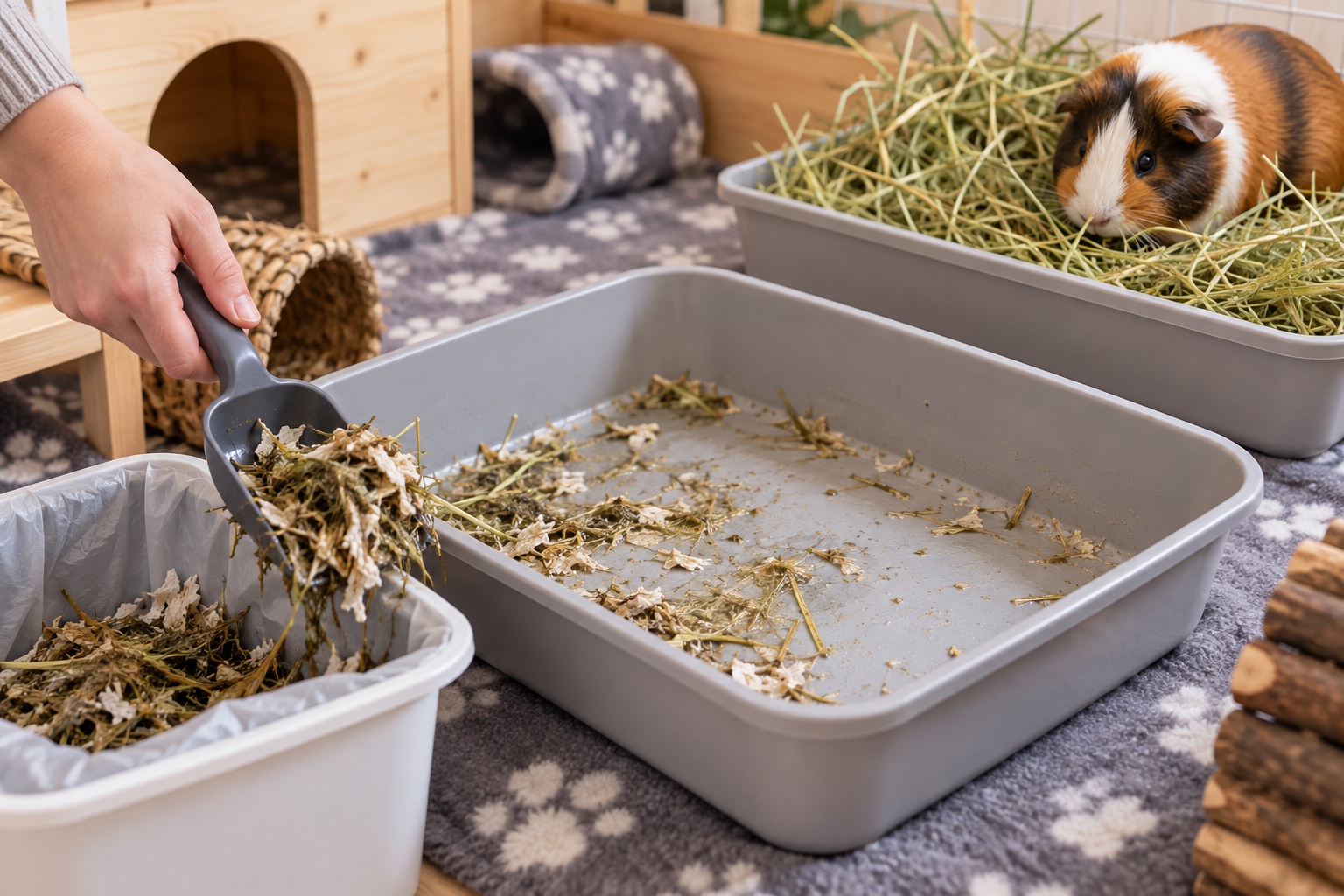
When a tray needs washing, provide hay elsewhere first. Empty it, clean with a suitable pet-safe method, rinse thoroughly as required, and dry it before adding fresh bedding and hay. Follow cleaning-product instructions and keep residues and fumes away from the animals. Check the surrounding floor as well; a clean tray on a soaked liner will soon become a wet feeding area again.
There is no useful promise that a tray will stay dry until a particular hour. The number of animals, their habits, bedding, and water fittings determine how often it needs attention. Increase checks if you find repeated damp patches. If you will be away, arrange care that maintains both clean hay and water rather than packing one enormous pile over yesterday’s waste.
Store the next refill properly
Keep the main hay supply in a cool, dry, ventilated place, protected from rain, condensation, pests, and household chemicals. Follow the supplier’s storage guidance. Do not seal damp hay into a container or leave it where it can absorb moisture from a floor or wall.
Use clean, dry hands or equipment for refilling, and keep removed enclosure hay separate from the unused supply. Do not put a seemingly clean handful from the tray back into the main bag. If a stored batch develops a musty smell, unusual moisture, or visible mould, stop offering it and obtain suitable replacement hay.
Buy an amount you can store well. A larger bale is not an economy if the only place available is damp. Keep enough suitable hay in reserve that an unsuitable bag or delayed delivery does not leave the animals without it.
Confirm eating rather than relying on a full tray
Watch for actual chewing and consumption by each guinea pig. A reduced appetite, smaller or fewer droppings, dropping food, drooling, weight loss, or difficulty chewing can indicate illness, including dental problems. Choosing soft vegetables while avoiding hay is not proof that everything is fine.
Contact a guinea-pig-experienced veterinarian promptly if intake falls, and urgently if an animal stops eating or is weak, painful, bloated, or passing markedly fewer droppings. Do not remove its remaining preferred food to force hay eating, and do not wait for a new feeder to fix a possible medical problem.
Hay can also injure an eye. Squinting, redness, discharge, or an eye held closed deserves prompt veterinary attention. Do not probe the eye or pull at embedded material. Review sharp protruding stems and the feeding arrangement, but keep supplying appropriate hay through a safer accessible option while obtaining advice.
Before leaving the enclosure, check three things at animal height: fresh hay can be pulled out easily, the footing beneath is dry, and each companion has a clear route to a feeding point. Those checks matter more than whether the pile still looks neatly contained.
Sources and further reading
- RSPCA: Guinea pig diet, hay and grass
- PDSA: Your guinea pig’s diet
- PDSA: The ideal home for guinea pigs and cleaning routines
- MSD Veterinary Manual: Diet for a guinea pig
- PDSA: Guinea pig health, dental and eye concerns
Editorial note: The illustrations on this page were generated for DailyTrail to show the setups described. They are not photographs of the author’s animals. This article provides general husbandry information and does not replace advice from a veterinarian familiar with guinea pigs.