
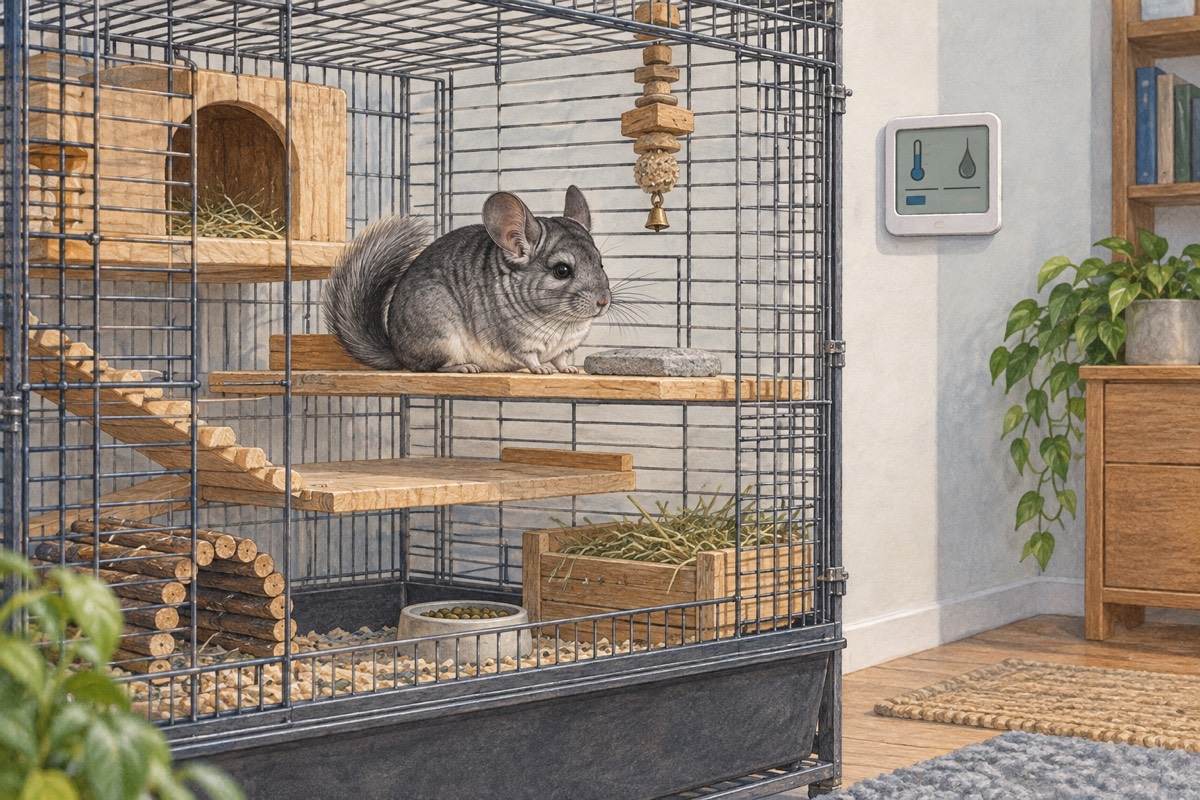
A room can feel pleasant to a person and still be too warm for a chinchilla. I would start at the cage, not the house thermostat: check the temperature and humidity where the animal rests, whether afternoon sun reaches the enclosure, and whether the chinchilla is behaving as it normally does at that time of day. Those observations tell you more than a quick touch of its fur.
Chinchillas are adapted to a cool, dry environment. The RSPCA and Blue Cross describe 10–18°C as an ideal housing range; VCA Animal Hospitals gives 10–20°C and advises low humidity. These are husbandry targets, not a line below which heatstroke is impossible. A warm room, direct sunlight, poor ventilation, and humid air can combine to raise risk.
Look for a change from the animal's normal routine
A chinchilla commonly rests during the day, so sleeping at noon alone is not evidence of overheating. Compare what you see with its usual pattern at the same hour. Is it alert when normally active? Does it move to hay and water? Does it respond when you approach? A chinchilla that remains unusually still, seems weak, or refuses to move needs attention, especially when the room has become hot.
VCA's chinchilla health guide lists panting, open-mouth breathing, a high body temperature, and reluctance to move among heatstroke signs. Do not wait to confirm a temperature with a home thermometer before seeking help. Laboured or open-mouth breathing, collapse, marked weakness, or seizures call for immediate veterinary care. Less dramatic changes in appetite, droppings, or activity also deserve a prompt call to a veterinarian familiar with small mammals; they can have causes other than heat.
Write down what changed and when: room reading, recent sun exposure or air-conditioning failure, breathing, movement, eating, and droppings. That short record helps a vet understand the sequence. Avoid repeatedly handling a distressed chinchilla just to check whether its ears feel warm. Warm ears are an observation, not a reliable diagnosis on their own.
Measure the space around the cage
Put a thermometer and hygrometer near the enclosure at roughly the height the chinchilla uses, out of reach of chewing. Check it at the warmest part of the day as well as in the morning. A hallway thermostat can miss heat trapped near a window or on an upper cage level. Move the instrument briefly to a sleeping shelf or the adjacent air, then compare readings; do not leave cords or small batteries accessible.
The guides do not use exactly the same target. PDSA recommends 10–15°C, the RSPCA and Blue Cross 10–18°C, while VCA describes 10–20°C and humidity below roughly 40–50%. Rather than chasing a single exact reading, aim for a reliably cool, dry room and act before it approaches the hotter end. VCA warns that temperatures above 27°C, particularly with humidity, can lead to fatal heatstroke. That is a danger threshold, not a sensible setting for a chinchilla room.
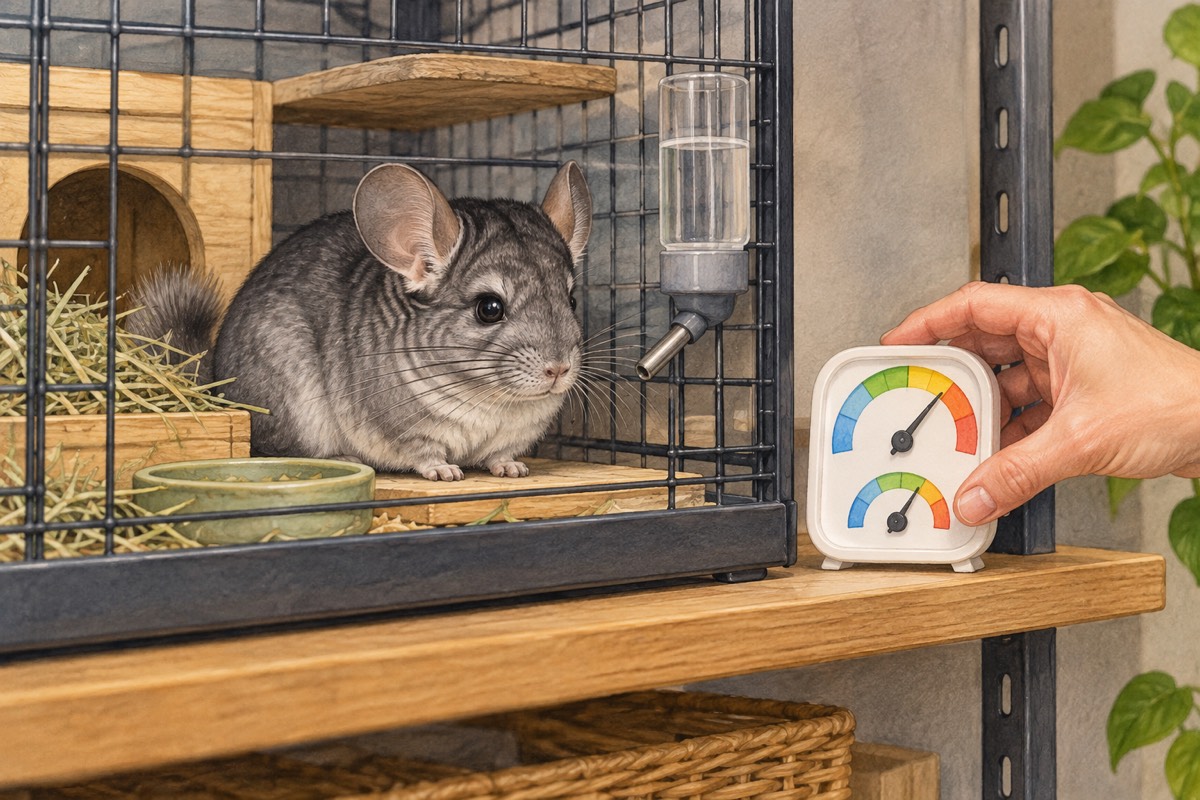
Change the room before the next hot afternoon
Keep the cage out of direct sun. Watch the actual path of sunlight across the floor and platforms; a position shaded at breakfast may be exposed later. Close a blind before sunlight reaches the enclosure. The Blue Cross specifically warns against a sunny window. Make sure curtains and blind cords cannot be chewed from the cage.
Use reliable room cooling when outdoor weather makes the room too warm. Air conditioning can maintain a steady environment; check its function and the cage-level reading rather than assuming the setting on its display matches the enclosure. Keep the room ventilated without placing the cage in a strong direct draft. A fan may circulate air, but it does not make a hot room cool enough by itself. A ceramic or stone resting surface may offer a cooler place to sit, but it cannot replace control of the surrounding air.
Provide fresh water and verify that the bottle or bowl actually works each day. If a heat wave or power cut means you cannot keep the room suitably cool, make a plan to move the chinchilla in its secure carrier to a reliably cool indoor location. Check that destination before moving it, and do not leave the animal in a parked car while arranging help. Transport, exercise, and handling add stress; limit unnecessary activity during heat.
If you suspect heatstroke, call a vet now
Move the chinchilla away from the heat into a cooler, quiet, ventilated space and phone an emergency vet experienced with exotic or small mammals. Describe the signs and room conditions, and follow their advice while travelling. Heatstroke is an emergency even if the animal appears to perk up after moving. VCA says affected chinchillas need immediate veterinary treatment and cautions against cooling them too rapidly.
Do not place the animal in ice water, hold ice directly against it, or assume a frozen bottle is enough treatment. VCA describes gentle cooling with tepid water during transport in suspected heatstroke, but the exact approach should be guided by the vet you have called; rapid chilling can also harm the animal. Do not delay departure to try several home remedies, force water into its mouth, or give medication without veterinary direction.
Once the immediate problem is handled, check why the room became unsafe: a sunlit position, failed cooling, a closed door that trapped heat, or a reading taken only in the morning. Record the warmest cage-level temperature over the next few days and adjust the setup before the next hot spell. If appetite, droppings, or normal activity do not return, contact the vet again rather than attributing the change to recovery from heat.
Related care
Keeping the room dry also matters for the coat. Our chinchilla dust-bath setup and cleaning guide explains how to offer clean bathing material without leaving a soiled tray in the cage. A dust bath is routine coat care, not a way to cool an overheated animal.
Sources and further reading
- RSPCA: Creating a good home for chinchillas
- Blue Cross: Chinchilla care
- PDSA: The ideal home for chinchillas
- VCA Animal Hospitals: Chinchilla housing
- VCA Animal Hospitals: Chinchilla health conditions
Editorial note: The illustrations on this page were generated for DailyTrail to show the setups described. They are not photographs of the author's animals. This article provides general husbandry information and does not replace advice from a veterinarian familiar with chinchillas.