
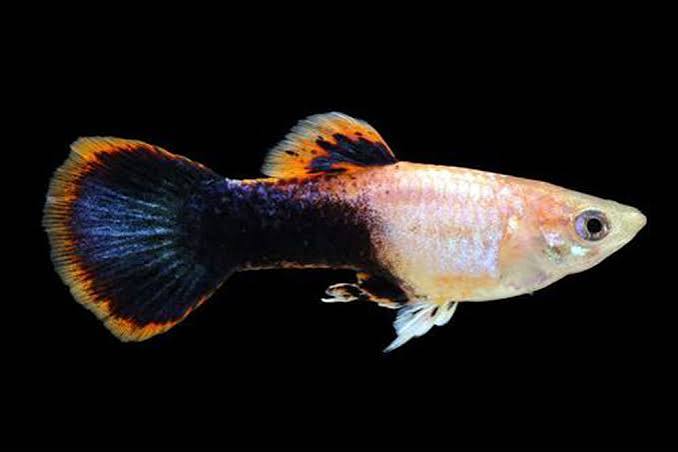
A breeding tank can look calm at breakfast and crowded a month later. Guppies give birth to free-swimming young, and one group can add more fish faster than a small filter can handle. I start with two questions: can the water stay stable as the population grows, and do the females have places to escape constant attention from males? Those questions are more useful than trying to maximize the next batch of fry.
Set up for the fish you may have next month
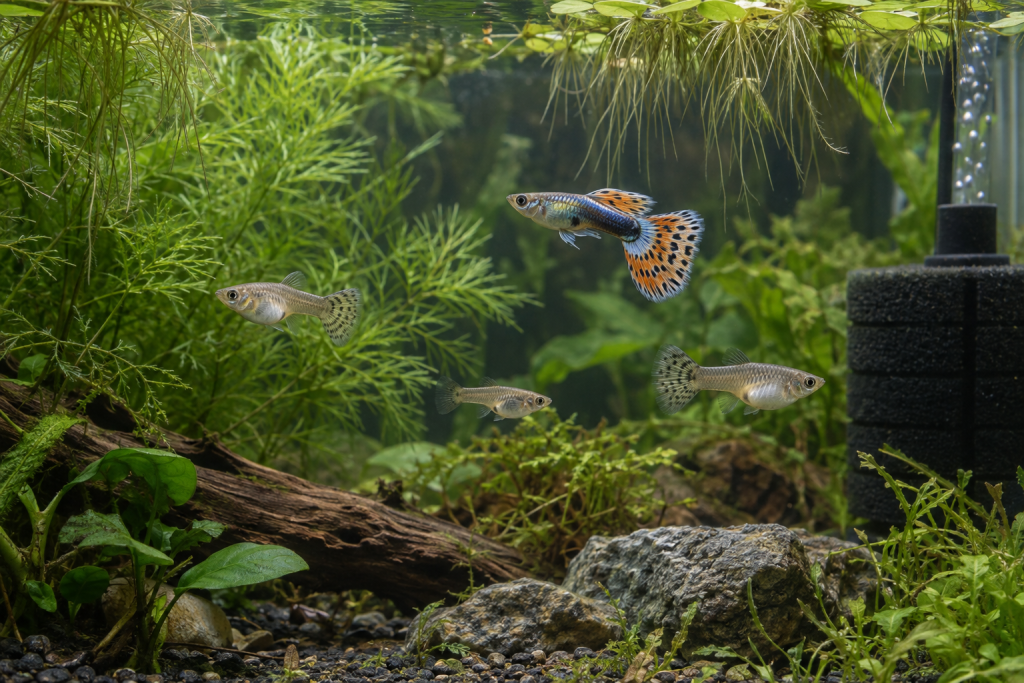
Use a mature, filtered aquarium with swimming space and dense plant cover. The Ornamental Aquatic Trade Association (OATA) suggests at least 45 litres for a small group of guppies; a breeding group with surviving fry needs room to grow or a separate plan for the young. A gentle sponge filter is a practical choice because its intake is less likely to trap tiny fry. If you use another filter, protect the intake and check that the flow does not push fish around.
Fine-leaved plants and floating roots give fry places to hide. They also give adult females a break from being followed. Leave open swimming space, and avoid sharp decorations that can damage fins. A bare breeding box may make fry easier to count, but it does not replace a stable, adequately sized aquarium.
Watch the group, not just the male-to-female ratio
A starting point is one male with at least two females, as OATA recommends. The ratio is not a guarantee that every female will be left alone. Watch for repeated chasing, a female staying behind equipment, torn fins or missed meals. If that pattern continues, more hiding space or a separate, fully cycled tank may help. Simply adding females to an already crowded aquarium raises the waste load.
Separating the sexes can stop new matings, but it does not promise an immediate pause in births. Female guppies can store sperm and produce later broods after males are removed. A fixed two- or three-week separation cannot guarantee healthier fry. Move a fish only when you have a suitable tank and a clear reason, and avoid repeated transfers just to chase a predicted birth date.
Test water before adjusting food or temperature
For a guppy group, OATA lists 20–28°C (68–82°F), pH 7.0–8.0 and medium-hard water as a guide. Aim for a stable temperature and water chemistry that suit the fish you keep rather than making abrupt changes to reach a single “breeding number.” Ammonia and nitrite should test at zero. Test at least weekly, and test sooner after a birth, a new fish, extra feeding or any unusual behavior. Write down the results so a trend is visible.
A weekly partial water change of about 25% is OATA’s general maintenance recommendation. Treat replacement tap water to remove chlorine or chloramine and check that its temperature is close to the tank’s. If tests show ammonia or nitrite, do not wait for a calendar day to investigate. Check feeding, stocking and filter function, and seek advice from an aquatic veterinarian or knowledgeable aquarium professional if fish are distressed. Rinse filter media gently in removed tank water when it needs cleaning; untreated tap water can harm the bacteria that process waste.
Feed the adults and fry without fouling the tank
Offer adults a suitable staple food in a small amount they finish promptly. Extra food for a breeding group is not helpful if it settles in the plants and breaks down. Remove obvious leftovers and adjust the next portion. Fry need food small enough to take, such as an appropriate fry food or finely crushed staple food; newly hatched brine shrimp is another option. Offer tiny portions and check what remains. The right frequency depends on the food, the number of fry and how the water tests—not a universal “three to five meals” rule.
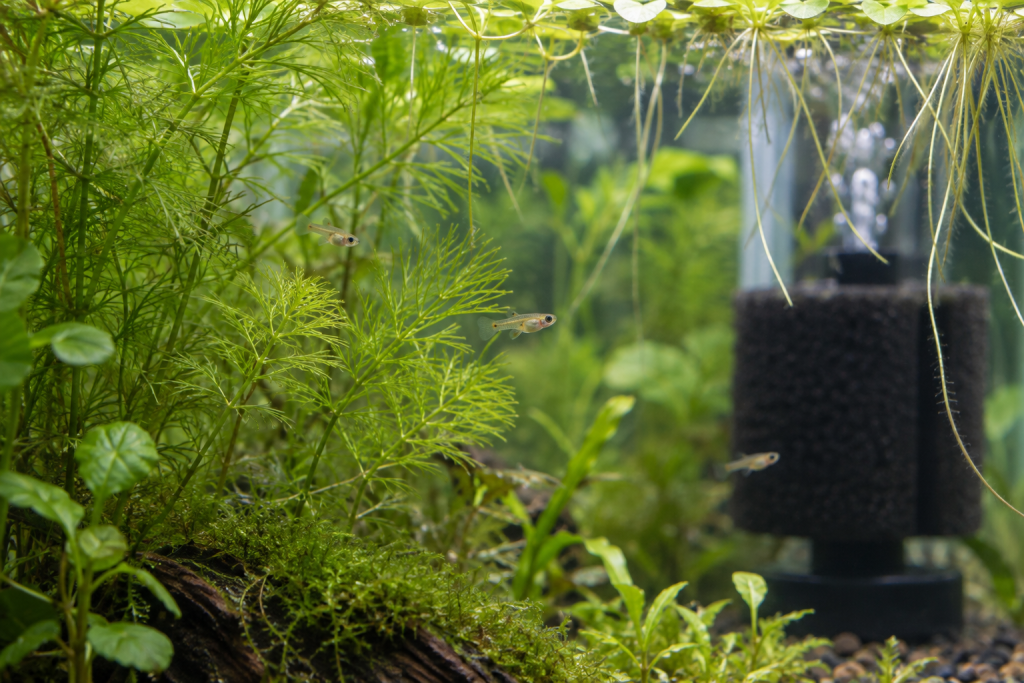
If fry share the adult tank, dense plants may protect some of them, but adults and tankmates may still eat young. A separate, cycled grow-out tank gives you more control over feeding and numbers. Keep its filtration gentle and its water stable. When siphoning, move slowly and check the bucket for fry before disposing of water.
What to check when something looks wrong
A dark gravid spot or rounded belly can suggest pregnancy, but neither predicts a reliable 24–48-hour birth window. Treat persistent surface gasping, rapid breathing, clamped fins, loss of appetite or sudden hiding as reasons to test the water and inspect equipment, not as routine signs that birth is near. If the water is in range and symptoms persist, consult an aquatic veterinarian.
Keep a simple record: date, number of adults and fry, temperature, ammonia, nitrite, nitrate, food offered and any unusual behavior. It makes it easier to notice when the tank is becoming crowded or maintenance no longer matches the load.
Sources
OATA: How to look after guppies and mollies; Merck Veterinary Manual: Breeding and Reproduction of Fish; Merck Veterinary Manual: Routine Health Care of Fish.
Editorial note: The illustrations on this page were generated for DailyTrail to show the setups described. They are not photographs of the author’s fish. This article provides general aquarium care information and does not replace advice from an aquatic veterinarian.