

When an older dog stops jumping onto the sofa or takes longer to stand, I do not label the change as “just age.” I compare it with the dog’s usual routine: when did it begin, does it vary during the day, and what else changed at the same time? Slower movement may reflect pain, weakness, vision loss, heart or neurologic disease, or several problems together. A useful senior-care routine turns those small observations into information a veterinarian can assess.
“Senior” is a life stage, not a diagnosis
Dogs do not all become senior at one fixed birthday. Size, breed, genetics and health history affect lifespan. AAHA describes a senior dog in practical terms as entering roughly the final quarter of its expected lifespan. That definition is more useful than a chart that declares every dog old at the same age.
Age itself does not explain a new symptom. Weight loss, reluctance to move, house soiling, night waking, appetite changes and confusion all deserve investigation because treatable disease can resemble ordinary aging. Keep the dates of these changes rather than waiting for the next annual visit.
Record movement where the dog actually lives
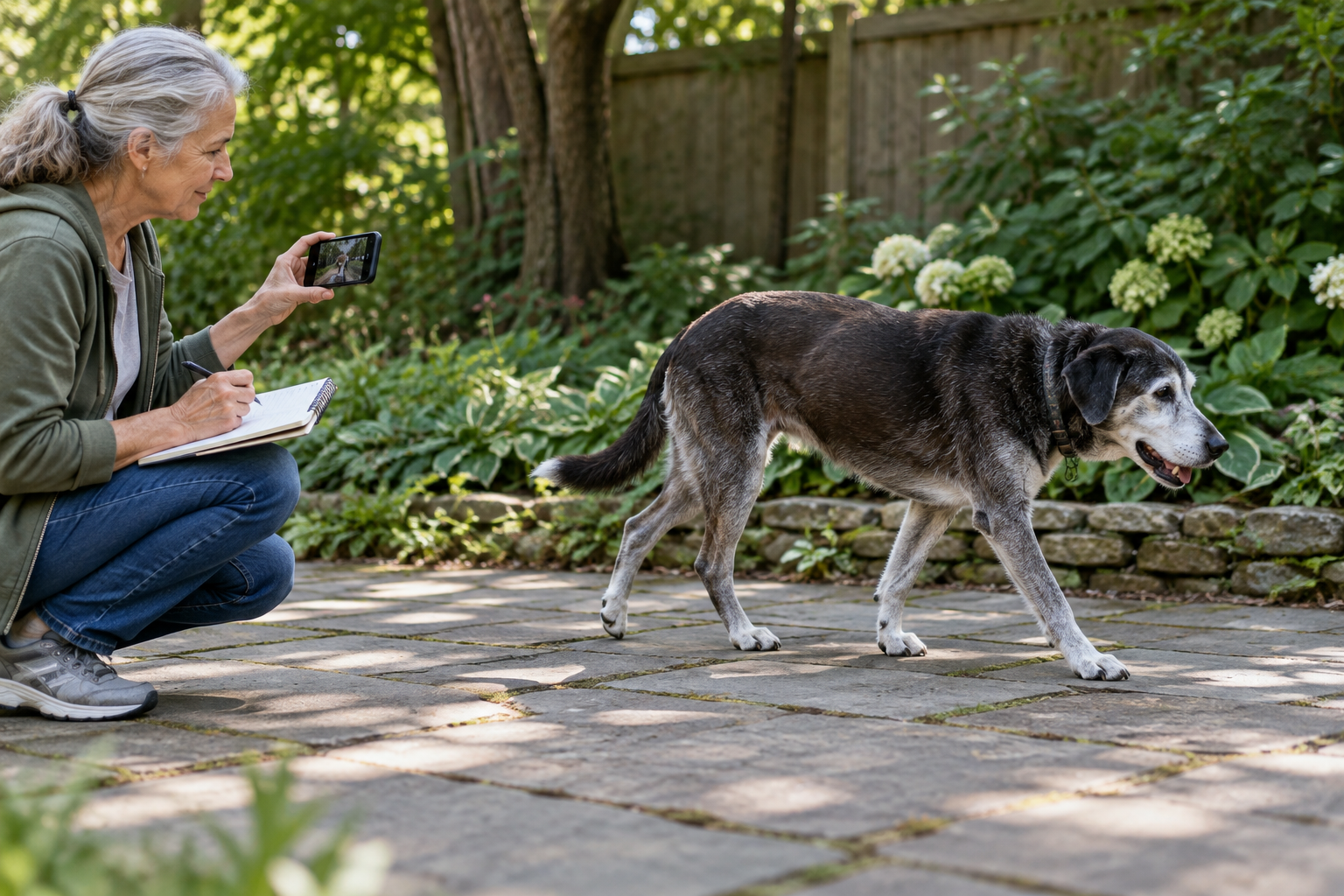
Once or twice a month, record a short video of the dog rising from bed, walking away and returning at a comfortable pace. Use the same level, well-lit area and avoid asking for extra repetitions. AAHA notes that home videos can help veterinarians evaluate mobility because clinic excitement may hide stiffness or change the dog’s gait.
Write down hesitation before stairs, shortened steps, slipping, a change in posture, reduced play, difficulty squatting, licking over a joint, or stiffness after rest. Also note whether the dog can settle comfortably at night. Sudden inability to stand, collapse, dragging a limb, severe pain, or loss of bladder control requires urgent veterinary advice.
Change the home before a fall happens
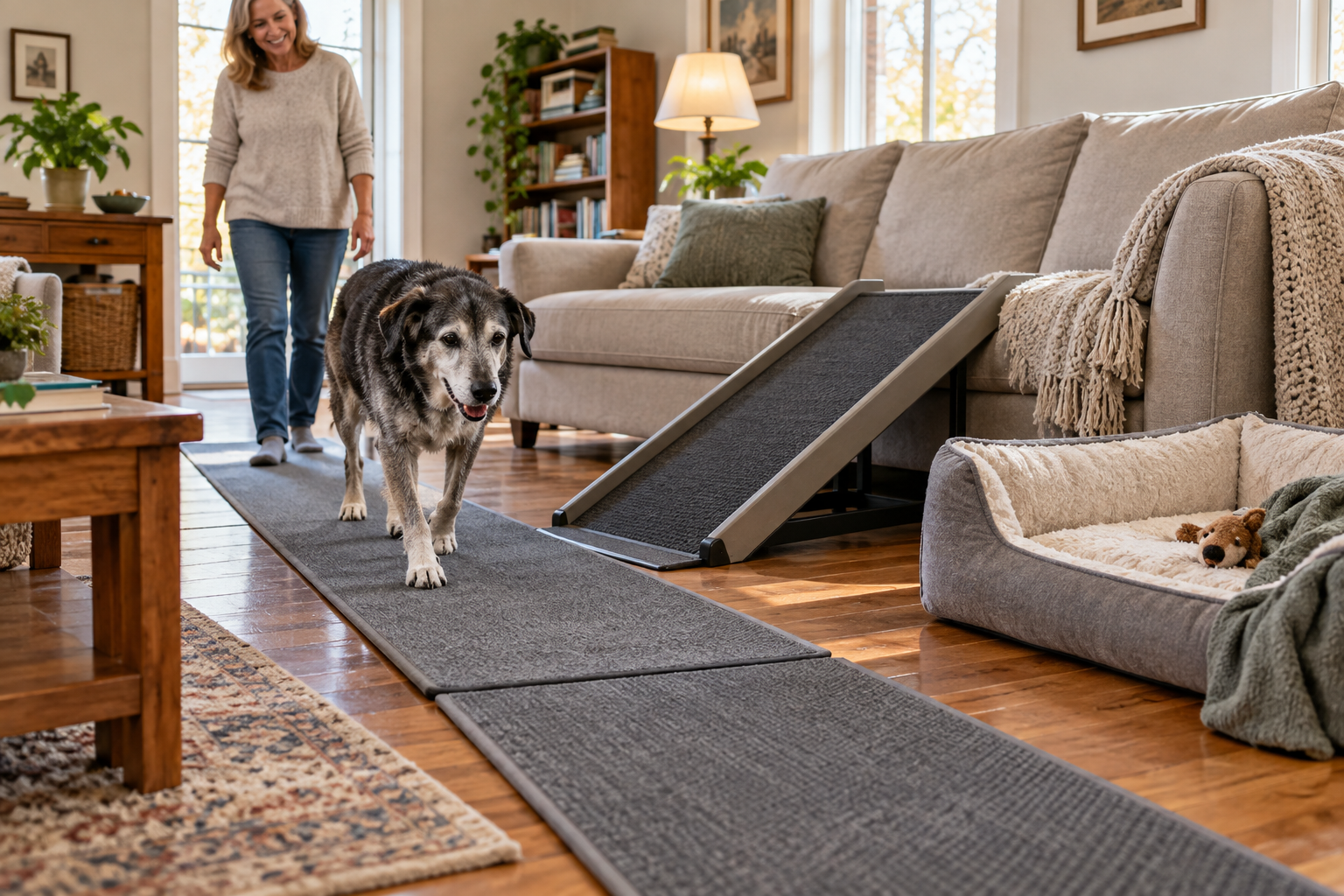
Create a continuous non-slip path between the bed, water, food and the door used for toilet breaks. Loose rugs that slide can make matters worse, so secure the edges. Check nail length and trim excess hair between the paw pads if it reduces traction. This dog paw and nail care guide explains how to inspect each foot, trim conservatively and recognize problems that need a groomer or veterinarian.
A ramp should be wide, stable, gently sloped and covered with a gripping surface. Add side edges where a misstep is possible and teach the dog to use it with calm, supervised practice. Place a supportive, low-entry bed away from drafts. Raised bowls, harnesses and lifting aids may help some dogs, but their fit and use should be checked with a veterinarian or rehabilitation professional.
Keep moving, but adjust the dose
Complete rest can accelerate muscle loss. Many senior dogs do better with shorter, regular walks on predictable surfaces than with one long weekend outing. Let pace and recovery guide the session. If stiffness, limping or fatigue is worse later that day or the next morning, record it and ask the veterinarian whether the exercise plan needs changing.
Do not start stretching, balance exercises or swimming simply because they are described as low impact. The right movement depends on which joints, muscles or nerves are affected. A veterinary rehabilitation professional can select exercises and show safe technique. Hot and cold weather also change tolerance; use the precautions in the guides to dog heat safety and winter cold protection.
Pain treatment needs an individual plan
Osteoarthritis is common, but mobility changes should be examined rather than self-diagnosed. Treatment may combine weight management, controlled exercise, environmental changes, rehabilitation and veterinary medication. The combination depends on the dog and on other conditions affecting the kidneys, liver, stomach, heart or nervous system.
Never give human pain medicines unless a veterinarian specifically directs it. Ibuprofen, naproxen and acetaminophen can cause serious poisoning in dogs. Supplements also deserve review: evidence and product quality vary, and an ingredient that is appropriate for one dog may conflict with disease or medication in another.
Food decisions begin with body and muscle condition
A food labeled “senior” is not automatically the right diet. Calorie needs, protein needs and restrictions differ between a healthy older dog and one with kidney, heart, gastrointestinal or endocrine disease. Ask the veterinarian to record body condition and muscle condition, then review weight trends, appetite, treats and current food before changing the diet.
Weigh the dog regularly on the same scale when possible. Unplanned weight loss can signal disease even when the dog is still eating; weight gain can increase the physical load on painful joints. Difficulty chewing, dropping food, one-sided chewing, bad breath, mouth bleeding or refusing hard food warrants an oral examination rather than simply softening every meal.
Behavior changes need a medical check first
Disorientation, altered interactions, sleep-wake changes, house soiling, reduced activity and new anxiety can occur with canine cognitive dysfunction. They can also result from pain, sensory loss, urinary disease, endocrine disease or medication effects. Record when the behavior occurs and what happens immediately before and after it.
Keep pathways and furniture predictable, add night lighting, offer more frequent toilet trips and use gentle activities the dog still enjoys. Short sniffing games or familiar cues may be enough. Stop if the dog appears frustrated, painful or exhausted. Do not scold confusion or accidents while the cause is being assessed.
Plan veterinary reviews around the dog
AAHA recommends senior pets receive regular, more frequent assessment; many dogs benefit from examinations about every six months, but the veterinarian may choose a different schedule. The visit may include physical, oral, mobility and neurologic assessment plus laboratory or blood-pressure testing selected for that dog’s history and findings. A fixed list of tests is not appropriate for every patient.
Bring a medication and supplement list, weight record, appetite and water notes, mobility videos, sleep changes and questions about quality of life. Seek an earlier appointment for rapid weight change, persistent cough, breathing difficulty, collapse, repeated vomiting or diarrhea, marked thirst or urination, new lumps, bleeding, seizures, or a sudden behavior or mobility change.
Sources
AAHA: 2023 Senior Care Guidelines for Dogs and Cats; AAHA: Evaluating the Healthy Senior Pet; Merck Veterinary Manual: Osteoarthritis in Dogs; VCA Animal Hospitals: Senior Pet Cognitive Dysfunction.
Editorial note: The two care illustrations on this page were generated for DailyTrail to show the observation and home setups described. The featured image is a stock photograph. None of the images documents an animal treated by the author. This article provides general care information and does not replace advice from your veterinarian.