
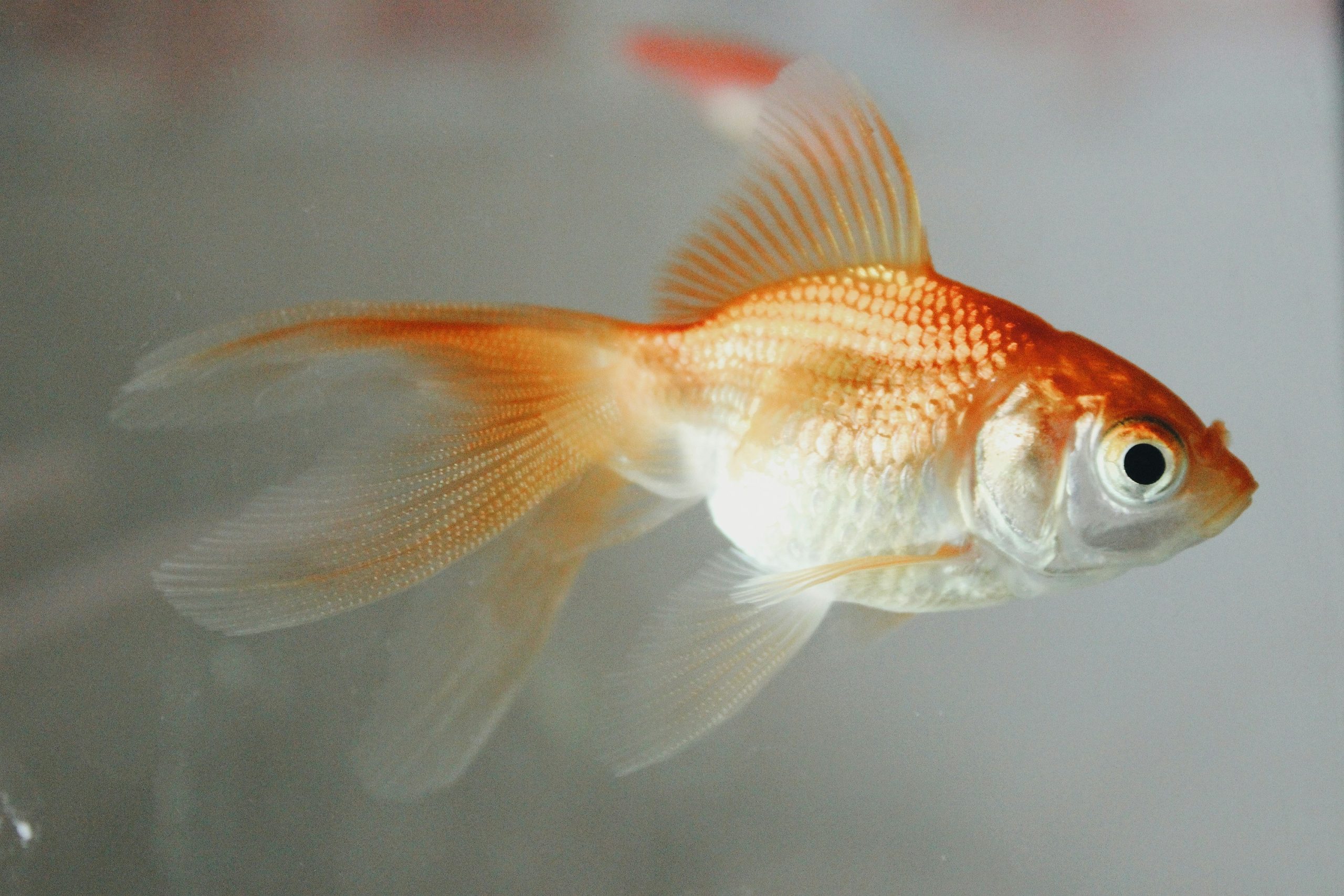
At feeding time, I pay attention to three things before I add more food: which fish reached the first portion, whether any pellets were missed, and what changed since the previous meal. A goldfish swimming to the front glass has learned that people often bring food; that response alone does not tell me how much the fish needs. A useful routine relies on measured portions, direct observation and water-quality records rather than appetite theatre.
Choose a complete food the fish can actually eat
Use a reputable commercial food formulated for goldfish as the main diet. Pellets or granules should be small enough to swallow without repeated spitting, and the floating or sinking form should suit how the fish feeds. Merck Veterinary Manual notes that processed fish foods can provide an appropriate nutrient mix when selected and fed correctly, while one food type or an improvised diet may not meet every need.
Buy a container that can be used while it is still fresh. Keep it tightly closed in a cool, dry place and discard food that smells rancid, looks damp or shows mold. Merck advises replacing opened dry fish food regularly because its oils and vitamins deteriorate; a giant container that stays open for many months is rarely a saving.
Begin with a repeatable small portion
The “size of the fish’s eye” is not a dependable portion rule. Flakes, pellets and gel foods have different weights and water content, and two fish of similar length may have different body condition or growth needs. Instead, I use the same small spoon or dry cup each time, start below the product’s suggested daily allowance, and watch the result over several feedings.
Add one small portion and follow it through the water. Healthy fish should approach and swallow pieces readily. If everything disappears promptly and every fish is still actively feeding, add a second small portion rather than dropping the whole allowance at once. RSPCA uses two to five minutes as a general upper observation window for aquarium fish, but the goal is not to keep adding food until a timer expires. Stop as soon as interest falls or pieces begin settling uneaten.
Make sure each fish gets a share
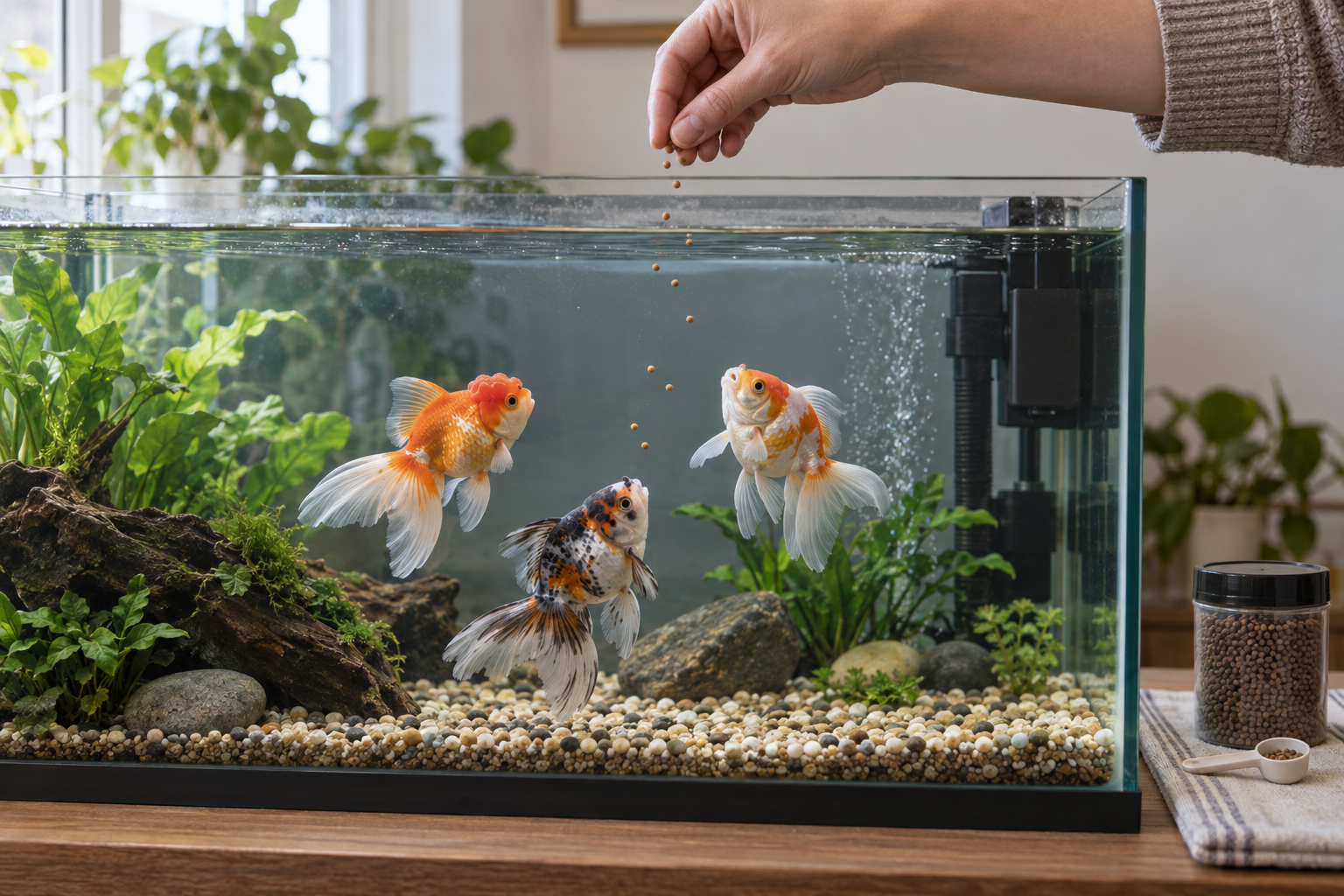
In a group, the fastest fish can consume most of a meal while a quieter fish appears to be eating. Spread small portions across two areas or feed the slower fish separately under guidance. Record repeated spitting, difficulty locating food, one fish hanging back, or food falling from the mouth. Those patterns can indicate an unsuitable particle size, competition, vision problems, mouth disease or illness.
Body shape also matters, especially in fancy goldfish. View each fish from the side and above and compare photographs taken under similar conditions. Rapid weight loss, a newly swollen abdomen, raised scales or a persistent change in swimming is not a reason to simply reduce the ration. Stop experimenting and seek advice from an aquatic veterinarian.
Let temperature change the plan gradually
Goldfish are ectothermic, so water temperature affects activity and food use. This matters most in outdoor ponds that cool substantially with the seasons. It does not justify one universal chart that tells every owner to feed twice above one temperature and every third day below another. Fish size, life stage, diet formulation, pond conditions and the speed of the temperature change all affect the decision.
Use a reliable thermometer and follow the temperature guidance supplied for the specific food. As water cools and activity declines, reduce the amount gradually and observe whether the fish still approach and swallow normally. For a cold pond, ask an experienced aquatic veterinarian or pond professional when seasonal feeding should stop and which food is appropriate. An indoor aquarium with stable temperature needs a consistent routine rather than seasonal guessing.
Treat leftovers as information
Remove uneaten food with a fine net or siphon before it breaks apart. Extra food adds organic waste to the system and can contribute to poor water quality, but a single missed pellet does not by itself explain an ammonia or nitrite reading. Test the water and examine the whole system: stocking, filtration, maintenance, recent changes and feeding all matter.
If ammonia or nitrite is detectable, or nitrate has risen unusually fast, reduce feeding while addressing the water problem. Use the step-by-step checks in this goldfish water-change guide; do not compensate for poor water by relying on a weekly fasting day.
When I stop a feeding
I stop adding food when fish lose interest, begin spitting repeatedly, or leave pieces on the bottom. I also pause the meal if a fish is gasping, listing, unable to stay upright, isolated from the group or showing a sudden swollen abdomen. Check temperature, ammonia, nitrite, oxygenation and equipment, then contact an aquatic veterinarian when abnormal behavior persists or is severe.
Buoyancy trouble should not automatically be labelled constipation or treated by repeatedly feeding peas. Feeding, water quality, anatomy and several diseases can produce similar signs. The goldfish constipation and buoyancy guide explains what to record before changing the diet.
A feeding log is more useful than a rigid rule
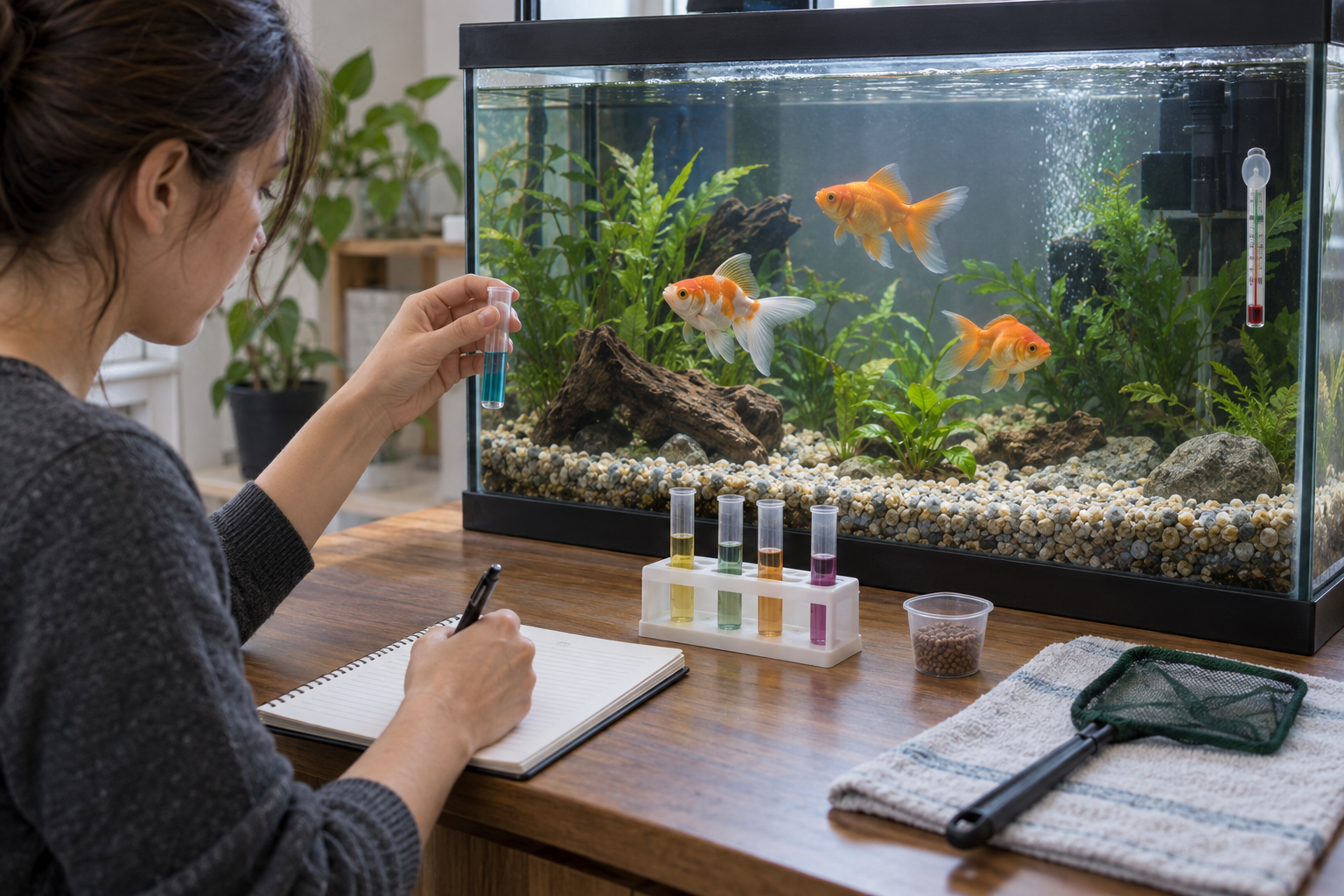
For one or two weeks, note the food name, measuring spoon, number of portions, water temperature, leftovers and whether every fish ate. Add weekly water-test results and occasional photographs of body condition. This short record makes patterns visible: one fish may miss meals, a portion may be too large, or nitrate may rise faster after a food change.
Young growing fish may need a different schedule from mature fish, and a recovering fish may need a veterinary feeding plan. Change one variable at a time and reassess rather than adding a new food, increasing frequency and altering water temperature together. The aim is a ration the fish consume well while maintaining stable body condition and water quality.
Sources
Merck Veterinary Manual: Providing a Home for Fish; Merck Veterinary Manual: Nutrition in Fish; Merck Veterinary Manual: Disorders and Diseases of Fish; RSPCA: What to Feed Your Fish.
Editorial note: The two feeding illustrations on this page were generated for DailyTrail to show the observation and water-check routines described. They are not photographs of the author’s fish. This article provides general husbandry information and does not replace advice from a veterinarian experienced with aquarium fish.