
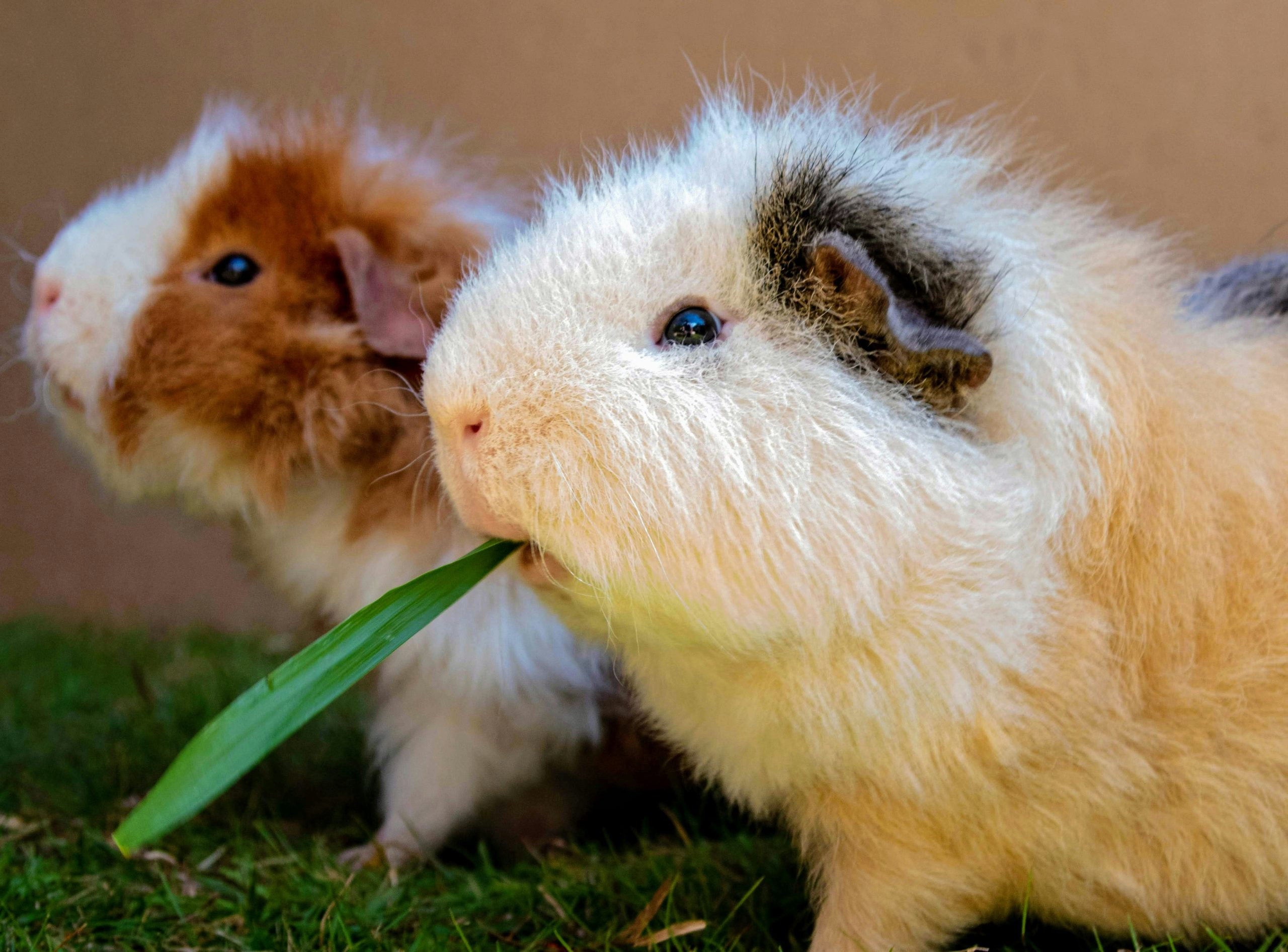
A newborn guinea pig can look surprisingly capable: the pup is furred, the eyes are open, and solid food may be sampled within the first days. I still treat that first week as a period for close observation. Being able to walk is not the same as being able to thrive without the mother, and a small change in nursing, weight or droppings can matter quickly.
This guide is for pups being raised normally with their mother. An orphaned, rejected, chilled or injured pup needs prompt advice from a veterinarian experienced with guinea pigs. Hand-rearing is not simply a matter of substituting cow’s milk or feeding with a syringe; aspiration and an unsuitable formula can be fatal.
Begin with the mother and the whole litter
Before handling individual pups, watch the family from a short distance. I look for pups moving between the mother, hay and shelter, and I check that each one appears warm, alert and able to approach the mother. Nursing may be brief and easy to miss, so a single quiet observation does not prove that a pup has been rejected.
The mother also needs attention. Heavy bleeding, collapse, straining after the birth appears complete, refusal of food, breathing difficulty, a painful swollen mammary gland or foul discharge requires urgent veterinary advice. Keep the enclosure calm and avoid repeatedly removing the pups unless a check is necessary.
Make the enclosure safe at pup height
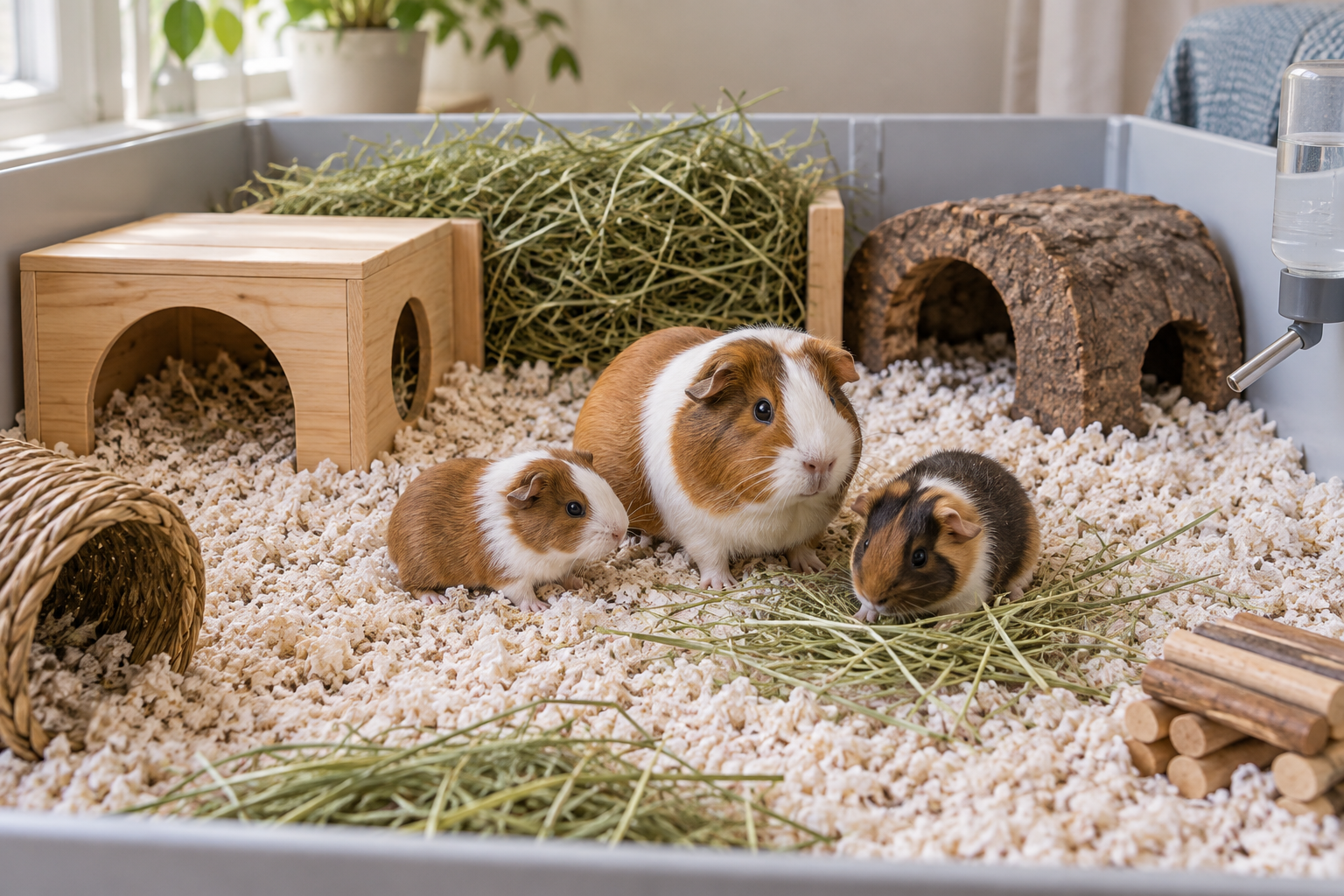
Inspect the enclosure from floor level. Gaps that contain an adult may allow a pup to escape or become trapped, so temporarily secure wide grid openings with a solid inner barrier that the animals cannot chew or climb. Keep the floor solid, dry and well bedded. Remove raised shelves, steep ramps and drop-offs; guinea pigs are not agile climbers, and a fall is an avoidable risk.
Provide more than one low shelter and choose designs with two exits so one animal cannot trap another. Place hay in several reachable piles and mount the water bottle low enough for the smallest pup while keeping it usable for the mother. Check that the ball bearing releases water. Keep the family away from drafts, direct sun and the sight or reach of dogs, cats, ferrets and rabbits.
Spot-clean wet bedding and spoiled food each day without stripping away every familiar scent. Deep-clean according to enclosure size and the number of animals. Avoid fluffy nesting material that can wrap around feet, dusty bedding, wire floors and strongly scented softwood products.
Use weight as a trend, not a competition
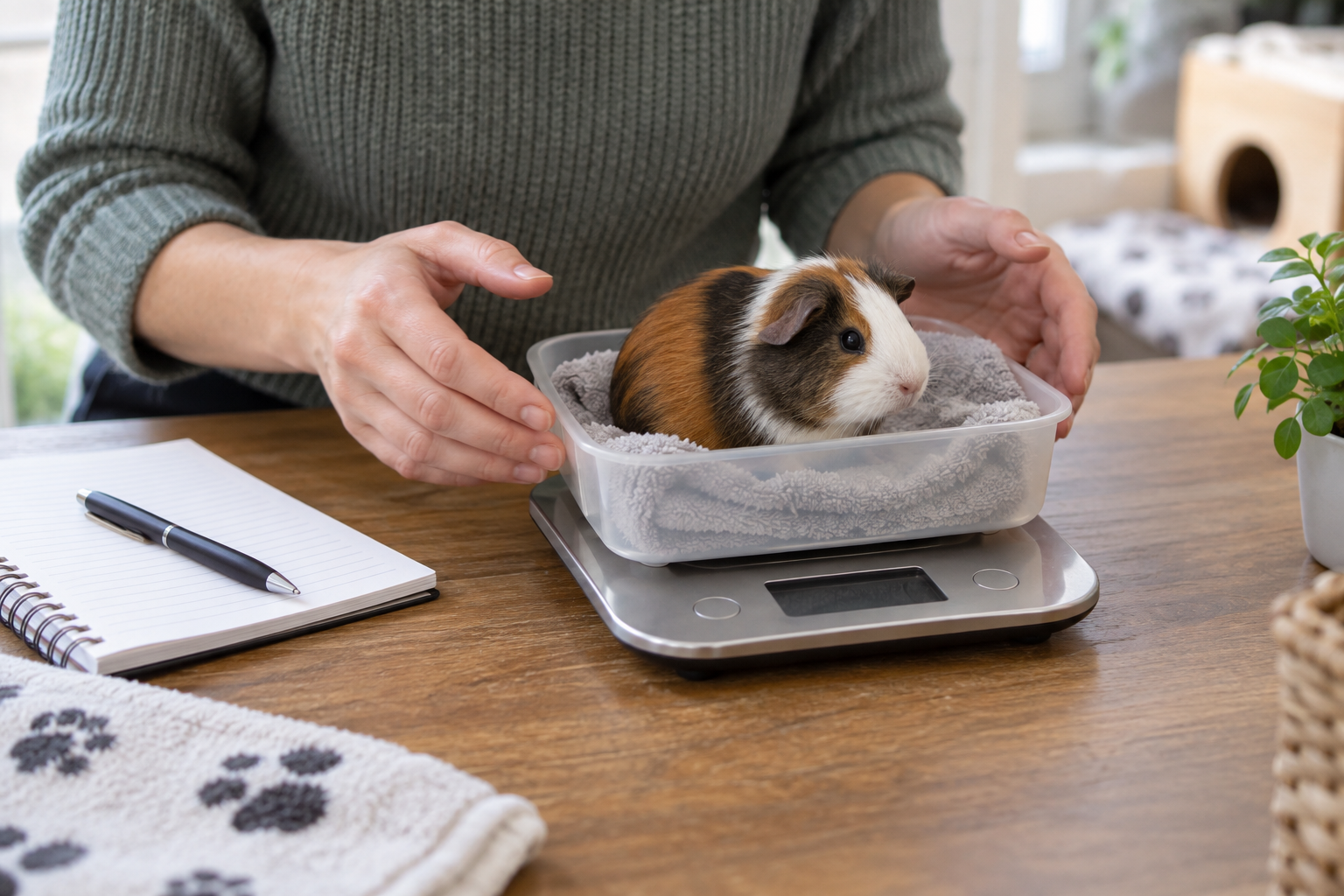
Visual impressions are unreliable when pups differ in birth size or coat. Weigh each pup at about the same time on a gram scale, using a low container lined with a towel. Record the number against an identifying coat marking. The pattern matters more than comparison with a generic target: a pup that fails to gain, repeatedly loses weight or falls behind its own trend should be discussed with an experienced veterinarian.
Combine the number with observations of nursing, appetite, droppings, posture and activity. Contact a veterinarian promptly if a pup is cold, limp, hunched, isolated, breathing hard, producing diarrhea, not eating, or showing eye or nasal discharge. Guinea pigs can hide illness, and a young animal has little reserve.
Feed the mother and pups as a growing family
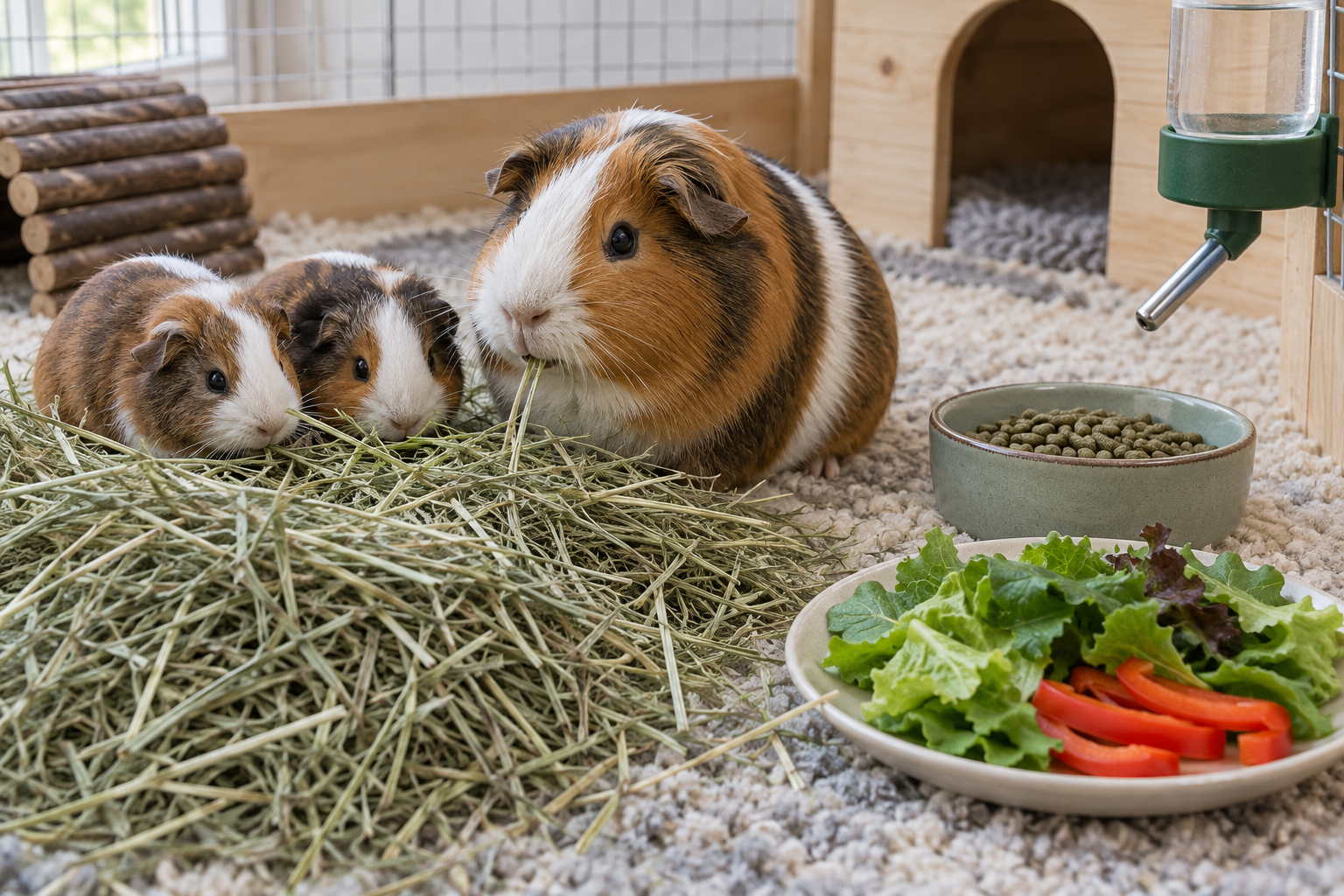
Pups begin tasting solid food while they continue to nurse. Keep clean hay available at all times, placed where small animals can reach it without entering a rack. MSD Veterinary Manual advises that growing guinea pigs, as well as pregnant and lactating animals, need the additional nutrients provided by alfalfa hay and pellets formulated for guinea pigs. A veterinarian familiar with the family can help decide how long to use those foods and how much pellet to offer; an overflowing bowl encourages waste and makes intake hard to judge.
Use plain, uniform guinea-pig pellets rather than seed or muesli mixes. Check the manufacturing or best-before date because vitamin C in stored feed degrades. Guinea pigs cannot make their own vitamin C. Growing animals need a reliable daily source from an appropriate fresh pellet, suitable vegetables and, when a veterinarian recommends it, a measured supplement. Adding vitamin C to the water is unreliable because it breaks down and may make the water less appealing.
Introduce vegetables gradually and in modest amounts. Bell pepper and suitable leafy greens can contribute vitamin C, but the diet should not resemble a basket filled with carrots or fruit. Sudden food changes can upset the digestive tract. Keep fresh water available at all times and confirm daily that every bottle works and does not leak onto the bedding.
Handle low, briefly and with full support
Approach from the front at a low level rather than grabbing from above. Place one hand around the shoulders or chest and support the entire hindquarters with the other. Hold the pup close to your lap or just above a padded surface. Children should sit on the floor and an adult should remain responsible for every handling session.
Short, calm handling can help with weight checks and future care, but socialization should not interrupt nursing or rest. Stop if the pup struggles continuously, freezes, chatters its teeth or tries to launch from the hands. Food rewards must fit the normal diet rather than becoming a stream of sugary treats.
Confirm sex before the separation deadline
Do not rely on a quick comparison or a pet-shop label. Young guinea pigs are commonly mis-sexed. Arrange for an experienced guinea-pig veterinarian or rescue to confirm every pup early enough to plan housing. VCA notes that males may begin mounting females at three to four weeks, so male pups should be separated from their mother and female siblings immediately after the appropriate weaning period advised for that litter.
Separation by sex does not mean isolation. House a weaned male with a compatible same-sex guinea pig where possible, and keep females in an appropriate compatible group. Introductions and enclosure space still need supervision. Rabbits are not suitable substitute companions because their communication, diet and physical strength differ, and they can transmit disease or injure a guinea pig.
Weaning and rehoming are individual decisions
A calendar date alone does not prove that a pup is ready. The veterinarian should consider age, weight trend, independent eating, health and the litter’s circumstances. Confirm sex and future companionship before any rehoming. Send the pup with its current food information and avoid changing enclosure, companions and diet all at once.
If the mother dies, will not allow nursing, or a pup is losing weight, obtain professional advice the same day. Do not improvise with cow’s milk, kitten formula, forced water or unrestricted syringe feeding. A clinician may need to examine both mother and pup and teach a feeding method that reduces aspiration risk.
Sources used for this guide
- MSD Veterinary Manual: Housing and Nutrition of Guinea Pigs
- VCA Animal Hospitals: Owning Guinea Pigs
- RSPCA: Creating a Good Home for Guinea Pigs
- RSPCA: Keeping Guinea Pigs as Pets
Editorial note: The three care illustrations on this page were generated for DailyTrail to show the enclosure, weighing and feeding setups described. They are not photographs of animals raised by the author. This article provides general husbandry information and does not replace advice from a veterinarian experienced with guinea pigs.
[…] Young animals, pregnancy and nursing require different feeding and housing decisions; the separate baby guinea pig care guide covers those situations in more […]