

You know how hamsters stuff food into their cheeks and haul it back to their stash?
First time I fed my Syrian, I dumped a whole handful of mix in his bowl. His cheeks swelled up like little ping pong balls, and he ran around the cage hiding food everywhere. I thought — wow, that is adorable.
Then I found some of those hidden corn kernels starting to grow mold. That was when I realized I was giving way too much, and the mix I bought had stuff he should not even be eating in the first place.
Hamster feeding is more complicated than it looks. Different species have different needs. And for the same species, getting it right or wrong can mean the difference between two good years and an early goodbye.
First Thing — Know Which Hamster You Have
Syrians and Dwarfs are not just different in size. Their nutritional needs are different too.
Syrian hamsters are bigger, metabolize a bit slower, and handle sugar slightly better than Dwarfs — but “better” does not mean “go ahead and load them up.” They gain weight easily, so high-fat and high-sugar stuff still needs to be limited.
Dwarf hamsters — especially Campbells and Winter Whites — have a genetic risk for diabetes. Sugar is not just “not great” for them. It is a real health threat. Too much fruit, too many treats, and you could be looking at a diabetic hamster down the line.
Know what you have, then feed accordingly.
Staple Food — Pellets Are Safer, Mixes Are Tricky
Hamster food comes in two main types: pellets and seed mixes.
Pellets are uniform — every piece has the same nutrition. Hamsters cannot pick out their favorites and leave the rest. This is the safest option, and the one I recommend.
Seed mixes let hamsters do what they do best — eat the good stuff first (sunflower seeds, peanuts, corn flakes) and leave the balanced pellets sitting in the bowl. The result? Too much fat and sugar, not enough protein and fiber.
If you do go with a mix, pick one that is not full of colored junk and sugary bits. And watch the bowl — if you always see the same pieces left behind, your hamster is picking favorites. That is when you switch to pellets.
Syrians — Safe Food List
Protein — 2 to 3 times a week, small amounts:
- Cooked chicken breast — plain, no salt, no oil
- Cooked egg — just a small piece
- Mealworms — dried or live, about 3 to 5
- Plain yogurt — unsweetened, occasional tiny spoonful
Veggies — daily, small portions:
- Romaine lettuce
- Cucumber
- Carrot — just a little, it has sugar
- Broccoli
- Bell pepper
Fruits — once or twice a week, one small piece:
- Apple — seeds removed
- Blueberries
- Strawberries
- Pear
Grains and seeds: The daily pellet or mix already covers this. You do not need to add extra seeds. Sunflower seeds and peanuts are high in fat — a few a day and your hamster will start looking rounder than they should.
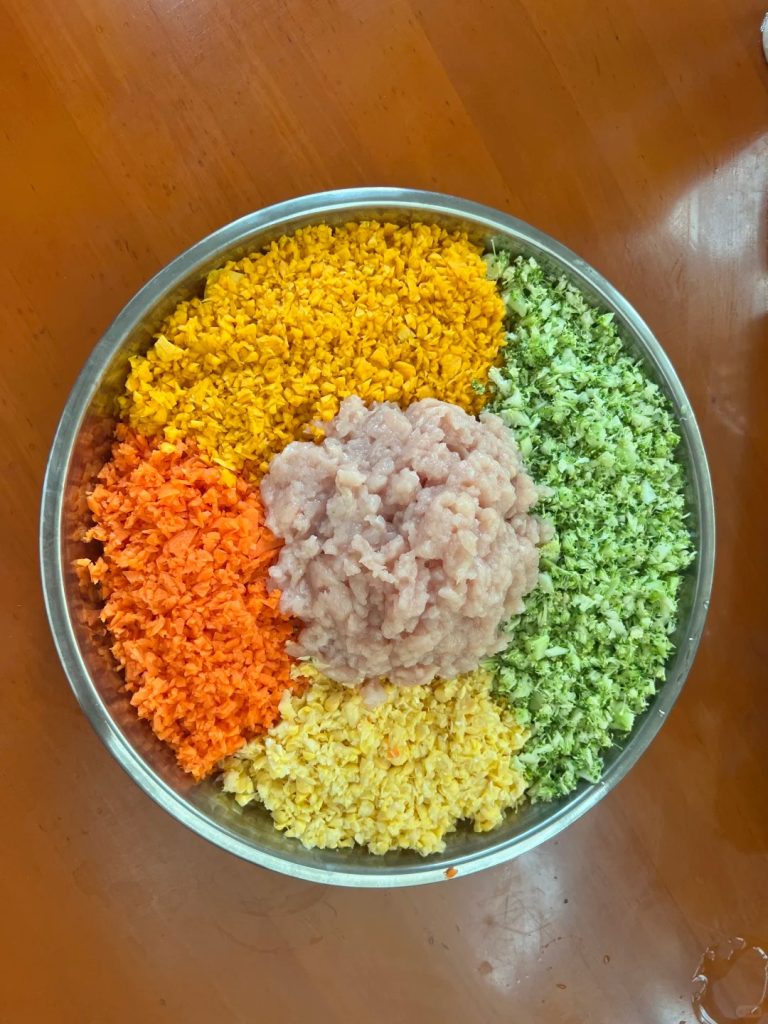
Dwarfs — Sugar Is the Enemy
Protein — 2 to 3 times a week:
- Cooked chicken breast
- Cooked egg
- Mealworms — 3 to 5
- Plain yogurt — barely any, just a tiny dab
Veggies — daily, but watch the sugary ones:
- Romaine lettuce
- Cucumber
- Broccoli
- Bell pepper
- Carrot — give half the amount you would give a Syrian
Fruits — once a week, extremely small amounts:
- Blueberries — 1 or 2
- Strawberry — half of a small one
- Apple — one tiny slice
- Do not give: raisins, banana, mango, papaya — these are sugar bombs, and Dwarfs cannot handle them
The Absolute No-List
These apply to ALL hamsters:
Onion, garlic, leeks, chives — toxic, causes anemia
Citrus fruits — oranges, lemons, grapefruit, limes — too acidic, hurts their stomachs
Chocolate, coffee, tea, alcohol — you already know why not
Raw beans and raw potatoes — contain toxins
Any processed, seasoned, or salted human food — salt, sugar, oil, spices — none of it is good for them
Bitter almonds — contain cyanide
Rhubarb — toxic
Introducing New Foods
Every time you give something new, offer a tiny piece and wait 24 hours.
Soft poop? Diarrhea? Not eating? That is your answer — this food does not work for your hamster. Stop giving it.
Do not try three new things in one day. If something goes wrong, you will not know which one caused it.
How to Handle Treats
Commercial hamster treats — yogurt drops, fruit sticks, nut bars — most of them are just sugar and fillers. Hamsters love them, but they do not need them.
My treat rule:
- Treats should be no more than 10 percent of daily food intake
- Use natural stuff as treats — a bit of cucumber, half a blueberry, a mealworm
- Save them for training or bonding moments, not daily handouts
- For Dwarfs, cut the treat amount in half
A Story That Sticks with Me
I knew someone who had a Dwarf hamster. She gave it banana every single day — just a tiny piece, because the hamster loved it and she could not resist. By the time he turned one and a half, he had diabetes. He did not make it to two.
Dwarf hamsters can live two to three years. One and a half is not old — that was diet.
She told me later: if she had known how sensitive Dwarfs are to sugar, she never would have done that. But by the time she learned, it was too late.
Sugar is not just “less healthy.” For Dwarfs, it is a real, measurable risk. Every time I see someone say “my hamster loves fruit, I give it every day,” I tense up.
Final Thoughts
Feeding a hamster looks simple — fill the bowl, fill the water bottle. But what goes into that bowl determines how long they live and how well they live.
Syrians and Dwarfs have different needs. Sugar and fat affect them differently. But they share one thing — they both benefit from natural, unprocessed food, not colorful commercial snacks with ingredients you cannot pronounce.
Next time you open that food bag, take five seconds and look at what is left in the bowl. If they are only eating certain pieces and leaving the rest — that is your hamster telling you something needs to change. Listen.