
When I check a dog’s eyes and ears, I am looking for change before I am looking for dirt. I compare left with right, notice whether the dog pulls away, and ask whether today looks different from the dog’s usual baseline. That distinction matters because routine cleaning cannot fix a painful eye, an ear infection or something lodged in a canal. Sometimes the safest care is to leave the area alone and call a veterinarian.
A check does not automatically mean a cleaning
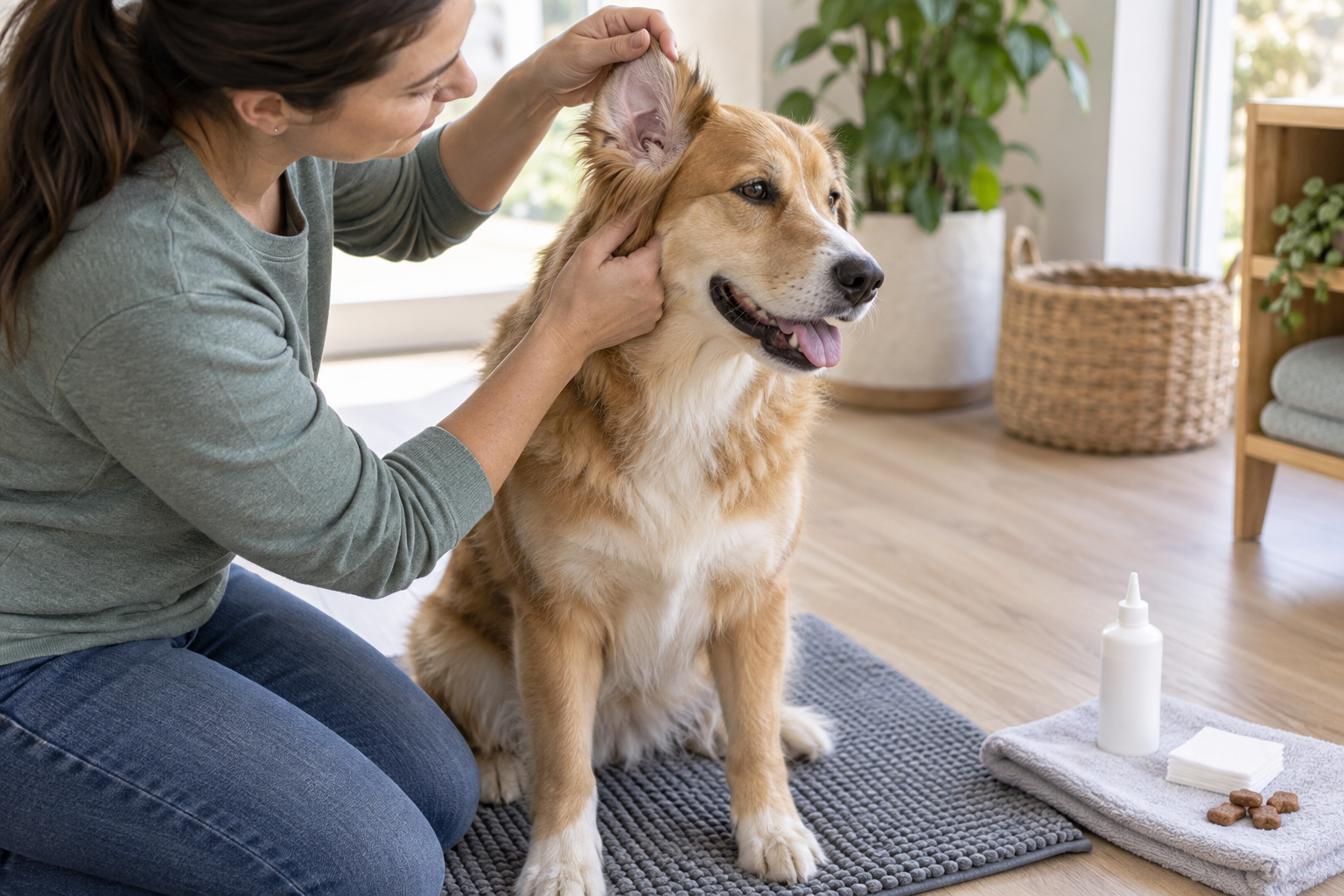
Use good light and begin without any product. For the eyes, compare the lids, pupils, surface clarity and the amount of discharge on both sides. For the ears, lift each flap gently and look only at the part you can see. A comfortable dog should not flinch, cry or fight when the outer ear is touched lightly.
There is no useful rule that every dog needs its ears cleaned every two or four weeks. Some healthy ears need little or no routine cleaning; others need a schedule chosen with a veterinarian because of anatomy, swimming, allergies or repeated ear disease. Over-cleaning can irritate the canal. The daily habit is observation. Cleaning happens when it is appropriate for that dog.
What I note during an ear check
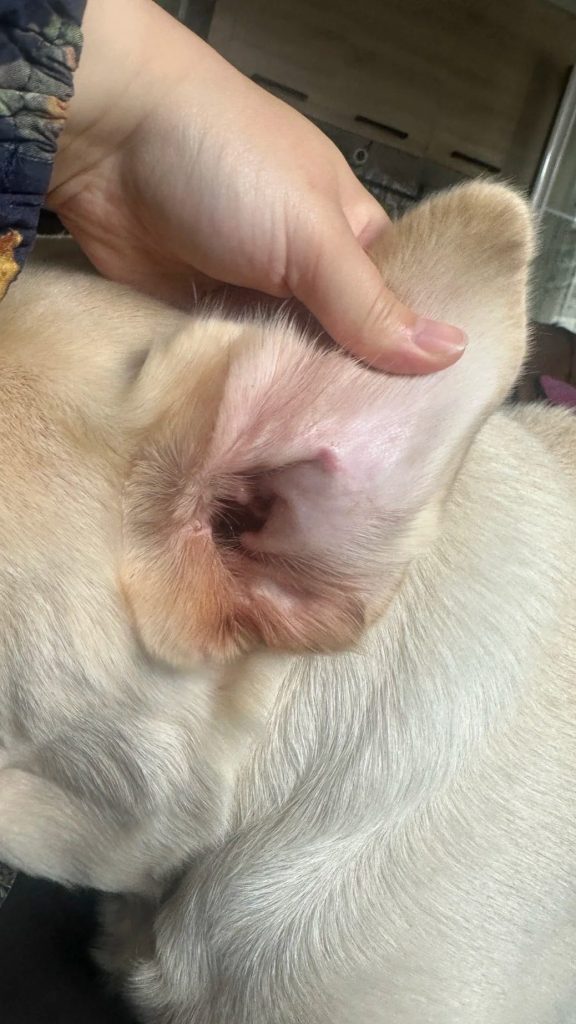
I note the color of the visible skin, the amount and color of wax, odor, swelling and whether one ear differs from the other. I also watch for repeated head shaking, scratching, rubbing the head on furniture, a lowered ear or a new head tilt. Floppy ears and hair around the opening may reduce airflow, but ear shape alone does not prove that infection is present.
Redness, marked swelling, strong odor, dark or pus-like discharge, blood, pain or rapid return of debris after cleaning are reasons to contact a veterinarian before putting more product into the canal. The eardrum cannot be assessed from home, and some cleaners or medications are unsafe when it is damaged. A veterinarian can examine the canal and eardrum and may test a sample of debris to identify the cause.
How to clean a healthy ear when cleaning is advised
Use a dog ear cleaner recommended by the veterinarian for that dog, along with gauze or cotton balls and treats. Alcohol and hydrogen peroxide can irritate inflamed tissue. Do not use cotton-tipped swabs in the canal: they can push material deeper and may injure the canal or eardrum.
- Choose an easy-to-clean area and place the dog on secure footing.
- Lift the ear flap without twisting it. Apply the amount of cleaner directed on the label or by the veterinarian, keeping the bottle tip from touching the ear.
- Massage the base of the ear gently for the recommended time. Stop if the dog shows pain.
- Allow the dog to shake its head, then wipe away only the loosened material you can reach at the outer opening with gauze or a cotton ball.
- Reward the dog and clean the bottle tip if it was contaminated, following the product instructions.
If prescription ear medication is being used, follow the veterinary instructions about whether and when to clean. Some cleaners can interfere with medication, and a painful ear may need treatment before home handling is tolerable.
Drying after water exposure
After swimming or bathing, dry the ear flap and the area around the opening with a soft towel. Do not push the towel into the canal. A dog with recurring swimmer’s ear may need a veterinarian-approved preventive routine, but adding cleaner after every bath without knowing the ear’s condition can cause irritation.
The eye check comes before the wipe
Stand where the light falls evenly across the face. I compare the two eyes for squinting, redness, swelling, cloudiness, a change in pupil size, a raised third eyelid or discharge. I also watch the dog move around the room. Bumping into objects, missing a step or seeming suddenly hesitant in familiar space may indicate a vision problem even when the surface of the eye looks normal.
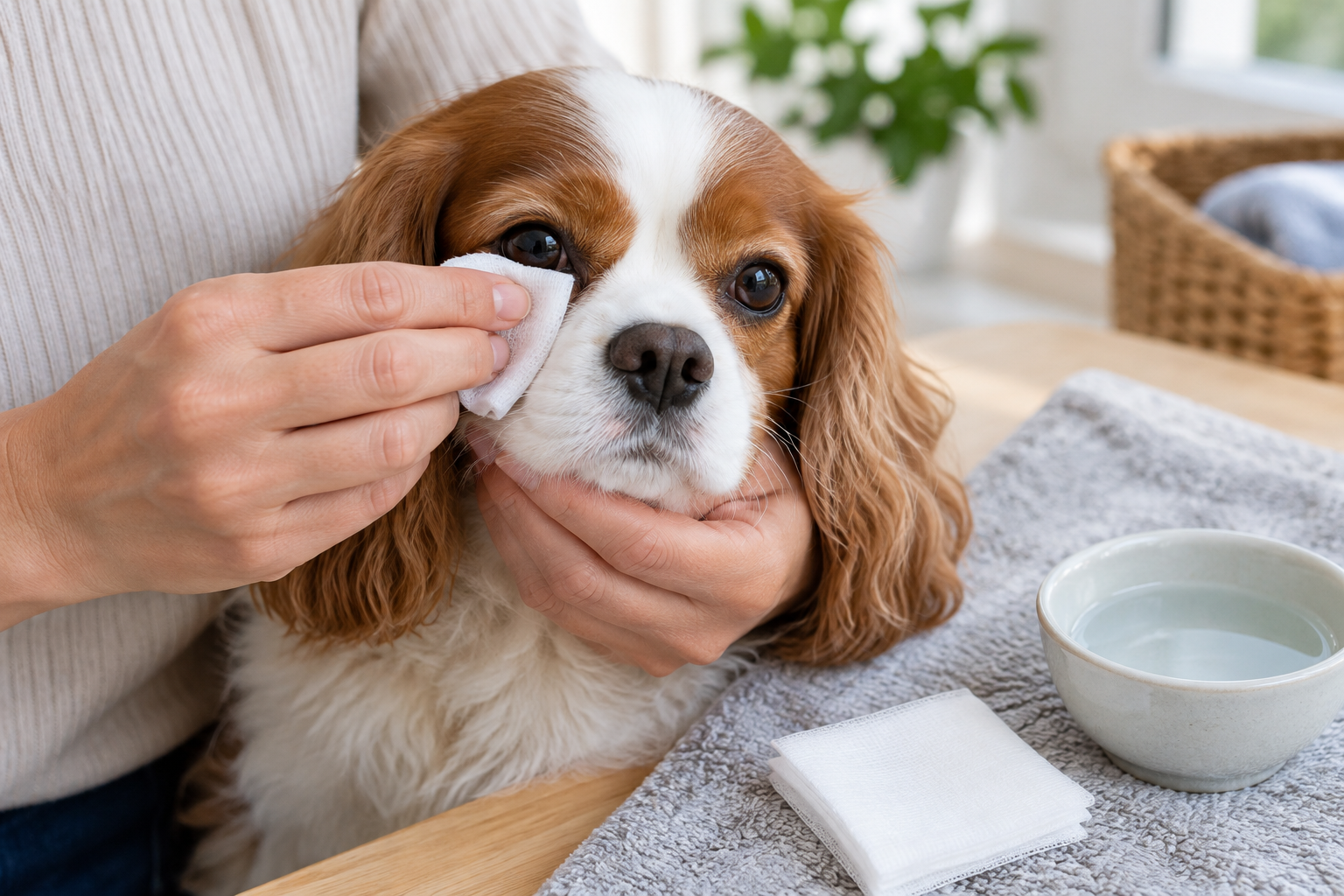
A small amount of dried material on the fur may be removable at home. Moisten clean gauze with clean lukewarm water and wipe the surrounding fur gently from the inner corner outward, without rubbing the eyeball. Use a fresh piece for the other eye so material is not transferred from side to side. Do not use hydrogen peroxide, ear cleaner, cosmetic tear-stain remover or human eye drops unless a veterinarian has specifically directed their use.
Tear stains are an observation, not a diagnosis
Reddish-brown staining can be conspicuous on pale fur, but color alone does not explain why tears are overflowing. Eyelid shape, eyelashes or hair touching the eye, a blocked drainage pathway, irritation and eye disease can all contribute. Persistent one-sided tearing, new staining, odor, skin soreness or discomfort deserves a veterinary examination rather than repeated scrubbing or an automatic diet change.
Eye signs that should not wait
An eye can deteriorate quickly. Seek prompt veterinary care for squinting, keeping an eye closed, marked redness, swelling, cloudiness, a bulging eye, unequal pupils, sudden vision change, visible trauma or a foreign object. Thick yellow-green or bloody discharge also needs assessment. Do not try to pull out embedded material or reuse an old prescription; similar-looking eye problems can require very different treatment.
Head tilt, loss of balance, rapid eye movements, facial droop or repeated vomiting alongside ear signs can involve deeper ear or neurologic structures and warrants urgent advice. Painful handling also raises bite risk, so stop rather than forcing the inspection.
Make handling predictable
Practice when no cleaning is planned. Touch the cheek, lift an ear flap for a second, reward and release. On later sessions, show the gauze or bottle and reward calm investigation. Keep sessions short enough that the dog does not need to struggle to make them end. This same approach is useful for the foot handling described in our dog paw and nail care guide.
For an older dog, new hearing or vision changes can alter sleep, confidence and movement through the home. Record when the change began and bring that record to the veterinarian. Our senior dog care guide explains how to track those changes without dismissing them as ordinary aging.
Sources used for this guide
- VCA Animal Hospitals: Ear Cleaning and Administering Ear Medication in Dogs
- American Animal Hospital Association: Help! Is This a Pet Emergency?
- Merck Veterinary Manual: Disorders of the Conjunctiva in Dogs
- American Animal Hospital Association: When to See a Veterinary Specialist
Editorial note: The ear-check and eye-wiping illustrations on this page were generated for DailyTrail to show the home routines described. The retained outer-ear image is a photograph. None of the images documents an animal examined or treated by the author. This article provides general care information and does not replace advice from a veterinarian familiar with the dog.